• Home
  • Latest
  • Fortune 500
  • Finance
  • Tech
  • Leadership
  • Lifestyle
  • Rankings
  • Multimedia
CommentaryHealth

Why sugar is potentially as toxic as alcohol

By
Robert Lustig
Robert Lustig
Down Arrow Button Icon
By
Robert Lustig
Robert Lustig
Down Arrow Button Icon
October 28, 2015, 10:30 AM ET
sb10065848dh-001
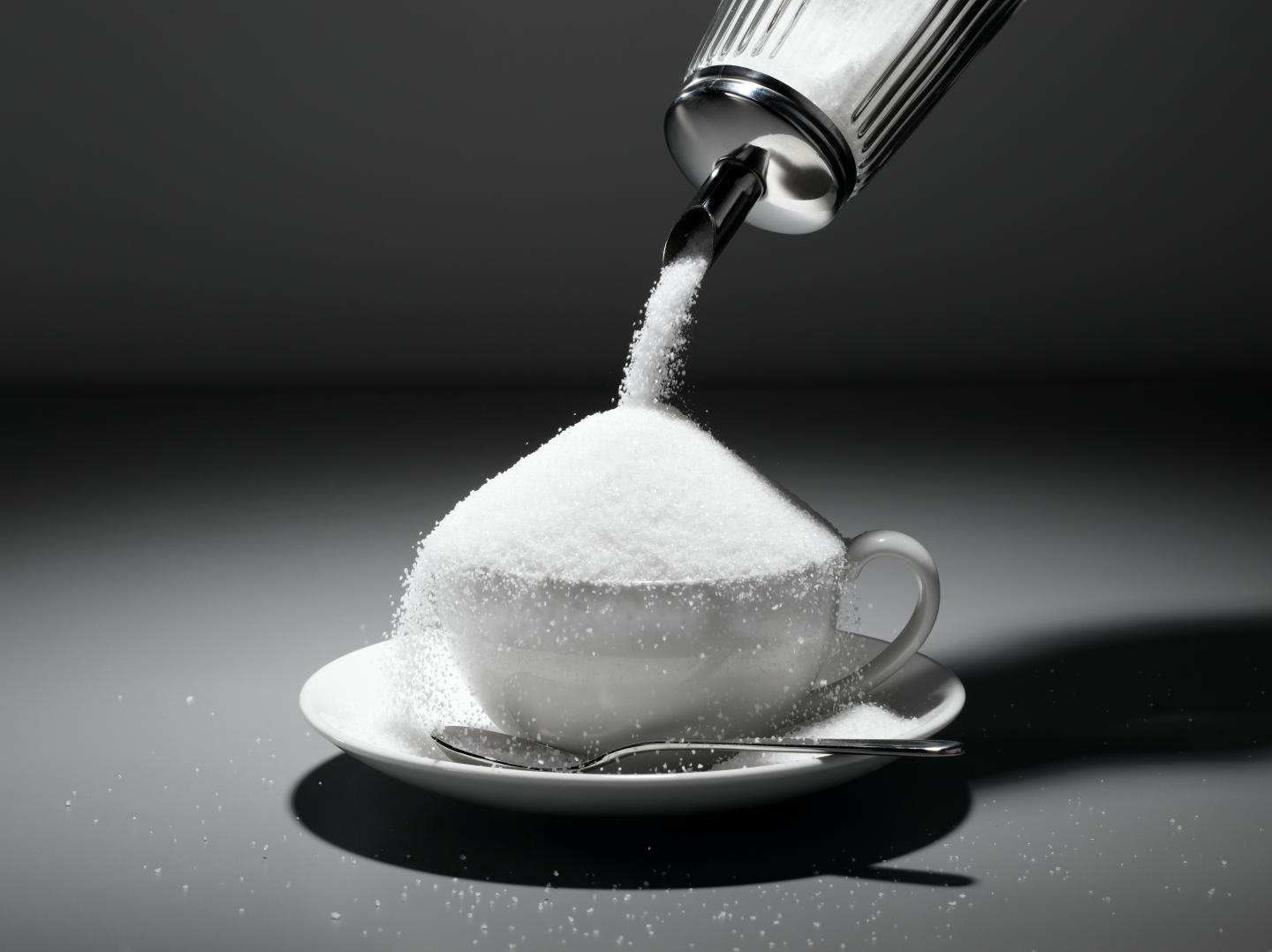
Sugar being poured into tea cup, close-upPhotograph by Getty Images

Children are manifesting increased rates of adult diseases like hypertension or high triglycerides. And they are getting diseases that used to be unheard of in children, like Type 2 diabetes and fatty liver disease. So why is this happening? Everyone assumes this is the result of the obesity epidemic – too many calories in, too few out. Children and adults are getting fat, so they’re getting sick. And it is generally assumed that no one specific food causes it, because “a calorie is a calorie.”

I’ve been studying the role that sugar plays in contributing to chronic disease for years, and my research group at the University of California, San Francisco (UCSF) has just published research in the journal Obesity that challenges this assumption. If calories come from sugar, they just aren’t the same.

Diabetes is increasing faster than obesity
It’s clear that the cause of rising rates of health conditions like Type 2 diabetes isn’t as simple as people just eating too many calories. Obesity is increasing globally at 1% per year, while diabetes is increasing globally at 4% per year. If diabetes were just a subset of obesity, how can you explain its more rapid increase? And certain countries are obese without being diabetic (such as Iceland, Mongolia and Micronesia), while other countries are diabetic without being obese (India, Pakistan and China, for instance). Twelve percent of people in China have diabetes, but the obesity rate is much lower. The U.S. is the fattest nation on Earth and our diabetes prevalence is 9.3%.

While 80% of the obese population in the U.S. is metabolically ill (meaning they have conditions like diabetes, hypertension, lipid problems and heart disease), 20% is not. Conversely, 40% of the normal weight population has metabolic syndrome. If normal weight people have these conditions, how then are they related to obesity? Indeed, we now know that obesity is a marker rather than a cause for these diseases. Epidemiological studies have found a correlation between added sugar consumption and health conditions like cardiovascular disease. So could cutting excess sugar out of our diets reverse metabolic syndrome?

What happens when you stop feeding kids added sugar?
Our group at UCSF studied 43 Latino and African-American children with obesity and metabolic syndrome over a 10-day period. We started by assessing their metabolic status – insulin and glucose levels, as well as blood fats and other markers for disease, like lactate and free fatty acids – on their home diet.

For the next nine days, each child ate an individual tailored diet. We catered their meals to provide same number of calories and protein and fat content as their usual home diet. We gave them the same percentage of carbohydrate, but we substituted starch for sugar. The big difference: this special diet had no added sugar. This means their diet had no sugar from sugarcane or high fructose corn syrup. The kids consumed foods such as fruits and other whole foods that naturally contain some sugar. These foods also have fiber, which reduces the rate of sugar absorption, so they don’t affect the body the same way that added sugar does.

We took chicken teriyaki out. We put turkey hot dogs in. We took sweetened yogurt out. We put baked potato chips in. We took donuts out. We put bagels in. We gave them unhealthy processed food, just with no added sugar. Each child was given a scale to take home, and if their weight was declining, we made them eat more. Then we studied them again.

The children had eaten the same number of calories and had not lost any weight, and yet every aspect of their metabolic health improved. With added sugar cut out of their diet for 10 days, blood pressure, triglycerides, low-density lipoprotein (LDL, or “bad cholesterol”), insulin sensitivity and glucose tolerance all improved. And remember, we weren’t giving them just leafy greens and tofu – we fed the kids processed foods, just ones without sugar. Further studies are needed to see if this will also work in adults, and if the benefits are short-term or long-term.

Sugar is like alcohol
This study demonstrates that a calorie is not a calorie, and that sugar is a primary contributor to metabolic syndrome, unrelated to calories or weight gain. By removing added sugar, we improved metabolic health. Sugar may not be the only contributor to chronic disease, but it is far and away the easiest one to avoid. Kids could improve their metabolic health – even while continuing to eat processed food – just by dumping the sugar. Can you imagine how much healthier they’d be if they ate real food? The naysayers will say, “But sugar is natural. Sugar has been with us for thousands of years. Sugar is food, and how can food be toxic?”

Webster’s Dictionary defines food as: material consisting essentially of protein, carbohydrate, and fat used in the body of an organism to sustain growth, repair, and vital processes and to furnish energy. Sugar by itself furnishes energy, and that’s about it. In that sense, sugar is like alcohol. It’s got calories, but it’s not nutrition. There’s no biochemical reaction that requires it. And at high doses, alcohol can fry your liver. Same with sugar. Fructose, the sweet molecule in sugar, contains calories that you can burn for energy, but it’s not nutrition, because there’s no biochemical reaction that requires it. In excess, it can fry your liver, just like alcohol. And this makes sense, because where do you get alcohol from? Fermentation of sugar.

Too much sugar causes diabetes, heart disease, fatty liver disease and tooth decay. When consumed in excess, it’s a toxin. And it’s addictive – just like alcohol. That’s why children are getting the diseases of alcohol – Type 2 diabetes and fatty liver disease – without alcohol. But our research suggests we could turn this around in 10 days – if we chose to.

Robert Lustig is a professor of Pediatrics at the University of California, San Francisco. This article originally appeared on The Conversation. The Conversation

About the Author
By Robert Lustig
See full bioRight Arrow Button Icon

Latest in Commentary

Finance
Lorem ipsum dolor sit amet, consectetur adipiscing elit, sed do eiusmod tempor incididunt ut labore et dolore magna aliqua. Ut enim ad minim veniam
By Fortune Editors
October 20, 2025
Finance
Lorem ipsum dolor sit amet, consectetur adipiscing elit, sed do eiusmod tempor incididunt ut labore et dolore magna aliqua. Ut enim ad minim veniam
By Fortune Editors
October 20, 2025
Finance
Lorem ipsum dolor sit amet, consectetur adipiscing elit, sed do eiusmod tempor incididunt ut labore et dolore magna aliqua. Ut enim ad minim veniam
By Fortune Editors
October 20, 2025
Finance
Lorem ipsum dolor sit amet, consectetur adipiscing elit, sed do eiusmod tempor incididunt ut labore et dolore magna aliqua. Ut enim ad minim veniam
By Fortune Editors
October 20, 2025
Finance
Lorem ipsum dolor sit amet, consectetur adipiscing elit, sed do eiusmod tempor incididunt ut labore et dolore magna aliqua. Ut enim ad minim veniam
By Fortune Editors
October 20, 2025
Finance
Lorem ipsum dolor sit amet, consectetur adipiscing elit, sed do eiusmod tempor incididunt ut labore et dolore magna aliqua. Ut enim ad minim veniam
By Fortune Editors
October 20, 2025

Most Popular

Finance
Lorem ipsum dolor sit amet, consectetur adipiscing elit, sed do eiusmod tempor incididunt ut labore et dolore magna aliqua. Ut enim ad minim veniam
By Fortune Editors
October 20, 2025
Finance
Lorem ipsum dolor sit amet, consectetur adipiscing elit, sed do eiusmod tempor incididunt ut labore et dolore magna aliqua. Ut enim ad minim veniam
By Fortune Editors
October 20, 2025
Finance
Lorem ipsum dolor sit amet, consectetur adipiscing elit, sed do eiusmod tempor incididunt ut labore et dolore magna aliqua. Ut enim ad minim veniam
By Fortune Editors
October 20, 2025
Finance
Lorem ipsum dolor sit amet, consectetur adipiscing elit, sed do eiusmod tempor incididunt ut labore et dolore magna aliqua. Ut enim ad minim veniam
By Fortune Editors
October 20, 2025
Finance
Lorem ipsum dolor sit amet, consectetur adipiscing elit, sed do eiusmod tempor incididunt ut labore et dolore magna aliqua. Ut enim ad minim veniam
By Fortune Editors
October 20, 2025
Finance
Lorem ipsum dolor sit amet, consectetur adipiscing elit, sed do eiusmod tempor incididunt ut labore et dolore magna aliqua. Ut enim ad minim veniam
By Fortune Editors
October 20, 2025
Fortune Secondary Logo
Rankings
  • 100 Best Companies
  • Fortune 500
  • Global 500
  • Fortune 500 Europe
  • Most Powerful Women
  • World's Most Admired Companies
  • See All Rankings
  • Lists Calendar
Sections
  • Finance
  • Fortune Crypto
  • Features
  • Leadership
  • Health
  • Commentary
  • Success
  • Retail
  • Mpw
  • Tech
  • Lifestyle
  • CEO Initiative
  • Asia
  • Politics
  • Conferences
  • Europe
  • Newsletters
  • Personal Finance
  • Environment
  • Magazine
  • Education
Customer Support
  • Frequently Asked Questions
  • Customer Service Portal
  • Privacy Policy
  • Terms Of Use
  • Single Issues For Purchase
  • International Print
Commercial Services
  • Advertising
  • Fortune Brand Studio
  • Fortune Analytics
  • Fortune Conferences
  • Business Development
  • Group Subscriptions
About Us
  • About Us
  • Press Center
  • Work At Fortune
  • Terms And Conditions
  • Site Map
  • About Us
  • Press Center
  • Work At Fortune
  • Terms And Conditions
  • Site Map
  • Facebook icon
  • Twitter icon
  • LinkedIn icon
  • Instagram icon
  • Pinterest icon

Latest in Commentary

kapoor
Commentaryquarterly results
Morningstar CEO: I agree with the SEC on ending quarterly reporting—with conditions
By Kunal KapoorMay 5, 2026
7 hours ago
crane
Commentaryclean energy
Clean energy’s winning argument is the one it refuses to make
By David CraneMay 5, 2026
10 hours ago
alain
CommentaryIran
I watched my father run his business through the Lebanese Civil War. Here’s what it taught me about leading through disruption.
By Alain BejjaniMay 5, 2026
14 hours ago
Hong Kong is the hub for China’s AI IPOs. It can be so much more than that
CommentaryHong Kong
Hong Kong is the hub for China’s AI IPOs. It can be so much more than that
By Brian Wong and Tony ChanMay 3, 2026
2 days ago
jason corso
Commentarydisruption
AI models are choking on junk data
By Jason Corso and David CowanMay 3, 2026
2 days ago
blake
CommentaryHousing
I spent a decade selling homes to the ultra-wealthy. What I saw explains the housing market’s nepo problem
By Blake O'ShaughnessyMay 3, 2026
2 days ago

Most Popular

Diary of a CEO founder says he hired someone with 'zero' work experience because she 'thanked the security guard by name' before the interview
Success
Diary of a CEO founder says he hired someone with 'zero' work experience because she 'thanked the security guard by name' before the interview
By Emma BurleighMay 3, 2026
2 days ago
Current price of silver as of Monday, May 4, 2026
Personal Finance
Current price of silver as of Monday, May 4, 2026
By Joseph HostetlerMay 4, 2026
1 day ago
Clean energy's winning argument is the one it refuses to make
Commentary
Clean energy's winning argument is the one it refuses to make
By David CraneMay 5, 2026
10 hours ago
America got rich and got sad. A top economist says 2020 broke something that hasn't healed
Economy
America got rich and got sad. A top economist says 2020 broke something that hasn't healed
By Nick LichtenbergMay 3, 2026
2 days ago
Current price of gold as of May 4, 2026
Personal Finance
Current price of gold as of May 4, 2026
By Danny BakstMay 4, 2026
1 day ago
America is lucky it’s no longer a manufacturing powerhouse—it’s what’s protecting the U.S. economy from the worst of the oil shock, top economist says
Economy
America is lucky it’s no longer a manufacturing powerhouse—it’s what’s protecting the U.S. economy from the worst of the oil shock, top economist says
By Sasha RogelbergMay 4, 2026
1 day ago

© 2026 Fortune Media IP Limited. All Rights Reserved. Use of this site constitutes acceptance of our Terms of Use and Privacy Policy | CA Notice at Collection and Privacy Notice | Do Not Sell/Share My Personal Information
FORTUNE is a trademark of Fortune Media IP Limited, registered in the U.S. and other countries. FORTUNE may receive compensation for some links to products and services on this website. Offers may be subject to change without notice.