• Home
  • Latest
  • Fortune 500
  • Finance
  • Tech
  • Leadership
  • Lifestyle
  • Rankings
  • Multimedia
LeadershipChina

Why China’s economic blunders are here to stay

By
Minxin Pei
Minxin Pei
Down Arrow Button Icon
By
Minxin Pei
Minxin Pei
Down Arrow Button Icon
August 27, 2015, 1:09 PM ET
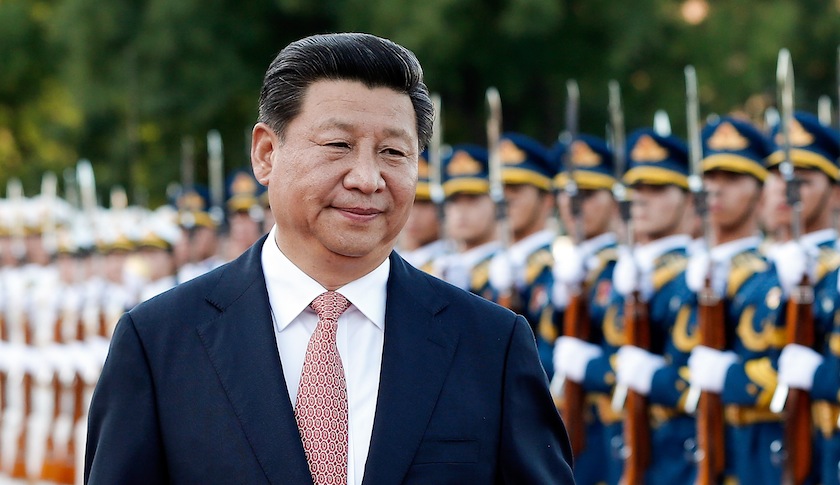
Chinese President Xi Jinping
Chinese President Xi JinpingPhotograph by Lintao Zhang—Getty Images

The recent turmoil in global financial markets triggered by China’s economic slowdown raises an uncomfortable question about the quality of the nation’s economic leadership. The myth of Beijing’s infallible leadership has deflated in the wake of China’s stock market collapse and economic slowdown.

To many Western executives sick and tired of political gridlock at home, China may look like a land of economic dynamism led by sophisticated, capable, and far-sighted policy-makers. Picked for their technocratic skills, real-world experience, and demonstrated excellence, Chinese economic policy-makers, not entrepreneurs, have been credited with the “Chinese economic miracle.”

With the unraveling of the “miracle,” we now know better. It is true that, since the end of the Mao era, China has been blessed with several outstanding economic policy-makers, such as Zhao Ziyang in the 1980s and Zhu Rongji in the late 1990s, reformers who pushed through difficult changes that laid the foundations for the nation’s economic take-off. However, like most family businesses, the Chinese Communist Party cannot escape the curse of leadership decline.

Outside observers often overlook the fact that the most successful officials inside the Chinese system tend to be those with powerful patrons to whom they demonstrate absolute loyalty. Those who are truly capable may land important executive positions, but only because they are deemed genuinely indispensable by the regime. Unfortunately, they are a minority. As a result, over time, the regime is now overpopulated with savvy careerists and has a shortage of top-notch economic policy-makers.

To make matters worse, in the Chinese system, careerists who have reached the top due to the support of their patrons politically outrank the small number of technocrats at the top and have the final say on key policy decisions.

Under normal circumstances, such a system produces chronic and cumulative inefficiency, but no major disasters. But when a crisis hits, the poor quality of economic leadership becomes all too clear—and the consequences can be dire.

This was the case during the global financial crisis of 2008. Ignoring the right lessons from the crisis, such as the perils of financial leveraging, Beijing responded with a hasty stimulus plan that, in retrospect, further distorted the economy and increased the likelihood and potential fallout of a debt crisis. Instead of funneling money into consumption, Beijing’s 2009 stimulus focused on investment and used bank loans to finance a gigantic real estate bubble.

This panicked response pattern repeated itself in early July this year when China’s stock market imploded. Instead of allowing market forces to squeeze out the speculative bubble, Beijing carelessly committed over 1.2 trillion yuan (nearly $190 billion) to prop up overvalued share prices. When China’s annual economic growth target of 7% appeared to be beyond reach, Beijing hit the panic button again, devaluing the yuan and sending global commodity and stock prices into a tailspin.

If the Chinese economy is now run by a gang that cannot shoot straight, the logical question is whether President Xi Jinping can do anything to repair the credibility of his government and regain the confidence of the business community. In the wake of Beijing’s failure to support the stock market bubble and fire up growth, rumors are swirling that Premier Li Keqiang, nominally the chief economic policy-maker, is in danger of losing his post.

However, it may not be fair to blame Li for the recent policy blunders even though he might be directly involved in the decision-making process. He inherited an economic mess—excessive debt, manufacturing overcapacity, and a full-blown real estate bubble—when he took office in early 2013. While lacking predecesor Zhu Rongji’s charisma and decisiveness, Li has been a diligent and unassuming team player. In any case, since Xi heads the central finance leading group, the top decision-making body that gives final approval to all important policies, responsibility for recent economic blunders should be shared among all senior leaders.

In any case, Xi has two practical problems even if he wants to make important personnel changes in his economic team. The first one is he cannot find a ready or better replacement for Li. Among senior leaders, only one person—Wang Qishan, the former mayor of Beijing—has the same caliber of leadership in economic management as Zhu Rongji (who was Wang’s mentor). Unfortunately, Wang is now leading Xi’s anti-corruption campaign and is unavailable. The second problem is that replacing Li before his term expires in March 2017 would be disruptive. This move would antagonize Li’s supporters and further exacerbate tensions inside the regime, which are already at their highest levels since the Tiananmen crackdown of 1989.

But the roots of poor economic leadership quality run much deeper. Even if Xi could replace his economic team, he could not solve China’s fundamental contradiction: as long as the Chinese Communist Party values loyalty over competence, sound economic policy will be the exception, not the rule.

Minxin Pei is the Tom and Margot Pritzker ’72 Professor of Government at Claremont McKenna College and a non-resident senior fellow of the German Marshall Fund of the United States

About the Author
By Minxin Pei
See full bioRight Arrow Button Icon

Latest in Leadership

Finance
Lorem ipsum dolor sit amet, consectetur adipiscing elit, sed do eiusmod tempor incididunt ut labore et dolore magna aliqua. Ut enim ad minim veniam
By Fortune Editors
October 20, 2025
Finance
Lorem ipsum dolor sit amet, consectetur adipiscing elit, sed do eiusmod tempor incididunt ut labore et dolore magna aliqua. Ut enim ad minim veniam
By Fortune Editors
October 20, 2025
Finance
Lorem ipsum dolor sit amet, consectetur adipiscing elit, sed do eiusmod tempor incididunt ut labore et dolore magna aliqua. Ut enim ad minim veniam
By Fortune Editors
October 20, 2025
Finance
Lorem ipsum dolor sit amet, consectetur adipiscing elit, sed do eiusmod tempor incididunt ut labore et dolore magna aliqua. Ut enim ad minim veniam
By Fortune Editors
October 20, 2025
Finance
Lorem ipsum dolor sit amet, consectetur adipiscing elit, sed do eiusmod tempor incididunt ut labore et dolore magna aliqua. Ut enim ad minim veniam
By Fortune Editors
October 20, 2025
Finance
Lorem ipsum dolor sit amet, consectetur adipiscing elit, sed do eiusmod tempor incididunt ut labore et dolore magna aliqua. Ut enim ad minim veniam
By Fortune Editors
October 20, 2025

Most Popular

Finance
Lorem ipsum dolor sit amet, consectetur adipiscing elit, sed do eiusmod tempor incididunt ut labore et dolore magna aliqua. Ut enim ad minim veniam
By Fortune Editors
October 20, 2025
Finance
Lorem ipsum dolor sit amet, consectetur adipiscing elit, sed do eiusmod tempor incididunt ut labore et dolore magna aliqua. Ut enim ad minim veniam
By Fortune Editors
October 20, 2025
Finance
Lorem ipsum dolor sit amet, consectetur adipiscing elit, sed do eiusmod tempor incididunt ut labore et dolore magna aliqua. Ut enim ad minim veniam
By Fortune Editors
October 20, 2025
Finance
Lorem ipsum dolor sit amet, consectetur adipiscing elit, sed do eiusmod tempor incididunt ut labore et dolore magna aliqua. Ut enim ad minim veniam
By Fortune Editors
October 20, 2025
Finance
Lorem ipsum dolor sit amet, consectetur adipiscing elit, sed do eiusmod tempor incididunt ut labore et dolore magna aliqua. Ut enim ad minim veniam
By Fortune Editors
October 20, 2025
Finance
Lorem ipsum dolor sit amet, consectetur adipiscing elit, sed do eiusmod tempor incididunt ut labore et dolore magna aliqua. Ut enim ad minim veniam
By Fortune Editors
October 20, 2025
Fortune Secondary Logo
Rankings
  • 100 Best Companies
  • Fortune 500
  • Global 500
  • Fortune 500 Europe
  • Most Powerful Women
  • Future 50
  • World’s Most Admired Companies
  • See All Rankings
Sections
  • Finance
  • Fortune Crypto
  • Features
  • Leadership
  • Health
  • Commentary
  • Success
  • Retail
  • Mpw
  • Tech
  • Lifestyle
  • CEO Initiative
  • Asia
  • Politics
  • Conferences
  • Europe
  • Newsletters
  • Personal Finance
  • Environment
  • Magazine
  • Education
Customer Support
  • Frequently Asked Questions
  • Customer Service Portal
  • Privacy Policy
  • Terms Of Use
  • Single Issues For Purchase
  • International Print
Commercial Services
  • Advertising
  • Fortune Brand Studio
  • Fortune Analytics
  • Fortune Conferences
  • Business Development
  • Group Subscriptions
About Us
  • About Us
  • Editorial Calendar
  • Press Center
  • Work At Fortune
  • Diversity And Inclusion
  • Terms And Conditions
  • Site Map
  • About Us
  • Editorial Calendar
  • Press Center
  • Work At Fortune
  • Diversity And Inclusion
  • Terms And Conditions
  • Site Map
  • Facebook icon
  • Twitter icon
  • LinkedIn icon
  • Instagram icon
  • Pinterest icon

Latest in Leadership

AIAI agents
OpenAI cofounder says he hasn’t written a line of code in months and is in a ‘state of psychosis’ trying to figure out what’s possible
By Jason MaMarch 21, 2026
5 hours ago
david
CommentaryScience
The one skill that separates people who get smarter with AI from everyone else
By David Rock and Chris WellerMarch 21, 2026
10 hours ago
Former Berkshire Hathaway CEO Warren Buffett
SuccessCareers
Dairy Queen CEO says he learned from Warren Buffett being the ‘smartest person in the world’ isn’t the most important attribute for success
By Emma BurleighMarch 21, 2026
11 hours ago
SuccessFour day work week
Covid gave us hybrid work. The Iran War might give us a four-day week—and this time, experts say it could stick
By Orianna Rosa RoyleMarch 21, 2026
13 hours ago
gen z
CommentaryCareers
The entry-level job market is the worst it’s been in 37 years. Stop blaming Gen Z
By Janelle Jones and Nia LawMarch 21, 2026
14 hours ago
A woman looks frustrated a computer
AIWomen
Women are avoiding the very technology that threatens them most, as expert warns of a ‘two-tiered AI economy’ approaching
By Jacqueline MunisMarch 21, 2026
14 hours ago

© 2026 Fortune Media IP Limited. All Rights Reserved. Use of this site constitutes acceptance of our Terms of Use and Privacy Policy | CA Notice at Collection and Privacy Notice | Do Not Sell/Share My Personal Information
FORTUNE is a trademark of Fortune Media IP Limited, registered in the U.S. and other countries. FORTUNE may receive compensation for some links to products and services on this website. Offers may be subject to change without notice.