• Home
  • Latest
  • Fortune 500
  • Finance
  • Tech
  • Leadership
  • Lifestyle
  • Rankings
  • Multimedia

Trendingnow

1

Mark Cuban says he has the solution to growing income inequality, and it's to reward every employee—from CEO to janitor—with company stock

2

OpenAI says its AI models secretly broke out of a secure test environment and hacked into AI company Hugging Face in order to cheat on an evaluation

3

Mathematicians grapple with a ‘very rapid and very unsettling change’ as AI cracks yet another century-old problem

1

Mark Cuban says he has the solution to growing income inequality, and it's to reward every employee—from CEO to janitor—with company stock

2

OpenAI says its AI models secretly broke out of a secure test environment and hacked into AI company Hugging Face in order to cheat on an evaluation

3

Mathematicians grapple with a ‘very rapid and very unsettling change’ as AI cracks yet another century-old problem
Oil

The U.S. is not opening the tap on crude oil exports

By
Cyrus Sanati
Cyrus Sanati
Down Arrow Button Icon
By
Cyrus Sanati
Cyrus Sanati
Down Arrow Button Icon
August 17, 2015, 2:12 PM ET
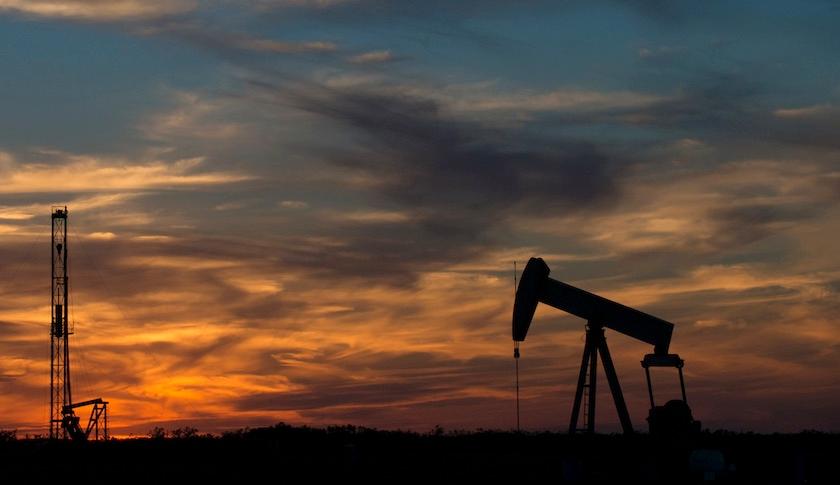
Oil rigging equipment in a field outside of Sweetwater, Texas
Oil rigging equipment in a field outside of Sweetwater, TexasPhotograph by Cooper Neill — Reuters
Add Fortune on Google for similar content.

The U.S. ban on crude oil exports isn’t going anywhere—at least not anytime soon. Reports late Friday that the Commerce Department was close to sealing a deal, which would see U.S. crude oil shipped to Mexico, have been exaggerated in terms of its significance as it relates to the 40-year-old oil export ban. In reality, the deal will probably have little to no impact on the overall pricing or production of U.S. crude, nor does it indicate that the U.S. is close to lifting the export ban.

As the global oil markets continued to weaken on Friday, West Texas Intermediate crude (WTI), the benchmark for U.S. crude oil production, posted a gain, with the September contract settling up a modest $0.27 to $42.50 per barrel. While the move was most likely a result of routine book-squaring ahead of the weekend, headlines late in the afternoon were saying something else.

A scattering of reports around lunchtime Friday said the government was close to permitting U.S. crude oil to be exported to Mexico, in defiance to the U.S. crude oil export ban. Some saw the government’s move, which hasn’t been officially confirmed, as a possible “first step” in the eventual overturn of the ban. If true, this would mean oil could be freely exported out of the U.S. for the first time in years, bringing U.S. crude prices more in line with Brent crude, the global benchmark for oil, which usually trades at a premium to WTI.


While many oil companies would love this to be the case, the reality of the situation is far less dramatic. The agreement, as Fortune understands it, would allow Pemex, Mexico’s state-run oil company, to swap its heavier and cheaper crude for lighter and more expensive U.S. crude. The reason Mexico would partake in such a swap would be to boost efficiency in its refineries, which, unlike many U.S. facilities, are unable to process heavier crude grades into refined products, such as gasoline or jet fuel.

So, to be clear, there doesn’t seem to be a net increase or decrease in U.S. oil supply here—just a swap in the grade of the oil. The exact amount to be swapped isn’t known yet, but it will most likely be 100,000 barrels a day, which is the amount the Mexican government was seeking when it first approached the U.S. in doing a deal earlier this year.

While that seems like a lot of oil, it really isn’t when you compare it to the nearly 81 million barrels of oil refined across the globe every single day. Indeed, it isn’t even a lot compared to the 18 million barrels of oil that U.S. refiners process daily, either. As such, it is highly unlikely that this swap will have any meaningful impact on the discount between WTI and Brent.

So what’s the point of all of this, and who benefits? Based on the size and scope of the scheme, it looks like it is designed to help refiners boost their margins, especially Mexican refiners, which are terribly inefficient. Mexican refineries consume about 42% more energy and suffer 12 times the number of non-scheduled work stoppages compared with international averages, a Mexican official told Reuters. They are so inefficient because the government has been using Pemex, the state-owned oil company, which owns all of Mexico’s six refineries, as a piggybank, leaving little extra cash for the company to improve its operations.

[fortune-brightcove videoid=4390416509001]


Complicating matters is that Mexico produces heavier and sourer crudes than it did in the past. These types of crude usually sell at a discount to international benchmarks as they are harder and more expensive to refine, while yielding less valuable products. So while Mexico is a net exporter of crude, it is a net importer of refined products. Mexico’s old refineries run at a pathetic 75% of capacity as they are mostly designed to process lighter and sweeter crudes.

This stands in stark contrast to the U.S. market. High oil prices over the years have induced U.S. refiners along the Gulf Coast to upgrade their facilities to be able to process heavy and sour crudes more efficiently. This enabled U.S. refiners to use cheaper crude to boost their margins. Were these saving passed on to the customer? A bit, but not really. Most of it is pocketed by the refiners who then use it to upgrade other facilities to make them cleaner and more efficient.

The shale oil boom in the U.S. has seen a major increase in crude oil production—much of it the light and sweet kind. But oil companies aren’t able to get a big premium on that oil as refiners can run cheaper oil from Mexico and Canada through their units and capture bigger margins. So this swap seems designed to ease this imbalance a bit, while keeping the oil within the NAFTA family.

Indeed, the export ban never applied to Canada, so it wasn’t fair that it applied to Mexico as well. Canada was originally exempt from the ban because at the time it went into effect, there were many Canadian refiners that were dependent on U.S. oil. Since much of the products being made in those Canadian refineries were set to flow back into the U.S. anyway, it made little sense banning those exports.

The situation to the south of the border is similar, but reversed: U.S. refiners depend on cheaper Mexican crude to make products, of which a lot is exported back into Mexico in the form of gasoline and diesel. The oil ban only bars the sale of U.S. crude to other countries, not refined products. Believe it or not, U.S. exports of non-crude petroleum products averaged a record 3.8 million barrels per day in 2014. Around 500,000 of those barrels were gasoline exported to Mexico. This is big business for U.S. refiners. As the U.S. slowly moves away from gasoline, its refiners will grow more dependent on foreign customers.

Commerce’s Bureau of Industry and Security, the department supervising the ban, has denied all other export applications—and it doesn’t look like it is going to budge on any of them. While the lifting of the export ban in its entirety would be a coup for some U.S. oil producers, as the local crude benchmark would rise to match international prices, it would be bad for pretty much everyone else. Refiners would see their margins take a hit because of the increase in crude and would thus try to pass on as much of that extra cost as possible on to its customers at the pump. Higher gas prices are never a good thing, especially in an election year.

This change should be seen more as a gesture of goodwill, which, may yield far more lucrative dividends down the road for Big Oil. You see, Mexico recently reopened its energy sector to international investment for the first time in decades. Many U.S. oil and engineering companies could end up with contracts that will boost Mexican oil production and its refining capacity, which could mean big bucks for all. Helping Pemex out with its refining issues wouldn’t necessarily help the U.S. in the coming scramble for Mexico’s oil riches—but it certainly wouldn’t hurt, either.

About the Author
By Cyrus Sanati
See full bioRight Arrow Button Icon
Add Fortune on Google for similar content.

Latest in

Finance
Lorem ipsum dolor sit amet, consectetur adipiscing elit, sed do eiusmod tempor incididunt ut labore et dolore magna aliqua. Ut enim ad minim veniam
By Fortune Editors
October 20, 2025
Finance
Lorem ipsum dolor sit amet, consectetur adipiscing elit, sed do eiusmod tempor incididunt ut labore et dolore magna aliqua. Ut enim ad minim veniam
By Fortune Editors
October 20, 2025
Finance
Lorem ipsum dolor sit amet, consectetur adipiscing elit, sed do eiusmod tempor incididunt ut labore et dolore magna aliqua. Ut enim ad minim veniam
By Fortune Editors
October 20, 2025
Finance
Lorem ipsum dolor sit amet, consectetur adipiscing elit, sed do eiusmod tempor incididunt ut labore et dolore magna aliqua. Ut enim ad minim veniam
By Fortune Editors
October 20, 2025
Finance
Lorem ipsum dolor sit amet, consectetur adipiscing elit, sed do eiusmod tempor incididunt ut labore et dolore magna aliqua. Ut enim ad minim veniam
By Fortune Editors
October 20, 2025
Finance
Lorem ipsum dolor sit amet, consectetur adipiscing elit, sed do eiusmod tempor incididunt ut labore et dolore magna aliqua. Ut enim ad minim veniam
By Fortune Editors
October 20, 2025

Most Popular

Finance
Lorem ipsum dolor sit amet, consectetur adipiscing elit, sed do eiusmod tempor incididunt ut labore et dolore magna aliqua. Ut enim ad minim veniam
By Fortune Editors
October 20, 2025
Finance
Lorem ipsum dolor sit amet, consectetur adipiscing elit, sed do eiusmod tempor incididunt ut labore et dolore magna aliqua. Ut enim ad minim veniam
By Fortune Editors
October 20, 2025
Finance
Lorem ipsum dolor sit amet, consectetur adipiscing elit, sed do eiusmod tempor incididunt ut labore et dolore magna aliqua. Ut enim ad minim veniam
By Fortune Editors
October 20, 2025
Finance
Lorem ipsum dolor sit amet, consectetur adipiscing elit, sed do eiusmod tempor incididunt ut labore et dolore magna aliqua. Ut enim ad minim veniam
By Fortune Editors
October 20, 2025
Finance
Lorem ipsum dolor sit amet, consectetur adipiscing elit, sed do eiusmod tempor incididunt ut labore et dolore magna aliqua. Ut enim ad minim veniam
By Fortune Editors
October 20, 2025
Finance
Lorem ipsum dolor sit amet, consectetur adipiscing elit, sed do eiusmod tempor incididunt ut labore et dolore magna aliqua. Ut enim ad minim veniam
By Fortune Editors
October 20, 2025
Fortune Secondary Logo
Rankings
  • 100 Best Companies
  • Fortune 500
  • Global 500
  • Fortune 500 Europe
  • Most Powerful Women
  • World's Most Admired Companies
  • See All Rankings
  • Lists Calendar
Sections
  • Finance
  • Fortune Crypto
  • Features
  • Leadership
  • Health
  • Commentary
  • Success
  • Retail
  • Mpw
  • Tech
  • Lifestyle
  • CEO Initiative
  • Asia
  • Politics
  • Conferences
  • Europe
  • Newsletters
  • Personal Finance
  • Environment
  • Magazine
  • Education
Customer Support
  • Frequently Asked Questions
  • Customer Service Portal
  • Privacy Policy
  • Terms Of Use
  • Single Issues For Purchase
  • International Print
Commercial Services
  • Advertising
  • Fortune Brand Studio
  • Fortune Analytics
  • Fortune Conferences
  • Business Development
  • Group Subscriptions
About Us
  • About Us
  • Press Center
  • Work At Fortune
  • Terms And Conditions
  • Site Map
  • About Us
  • Press Center
  • Work At Fortune
  • Terms And Conditions
  • Site Map
  • Facebook icon
  • Twitter icon
  • LinkedIn icon
  • Instagram icon
  • TikTok icon
  • YouTube icon

Latest in

Current price of gold as of July 22, 2026
Personal Financegold prices
Current price of gold as of July 22, 2026
By Danny BakstJuly 22, 2026
1 hour ago
t
CommentaryTariffs
Trump’s third tariff tantrum piles more dizzying distractions on top of ever-spiraling failures
By Jeffrey Sonnenfeld and Steven TianJuly 22, 2026
1 hour ago
orson
CommentaryOpenAI
We got California to intervene about OpenAI’s corporate switch from nonprofit status. It’s time for the SEC to come to the table
By Orson Aguilar and Catherine BracyJuly 22, 2026
2 hours ago
A woman observes stock trends on her smartphone while a computer screen displays financial graphs.
NewslettersCFO Daily
Beyond SpaceX: Why great IPOs depend on more than first-day demand
By Sheryl EstradaJuly 22, 2026
2 hours ago
Arrakis cofounder and CEO Rafael Quintanilla.
Startups & VentureVenture Capital
Exclusive: Arrakis, betting AI’s biggest payoff is in industrial sectors not office work, emerges from stealth with $38 million in venture funding
By Jeremy KahnJuly 22, 2026
2 hours ago
ls
Commentarybooks
Confessions of an award-winning AI memoirist — the ‘slop’ debate isn’t really about good writing, and you know it
By Luke StoffelJuly 22, 2026
3 hours ago

Most Popular

Mark Cuban says he has the solution to growing income inequality, and it's to reward every employee—from CEO to janitor—with company stock
Success
Mark Cuban says he has the solution to growing income inequality, and it's to reward every employee—from CEO to janitor—with company stock
By Sasha RogelbergJuly 20, 2026
2 days ago
OpenAI says its AI models secretly broke out of a secure test environment and hacked into AI company Hugging Face in order to cheat on an evaluation
Cybersecurity
OpenAI says its AI models secretly broke out of a secure test environment and hacked into AI company Hugging Face in order to cheat on an evaluation
By Jeremy Kahn and Emily ForliniJuly 21, 2026
19 hours ago
Mathematicians grapple with a ‘very rapid and very unsettling change’ as AI cracks yet another century-old problem
AI
Mathematicians grapple with a ‘very rapid and very unsettling change’ as AI cracks yet another century-old problem
By Eva RoytburgJuly 21, 2026
22 hours ago
‘I want to die broke’: Billionaire philanthropist Denny Sanford dies after giving away $4 billion
Success
‘I want to die broke’: Billionaire philanthropist Denny Sanford dies after giving away $4 billion
By Sydney LakeJuly 20, 2026
2 days ago
Despite a $156 million contract, Knicks star Jalen Brunson still calls his parents for financial advice any time he makes a big purchase
Success
Despite a $156 million contract, Knicks star Jalen Brunson still calls his parents for financial advice any time he makes a big purchase
By Emma BurleighJuly 21, 2026
23 hours ago
'Dr. Doom' Nouriel Roubini says we're headed for universal basic income or 'some form of socialism' as AI revolutionizes work—He calls that optimistic
AI
'Dr. Doom' Nouriel Roubini says we're headed for universal basic income or 'some form of socialism' as AI revolutionizes work—He calls that optimistic
By Jason MaJuly 18, 2026
4 days ago

© 2026 Fortune Media IP Limited. All Rights Reserved. Use of this site constitutes acceptance of our Terms of Use and Privacy Policy | CA Notice at Collection and Privacy Notice | Do Not Sell/Share My Personal Information
FORTUNE is a trademark of Fortune Media IP Limited, registered in the U.S. and other countries. FORTUNE may receive compensation for some links to products and services on this website. Offers may be subject to change without notice.