• Home
  • News
  • Fortune 500
  • Tech
  • Finance
  • Leadership
  • Lifestyle
  • Rankings
  • Multimedia
Real Estateaffordability

Why should you only spend 30% of your income on housing?

By
Chris Matthews
Chris Matthews
Down Arrow Button Icon
By
Chris Matthews
Chris Matthews
Down Arrow Button Icon
August 4, 2015, 9:15 AM ET
Vacancy Rate For U.S. Apartments Reaches Highest Rate In 20 Years
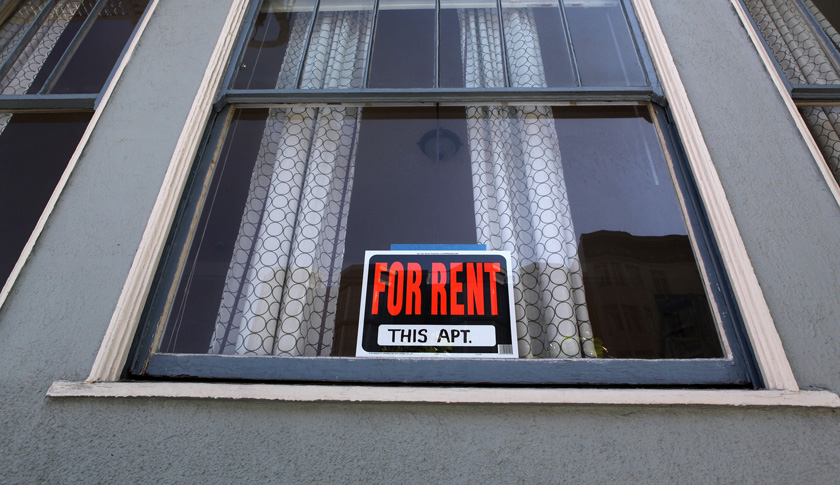
SAN FRANCISCO - JULY 08: A sign advertising an apartment for rent is displayed in a window July 8, 2009 in San Francisco, California. As the economy continues to falter, vacancy rates for U.S. apartments have spiked to a twenty two year high of 7.5 percent, just short of the record high of 7.8 percent set in 1986. (Photo by Justin Sullivan/Getty Images)Photograph by Justin Sullivan — Getty Images

Anyone who has looked for an apartment to rent or a home to buy has probably heard the rule of thumb that you shouldn’t spend more than 30% of your income on housing.

This seems like a reasonable benchmark. After all, you wouldn’t want to spend so much money on housing that you are left with nothing for the rest of life’s necessities. The problem is, many Americans aren’t abiding by this rule of thumb, not by a long shot. In places like New York City, for instance, the average family spends 40% of its income on housing, while a recent report by Harvard University’s Joint Center for Housing Studies shows that the share of renters who are “cost-burdened” rose from 40% to 46% from 2003 to 2013.

The data underscore the fact that in an America with stagnant incomes and a convalescent home-building industry, housing is becoming more expensive. But how expensive is too expensive? And is the 30%-of-income benchmark useful?

The short answer is no. Here’s why:

1. The standard is an arbitrary holdover from the New Deal era: The United States National Housing Act of 1937 marked the beginning of federal public housing subsidies as we know them today. The law set income limits, where recipients were eligible for housing subsidies only if their income wasn’t more than five or six times the amount of rent they owed each month. According to the Census Bureau:

By 1969, the escalation of rents by public housing authorities struggling to meet spiraling operation and maintenance costs nearly nullified the purpose of the public housing program established in 1937 to serve the nation’s neediest. To reverse this, the Brooke Amendment (1969) to the 1968 Housing and Urban Development Act, established the rent threshold of 25 percent of family income; that is a family would be required to pay one-quarter of its income in rent. By 1981, this threshold had been raised to 30 percent, which today remains the rent standard for most rental housing programs.

In other words, the idea stems from a policy crafted 80 years ago, and it has fluctuated based on the vagaries of available public funding. While government programs might need arbitrary standards to decide who is eligible for welfare, it doesn’t make sense to then use that standard to decide whether or not a particular individual is spending too much on housing, or whether or not housing in general is too expensive.

2. Housing affordability should take other costs into account: David Bieri, an economist at the University of Michigan, recently published a paper analyzing housing affordability measures, arguing that an accurate measure would have to take into account the quality of housing, including what benefits residents gain from living where they live. For instance, the average New York family that spends 40% of its income on housing is also deriving benefits, like superior public transportation, from living in the city. Quality public education is another good that also drives up housing prices, and it might make perfect sense for a family to spend more money on a home if it means they can then spend less on education.

3. We should expect housing to take up an increasingly large part of our incomes: As the economy grows, the cost of many goods are going to fall. For instance, in 1936 the average family spent about one-third of its income on food, compared with roughly 13% in 2003. A person only needs to consume so many calories per day, and as food production becomes more efficient, we should expect to spend a smaller portion of our incomes on it.

But some goods, like housing, won’t follow this trend. That’s because much of the cost of housing is made up of the land on which the housing sits, and the cost of land is largely the result of its proximity to economically productive areas. This makes housing somewhat similar to healthcare and education, where the main driver in the good’s cost (skilled labor in the cases of healthcare and education) won’t be made much cheaper via technological advances. So, we shouldn’t expect these goods to account for the same portion of an individual’s budget as time goes on.


About the Author
By Chris Matthews
See full bioRight Arrow Button Icon

Latest in Real Estate

Zohran Mamdani, in front of a brick building, smiles as he holds a press conference.
Real EstateHousing
‘There is no Mamdani effect’: Manhattan luxury home sales surge after mayoral election, undercutting predictions of doom and escape to Florida
By Sasha RogelbergDecember 4, 2025
7 hours ago
Personal FinanceReal Estate
Current ARM mortgage rates report for Dec. 4, 2025
By Glen Luke FlanaganDecember 4, 2025
19 hours ago
Personal Financemortgages
Current mortgage rates report for Dec. 4, 2025: Rates hold steady
By Glen Luke FlanaganDecember 4, 2025
19 hours ago
Personal FinanceReal Estate
Current refi mortgage rates report for Dec. 4, 2025
By Glen Luke FlanaganDecember 4, 2025
19 hours ago
Personal Financemortgages
Home equity loan vs. home equity line of credit (HELOC)
By Joseph HostetlerDecember 3, 2025
1 day ago
Tony Cuccio posing in a chair
C-SuiteMillionaires
Tony Cuccio started with $200 selling beauty products on Venice Beach. Then he brought gel nails to the masses—and forged a $2 billion empire
By Dave SmithDecember 3, 2025
1 day ago

Most Popular

placeholder alt text
Economy
Two months into the new fiscal year and the U.S. government is already spending more than $10 billion a week servicing national debt
By Eleanor PringleDecember 4, 2025
15 hours ago
placeholder alt text
Success
‘Godfather of AI’ says Bill Gates and Elon Musk are right about the future of work—but he predicts mass unemployment is on its way
By Preston ForeDecember 4, 2025
10 hours ago
placeholder alt text
North America
Jeff Bezos and Lauren Sánchez Bezos commit $102.5 million to organizations combating homelessness across the U.S.: ‘This is just the beginning’
By Sydney LakeDecember 2, 2025
2 days ago
placeholder alt text
Health
Bill Gates decries ‘significant reversal in child deaths’ as nearly 5 million kids will die before they turn 5 this year
By Nick LichtenbergDecember 4, 2025
22 hours ago
placeholder alt text
Economy
Ford workers told their CEO 'none of the young people want to work here.' So Jim Farley took a page out of the founder's playbook
By Sasha RogelbergNovember 28, 2025
6 days ago
placeholder alt text
Success
Nearly 4 million new manufacturing jobs are coming to America as boomers retire—but it's the one trade job Gen Z doesn't want
By Emma BurleighDecember 4, 2025
11 hours ago
Rankings
  • 100 Best Companies
  • Fortune 500
  • Global 500
  • Fortune 500 Europe
  • Most Powerful Women
  • Future 50
  • World’s Most Admired Companies
  • See All Rankings
Sections
  • Finance
  • Leadership
  • Success
  • Tech
  • Asia
  • Europe
  • Environment
  • Fortune Crypto
  • Health
  • Retail
  • Lifestyle
  • Politics
  • Newsletters
  • Magazine
  • Features
  • Commentary
  • Mpw
  • CEO Initiative
  • Conferences
  • Personal Finance
  • Education
Customer Support
  • Frequently Asked Questions
  • Customer Service Portal
  • Privacy Policy
  • Terms Of Use
  • Single Issues For Purchase
  • International Print
Commercial Services
  • Advertising
  • Fortune Brand Studio
  • Fortune Analytics
  • Fortune Conferences
  • Business Development
About Us
  • About Us
  • Editorial Calendar
  • Press Center
  • Work At Fortune
  • Diversity And Inclusion
  • Terms And Conditions
  • Site Map

© 2025 Fortune Media IP Limited. All Rights Reserved. Use of this site constitutes acceptance of our Terms of Use and Privacy Policy | CA Notice at Collection and Privacy Notice | Do Not Sell/Share My Personal Information
FORTUNE is a trademark of Fortune Media IP Limited, registered in the U.S. and other countries. FORTUNE may receive compensation for some links to products and services on this website. Offers may be subject to change without notice.