• Home
  • Latest
  • Fortune 500
  • Finance
  • Tech
  • Leadership
  • Lifestyle
  • Rankings
  • Multimedia
TechSunrun

What Sunrun’s IPO says about the solar industry and Silicon Valley

By
Katie Fehrenbacher
Katie Fehrenbacher
Down Arrow Button Icon
By
Katie Fehrenbacher
Katie Fehrenbacher
Down Arrow Button Icon
June 26, 2015, 5:00 AM ET
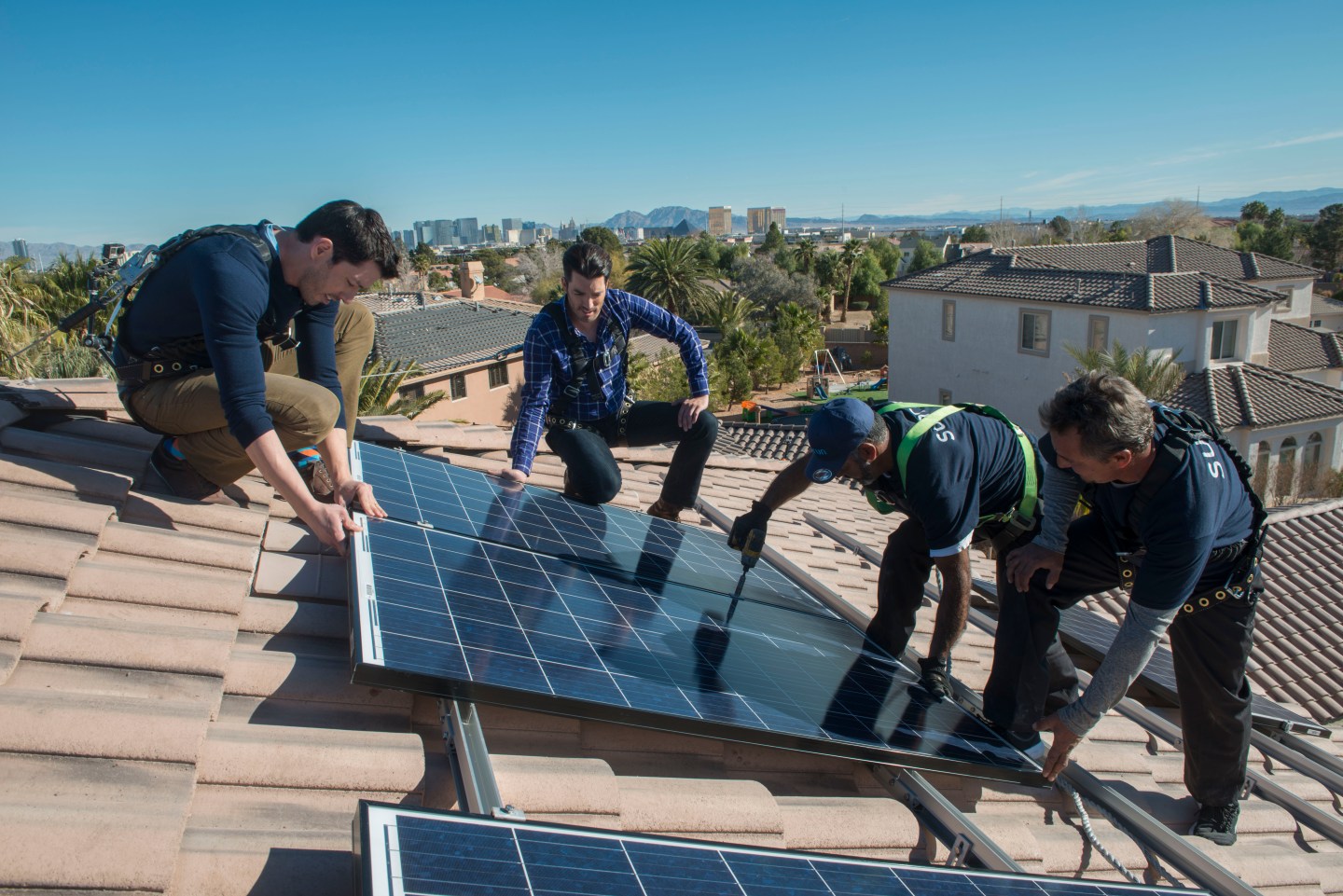
Drew Scott, Jonathan Scott
In this handout photograph provided by Sunrun, real estate experts Drew Scott, left, and Jonathan Scott, center, stars of the HGTV show The Property Brothers and solar enthusiasts, help install Sunrun solar panels, Saturday, Jan. 24, 2015, on their newly renovated "smart home" in Las Vegas. (AP Photo/John Harrington, Sunrun)Photograph by John Harrington — AP

Eight years ago, entrepreneurs Ed Fenster and Lynn Jurich founded residential solar installer Sunrun in San Francisco with backing by some of the most well known firms in Silicon Valley. Fast forward to Thursday, and the company revealed plans to raise $100 million (or probably more) by going public on Nasdaq.

Over the course of the past eight years, the solar industry, and the venture capitalists of Silicon Valley, have faced some dramatic changes. Sunrun’s IPO plans, and its accompanying financial documents, highlight both the evolution of an early solar startup, as well as the increasingly competitive, cash-hungry, and maturing solar market that the company must compete in.

Then

But let’s start at the beginning. In 2007 solar panels were relatively expensive, and the cost to install them on roof tops was still pretty high. The average price to install solar panels (blended across type of project) in 2007 was around $8 per watt, according to the Solar Energy Industry Association. With the solar industry in its infancy, only 160 megawatts of solar panels were installed that year across the U.S.

Fast track to today, and a whopping 8,100 megawatts of solar panels are expected to be installed in the U.S. by the end of the year (1,000 megawatts is the equivalent to a large gas, coal or nuclear power plant). Last year about a third of all the new electricity generation that came online in the U.S. was from solar, and the average price to install solar panels was a little over $2.50 per watt.

One of the reasons solar became so much cheaper was because of the simple business model innovation. Sunrun was one of the early players involved in this trend.

In the nascent days of solar, it was far too expensive for the average home owner to buy the solar panels upfront because it could cost tens of thousands of dollars. A much easier sell was for companies to install the solar panels for free or little cost, and then over the course of many years, charge a monthly fee based on the energy produced. Companies like SunEdison (created by Jigar Shah), SolarCity, Sungevity, Vivint Solar, Clean Power Finance and of course Sunrun led this revolutionary business model.

Sunrun Inc. President Lynn Jurich
Lynn Jurich, president and co-founder of SunRun Inc., speaks during a television interview San Francisco, California, U.S., on Dec. 21, 2011. Photographer: David Paul Morris/Bloomberg via Getty ImagesPhotograph by David Paul Morris — Bloomberg via Getty Images
Photograph by David Paul Morris — Bloomberg via Getty Images

Over the course of the past eight years, Sunrun has used this strategy to attract 80,000 solar customers (at least half are in California). The company lays claim to having the “second largest fleet of residential solar solar energy systems” in the U.S.

Back in 2007, Silicon Valley and tech investing was also a very different place. This was the year that Kleiner Perkins investor John Doerr gave a teary-eyed TED talk about green technology. Fellow venture capitalists at rival firms made their own bets on cleantech startups.

Sunrun was one of those. Over the course of its lifetime Sunrun raised $265 million in funding from investors including Sequoia Capital, Foundation Capital, Accel Partners and Madrone Partners, a firm affiliated with the Walmart family.

Sequoia Capital, one of the top investment firms, had made a big name for itself years ago by getting in early on tech companies like Google, Apple, and Cisco. Unlike some of its peers, Sequoia put comparatively little money into the cleantech wave. That turned out to be a pretty good call. Many fellow venture capitalists ended up losing big after capital-intensive technologies like next-gen solar manufacturing, electric cars, and biofuels failed to pan out.

Sunrun investor Madrone Capital learned the hard way by backing Solyndra, the now defunct solar maker, early on and lost millions of dollars. Most venture capitalists stopped funding cleantech.

A SolarCity Installation As Earnings Figures Are Released
A SolarCity employee installs a solar panel on the roof of a home in Los Angeles in May 2014.Photograph by Patrick T. Fallon — Bloomberg/Getty Images
Photograph by Patrick T. Fallon — Bloomberg/Getty Images

But it turns out that backing “cleantech” in general was not an entirely bad deal for VCs. It was just the type of companies they invested in.

Sunrun and its solar service provider peers have turned out to be some of the better investments of that era. SolarCity, which was backed by entrepreneur Elon Musk, went public in 2012. SunEdison (founded in 2003) was sold to semiconductor company MEMC Electronic Materials in 2009 for $200 million. Meanwhile, Vivint Solar went public late last year.

In fact these solar financing and developer companies proved to have such untapped growth potential that over the years executives of GE and NRG Energy have lamented how they missed out on the earliest wave of this solar service market. Since then, NRG jumped in and now has a growing home solar business.

It turns out that for the last several years, investing in what energy geeks call the “downstream” part of the solar sector — the installation, financing, and marketing — has been highly lucrative, at least in terms of revenue. It was just investing in the “upstream” part of the market — the manufacturing and developing new solar cells and panels — that was difficult.

Now

But in 2015 the solar industry itself has evolved to become more mature and competitive. You can see that in Sunrun’s IPO filing. On one hand the industry’s top companies are getting much bigger. Sunrun’s revenues more than tripled to $198.6 million in 2014, up from $54.7 million in 2013.

But the solar service business has also become a cash-hungry business. Sunrun posted a loss of $162.6 million in 2014, up from a $68.6 million loss in 2013.

Companies are now forced to compete through marketing and sales. Big companies like NRG, which entered the market later on, can use its sizable brand, industry partnerships and distribution to its advantage.

Sunrun revealed in its filing that it has debt and lease payment obligations of $248.97 million. The company has accumulated deficit of $76.8 million as of the end of March. Sunrun is also borrowing heavily. As of early April, the company had drawn down $80 million from its credit lines, with another $107 million available to tap into.

Sun also just has about $105.5 million cash on hand. As Dan Primack explained it, this means with its current burn rate of $52 million in the first quarter, the company either needs to go public by the end of the third quarter or find some other source of financing.
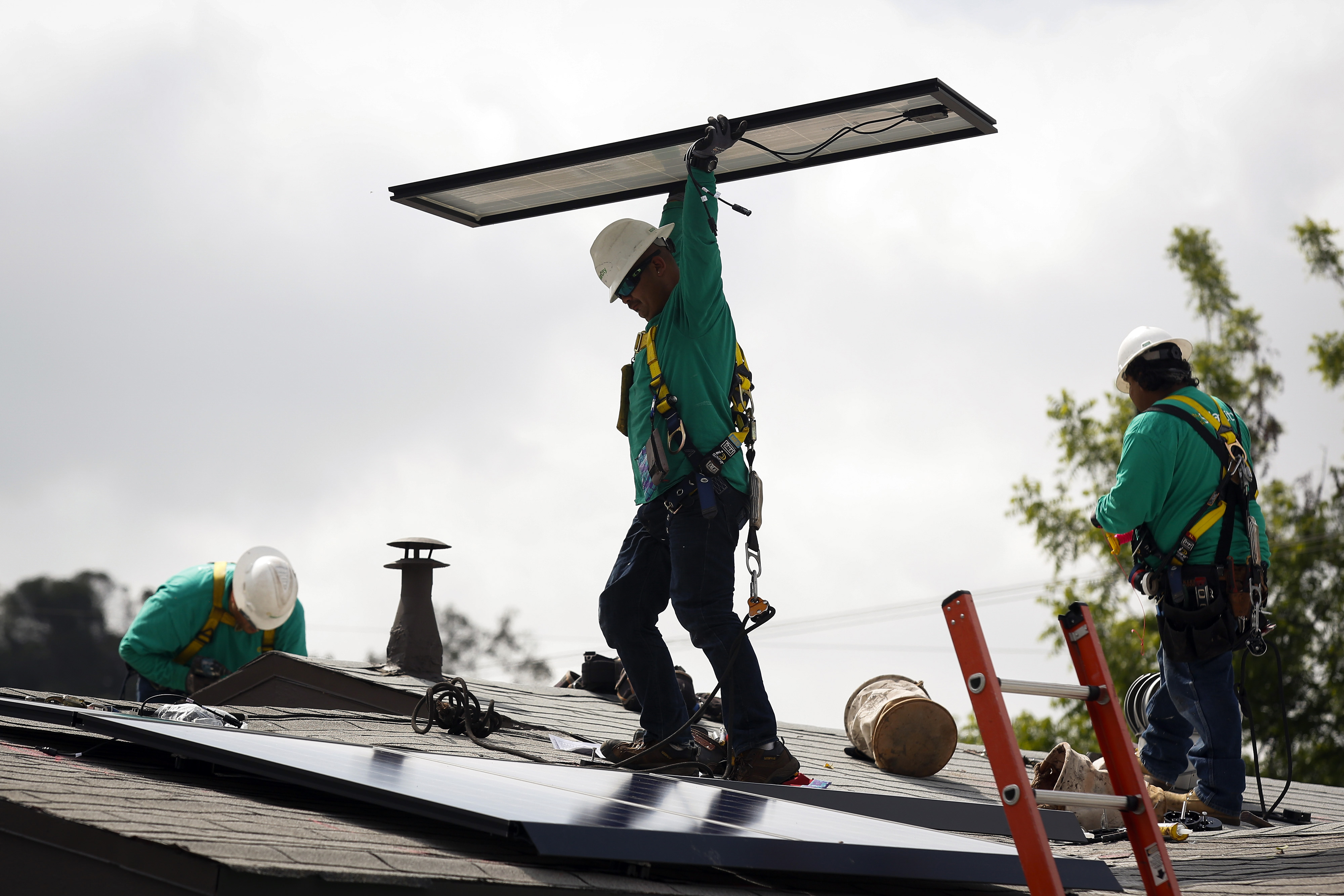
A SolarCity Installation As Earnings Figures Are Released
A SolarCity employee carries a solar panel being installed on the roof of a home in the Eagle Rock neighborhood of Los Angeles, Calif. in May 2014.Patrick T. Fallon/Bloomberg—Getty Images
Photograph by Patrick T. Fallon — Bloomberg/Getty Images

In this highly competitive market, the solar installers have been acquiring companies that can market solar, or help sales people with finding valuable leads. The companies have also been trying to move more “upstream” in the market, or basically control some of the manufacturing or hardware.

SolarCity made a series of marketing and hardware focused acquisitions over the years and is now even building its own solar cell manufacturing plant in New York. Last year Sunrun acquired Mainstream Energy Corporation, and its business that supplies solar components, and this year bought startup Clean Energy Experts, a company that delivers leads to sales people trying to sell solar systems.

The core issue with the solar installation business in its mature years is that companies must be big and have a lot of customers to make decent money. Sunrun’s primary source of cash is from payments by its solar customers. As the company put it in one of its risk statements:

Our business may not continue to generate cash flow from operations in the future sufficient to service our debt and make necessary capital expenditures to operate our business. If we are unable to generate such cash flow, we may be required to adopt one or more alternatives, such as selling assets, restructuring debt or obtaining additional equity capital on terms that may be onerous or highly dilutive.

Yes, that’s a standard IPO risk notification, but it’s also math.

The other issue facing solar installers this year is subsidies. As the solar sector has matured, the incentives from state and federal governments to support the industry have started to end.

Solar project developers in the U.S. have been able to take advantage of the solar investment tax credit (ITC) that provides a 30% tax credit per installation. But that incentive is supposed to fall to 10% by the end of 2016. This will be one of the biggest financial changes for the solar industry in the U.S. in recent years.

How Sunrun faces these economic and industry headwinds remains to be seen. The solar market itself is exploding, it’s just no longer a secret. Maybe the industry will end up being big enough for all of the players to survive. Or maybe not.

For Sunrun’s investors and founders — many of which backed the company years ago — the IPO will provide a long- awaited opportunity to cash out. Foundation Capital owns almost 20% of Sunrun, Accel Partners owns 13.2%, Canyon Partners owns 9.1%, Sequoia owns 9%, and Madrone Partners owns 7.5%. Founders Jurich and Fenster own 3.8% and 3.4% respectively.

If Sunrun does go through with its IPO plans, it’ll be another lesson in how Silicon Valley can invest successfully in clean energy.


 

About the Author
By Katie Fehrenbacher
See full bioRight Arrow Button Icon

Latest in Tech

Finance
Lorem ipsum dolor sit amet, consectetur adipiscing elit, sed do eiusmod tempor incididunt ut labore et dolore magna aliqua. Ut enim ad minim veniam
By Fortune Editors
October 20, 2025
Finance
Lorem ipsum dolor sit amet, consectetur adipiscing elit, sed do eiusmod tempor incididunt ut labore et dolore magna aliqua. Ut enim ad minim veniam
By Fortune Editors
October 20, 2025
Finance
Lorem ipsum dolor sit amet, consectetur adipiscing elit, sed do eiusmod tempor incididunt ut labore et dolore magna aliqua. Ut enim ad minim veniam
By Fortune Editors
October 20, 2025
Finance
Lorem ipsum dolor sit amet, consectetur adipiscing elit, sed do eiusmod tempor incididunt ut labore et dolore magna aliqua. Ut enim ad minim veniam
By Fortune Editors
October 20, 2025
Finance
Lorem ipsum dolor sit amet, consectetur adipiscing elit, sed do eiusmod tempor incididunt ut labore et dolore magna aliqua. Ut enim ad minim veniam
By Fortune Editors
October 20, 2025
Finance
Lorem ipsum dolor sit amet, consectetur adipiscing elit, sed do eiusmod tempor incididunt ut labore et dolore magna aliqua. Ut enim ad minim veniam
By Fortune Editors
October 20, 2025

Most Popular

Finance
Lorem ipsum dolor sit amet, consectetur adipiscing elit, sed do eiusmod tempor incididunt ut labore et dolore magna aliqua. Ut enim ad minim veniam
By Fortune Editors
October 20, 2025
Finance
Lorem ipsum dolor sit amet, consectetur adipiscing elit, sed do eiusmod tempor incididunt ut labore et dolore magna aliqua. Ut enim ad minim veniam
By Fortune Editors
October 20, 2025
Finance
Lorem ipsum dolor sit amet, consectetur adipiscing elit, sed do eiusmod tempor incididunt ut labore et dolore magna aliqua. Ut enim ad minim veniam
By Fortune Editors
October 20, 2025
Finance
Lorem ipsum dolor sit amet, consectetur adipiscing elit, sed do eiusmod tempor incididunt ut labore et dolore magna aliqua. Ut enim ad minim veniam
By Fortune Editors
October 20, 2025
Finance
Lorem ipsum dolor sit amet, consectetur adipiscing elit, sed do eiusmod tempor incididunt ut labore et dolore magna aliqua. Ut enim ad minim veniam
By Fortune Editors
October 20, 2025
Finance
Lorem ipsum dolor sit amet, consectetur adipiscing elit, sed do eiusmod tempor incididunt ut labore et dolore magna aliqua. Ut enim ad minim veniam
By Fortune Editors
October 20, 2025
Fortune Secondary Logo
Rankings
  • 100 Best Companies
  • Fortune 500
  • Global 500
  • Fortune 500 Europe
  • Most Powerful Women
  • Future 50
  • World’s Most Admired Companies
  • See All Rankings
Sections
  • Finance
  • Fortune Crypto
  • Features
  • Leadership
  • Health
  • Commentary
  • Success
  • Retail
  • Mpw
  • Tech
  • Lifestyle
  • CEO Initiative
  • Asia
  • Politics
  • Conferences
  • Europe
  • Newsletters
  • Personal Finance
  • Environment
  • Magazine
  • Education
Customer Support
  • Frequently Asked Questions
  • Customer Service Portal
  • Privacy Policy
  • Terms Of Use
  • Single Issues For Purchase
  • International Print
Commercial Services
  • Advertising
  • Fortune Brand Studio
  • Fortune Analytics
  • Fortune Conferences
  • Business Development
  • Group Subscriptions
About Us
  • About Us
  • Editorial Calendar
  • Press Center
  • Work At Fortune
  • Diversity And Inclusion
  • Terms And Conditions
  • Site Map
  • About Us
  • Editorial Calendar
  • Press Center
  • Work At Fortune
  • Diversity And Inclusion
  • Terms And Conditions
  • Site Map
  • Facebook icon
  • Twitter icon
  • LinkedIn icon
  • Instagram icon
  • Pinterest icon

Latest in Tech

Even Nvidia’s own research teams can’t get enough GPUs amid the race for AI computing power
NewslettersEye on AI
Even Nvidia’s own research teams can’t get enough GPUs amid the race for AI computing power
By Sharon GoldmanApril 9, 2026
15 hours ago
You’re looking at the AI revolution all wrong, top economist says: 40% unemployment and a 3-day work week are the same thing
AIdisruption
You’re looking at the AI revolution all wrong, top economist says: 40% unemployment and a 3-day work week are the same thing
By Nick LichtenbergApril 9, 2026
16 hours ago
Zoom CEO Eric Yuan
Successthe future of work
‘I hate working 5 days’: Zoom CEO says traditional work schedules are becoming obsolete—and predicts a 3-day workweek by 2031
By Preston ForeApril 9, 2026
17 hours ago
Nutella seen aboard the Orion spacecraft Integrity.
RetailFood and drink
Nutella jumps on the best product placement money can’t buy: A trip to the far side of the Moon
By Catherina GioinoApril 9, 2026
18 hours ago
kash
Cybersecuritycyber
Trump’s ‘cease-fire’ won’t stop Iranian hackers for long, cyber experts say
By David Klepper and The Associated PressApril 9, 2026
18 hours ago
lego
PoliticsIran
AI-savvy pro-Iran groups troll America with Lego Movie-style propaganda videos mocking American failure
By Sam McNeil and The Associated PressApril 9, 2026
19 hours ago

Most Popular

The U.S. government is spending $88 billion a month in interest on national debt—equal to spending on defense and education combined
Economy
The U.S. government is spending $88 billion a month in interest on national debt—equal to spending on defense and education combined
By Fortune EditorsApril 9, 2026
20 hours ago
A Meta employee created a dashboard so coworkers can compete to be the company's No. 1 AI token user—and Zuckerberg doesn't even rank in the top 250
AI
A Meta employee created a dashboard so coworkers can compete to be the company's No. 1 AI token user—and Zuckerberg doesn't even rank in the top 250
By Fortune EditorsApril 9, 2026
23 hours ago
Gen Z doesn't want your full-time job. They want several part-time roles, and it's reshaping the entire workforce
Success
Gen Z doesn't want your full-time job. They want several part-time roles, and it's reshaping the entire workforce
By Fortune EditorsApril 9, 2026
24 hours ago
White-collar workers are quietly rebelling against AI as 80% outright refuse adoption mandates
AI
White-collar workers are quietly rebelling against AI as 80% outright refuse adoption mandates
By Fortune EditorsApril 9, 2026
22 hours ago
Gen Z workers are so fearful AI will take their job they’re intentionally sabotaging their company’s AI rollout
AI
Gen Z workers are so fearful AI will take their job they’re intentionally sabotaging their company’s AI rollout
By Fortune EditorsApril 8, 2026
2 days ago
2 years ago, Saudi Arabia quietly canceled the ‘petrodollar’ deal with America that wired the world economy for 50 years. Then war broke out in Iran
Energy
2 years ago, Saudi Arabia quietly canceled the ‘petrodollar’ deal with America that wired the world economy for 50 years. Then war broke out in Iran
By Fortune EditorsApril 7, 2026
2 days ago

© 2026 Fortune Media IP Limited. All Rights Reserved. Use of this site constitutes acceptance of our Terms of Use and Privacy Policy | CA Notice at Collection and Privacy Notice | Do Not Sell/Share My Personal Information
FORTUNE is a trademark of Fortune Media IP Limited, registered in the U.S. and other countries. FORTUNE may receive compensation for some links to products and services on this website. Offers may be subject to change without notice.