• Home
  • Latest
  • Fortune 500
  • Finance
  • Tech
  • Leadership
  • Lifestyle
  • Rankings
  • Multimedia
Commentarytrans-pacific partnership

What JFK wouldn’t have liked about Obama’s trade agenda

By
Sarah Anderson
Sarah Anderson
Down Arrow Button Icon
By
Sarah Anderson
Sarah Anderson
Down Arrow Button Icon
June 16, 2015, 10:17 AM ET
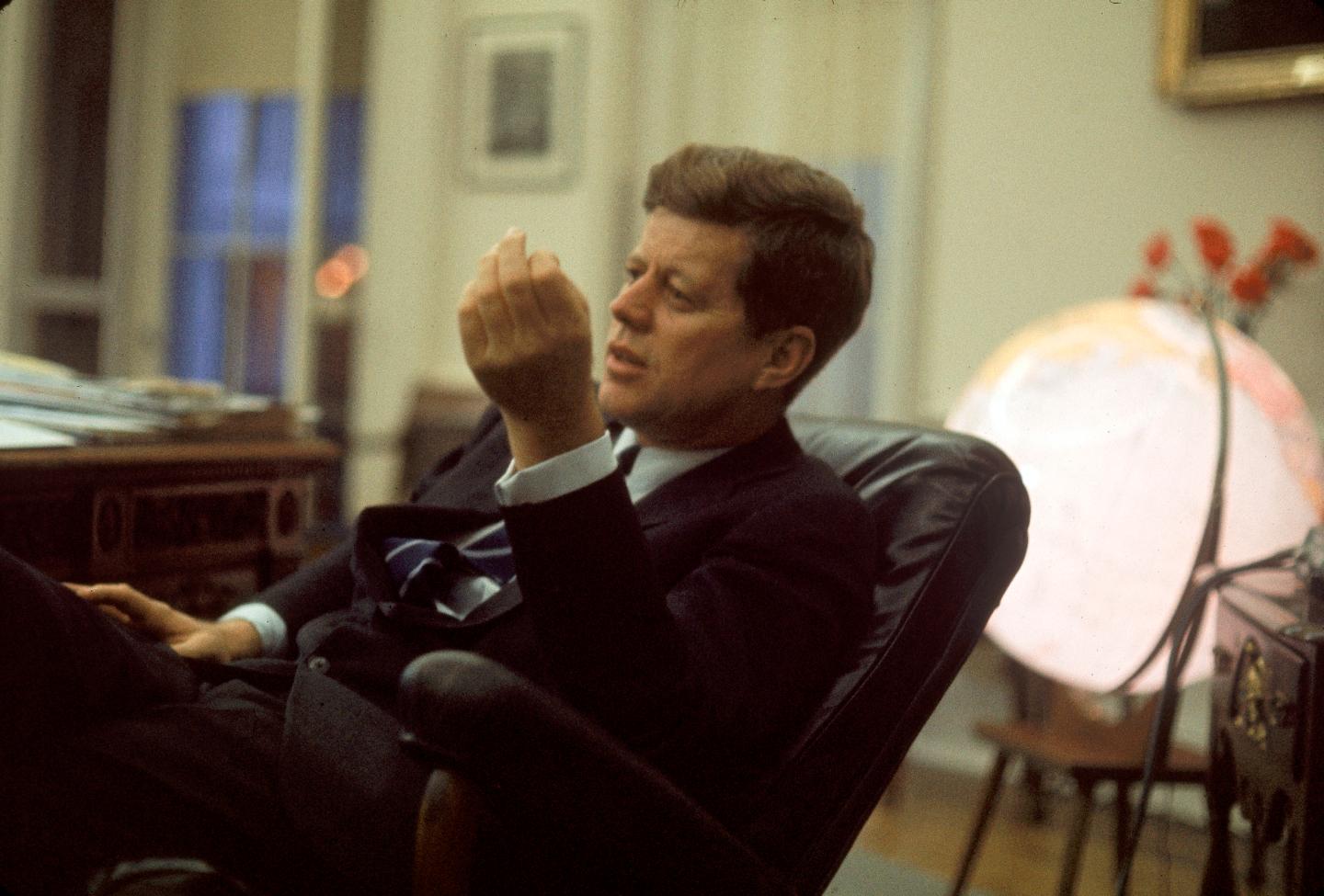
Pres. John F. Kennedy sitting in his White House o
DISTRICT OF COLUMBIA, UNITED STATES - APRIL 1961: President John F. Kennedy sitting in his White House office. (Photo by Paul Schutzer/The LIFE Picture Collection/Getty Images)Photograph by Paul Schutzer — The LIFE Picture Collection/Getty Images

As President Obama scrambles to salvage his trade agenda this week, his top emissary to Japan is appealing to Democrats by lifting up one of the party’s most beloved icons — her father.

In “My Dad, JFK, Was for Free Trade,” Ambassador Caroline Kennedy wrote “For my father, President John F. Kennedy, expanding trade was integral to America’s prosperity and security.”

There’s no doubt trade was high on Kennedy’s agenda. He championed the Trade Expansion Act of 1962, which established the Office of the U.S. Trade Representative and led to a successful “Kennedy Round” of multilateral trade talks.

The thing is, though, JFK would have a hard time recognizing today’s trade agreements.

Back in his era, the main goal was tariff reduction, plain and simple. Six European governments had just formed the Common Market, the Brits were talking about joining, and Kennedy feared a Fortress Europe that locked out American products.

There are some 1960s-style tariff schedules in the Trans-Pacific Partnership (TPP), the 12-country pact the Obama administration hopes to finalize—if they can get Congress to approve “fast track” trade promotion authority.

But that’s not why a diverse coalition of labor, environmental, faith, immigrant, food safety, civil rights, and consumer groups came together to block Obama’s trade package last Friday.

What’s strengthened the opposition are the pact’s 24 chapters that have nothing to do with old-fashioned trade in goods but instead impose rules on financial services, sanitary standards, government procurement, and other domestic policies. Such international rules simply didn’t exist in JFK’s day.

The president who created the Peace Corps might have also been surprised to learn that global health groups have been fighting TPP provisions on patent rights for pharmaceutical companies. Based on leaked drafts of the intellectual property rights chapter, Doctors Without Borders has called the TPP “the most damaging trade agreement we have ever seen in terms of access to medicines for poor people.”

Another major difference in today’s trade deals are the rights granted to foreign investors. Back in Kennedy’s day, foreign corporations couldn’t sue the U.S. government to demand compensation over actions—including public interest regulations —that reduce the value of their investment. That’s come about through the “investor-state” dispute settlement procedures in the 1994 North American Free Trade Agreement (NAFTA) and other more recent trade and investment treaties.

The leaked draft of the TPP investment chapter includes these investor powers, a revelation that has united strange political bedfellows. In a piece applauding Democrat Sen. Elizabeth Warren for speaking out on the issue, Daniel Ikenson of the libertarian Cato Institute wrote that these investor rights raise “serious questions about democratic accountability, sovereignty, checks and balances, and the separation of power.”

At a meeting I attended in the 1990s, a U.S. Trade Representative (USTR) negotiator responded to concerns about environmental and social impacts of trade agreements by saying these issues were secondary to his primary job of advancing the interests of U.S. corporations. Afterwards, I contacted one of my organization’s former board members, William Matson Roth, who’d served as the second U.S. Trade Representative, after Kennedy had established the position in 1962.

“Was this his understanding at the time of USTR’s mission?” I asked. “Absolutely not,” he said. The official aim of the 1962 Act that created the agency was “to promote the general welfare, foreign policy, and security of the United States.” Because of this broad mandate, there had been a big debate over where to situate USTR, he explained. Should it be in the State Department? No — that would make it too politicized. Should it be in the Commerce Department? No — it should not just represent narrow commercial interests.

USTR was given an independent perch within the government, but that doesn’t mean our current negotiators have risen above narrow interests.

Would JFK have been for or against the Trans-Pacific Partnership? I don’t feel the need to speculate. What we do need is a debate based on the actual content of our modern-day “trade” policies.

Sarah Anderson directs the Global Economy Project at the Institute for Policy Studies in Washington, DC.

About the Author
By Sarah Anderson
See full bioRight Arrow Button Icon

Latest in Commentary

Finance
Lorem ipsum dolor sit amet, consectetur adipiscing elit, sed do eiusmod tempor incididunt ut labore et dolore magna aliqua. Ut enim ad minim veniam
By Fortune Editors
October 20, 2025
Finance
Lorem ipsum dolor sit amet, consectetur adipiscing elit, sed do eiusmod tempor incididunt ut labore et dolore magna aliqua. Ut enim ad minim veniam
By Fortune Editors
October 20, 2025
Finance
Lorem ipsum dolor sit amet, consectetur adipiscing elit, sed do eiusmod tempor incididunt ut labore et dolore magna aliqua. Ut enim ad minim veniam
By Fortune Editors
October 20, 2025
Finance
Lorem ipsum dolor sit amet, consectetur adipiscing elit, sed do eiusmod tempor incididunt ut labore et dolore magna aliqua. Ut enim ad minim veniam
By Fortune Editors
October 20, 2025
Finance
Lorem ipsum dolor sit amet, consectetur adipiscing elit, sed do eiusmod tempor incididunt ut labore et dolore magna aliqua. Ut enim ad minim veniam
By Fortune Editors
October 20, 2025
Finance
Lorem ipsum dolor sit amet, consectetur adipiscing elit, sed do eiusmod tempor incididunt ut labore et dolore magna aliqua. Ut enim ad minim veniam
By Fortune Editors
October 20, 2025

Most Popular

Finance
Lorem ipsum dolor sit amet, consectetur adipiscing elit, sed do eiusmod tempor incididunt ut labore et dolore magna aliqua. Ut enim ad minim veniam
By Fortune Editors
October 20, 2025
Finance
Lorem ipsum dolor sit amet, consectetur adipiscing elit, sed do eiusmod tempor incididunt ut labore et dolore magna aliqua. Ut enim ad minim veniam
By Fortune Editors
October 20, 2025
Finance
Lorem ipsum dolor sit amet, consectetur adipiscing elit, sed do eiusmod tempor incididunt ut labore et dolore magna aliqua. Ut enim ad minim veniam
By Fortune Editors
October 20, 2025
Finance
Lorem ipsum dolor sit amet, consectetur adipiscing elit, sed do eiusmod tempor incididunt ut labore et dolore magna aliqua. Ut enim ad minim veniam
By Fortune Editors
October 20, 2025
Finance
Lorem ipsum dolor sit amet, consectetur adipiscing elit, sed do eiusmod tempor incididunt ut labore et dolore magna aliqua. Ut enim ad minim veniam
By Fortune Editors
October 20, 2025
Finance
Lorem ipsum dolor sit amet, consectetur adipiscing elit, sed do eiusmod tempor incididunt ut labore et dolore magna aliqua. Ut enim ad minim veniam
By Fortune Editors
October 20, 2025
Fortune Secondary Logo
Rankings
  • 100 Best Companies
  • Fortune 500
  • Global 500
  • Fortune 500 Europe
  • Most Powerful Women
  • World's Most Admired Companies
  • See All Rankings
  • Lists Calendar
Sections
  • Finance
  • Fortune Crypto
  • Features
  • Leadership
  • Health
  • Commentary
  • Success
  • Retail
  • Mpw
  • Tech
  • Lifestyle
  • CEO Initiative
  • Asia
  • Politics
  • Conferences
  • Europe
  • Newsletters
  • Personal Finance
  • Environment
  • Magazine
  • Education
Customer Support
  • Frequently Asked Questions
  • Customer Service Portal
  • Privacy Policy
  • Terms Of Use
  • Single Issues For Purchase
  • International Print
Commercial Services
  • Advertising
  • Fortune Brand Studio
  • Fortune Analytics
  • Fortune Conferences
  • Business Development
  • Group Subscriptions
About Us
  • About Us
  • Press Center
  • Work At Fortune
  • Terms And Conditions
  • Site Map
  • About Us
  • Press Center
  • Work At Fortune
  • Terms And Conditions
  • Site Map
  • Facebook icon
  • Twitter icon
  • LinkedIn icon
  • Instagram icon
  • Pinterest icon

Latest in Commentary

agentic
CommentaryAI agents
Why your data infrastructure — not your AI model — will determine whether Agentic AI scales
By Jeffrey Sonnenfeld, Stephen Henriques, Catherine Dai and Zander JeinthanuttkanontApril 30, 2026
1 hour ago
hoskins
Commentaryoffices
Gensler Co-Chair: Hot-desking was supposed to save money. It may be costing you your culture
By Diane HoskinsApril 30, 2026
3 hours ago
tillis
CommentaryCongress
Thom Tillis: Free markets built American prosperity. Government intervention puts it at risk
By Thom Tillis and John StanfordApril 30, 2026
4 hours ago
iran
CommentaryIran
The Strait of Hormuz is a data problem, not just a military one
By Erik Bethel and Ami DanielApril 30, 2026
5 hours ago
hollywood
CommentaryMarketing
I spent 20 years learning to navigate an industry. Then I built a campaign for the man who’s dismantling it
By Matti YahavApril 29, 2026
24 hours ago
aging
HealthLongevity
We’re the CEOs of Peloton and the Hospital for Special Surgery. Living longer isn’t enough, we need to live better, too
By Bryan T. Kelly and Peter SternApril 29, 2026
1 day ago

Most Popular

Apple cofounder Ronald Wayne—whose stake would be worth up to $400 billion had he not sold it in 1976—says that at 91, he has no regrets
Success
Apple cofounder Ronald Wayne—whose stake would be worth up to $400 billion had he not sold it in 1976—says that at 91, he has no regrets
By Preston ForeApril 27, 2026
3 days ago
Jamie Dimon gets candid about national debt: ‘There will be a bond crisis, and then we’ll have to deal with it’
Economy
Jamie Dimon gets candid about national debt: ‘There will be a bond crisis, and then we’ll have to deal with it’
By Eleanor PringleApril 29, 2026
1 day ago
‘The cost of compute is far beyond the costs of the employees’: Nvidia executive says right now AI is more expensive than paying human workers
AI
‘The cost of compute is far beyond the costs of the employees’: Nvidia executive says right now AI is more expensive than paying human workers
By Sasha RogelbergApril 28, 2026
2 days ago
‘Take the money and run’: Johns Hopkins economist Steve Hanke on why the UAE quit OPEC
Energy
‘Take the money and run’: Johns Hopkins economist Steve Hanke on why the UAE quit OPEC
By Shawn TullyApril 29, 2026
1 day ago
‘They left me no choice’: Powell isn’t going anywhere—blocking Trump from another Fed appointee
Banking
‘They left me no choice’: Powell isn’t going anywhere—blocking Trump from another Fed appointee
By Eva RoytburgApril 29, 2026
18 hours ago
More than two-thirds of U.S. schools say they’re unable to afford the cost of student free lunch—and MAHA’s dietary guidelines may make it worse
Economy
More than two-thirds of U.S. schools say they’re unable to afford the cost of student free lunch—and MAHA’s dietary guidelines may make it worse
By Sasha RogelbergApril 29, 2026
1 day ago

© 2026 Fortune Media IP Limited. All Rights Reserved. Use of this site constitutes acceptance of our Terms of Use and Privacy Policy | CA Notice at Collection and Privacy Notice | Do Not Sell/Share My Personal Information
FORTUNE is a trademark of Fortune Media IP Limited, registered in the U.S. and other countries. FORTUNE may receive compensation for some links to products and services on this website. Offers may be subject to change without notice.