• Home
  • News
  • Fortune 500
  • Tech
  • Finance
  • Leadership
  • Lifestyle
  • Rankings
  • Multimedia
CommentaryToys

Why Google and Mattel are getting kids (and parents) wrong

By
Filip Lau
Filip Lau
and
Camilla Mehlsen
Camilla Mehlsen
Down Arrow Button Icon
By
Filip Lau
Filip Lau
and
Camilla Mehlsen
Camilla Mehlsen
Down Arrow Button Icon
June 3, 2015, 5:00 AM ET
Photograph by Mark Lennihan — AP

In February, Google launched a new video service called YouTube Kids. It was, the company wrote on its official blog, “just our first step – we’ll keep tinkering and hope to have more great products for your family soon.” Last week, in the hours before Google’s I/O conference, we got a glimpse at the second step, a patent for an Internet-connected teddy bear. The bear features a computer, camera, and range of sensors to interact with and monitor children.

Whether the teddy bear will eventually reach shelves isn’t clear. The company often takes out patents for ideas that never make it to market. But as a way into Google’s approach and thinking around kids, and families, the teddy bear is telling. CNN called it “the creepy teddy bear,” which it is. It also ignores the fundamental aspects of play and imagination.

Google, enamored with technology, has felled into a technology trap surrounding kids and play. It’s an easy trap to fall into. Others have, too.

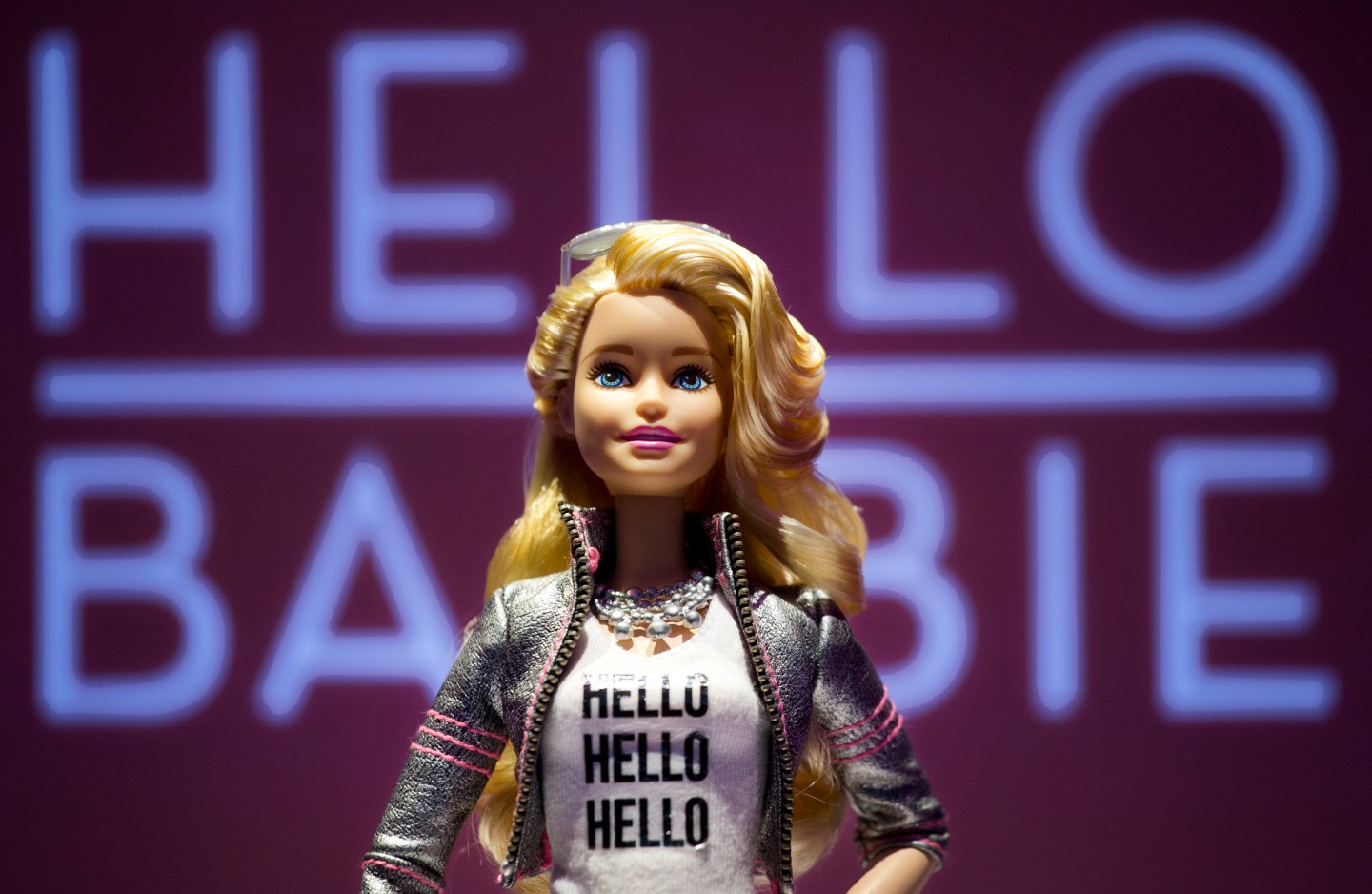
The toy industry is undergoing rapid change, much of which involves more connected, creepier products. Mattel launched Hello Barbie during the annual Toy Fair in New York City in February. Hello Barbie is an interactive doll that can communicate with kids (she has a microphone in her belt buckle) and draw upon the information on the Internet when replying to the questions from its owner. With the launch of “smart” Barbie in the Fall, Mattel hopes to make Barbie popular again, after years of plummeting sales.

Reactions from the press and consumer groups to Hello Barbie were swift, and mostly negative. After all, the doll can record and submit—to parents, and presumably to Mattel—what happens in kids’ rooms. The Campaign for a Commercial-Free Childhood started a petition demanding that Mattel abandon the project. Susan Linn, the groups executive director, told USA Today that Mattel was “eavesdropping on a child’s heart and soul.”

It’s startling to see this shift toward interactive, surveillance technology in kids’ toys and away from creative play, particularly from giants such as Google (GOOG) and Mattel (MAT), and particularly when—more than ever before—parents and kids seem to be aligned in their demand for products that allow space to create.

Being creative, constructing and displaying funny and clever creations, is what kids really want to spend their free time on. This is one of the key reasons why Microsoft (MSFT) acquired online video game Minecraft for $2.5 billion.

Google should know: its new YouTube channel features kid-produced Minecraft videos, with kids (and adults) showing off their creations in the sandbox-building-block game world. When we take a look at Hello Barbie, it does not exactly fit into the smart and creative category. The prototype that Mattel showed at Toy Fair was more like a multiple-choice machine, asking children specific questions: “What is your favorite part about the city — the food, the fashion or the sights?” A key problem is that it is the doll, not the child, that drives the conversation. The technology gets in the way of imagination.

We know that children love to use their imagination. But it’s also a practical learning tool. Our ability to imagine that objects can be something different than what they really are is essential—it’s one of the things that makes us human, our capacity to see tools and solutions in places and objects that aren’t obvious. Imagination, and imaginative play, is crucial to learning. It’s also simply a lot more fun.
[fortune-brightcove videoid=4063664863001]

How many other multi-billion-dollar companies will fall into the technology trap surrounding kids and play? It’s impossible to answer, but the root of the problem is simple: don’t underestimate a child’s creative imagination. Once these companies realize it’s not about answering questions or programming stilted conversation but creating the space for kids to create, it will seem silly, all the time and effort wasted on monitoring a child. It’s possible the people behind these technologies just haven’t realized that kids can dream up questions, and, indeed, whole worlds, far beyond the limits of the Internet.

Filip Lau is sociologist and partner in the strategy and innovation consultancy, ReD Associates, and Camilla Mehlsen is the editor of Denmark’s magazine on educational research, Asterisk.
About the Authors
By Filip Lau
See full bioRight Arrow Button Icon
By Camilla Mehlsen
See full bioRight Arrow Button Icon

Latest in Commentary

Alex Amouyel is the President and CEO of Newman’s Own Foundation
Commentaryphilanthropy
Following in Paul Newman and Yvon Chouinard’s footsteps: There are more ways for leaders to give it away in ‘the Great Boomer Fire Sale’ than ever
By Alex AmouyelDecember 7, 2025
16 hours ago
Amit Walia
CommentaryM&A
Why the timing was right for Salesforce’s $8 billion acquisition of Informatica — and for the opportunities ahead
By Amit WaliaDecember 6, 2025
2 days ago
Steve Milton is the CEO of Chain, a culinary-led pop-culture experience company founded by B.J. Novak and backed by Studio Ramsay Global.
CommentaryFood and drink
Affordability isn’t enough. Fast-casual restaurants need a fandom-first approach
By Steve MiltonDecember 5, 2025
3 days ago
Paul Atkins
CommentaryCorporate Governance
Turning public companies into private companies: the SEC’s retreat from transparency and accountability
By Andrew BeharDecember 5, 2025
3 days ago
Matt Rogers
CommentaryInfrastructure
I built the first iPhone with Steve Jobs. The AI industry is at risk of repeating an early smartphone mistake
By Matt RogersDecember 4, 2025
4 days ago
Jerome Powell
CommentaryFederal Reserve
Fed officials like the mystique of being seen as financial technocrats, but it’s time to demystify the central bank
By Alexander William SalterDecember 4, 2025
4 days ago

Most Popular

placeholder alt text
Real Estate
The 'Great Housing Reset' is coming: Income growth will outpace home-price growth in 2026, Redfin forecasts
By Nino PaoliDecember 6, 2025
2 days ago
placeholder alt text
AI
Nvidia CEO says data centers take about 3 years to construct in the U.S., while in China 'they can build a hospital in a weekend'
By Nino PaoliDecember 6, 2025
1 day ago
placeholder alt text
Economy
The most likely solution to the U.S. debt crisis is severe austerity triggered by a fiscal calamity, former White House economic adviser says
By Jason MaDecember 6, 2025
1 day ago
placeholder alt text
Big Tech
Mark Zuckerberg rebranded Facebook for the metaverse. Four years and $70 billion in losses later, he’s moving on
By Eva RoytburgDecember 5, 2025
2 days ago
placeholder alt text
Economy
JPMorgan CEO Jamie Dimon says Europe has a 'real problem’
By Katherine Chiglinsky and BloombergDecember 6, 2025
1 day ago
placeholder alt text
Uncategorized
Transforming customer support through intelligent AI operations
By Lauren ChomiukNovember 26, 2025
11 days ago
Rankings
  • 100 Best Companies
  • Fortune 500
  • Global 500
  • Fortune 500 Europe
  • Most Powerful Women
  • Future 50
  • World’s Most Admired Companies
  • See All Rankings
Sections
  • Finance
  • Leadership
  • Success
  • Tech
  • Asia
  • Europe
  • Environment
  • Fortune Crypto
  • Health
  • Retail
  • Lifestyle
  • Politics
  • Newsletters
  • Magazine
  • Features
  • Commentary
  • Mpw
  • CEO Initiative
  • Conferences
  • Personal Finance
  • Education
Customer Support
  • Frequently Asked Questions
  • Customer Service Portal
  • Privacy Policy
  • Terms Of Use
  • Single Issues For Purchase
  • International Print
Commercial Services
  • Advertising
  • Fortune Brand Studio
  • Fortune Analytics
  • Fortune Conferences
  • Business Development
About Us
  • About Us
  • Editorial Calendar
  • Press Center
  • Work At Fortune
  • Diversity And Inclusion
  • Terms And Conditions
  • Site Map

© 2025 Fortune Media IP Limited. All Rights Reserved. Use of this site constitutes acceptance of our Terms of Use and Privacy Policy | CA Notice at Collection and Privacy Notice | Do Not Sell/Share My Personal Information
FORTUNE is a trademark of Fortune Media IP Limited, registered in the U.S. and other countries. FORTUNE may receive compensation for some links to products and services on this website. Offers may be subject to change without notice.