• Home
  • Latest
  • Fortune 500
  • Finance
  • Tech
  • Leadership
  • Lifestyle
  • Rankings
  • Multimedia

Trendingnow

1

26 Meta employees accuse Mark Zuckerberg of using AI to target 8,000 layoffs against workers on medical, parental or family leave

2

FedEx CEO says we are in the middle of the biggest supply chain shift he’s seen in 35 years: ‘We are the referendum’

3

He sold his last company to Palantir. Now he's betting $32 million that robots can fix construction's labor crisis

1

26 Meta employees accuse Mark Zuckerberg of using AI to target 8,000 layoffs against workers on medical, parental or family leave

2

FedEx CEO says we are in the middle of the biggest supply chain shift he’s seen in 35 years: ‘We are the referendum’

3

He sold his last company to Palantir. Now he's betting $32 million that robots can fix construction's labor crisis
CommentaryCommentary

The winners of Cuba’s ‘new’ economy

By
Jennifer M. Harris
Jennifer M. Harris
Down Arrow Button Icon
By
Jennifer M. Harris
Jennifer M. Harris
Down Arrow Button Icon
January 14, 2015, 4:37 PM ET
Cuba Aims for More Foreign Investment In Agriculture Sector
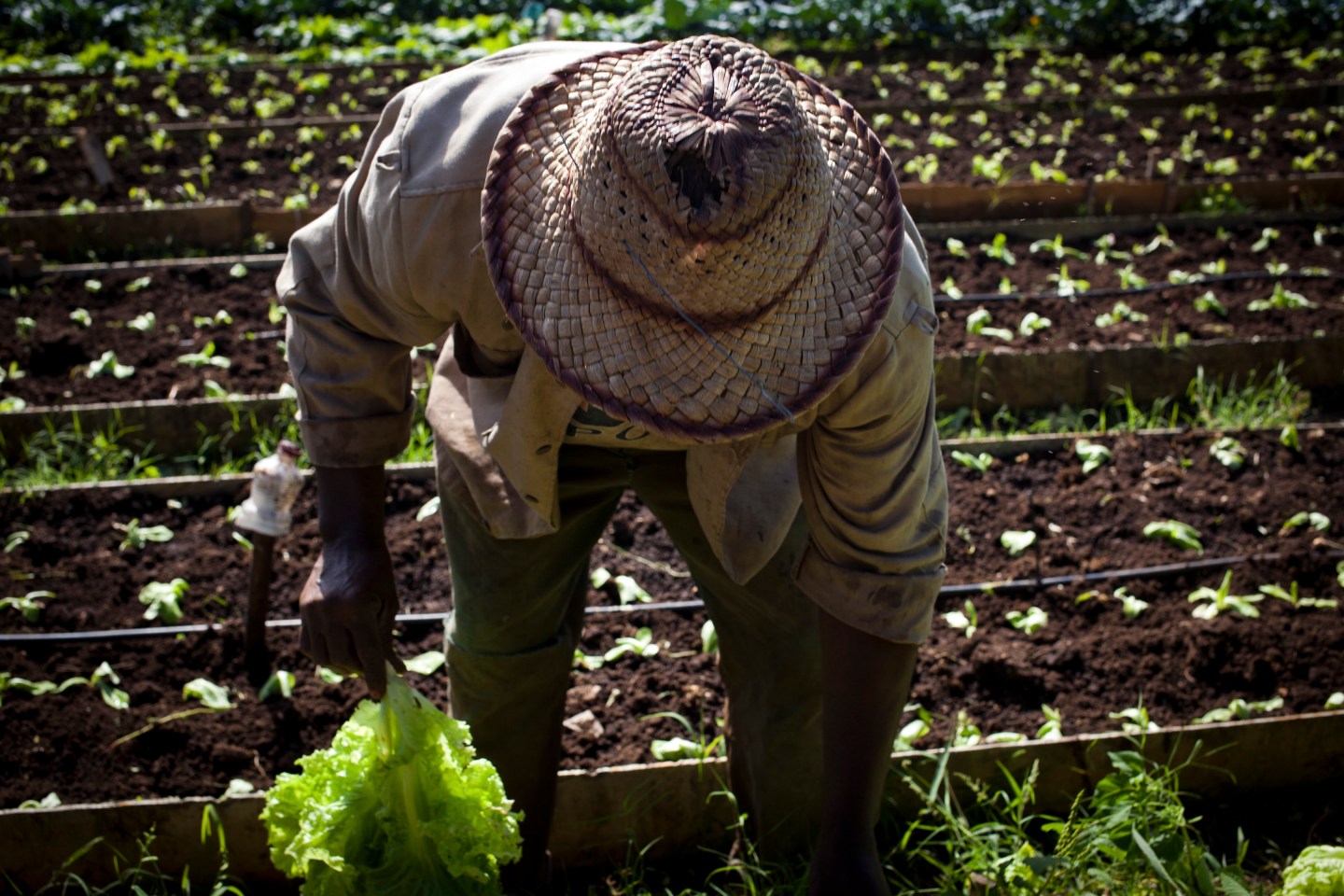
A farmer collects lettuce at a small organic cooperative farm in Bejucal, Cuba, on Saturday, Dec. 27, 2014. Cuba, which had been pushing to attract more foreign investment in agriculture even before U.S. President Obama's announcement normalizing relations, could become a significant market for companies like Caterpillar Inc. Photographer: BloombergPhotograph by Bloomberg via Getty Images
Add Fortune on Google for similar content.

U.S. President Barack Obama’s recent move to normalize relations with Cuba has been called ‘historic,’ ‘courageous’ and ‘a moral victory.’ Surely any deal so hailed must carry economic consequences of similar magnitude. But that’s unlikely — and for the same reasons that America’s economic embargo against Cuba has for decades found slim policy justification and even slimmer odds of removal.

Poorly designed sanctions tend to be easily circumvented: even with the embargo in place, the U.S. is Cuba’s fifth largest trading partner, a position it has held since 2007 (helped by the decision of U.S. President George W. Bush to authorize the sale of agricultural products in 2003). Further, the fact that Europe and Asia have not joined America’s embargo means that any U.S. firm with the right finance and transport infrastructure can easily navigate around the restrictions.

And easily circumvented bans, in turn, tend to be the most difficult to remove. With such little discomfort felt by American industry, few, if any, have lobbied to end it (stacked up, of course, against a highly vocal Cuban expatriate community that, on balance, still falls reliably in favor of maintaining, if not strengthening the ban).

That is not to say there aren’t real economic stakes to the recent announcement. The current embargo policy inflicts billions in annual losses on both the U.S. (by conservative estimates, around $1.2 billion a year) and Cuban ($685 million a year) economies. The new policy will reduce these costs substantially. More important than these headline sums, however, are the sorts of winners created by the new measures.

For the U.S., most of the gains will be concentrated in agricultural and telecommunications exports. The largest winners will be farmers in the Southeastern United states, whose proximity to Cuba make their poultry, fish, rice, and corn exports to Cuba especially competitive. As of 2006, a full quarter of Alabama’s agricultural revenue came from exports to Cuba, including sales of catfish, soybeans and poultry. The largest relative gains may go to U.S. wheat and rice farmers: both trades have slumped to zero in the past five years, as financing costs made U.S. suppliers far more expensive than South American or Asian alternatives. But with the new measures, “[w]e believe our market share [in Cuba] could grow from its current level of zero to around 80% to 90%,” said Alan Tracy, president of the U.S. Wheat Associates.

All told, it could result in 6,000 new U.S. jobs. And, underscoring the irony that has characterized so much of the embargo and its consequences, Florida— home to most of the vocal and fervent opposition to the new changes— is likely to benefit economically more than any other U.S. state.

The term “state” is used advisedly here. That is because the single-biggest U.S. winner may be the nation’s capital. Indeed, the largest source of benefits are likely to come in the form of reduced federal enforcement costs of these sanctions: at least 10 different agencies are responsible for enforcing different provisions of the embargo, and according to the Government Accountability Office, the U.S. government devotes hundreds of millions of dollars and tens of thousands of man hours to administering the embargo each year. Over 70% of U.S. Treasury Department inspections each year are centered on smuggled Cuban goods, even though the agency administers more than 20 other trade bans.

For Cuba, the most significant aspects of normalizing relations with the U.S. are changes to remittance allowances and travel restrictions. The new measures build on earlier 2009 reforms—when President Obama ushered in new rules allowing unlimited family visits to Cuba—extending the categories of general licenses to a broader array of political, humanitarian, educational, and commercial purposes. The new measures also allow larger remittances— general donative remittances will now be capped at $2000 per quarter, up from $500, while remittances “for humanitarian projects, support for the Cuban people, and support for the development of private businesses in Cuba will no longer require a specific license,” according to the White House. Nor will remittance forwarders require a specific license any longer.

All of this matters because, at roughly $5.1 billion, annual remittance flows into Cuba overwhelmingly come from the U.S. In fact, remittances total more than the four fastest growing sectors of the Cuban economy combined. This differential is actually larger when one takes into account that unlike substantial costs that go into processing sugar, manufacturing drugs, and importing food, remittances do not cost the Cuban government or its broader economy anything to produce. As a measure of just how critical U.S. remittances have become for the Cuban economy, the Cuban government has begun estimating the costs of the embargo primarily in terms of how it impacts remittance.

It seems there is nothing quite so powerful as scarcity to turn communists into market-watching capitalists. The whole thing recalls another episode of Cold War sanctions when, in the early 1960s at the height of tensions, Soviet leader Nikita Khruschev found himself inexplicably more capitalist than the United States. At the time, the Soviet Union was working to develop its oil industry for strategic reasons and in hope of selling oil and gas to the West for hard currency.

One of the production weaknesses involved wide-diameter steel pipes needed to move oil from the wellhead to refineries and on to the point of sale. Rather than selling large quantities of piping, the U.S. orchestrated concerted opposition through its European and Asian alliance systems. American capitalism was abandoning its own market principles—“denying its own essential character by forgoing the possibility of trade and profit-making,” historian Alan Dobson explained. For the Soviets, this violated the order of things. Exasperated, Khrushchev reportedly burst out to his advisors, “who the hell do these capitalists think they are, to believe that they can go around and not act like capitalists?”

There are other beneficiaries to the deal beyond the negotiating parties. In Mexico, one of the two largest economies in Latin America, economists are forecasting a favorable impact on businesses that have been reluctant to invest in Cuba for fear of risking their ties to the U.S. market. They also expect more Mexican tourists to travel to Cuba. And a more economically integrated Cuba is a Cuba better able to contribute its considerable talents to some of the world’s most important fights: Cuba has sent large teams of doctors to Africa to fight Ebola and has helped to mediate the decades-long conflict in Colombia between the government and the FARC rebels. News of a deal emerged in Colombia around the same time as news of the U.S- Cuba breakthrough, as the FARC announced their cease-fire would last indefinitely unless their guerrillas were attacked by security forces.

But again, the sums and individual winners, be they American, Cuban, or otherwise, pale in comparison to what is arguably the deal’s largest victory: which, to paraphrase Mr. Khruschev, is to help all of the good capitalists act like capitalists — even, or perhaps especially, the most ardent of last century’s communists.

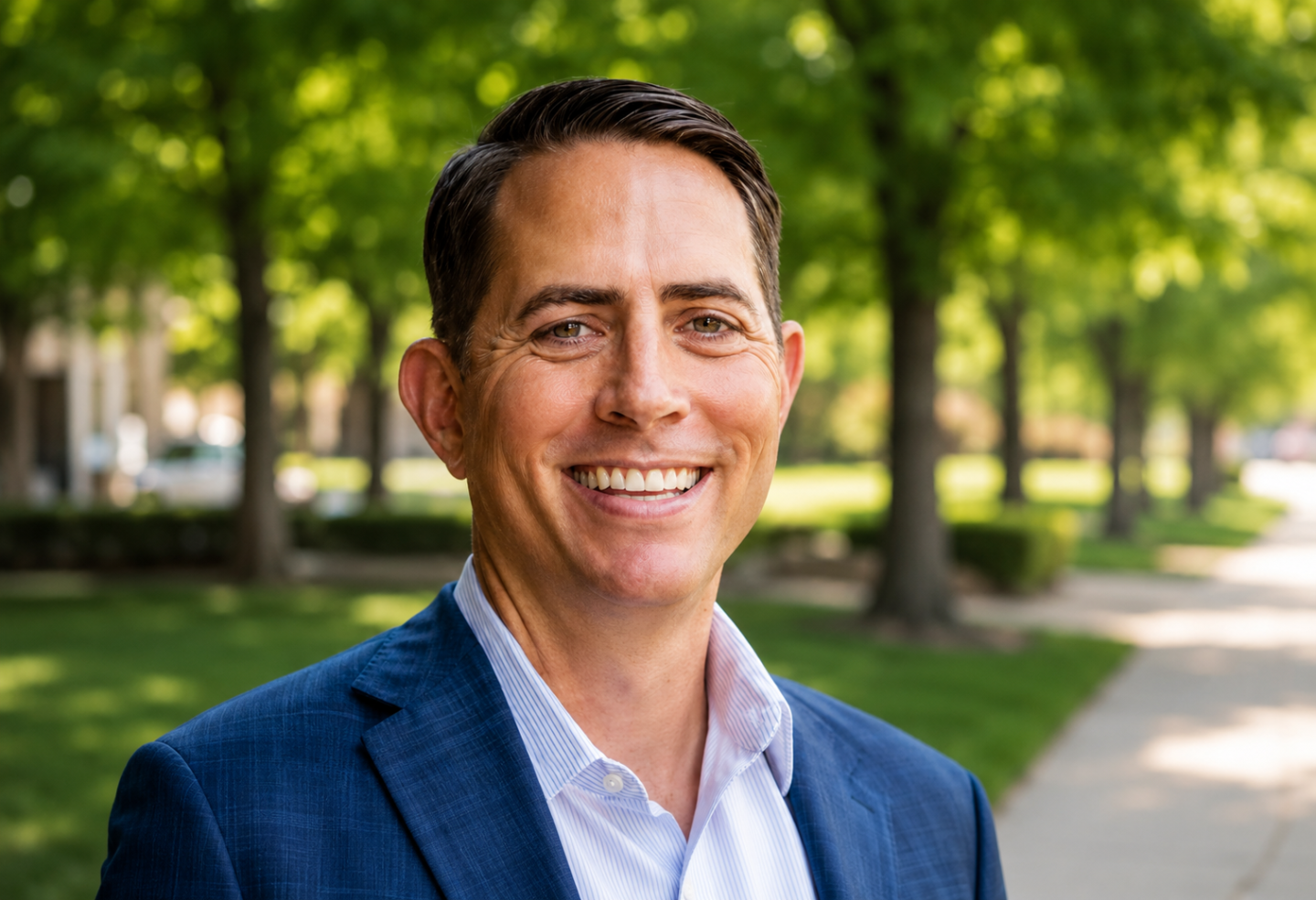
Jennifer M. Harris is a senior fellow at the Council on Foreign Relations. Prior to joining the council, Jennifer was a member of the policy planning staff at the U.S. Department of State responsible for global markets, geo-economic issues, and energy security. Jennifer is currently writing a book on the modern use of economic and financial instruments as tools of statecraft.
About the Author
By Jennifer M. Harris
See full bioRight Arrow Button Icon
Add Fortune on Google for similar content.

Latest in Commentary

Finance
Lorem ipsum dolor sit amet, consectetur adipiscing elit, sed do eiusmod tempor incididunt ut labore et dolore magna aliqua. Ut enim ad minim veniam
By Fortune Editors
October 20, 2025
Finance
Lorem ipsum dolor sit amet, consectetur adipiscing elit, sed do eiusmod tempor incididunt ut labore et dolore magna aliqua. Ut enim ad minim veniam
By Fortune Editors
October 20, 2025
Finance
Lorem ipsum dolor sit amet, consectetur adipiscing elit, sed do eiusmod tempor incididunt ut labore et dolore magna aliqua. Ut enim ad minim veniam
By Fortune Editors
October 20, 2025
Finance
Lorem ipsum dolor sit amet, consectetur adipiscing elit, sed do eiusmod tempor incididunt ut labore et dolore magna aliqua. Ut enim ad minim veniam
By Fortune Editors
October 20, 2025
Finance
Lorem ipsum dolor sit amet, consectetur adipiscing elit, sed do eiusmod tempor incididunt ut labore et dolore magna aliqua. Ut enim ad minim veniam
By Fortune Editors
October 20, 2025
Finance
Lorem ipsum dolor sit amet, consectetur adipiscing elit, sed do eiusmod tempor incididunt ut labore et dolore magna aliqua. Ut enim ad minim veniam
By Fortune Editors
October 20, 2025

Most Popular

Finance
Lorem ipsum dolor sit amet, consectetur adipiscing elit, sed do eiusmod tempor incididunt ut labore et dolore magna aliqua. Ut enim ad minim veniam
By Fortune Editors
October 20, 2025
Finance
Lorem ipsum dolor sit amet, consectetur adipiscing elit, sed do eiusmod tempor incididunt ut labore et dolore magna aliqua. Ut enim ad minim veniam
By Fortune Editors
October 20, 2025
Finance
Lorem ipsum dolor sit amet, consectetur adipiscing elit, sed do eiusmod tempor incididunt ut labore et dolore magna aliqua. Ut enim ad minim veniam
By Fortune Editors
October 20, 2025
Finance
Lorem ipsum dolor sit amet, consectetur adipiscing elit, sed do eiusmod tempor incididunt ut labore et dolore magna aliqua. Ut enim ad minim veniam
By Fortune Editors
October 20, 2025
Finance
Lorem ipsum dolor sit amet, consectetur adipiscing elit, sed do eiusmod tempor incididunt ut labore et dolore magna aliqua. Ut enim ad minim veniam
By Fortune Editors
October 20, 2025
Finance
Lorem ipsum dolor sit amet, consectetur adipiscing elit, sed do eiusmod tempor incididunt ut labore et dolore magna aliqua. Ut enim ad minim veniam
By Fortune Editors
October 20, 2025
Fortune Secondary Logo
Rankings
  • 100 Best Companies
  • Fortune 500
  • Global 500
  • Fortune 500 Europe
  • Most Powerful Women
  • World's Most Admired Companies
  • See All Rankings
  • Lists Calendar
Sections
  • Finance
  • Fortune Crypto
  • Features
  • Leadership
  • Health
  • Commentary
  • Success
  • Retail
  • Mpw
  • Tech
  • Lifestyle
  • CEO Initiative
  • Asia
  • Politics
  • Conferences
  • Europe
  • Newsletters
  • Personal Finance
  • Environment
  • Magazine
  • Education
Customer Support
  • Frequently Asked Questions
  • Customer Service Portal
  • Privacy Policy
  • Terms Of Use
  • Single Issues For Purchase
  • International Print
Commercial Services
  • Advertising
  • Fortune Brand Studio
  • Fortune Analytics
  • Fortune Conferences
  • Business Development
  • Group Subscriptions
About Us
  • About Us
  • Press Center
  • Work At Fortune
  • Terms And Conditions
  • Site Map
  • About Us
  • Press Center
  • Work At Fortune
  • Terms And Conditions
  • Site Map
  • Facebook icon
  • Twitter icon
  • LinkedIn icon
  • Instagram icon
  • Pinterest icon

Latest in Commentary

sb
Commentarynational debt
The national debt is over 100% of GDP and most of Congress is ignoring wishes to rein it in. It’s time to amend the Constitution
By Steve H. Hanke and David M. WalkerJuly 15, 2026
17 hours ago
Is your AI really working? Why productivity isn’t the same as progress
Future of WorkBrainstorm Tech
Is your AI really working? Why productivity isn’t the same as progress
By Jamie GarverickJuly 15, 2026
19 hours ago
r
CommentaryFDA
Trust in the FDA is collapsing. It’s time to get really transparent about our food and our drugs
By Jeffrey Sonnenfeld, Megan Ranney, Sten Vermund, Patricia Greenstein and Steven TianJuly 14, 2026
2 days ago
mm
Commentaryregulation
Exclusive: Delaware proposes testing the AIC, a new legal entity for agents in a regulatory sandbox
By John Nay and Charuni Patibanda-SanchezJuly 14, 2026
2 days ago
jobs
CommentaryLabor
Black women’s unemployment rate fell. That’s not the good news you think it is
By Katica RoyJuly 14, 2026
2 days ago
b
CommentaryWorld Cup
Columbia Business School professors: What the Balogun red card can teach us about AI and judgment
By Oded Netzer, Christopher Frank and Paul MagnoneJuly 13, 2026
3 days ago

Most Popular

26 Meta employees accuse Mark Zuckerberg of using AI to target 8,000 layoffs against workers on medical, parental or family leave
Law
26 Meta employees accuse Mark Zuckerberg of using AI to target 8,000 layoffs against workers on medical, parental or family leave
By Barbara Ortutay, Alexandra Olson and The Associated PressJuly 15, 2026
18 hours ago
FedEx CEO says we are in the middle of the biggest supply chain shift he’s seen in 35 years: ‘We are the referendum’
C-Suite
FedEx CEO says we are in the middle of the biggest supply chain shift he’s seen in 35 years: ‘We are the referendum’
By Fortune EditorsJuly 15, 2026
16 hours ago
He sold his last company to Palantir. Now he's betting $32 million that robots can fix construction's labor crisis
Innovation
He sold his last company to Palantir. Now he's betting $32 million that robots can fix construction's labor crisis
By Lily Mae LazarusJuly 15, 2026
19 hours ago
MacKenzie Scott, Melinda French Gates, and Lauren Sánchez Bezos are rewriting the rules of billionaire giving—one quietly, one strategically, one very publicly
Newsletters
MacKenzie Scott, Melinda French Gates, and Lauren Sánchez Bezos are rewriting the rules of billionaire giving—one quietly, one strategically, one very publicly
By Sydney LakeJuly 14, 2026
2 days ago
Jamie Dimon understands why people are anti-rich: 'We have, in fact, left the lower-income folks behind' and 'that's kind of annoying'
Economy
Jamie Dimon understands why people are anti-rich: 'We have, in fact, left the lower-income folks behind' and 'that's kind of annoying'
By Eleanor PringleJuly 15, 2026
20 hours ago
After donating $48 billion to the Gates Foundation, Warren Buffett is quietly ending one of the biggest philanthropic relationships in history
North America
After donating $48 billion to the Gates Foundation, Warren Buffett is quietly ending one of the biggest philanthropic relationships in history
By Marco Quiroz-GutierrezJuly 14, 2026
2 days ago

© 2026 Fortune Media IP Limited. All Rights Reserved. Use of this site constitutes acceptance of our Terms of Use and Privacy Policy | CA Notice at Collection and Privacy Notice | Do Not Sell/Share My Personal Information
FORTUNE is a trademark of Fortune Media IP Limited, registered in the U.S. and other countries. FORTUNE may receive compensation for some links to products and services on this website. Offers may be subject to change without notice.