• Home
  • Latest
  • Fortune 500
  • Finance
  • Tech
  • Leadership
  • Lifestyle
  • Rankings
  • Multimedia

Trendingnow

1

Jensen Huang says ‘a lot’ of six-figure jobs in plumbing and construction will soon be unlocked because someone needs to build new AI centers

2

The labor market could become so backward that the economy will have to shed jobs to keep unemployment steady

3

Bars, bowling alleys and movie theaters cost too much to run and visit. Americans have run out of places to hang out and we're paying with our health

1

Jensen Huang says ‘a lot’ of six-figure jobs in plumbing and construction will soon be unlocked because someone needs to build new AI centers

2

The labor market could become so backward that the economy will have to shed jobs to keep unemployment steady

3

Bars, bowling alleys and movie theaters cost too much to run and visit. Americans have run out of places to hang out and we're paying with our health
CommentaryCommentary

The end of OPEC as we have known it is here

By
George L. Perry
George L. Perry
Down Arrow Button Icon
By
George L. Perry
George L. Perry
Down Arrow Button Icon
January 14, 2015, 8:00 AM ET
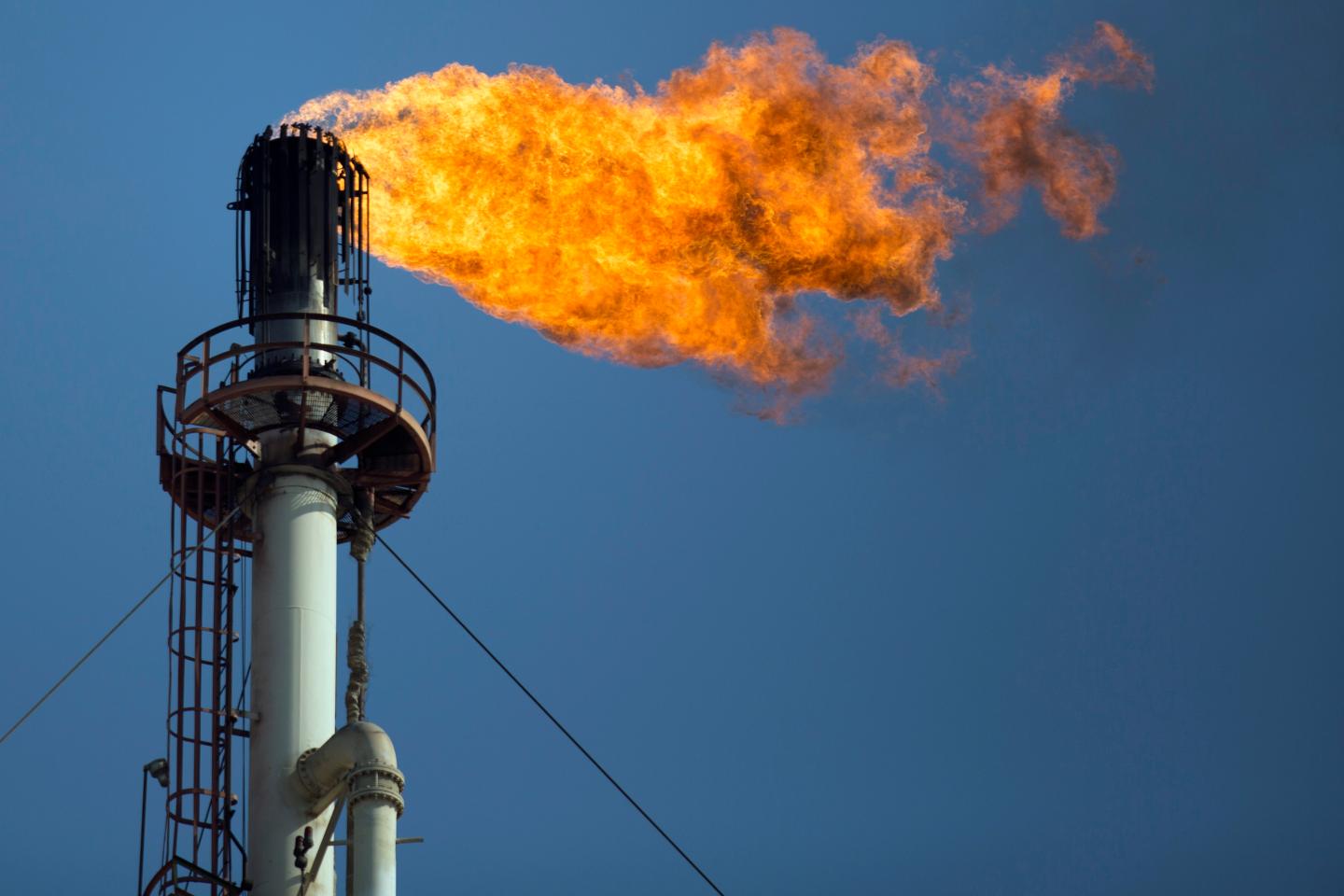
Oil Declines Below 60USD A Barrel
FILE PHOTO: Flames shoot out of one of the flare stacks at the Petroleos Mexicanos (Pemex) Miguel Hidalgo Refinery in Tula de Allende, Mexico, on Thursday, March 6, 2014. Oil extended losses below $60 a barrel amid speculation that OPEC's biggest members will defend market share against U.S. shale producers. Photographer: Susana Gonzalez/Bloomberg via Getty ImagesPhotograph by Susana Gonzales — Bloomberg via Getty Images
Add Fortune on Google for similar content.

Early last Fall, when oil prices had fallen by about $25 a barrel and it became clear the decline was more than a temporary blip, the big question was how far prices would fall? And that would depend on whether and when Saudi Arabia and its partners at the Organization of the Petroleum Exporting Countries would support the world oil price by cutting their own production. By this winter, we had an answer. The Saudis have made it clear, by what they have said and what they have not done, that they want the U.S. and others to cut production before they do any cutting of their own. This is the end of OPEC as we have known it, and it will keep the global oil market chaotic for some time.

Learn more of the latest news about OPEC from Fortune’s video team:

On Tuesday, oil prices fell further after the United Arab Emirates’ oil minister said OPEC would keep output unchanged. Markets will adjust to this new situation, but not very quickly. And most of the adjustments will have to come from lower oil production because consumption depends largely on the level of fuel efficiency of today’s vehicles and planes, and that’s unlikely to change anytime soon. Thus, most of the adjustment will have to come from the supply side of the market, where low prices could force some high cost fields to shut down earlier than planned and cause many new drilling projects to be abandoned.

Most of the world’s new oil production has come from U.S. shale fields and Canadian tar sands — two main forms of “tight oil” that were made possible by new technologies that had revolutionized the industry. Both are relatively high-cost sources of oil, but with an important difference. The tar sands projects require huge initial investments in processing plants but have low marginal costs to operate afterward. Once established, their production is unlikely to change much. By contrast, shale fields produce most of their output in the first year, which makes their output highly responsive to oil prices. A disproportionate amount of any reduction in global supply is therefore likely to come from cuts in U.S. shale oil production.

That adjustment is already underway, and it will lower the projected path of oil production for later this year and beyond. But in the immediate future, U.S. production will continue to grow as wells started last year are completed. For now, production will continue to exceed demand and inventories of oil and oil products, which are already at historically high levels, will rise further. So it is easy to make the case that prices are headed still lower in the near term.

Looking a few quarters ahead, the prospects begin to change. On the demand side, lower oil prices will weaken the incentives for a more fuel efficient capital stock. The high fuel prices of the past several years had moved the airlines to order more fuel-efficient planes and tilted consumers to more fuel-efficient cars. But by late last year, airlines were cancelling new plane orders and car sales of SUVs and light trucks soared. These effects will be modest. They will not undue the environmental movement toward fuel efficiency, but will delay some change. Barring some unexpected disruption in supplies from noneconomic developments, the main adjustment to the imbalance in the global oil market will have to come from cuts in the world’s oil production. Prices should recover from this winter’s slide, which reflect the continuing increase in North American production. But to discourage enough high-cost production for the longer run will require prices to stay substantially below the $100 level that prevailed through last summer.

If prices stay low, the implications on the world economy and geopolitics will be large and diverse, even if, over the next several years, oil prices recover from present levels to the $60 to $70 a barrel range, that would still maintain a decline of well over $1 trillion a year from last summer’s level of oil revenues – and oil users’ costs.

Some of the effects are welcome, others not. For Russia, whose budget depends heavily on oil revenues, the decline in oil prices is a financial disaster. The ruble’s foreign exchange value has already been cut in half. Terrorists in the Middle East arm themselves with revenue from oil. In the U.S., the development of shale fields has often been funded with credits that are held by banks and high-yield bond funds. Many of these credits could default. Alongside these complications, some of which are good and some not, the unambiguous positive effect of lower oil prices will be for the boost they provide to the purchasing power of the world’s consumers at a time when such stimulus is badly needed.

George L.Perry is a Senior Fellow in Economic Studies at the Brookings Institution.

About the Author
By George L. Perry
See full bioRight Arrow Button Icon
Add Fortune on Google for similar content.

Latest in Commentary

Finance
Lorem ipsum dolor sit amet, consectetur adipiscing elit, sed do eiusmod tempor incididunt ut labore et dolore magna aliqua. Ut enim ad minim veniam
By Fortune Editors
October 20, 2025
Finance
Lorem ipsum dolor sit amet, consectetur adipiscing elit, sed do eiusmod tempor incididunt ut labore et dolore magna aliqua. Ut enim ad minim veniam
By Fortune Editors
October 20, 2025
Finance
Lorem ipsum dolor sit amet, consectetur adipiscing elit, sed do eiusmod tempor incididunt ut labore et dolore magna aliqua. Ut enim ad minim veniam
By Fortune Editors
October 20, 2025
Finance
Lorem ipsum dolor sit amet, consectetur adipiscing elit, sed do eiusmod tempor incididunt ut labore et dolore magna aliqua. Ut enim ad minim veniam
By Fortune Editors
October 20, 2025
Finance
Lorem ipsum dolor sit amet, consectetur adipiscing elit, sed do eiusmod tempor incididunt ut labore et dolore magna aliqua. Ut enim ad minim veniam
By Fortune Editors
October 20, 2025
Finance
Lorem ipsum dolor sit amet, consectetur adipiscing elit, sed do eiusmod tempor incididunt ut labore et dolore magna aliqua. Ut enim ad minim veniam
By Fortune Editors
October 20, 2025

Most Popular

Finance
Lorem ipsum dolor sit amet, consectetur adipiscing elit, sed do eiusmod tempor incididunt ut labore et dolore magna aliqua. Ut enim ad minim veniam
By Fortune Editors
October 20, 2025
Finance
Lorem ipsum dolor sit amet, consectetur adipiscing elit, sed do eiusmod tempor incididunt ut labore et dolore magna aliqua. Ut enim ad minim veniam
By Fortune Editors
October 20, 2025
Finance
Lorem ipsum dolor sit amet, consectetur adipiscing elit, sed do eiusmod tempor incididunt ut labore et dolore magna aliqua. Ut enim ad minim veniam
By Fortune Editors
October 20, 2025
Finance
Lorem ipsum dolor sit amet, consectetur adipiscing elit, sed do eiusmod tempor incididunt ut labore et dolore magna aliqua. Ut enim ad minim veniam
By Fortune Editors
October 20, 2025
Finance
Lorem ipsum dolor sit amet, consectetur adipiscing elit, sed do eiusmod tempor incididunt ut labore et dolore magna aliqua. Ut enim ad minim veniam
By Fortune Editors
October 20, 2025
Finance
Lorem ipsum dolor sit amet, consectetur adipiscing elit, sed do eiusmod tempor incididunt ut labore et dolore magna aliqua. Ut enim ad minim veniam
By Fortune Editors
October 20, 2025
Fortune Secondary Logo
Rankings
  • 100 Best Companies
  • Fortune 500
  • Global 500
  • Fortune 500 Europe
  • Most Powerful Women
  • World's Most Admired Companies
  • See All Rankings
  • Lists Calendar
Sections
  • Finance
  • Fortune Crypto
  • Features
  • Leadership
  • Health
  • Commentary
  • Success
  • Retail
  • Mpw
  • Tech
  • Lifestyle
  • CEO Initiative
  • Asia
  • Politics
  • Conferences
  • Europe
  • Newsletters
  • Personal Finance
  • Environment
  • Magazine
  • Education
Customer Support
  • Frequently Asked Questions
  • Customer Service Portal
  • Privacy Policy
  • Terms Of Use
  • Single Issues For Purchase
  • International Print
Commercial Services
  • Advertising
  • Fortune Brand Studio
  • Fortune Analytics
  • Fortune Conferences
  • Business Development
  • Group Subscriptions
About Us
  • About Us
  • Press Center
  • Work At Fortune
  • Terms And Conditions
  • Site Map
  • About Us
  • Press Center
  • Work At Fortune
  • Terms And Conditions
  • Site Map
  • Facebook icon
  • Twitter icon
  • LinkedIn icon
  • Instagram icon
  • TikTok icon
  • YouTube icon

Latest in Commentary

t
CommentaryTariffs
Trump just invoked a 1930 tariff law no president has ever used — against Canada
By Caleb PetittAugust 2, 2026
10 hours ago
SpaceAI could be Southeast Asia’s edge against El Niño—if governments actually use it
AsiaSatellites
SpaceAI could be Southeast Asia’s edge against El Niño—if governments actually use it
By Karryl Kim Sagun Trajano and Iuna TsyrulnevaAugust 2, 2026
18 hours ago
250
Commentary250 Years of Innovation
America bet everything on trust 250 years ago. That bet is being tested again
By Keith KrachAugust 1, 2026
1 day ago
Asia’s aging population doesn’t have to be a fiscal burden. With smart planning, it can be a growth opportunity
Commentaryaging
Asia’s aging population doesn’t have to be a fiscal burden. With smart planning, it can be a growth opportunity
By Runchana Pongsaparn and Koon Hui TeeJuly 31, 2026
2 days ago
saunders
Commentarydisruption
Bausch & Lomb CEO: the AI hysteria is nothing new
By Brent SaundersJuly 31, 2026
2 days ago
zelter
CommentaryInfrastructure
Apollo President: America’s industrial comeback requires  a new financial playbook and a fatter checkbook
By Jim ZelterJuly 31, 2026
2 days ago

Most Popular

Jensen Huang says ‘a lot’ of six-figure jobs in plumbing and construction will soon be unlocked because someone needs to build new AI centers
Success
Jensen Huang says ‘a lot’ of six-figure jobs in plumbing and construction will soon be unlocked because someone needs to build new AI centers
By Preston ForeAugust 1, 2026
1 day ago
The labor market could become so backward that the economy will have to shed jobs to keep unemployment steady
Economy
The labor market could become so backward that the economy will have to shed jobs to keep unemployment steady
By Jason MaAugust 1, 2026
23 hours ago
Bars, bowling alleys and movie theaters cost too much to run and visit. Americans have run out of places to hang out and we're paying with our health
North America
Bars, bowling alleys and movie theaters cost too much to run and visit. Americans have run out of places to hang out and we're paying with our health
By Catherina GioinoAugust 2, 2026
14 hours ago
Most billionaires are stuck in 'slow philanthropy.' MacKenzie Scott gave away $26 billion and won't stop until 'the safe is empty'
Success
Most billionaires are stuck in 'slow philanthropy.' MacKenzie Scott gave away $26 billion and won't stop until 'the safe is empty'
By Sydney LakeAugust 2, 2026
13 hours ago
Trump just invoked a 1930 tariff law no president has ever used — against Canada
Commentary
Trump just invoked a 1930 tariff law no president has ever used — against Canada
By Caleb PetittAugust 2, 2026
10 hours ago
Mamdani's city-owned supermarkets will fight the one force no city has ever beaten: the market
Retail
Mamdani's city-owned supermarkets will fight the one force no city has ever beaten: the market
By Shawn TullyAugust 2, 2026
16 hours ago

© 2026 Fortune Media IP Limited. All Rights Reserved. Use of this site constitutes acceptance of our Terms of Use and Privacy Policy | CA Notice at Collection and Privacy Notice | Do Not Sell/Share My Personal Information
FORTUNE is a trademark of Fortune Media IP Limited, registered in the U.S. and other countries. FORTUNE may receive compensation for some links to products and services on this website. Offers may be subject to change without notice.