• Home
  • Latest
  • Fortune 500
  • Finance
  • Tech
  • Leadership
  • Lifestyle
  • Rankings
  • Multimedia

Trendingnow

1

Jeff Bezos wants the bottom half of earners to pay zero income tax—he says nurses making just $75K should save $12K a year

2

Despite a $500 million net worth, Shaq just finished his fourth degree. He warns graduates: 'Your character will take you further than your resume'

3

Bolt CEO says he let go of his entire HR team for creating problems that didn’t exist: ‘Those problems disappeared when I let them go’ 

1

Jeff Bezos wants the bottom half of earners to pay zero income tax—he says nurses making just $75K should save $12K a year

2

Despite a $500 million net worth, Shaq just finished his fourth degree. He warns graduates: 'Your character will take you further than your resume'

3

Bolt CEO says he let go of his entire HR team for creating problems that didn’t exist: ‘Those problems disappeared when I let them go’ 
FeaturesInsider trading

Two insider trading convictions overturned in key ruling

By
Roger Parloff
Roger Parloff
Down Arrow Button Icon
By
Roger Parloff
Roger Parloff
Down Arrow Button Icon
December 11, 2014, 7:00 AM ET
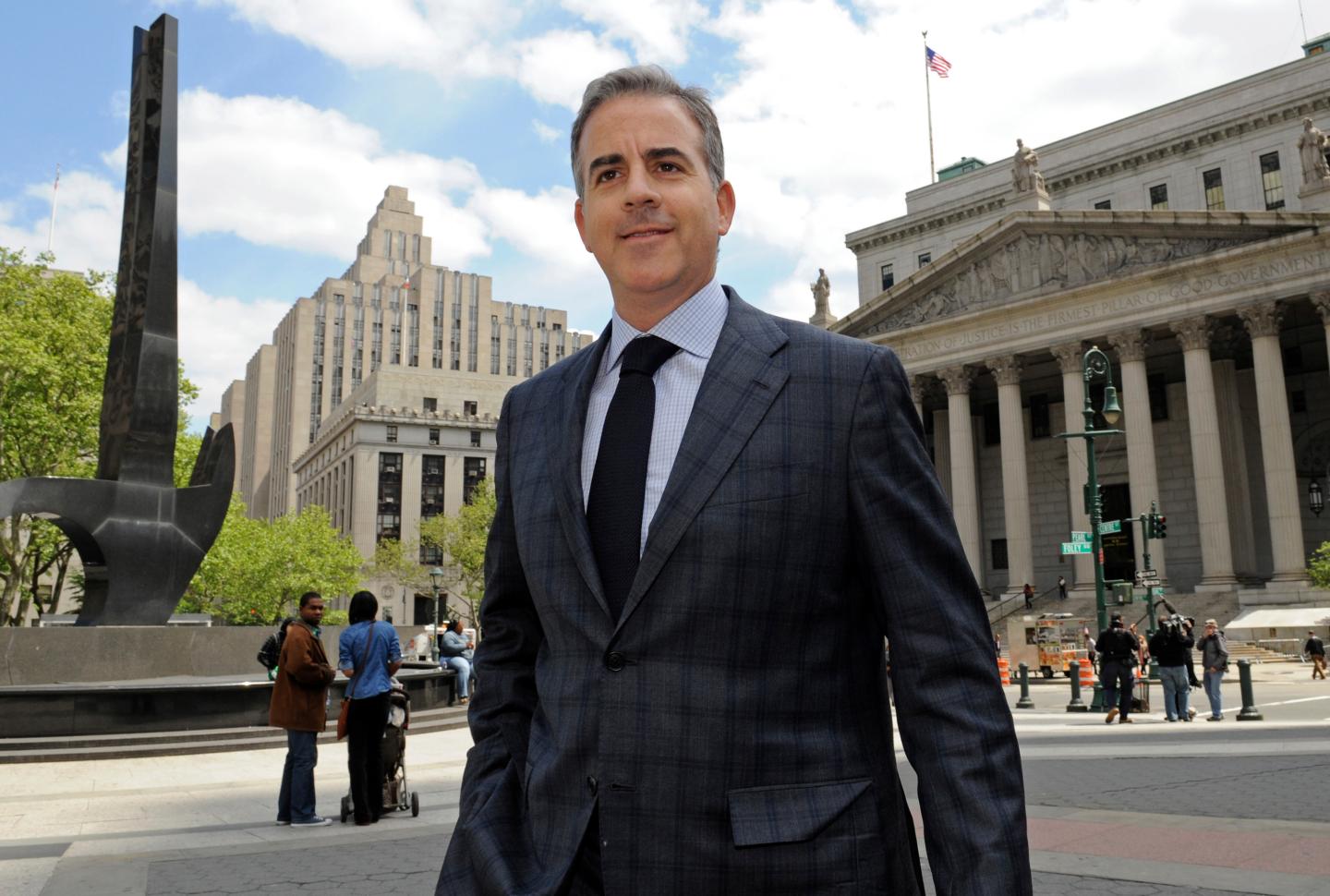
Level Global Investors Co-Founder Anthony Chiasson Sentencing On Insider Trading
Anthony Chiasson, co-founder of Level Global Investors LP, exits federal court following a sentencing hearing in New York, U.S., on Monday, May 13, 2013. Chiasson was sentenced to 6 1/2 years in prison for using illegal tips funneled to him from analysts and company insiders to make $68 million for his hedge fund. Photographer: Peter Foley/Bloomberg via Getty ImagesPhotograph by Peter Foley — Bloomberg via Getty Images/file

A federal appeals court yesterday unanimously overturned the insider trading convictions of two investment fund portfolio managers, Todd Newman of Diamondback Capital and Anthony Chiasson of Level Global Investors, in a ruling that will make it quite challenging to win a certain subset of such prosecutions in the future.

Newman and Chiasson had each been found guilty of using material nonpublic information leaked to them by corporate insiders they had never met, but which had been passed along through three or four levels of intermediaries. The ruling appears, as a practical matter, to make it very difficult for such “remote tippees” to be successfully prosecuted in the future, at least in criminal actions.

Newman, Diamondback Capital Management portfolio manager, exits the United States Court in Manhattan
Todd NewmanPhotograph by Brendan McDermid — Reuters
Photograph by Brendan McDermid — Reuters

The ruling, if it stands, will also likely doom the conviction of at least one other remote tippee caught up in Manhattan U.S. Attorney Preet Bharara’s insider trading prosecution dragnet: Michael Steinberg, a former portfolio manager for SAC Capital. One other remote tippee prosecuted by Bharara, Rengan Rajaratnam, was acquitted after trial in July. (Yesterday’s ruling will not affect, however, the celebrated convictions of Rengan’s brother, Galleon hedge fund owner Raj Rajaratnam, or that of SAC Capital portfolio manager Matthew Martoma.)

In a statement, Bharara said that yesterday’s ruling “interprets the securities laws in a way that will limit the ability to prosecute people who trade on leaked inside information,” but said it would affect “only a subset” of those previously convicted by him. He said he was still assessing the ruling and was considering appealing. (Since assuming the office in August 2009, Bharara has charged 95 people with insider trading and, prior to yesterday’s decision, he had won 89 convictions while suffering one acquittal.)

The opinion, authored by circuit judge Barrington D. Parker, is an illustration of a fact about the insider trading laws that sometimes surprises the lay public. Though we often think of those laws as forbidding any trading on material inside information—and many Securities and Exchange Commission staffers and U.S. attorneys think they the laws ought to do that—the U.S. Supreme Court has repeatedly said that they do not sweep so broadly.

Certain kinds of information advantage are actually legal, and that’s why the lines get murky. I wrote a cover feature about this for the September 2, 2013 issue of Fortune, “The Gray Art of Not Quite Insider Trading.”

The starting point for trying to understand the anomalies of this area of the law is that there is no actual statute specifically addressed at “insider trading.” Instead, courts have interpreted the general law against “securities fraud” to prohibit some forms of insider trading.

The most clear-cut case is that of a corporate insider—a CFO, say—who uses confidential information about his corporation to trade for his own profit. Judges have said that this amounts to “fraud” because the officer is breaching his fiduciary duty to the company’s shareholders and using the information to gain a personal trading advantage over them.

If the insider leaks material nonpublic information to someone outside the corporation—a tippee—then the tippee, if he trades on the information, can also be liable for insider trading, even though the tippee doesn’t technically have any fiduciary duty to the corporation’s shareholders. The tippee’s liability is said to derive from the tipper’s.

But in a landmark 1983 decision, known as Dirks v. S.E.C., the Supreme Court drew an important limitation on tippee liability. Dirks involved odd facts: the former director of an insurance company leaked information about fraud at his company to a stockbroker in hopes of exposing the wrongdoing. Since Dirks received no “personal benefit” from the broker in exchange for the leak, the court held that neither he nor the broker, nor the broker’s downstream clients, were liable for insider trading.

Ever since Dirks, the tippee of inside information has been considered immune from insider trading liability so long as the tipper did not receive a “personal benefit” in exchange for leaking the information.

In many cases that sort of quid-pro-quo isn’t hard to prove. Usually the leaker expects or demands payment in exchange for taking the risk of breaking his company’s rules to provide inside information, and if the government goes after the tippee himself, it has no trouble making its case.

But in the prosecutions of Chiasson and Newman, the situation was different. The government alleged that insiders at Nvidia and Dell were leaking information to a group of unprincipled analysts, who were then sharing information with each other. The analysts, in turn, forwarded some of the tips they received to portfolio managers within their own firms. Newman and Chiasson were such portfolio managers.

But the government couldn’t prove that the original insiders at Dell or Nvidia had received benefits for leaking the tips to the analysts that eventually wended their way up the line to Chiasson or Newman. Nor could it prove that Chiasson or Newman knew that any of the ultimate sources of the information, at Nvidia or Dell, had received benefits.

Both failures of proof were fatal to the prosecutions, according to Judge Parker. (And it’s hard to imagine many remote tipper prosecutions in which those gaps in proof could be filled beyond a reasonable doubt.)

“Insider trading liability is based on breaches of fiduciary duty,” Parker wrote, “not on informational asymmetries. This is a critical limitation on insider trading liability that protects a corporation’s interests in confidentiality while promoting efficiency in the nation’s securities markets.”

Though this ruling may seem intuitively wrong to many, it stems from the Supreme Court’s desire, as expressed in Dirks, to encourage stock analysts to continue to dig hard to learn as much information as they can about the stocks they cover. Such research ensures that stocks are valued accurately and that, in turn, promotes market efficiency. The fact that these analysts gain informational advantages over others in the process of unearthing such information is not, then, necessarily illegal. Sometimes, in fact, it benefits society.

That’s the theory anyway.


About the Author
By Roger Parloff
See full bioRight Arrow Button Icon

Latest in Features

Finance
Lorem ipsum dolor sit amet, consectetur adipiscing elit, sed do eiusmod tempor incididunt ut labore et dolore magna aliqua. Ut enim ad minim veniam
By Fortune Editors
October 20, 2025
Finance
Lorem ipsum dolor sit amet, consectetur adipiscing elit, sed do eiusmod tempor incididunt ut labore et dolore magna aliqua. Ut enim ad minim veniam
By Fortune Editors
October 20, 2025
Finance
Lorem ipsum dolor sit amet, consectetur adipiscing elit, sed do eiusmod tempor incididunt ut labore et dolore magna aliqua. Ut enim ad minim veniam
By Fortune Editors
October 20, 2025
Finance
Lorem ipsum dolor sit amet, consectetur adipiscing elit, sed do eiusmod tempor incididunt ut labore et dolore magna aliqua. Ut enim ad minim veniam
By Fortune Editors
October 20, 2025
Finance
Lorem ipsum dolor sit amet, consectetur adipiscing elit, sed do eiusmod tempor incididunt ut labore et dolore magna aliqua. Ut enim ad minim veniam
By Fortune Editors
October 20, 2025
Finance
Lorem ipsum dolor sit amet, consectetur adipiscing elit, sed do eiusmod tempor incididunt ut labore et dolore magna aliqua. Ut enim ad minim veniam
By Fortune Editors
October 20, 2025

Most Popular

Finance
Lorem ipsum dolor sit amet, consectetur adipiscing elit, sed do eiusmod tempor incididunt ut labore et dolore magna aliqua. Ut enim ad minim veniam
By Fortune Editors
October 20, 2025
Finance
Lorem ipsum dolor sit amet, consectetur adipiscing elit, sed do eiusmod tempor incididunt ut labore et dolore magna aliqua. Ut enim ad minim veniam
By Fortune Editors
October 20, 2025
Finance
Lorem ipsum dolor sit amet, consectetur adipiscing elit, sed do eiusmod tempor incididunt ut labore et dolore magna aliqua. Ut enim ad minim veniam
By Fortune Editors
October 20, 2025
Finance
Lorem ipsum dolor sit amet, consectetur adipiscing elit, sed do eiusmod tempor incididunt ut labore et dolore magna aliqua. Ut enim ad minim veniam
By Fortune Editors
October 20, 2025
Finance
Lorem ipsum dolor sit amet, consectetur adipiscing elit, sed do eiusmod tempor incididunt ut labore et dolore magna aliqua. Ut enim ad minim veniam
By Fortune Editors
October 20, 2025
Finance
Lorem ipsum dolor sit amet, consectetur adipiscing elit, sed do eiusmod tempor incididunt ut labore et dolore magna aliqua. Ut enim ad minim veniam
By Fortune Editors
October 20, 2025
Fortune Secondary Logo
Rankings
  • 100 Best Companies
  • Fortune 500
  • Global 500
  • Fortune 500 Europe
  • Most Powerful Women
  • World's Most Admired Companies
  • See All Rankings
  • Lists Calendar
Sections
  • Finance
  • Fortune Crypto
  • Features
  • Leadership
  • Health
  • Commentary
  • Success
  • Retail
  • Mpw
  • Tech
  • Lifestyle
  • CEO Initiative
  • Asia
  • Politics
  • Conferences
  • Europe
  • Newsletters
  • Personal Finance
  • Environment
  • Magazine
  • Education
Customer Support
  • Frequently Asked Questions
  • Customer Service Portal
  • Privacy Policy
  • Terms Of Use
  • Single Issues For Purchase
  • International Print
Commercial Services
  • Advertising
  • Fortune Brand Studio
  • Fortune Analytics
  • Fortune Conferences
  • Business Development
  • Group Subscriptions
About Us
  • About Us
  • Press Center
  • Work At Fortune
  • Terms And Conditions
  • Site Map
  • About Us
  • Press Center
  • Work At Fortune
  • Terms And Conditions
  • Site Map
  • Facebook icon
  • Twitter icon
  • LinkedIn icon
  • Instagram icon
  • Pinterest icon

Latest in Features

Anduril CEO Brian Schimpf
MagazineDefense
Inside Anduril: Meet the quiet engineer-CEO building America’s $31 billion weapons startup
By Allie GarfinkleMay 6, 2026
17 days ago
A Michigan farm town voted down plans for a giant OpenAI-Oracle data center. Weeks later, construction began
MagazineData centers
A Michigan farm town voted down plans for a giant OpenAI-Oracle data center. Weeks later, construction began
By Sharon GoldmanMay 6, 2026
17 days ago
The American Express CEO defied haters who said he’d never have the top job—winning with millennials and Gen Z and trouncing the competition
MagazineAmerican Express
The American Express CEO defied haters who said he’d never have the top job—winning with millennials and Gen Z and trouncing the competition
By Shawn TullyMay 6, 2026
17 days ago
Photo of Marc Benioff
Magazinecommunication
Salesforce CEO Marc Benioff turned his earnings call into a vodcast. Why other Fortune 500 CEOs might follow
By Rachel VentrescaMay 6, 2026
17 days ago
Intel Chief Exec, Lip-Bu Tan, on stage
EuropeIntel
Intel’s share price just blew the doors off. One man thinks he knows the reason why
By Kamal AhmedApril 27, 2026
26 days ago
Who owns ideas in the AI age?
MagazinePublishing
Who owns ideas in the AI age?
By Francesca CassidyApril 8, 2026
1 month ago

Most Popular

Jeff Bezos wants the bottom half of earners to pay zero income tax—he says nurses making just $75K should save $12K a year
Success
Jeff Bezos wants the bottom half of earners to pay zero income tax—he says nurses making just $75K should save $12K a year
By Preston ForeMay 21, 2026
2 days ago
Despite a $500 million net worth, Shaq just finished his fourth degree. He warns graduates: 'Your character will take you further than your resume'
Success
Despite a $500 million net worth, Shaq just finished his fourth degree. He warns graduates: 'Your character will take you further than your resume'
By Preston ForeMay 20, 2026
3 days ago
Bolt CEO says he let go of his entire HR team for creating problems that didn’t exist: ‘Those problems disappeared when I let them go’ 
Workplace Culture
Bolt CEO says he let go of his entire HR team for creating problems that didn’t exist: ‘Those problems disappeared when I let them go’ 
By Preston ForeMay 19, 2026
3 days ago
Indeed chief economist says we’re entering an era of ‘great mismatch’ thanks to a generational imbalance of workers
Success
Indeed chief economist says we’re entering an era of ‘great mismatch’ thanks to a generational imbalance of workers
By Emma BurleighMay 22, 2026
16 hours ago
Microsoft reports are exposing AI's real cost problem: Using the tech is more expensive than paying human employees
AI
Microsoft reports are exposing AI's real cost problem: Using the tech is more expensive than paying human employees
By Jake AngeloMay 22, 2026
15 hours ago
Pay transparency is exposing a bigger problem: Most companies can't explain why they pay what they pay
Workplace Culture
Pay transparency is exposing a bigger problem: Most companies can't explain why they pay what they pay
By Sydney LakeMay 20, 2026
3 days ago

© 2026 Fortune Media IP Limited. All Rights Reserved. Use of this site constitutes acceptance of our Terms of Use and Privacy Policy | CA Notice at Collection and Privacy Notice | Do Not Sell/Share My Personal Information
FORTUNE is a trademark of Fortune Media IP Limited, registered in the U.S. and other countries. FORTUNE may receive compensation for some links to products and services on this website. Offers may be subject to change without notice.