• Home
  • Latest
  • Fortune 500
  • Finance
  • Tech
  • Leadership
  • Lifestyle
  • Rankings
  • Multimedia

Trendingnow

1

Jeff Bezos wants the bottom half of earners to pay zero income tax—he says nurses making just $75K should save $12K a year

2

The river that supplies 40 million Americans is down to 23% — and about to make a $25 million bet on one fish

3

Jamie Dimon said the American Dream was slipping away. JPMorgan just put $40 million on the table to fix it

1

Jeff Bezos wants the bottom half of earners to pay zero income tax—he says nurses making just $75K should save $12K a year

2

The river that supplies 40 million Americans is down to 23% — and about to make a $25 million bet on one fish

3

Jamie Dimon said the American Dream was slipping away. JPMorgan just put $40 million on the table to fix it
Finance

Movie theaters should jack up prices on Thanksgiving weekend, but they won’t

By
Chris Matthews
Chris Matthews
Down Arrow Button Icon
By
Chris Matthews
Chris Matthews
Down Arrow Button Icon
November 25, 2014, 9:11 AM ET
movie theater
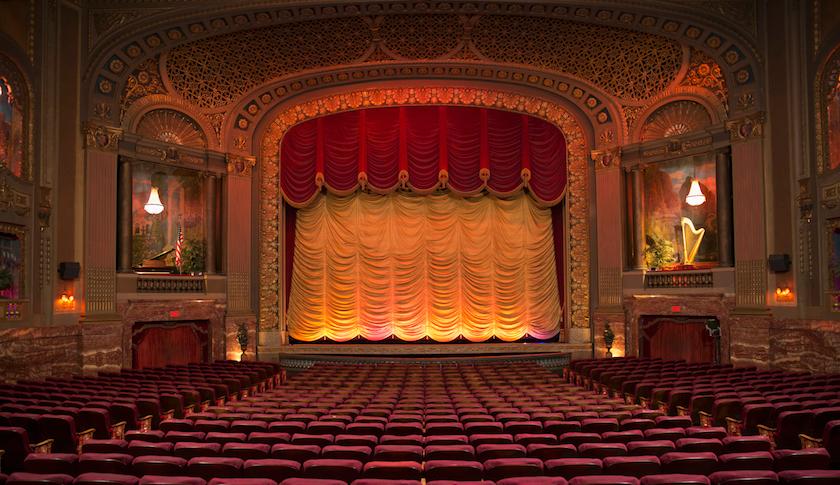
Empty seats in ornate movie theaterPhotograph by Ariel Skelley—Getty Images/Blend Images

Retailers aren’t the only ones preparing for a rush of business this holiday season. The Thanksgiving and Christmas holidays are a busy time for the movie business too, with average weekly attendance over Thanksgiving weekend spiking, followed by an even more pronounced surge in attendance during Christmas.

But unlike, say, the airline industry, movie theaters don’t take advantage of this surge in demand by charging its customers more. A 2007 paper published by Barak Orbach and Liran Einav argues that “anecdotal evidence indeed indicates that variable pricing could increase revenues” for theaters. They point to studies conducted in the 1970s showed that lowering prices during weekdays increased box office revenues and concession sales. Theater owners overseas have also had success by discounting tickets during slow periods or charging premiums for big blockbuster movies like Jurassic Park.

But despite this evidence, and the sound economic theory that supports changing prices to reflect waxing and waning demand, theaters in America more or less charge the same price for a ticket regardless of the how popular the movie is or when it is playing.

Orbach and Einav explain that this wasn’t always the case. There was widespread use of variable pricing in the industry from the 1910s until the 1950s, and the practice continued in some theaters up until the early 1970s. According to Orbach and Einav, film distributors, which often owned major stakes in the most popular movie theaters, devised a system in which everyone benefitted from variable pricing:

Theaters were classified according to their affiliation, luxuriousness, age, and location. Based on this classification, a “run-clearance-zone” system was established. In any defined geographic location, a given movie played at one theater, and another theater within the same zone could show the same movie only after a defined period lapsed.

Distributors also graded movies as A, B, or C depending on their budgets and the popularity of leading actors. Admission prices for A movies were greater than B, while B movies cost more than the C variety. These practices created a system where ticket prices varied depending on when and where movies played and how much it cost to make them.


This system began to unravel in the late 1940s, when a recession and the advent of television dealt a huge blow to the movie production industry. “Adjusted to 2002 dollars, box office receipts, which hit a record of $15.6 billion in 1946, bottomed out at just $5.5 billion in 1964, and then gradually climbed to $9.5 billion in 2002,” write Orbach and Einav. The business reacted to this sea change by cutting back on the supply of movies—mostly by eliminating lower-priced B and C movies. In addition, the famous Paramount anti-trust case of 1948 broke up the system that gave movie distributors an interest in the variable pricing scheme.

That case was supposed to dismantle the cozy relationship between movie theaters and distributors, but even today “most theaters are informally affiliated with specific major distributors,” write Orbach and Einav. They find that the Paramount case and state laws aimed at “creating a competitive bidding market in which theaters have access to all distributors” have failed. And the benefits of the system that eventually emerged accrued to movie studios and distributors, rather than the theaters themselves. Theaters make most of their profits from concessions and would benefit from a pricing scheme that kept their houses full no matter the time of day or year.

The reliance on uniform pricing has had some unintended ethical consequences, too. For instance, this weekend, The New York Times ethicist column dealt with a reader who liked purchasing (at a movie theater with reserved seating) an extra seat next to him so that he could enjoy the additional space. The ethicist frowned on this practice, writing:

If you buy an extra ticket for a movie playing in a theater that’s only half full, you’re actually being more morally conscientious than necessary. Most of the time, finding an empty third seat is not that difficult — but by paying for a third ticket, you are admitting your intentions up front and ensuring that you won’t extract more from this experience than you invested. That’s good citizenship. If the theater is full, however, you should never do this…. You are placing your own gratuitous comfort … above a stranger’s ability to merely experience the same film. Under those conditions, the benefit you are taking for yourself is smaller and less meaningful than what you’re taking away from another person. That’s bad citizenship.

An economist would look at this question differently. He would argue that it’s impossible for an outsider to say one movie goer’s comfort is less valuable than a stranger’s ability to merely experience the film. What if, for instance, a movie goer is so anthrophobic that he can’t enjoy a movie without a buffer seat next to him?

Furthermore, the ethicist argues that it’s actually an example of good citizenship to buy an extra seat, but only when the movie isn’t sold out. But in most situations, a movie goer won’t likely know whether a movie will sell out when he is buying his tickets, especially if he buys his tickets well ahead of the showing. By raising prices during times of high demand and lowering them during times of slack demand, theaters would make it less likely for a patron to buy extra comfort in the form of extra seats.

Prices can communicate of all sorts of information, but only when they are allowed to change in the face of shifting supply and demand.

About the Author
By Chris Matthews
See full bioRight Arrow Button Icon

Latest in Finance

Finance
Lorem ipsum dolor sit amet, consectetur adipiscing elit, sed do eiusmod tempor incididunt ut labore et dolore magna aliqua. Ut enim ad minim veniam
By Fortune Editors
October 20, 2025
Finance
Lorem ipsum dolor sit amet, consectetur adipiscing elit, sed do eiusmod tempor incididunt ut labore et dolore magna aliqua. Ut enim ad minim veniam
By Fortune Editors
October 20, 2025
Finance
Lorem ipsum dolor sit amet, consectetur adipiscing elit, sed do eiusmod tempor incididunt ut labore et dolore magna aliqua. Ut enim ad minim veniam
By Fortune Editors
October 20, 2025
Finance
Lorem ipsum dolor sit amet, consectetur adipiscing elit, sed do eiusmod tempor incididunt ut labore et dolore magna aliqua. Ut enim ad minim veniam
By Fortune Editors
October 20, 2025
Finance
Lorem ipsum dolor sit amet, consectetur adipiscing elit, sed do eiusmod tempor incididunt ut labore et dolore magna aliqua. Ut enim ad minim veniam
By Fortune Editors
October 20, 2025
Finance
Lorem ipsum dolor sit amet, consectetur adipiscing elit, sed do eiusmod tempor incididunt ut labore et dolore magna aliqua. Ut enim ad minim veniam
By Fortune Editors
October 20, 2025

Most Popular

Finance
Lorem ipsum dolor sit amet, consectetur adipiscing elit, sed do eiusmod tempor incididunt ut labore et dolore magna aliqua. Ut enim ad minim veniam
By Fortune Editors
October 20, 2025
Finance
Lorem ipsum dolor sit amet, consectetur adipiscing elit, sed do eiusmod tempor incididunt ut labore et dolore magna aliqua. Ut enim ad minim veniam
By Fortune Editors
October 20, 2025
Finance
Lorem ipsum dolor sit amet, consectetur adipiscing elit, sed do eiusmod tempor incididunt ut labore et dolore magna aliqua. Ut enim ad minim veniam
By Fortune Editors
October 20, 2025
Finance
Lorem ipsum dolor sit amet, consectetur adipiscing elit, sed do eiusmod tempor incididunt ut labore et dolore magna aliqua. Ut enim ad minim veniam
By Fortune Editors
October 20, 2025
Finance
Lorem ipsum dolor sit amet, consectetur adipiscing elit, sed do eiusmod tempor incididunt ut labore et dolore magna aliqua. Ut enim ad minim veniam
By Fortune Editors
October 20, 2025
Finance
Lorem ipsum dolor sit amet, consectetur adipiscing elit, sed do eiusmod tempor incididunt ut labore et dolore magna aliqua. Ut enim ad minim veniam
By Fortune Editors
October 20, 2025
Fortune Secondary Logo
Rankings
  • 100 Best Companies
  • Fortune 500
  • Global 500
  • Fortune 500 Europe
  • Most Powerful Women
  • World's Most Admired Companies
  • See All Rankings
  • Lists Calendar
Sections
  • Finance
  • Fortune Crypto
  • Features
  • Leadership
  • Health
  • Commentary
  • Success
  • Retail
  • Mpw
  • Tech
  • Lifestyle
  • CEO Initiative
  • Asia
  • Politics
  • Conferences
  • Europe
  • Newsletters
  • Personal Finance
  • Environment
  • Magazine
  • Education
Customer Support
  • Frequently Asked Questions
  • Customer Service Portal
  • Privacy Policy
  • Terms Of Use
  • Single Issues For Purchase
  • International Print
Commercial Services
  • Advertising
  • Fortune Brand Studio
  • Fortune Analytics
  • Fortune Conferences
  • Business Development
  • Group Subscriptions
About Us
  • About Us
  • Press Center
  • Work At Fortune
  • Terms And Conditions
  • Site Map
  • About Us
  • Press Center
  • Work At Fortune
  • Terms And Conditions
  • Site Map
  • Facebook icon
  • Twitter icon
  • LinkedIn icon
  • Instagram icon
  • Pinterest icon

Latest in Finance

A Google engineer is facing federal charges after allegedly using his employer’s confidential data to pocket $1.2 million on Polymarket
Investingfraud
A Google engineer is facing federal charges after allegedly using his employer’s confidential data to pocket $1.2 million on Polymarket
By Marco Quiroz-GutierrezMay 28, 2026
1 hour ago
a woman looks at the produce she's buying
Economyaffordability
More Americans are going hungry now than during the pandemic, as people face a ‘remarkable’ rise in food insecurity, New York Fed says
By Jacqueline MunisMay 28, 2026
3 hours ago
ron
Personal FinanceFlorida
UBS says Ron DeSantis has a problem with his plan to help 92% of homeowners save on property taxes: His own state’s data
By Nick LichtenbergMay 28, 2026
3 hours ago
Jane Fraser defied the ‘glass cliff’ to engineer Citi’s long-awaited turnaround
NewslettersMPW Daily
Jane Fraser defied the ‘glass cliff’ to engineer Citi’s long-awaited turnaround
By Claire ZillmanMay 28, 2026
4 hours ago
Costco CEO Ron Vachris says tech is ‘elevating’ workers,’ not replacing them—as IBM and Delta bosses make the same bet on humans
Successthe future of work
Costco CEO Ron Vachris says tech is ‘elevating’ workers,’ not replacing them—as IBM and Delta bosses make the same bet on humans
By Preston ForeMay 28, 2026
4 hours ago
Boos, AI-washing, and ‘low-value human capital’: The psychological traps CEOs are falling into when they botch their AI messaging
C-Suitechief executive officer (CEO)
Boos, AI-washing, and ‘low-value human capital’: The psychological traps CEOs are falling into when they botch their AI messaging
By Claire ZillmanMay 28, 2026
4 hours ago

Most Popular

Jeff Bezos wants the bottom half of earners to pay zero income tax—he says nurses making just $75K should save $12K a year
Success
Jeff Bezos wants the bottom half of earners to pay zero income tax—he says nurses making just $75K should save $12K a year
By Preston ForeMay 21, 2026
7 days ago
The river that supplies 40 million Americans is down to 23% — and about to make a $25 million bet on one fish
Environment
The river that supplies 40 million Americans is down to 23% — and about to make a $25 million bet on one fish
By Dorany Pineda, Brittany Peterson and The Associated PressMay 27, 2026
1 day ago
Jamie Dimon said the American Dream was slipping away. JPMorgan just put $40 million on the table to fix it
Banking
Jamie Dimon said the American Dream was slipping away. JPMorgan just put $40 million on the table to fix it
By Nick LichtenbergMay 27, 2026
1 day ago
Even if every California billionaire left tomorrow, it would take 25 years for the state to lose as much as it stands to gain from proposed wealth tax
Economy
Even if every California billionaire left tomorrow, it would take 25 years for the state to lose as much as it stands to gain from proposed wealth tax
By Tristan BoveMay 27, 2026
1 day ago
Current price of oil as of May 27, 2026
Personal Finance
Current price of oil as of May 27, 2026
By Joseph HostetlerMay 27, 2026
1 day ago
Techlash grows in education: 'My daughter went to middle school and was sent home with a screen addiction in her backpack'
North America
Techlash grows in education: 'My daughter went to middle school and was sent home with a screen addiction in her backpack'
By Jocelyn Gecker and The Associated PressMay 26, 2026
2 days ago

© 2026 Fortune Media IP Limited. All Rights Reserved. Use of this site constitutes acceptance of our Terms of Use and Privacy Policy | CA Notice at Collection and Privacy Notice | Do Not Sell/Share My Personal Information
FORTUNE is a trademark of Fortune Media IP Limited, registered in the U.S. and other countries. FORTUNE may receive compensation for some links to products and services on this website. Offers may be subject to change without notice.