• Home
  • News
  • Fortune 500
  • Tech
  • Finance
  • Leadership
  • Lifestyle
  • Rankings
  • Multimedia
LeadershipInnovation

Finding innovative ideas in unexpected places

By
Down Arrow Button Icon
By
Down Arrow Button Icon
November 19, 2014, 3:46 PM ET
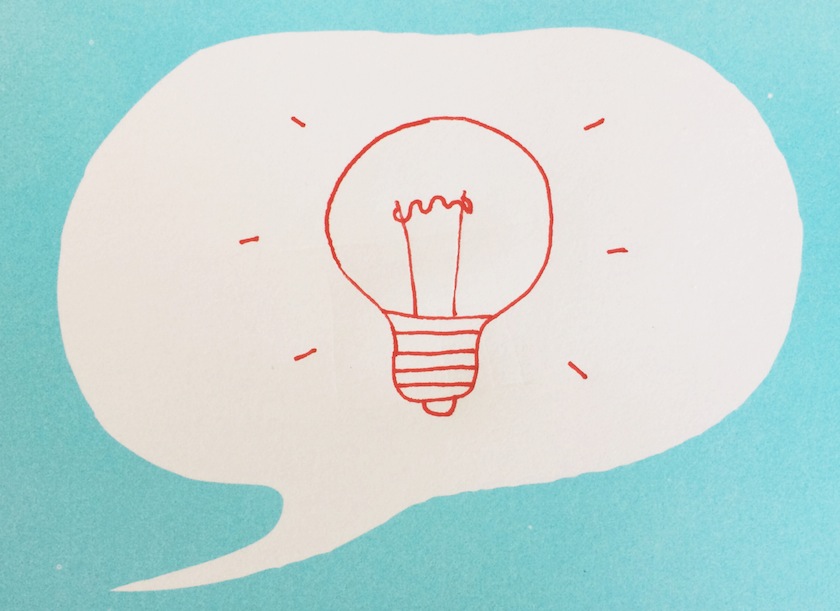
light bulb idea innovation
light bulb idea innovationPhotograph by Lasse Kristensen—Getty Images/Moment Open

A few years ago, executives at PepsiCo gave the R&D department a challenge: Find a way to cut the sodium content of snack foods, while still keeping the salty taste consumers crave.

After toiling away in their own labs and searching across the packaged-foods industry for ideas, the scientists found what they were looking for — in a global research lab that was studying osteoporosis.

What do salty snacks and bone disease have to do with each other? Nothing, except when it comes to so-called open innovation. The osteoporosis researchers had developed a way to create nanoparticles of a low-sodium, salt-like substance by “smashing calcium into tiny particles and re-growing it,” says Andy Zynga, CEO of innovation firm NineSigma. That gave PepsiCo’s food scientists a whole new perspective on the task, so “the company went on to solve its problem in a truly innovative way.”

PepsiCo isn’t the only one to have based a big innovation on an idea that originated in a totally different business, for a different purpose altogether. Procter & Gamble, for instance, found a way to reduce the wrinkles in shirts fresh out of the dryer by starting with a polymer invented by a computer chip expert at a European university.

Zynga, whose firm counts Xerox, Pfizer, Kraft, Siemens, and many other heavy hitters among its clients, says any company can make profitable use of ideas from other, seemingly unrelated fields. The first step in what’s commonly called open innovation, he says, is to reframe the question of what you’re looking for.

“State the problem in its most basic form,” he suggests. In P&G’s case, instead of looking for ideas on, say, “how to make fabrics less wrinkly,” the company put the word out that it sought proposals on “relaxing surface tension of an organic material.” Expanding the definition of the goal “lets you cast a very wide net, so you can find workable solutions in places you might never have thought of looking,” Zynga says.

NineSigma has built a database of more than 2 million companies, nonprofits, and university labs worldwide, where its teams of consultants search for useful technologies on clients’ behalf, but Zynga maintains that anyone with a tricky problem to solve can do something similar.

“Start with a basic problem statement that doesn’t limit you to your own industry,” he suggests. “Then, go and talk to suppliers, customers, and universities. Some of our clients have technology scouts who are constantly going to conferences to talk with experts in other fields, to see what they can apply to improving their own products.” The more varied technologies you have to choose from, he adds, the better your chances of “advancing above and beyond what your competition is doing.”

That’s not to say that an innovation from elsewhere will always be welcome in-house. One obstacle to open innovation is a cognitive bias that psychologists call “functional fixedness,” meaning that a company’s own R&D experts “can’t get past the way they have always looked, and where they have always looked, for solutions,” Zynga says. “Ironically, the more success they’ve had with their usual approach to a problem, the harder it is to imagine a totally different one.”

To change that, Zynga suggests appointing what he calls “a functional fixedness SWAT team — a group of innovators who embrace the idea of collaborating with others outside industry walls.” He’s seen such teams unearth enough helpful ideas from surprising sources that they’ve inspired their colleagues to “evolve from a closed loop to an open one.”


Latest in Leadership

EconomyEurope
JPMorgan CEO Jamie Dimon says Europe has a ‘real problem’
By Katherine Chiglinsky and BloombergDecember 6, 2025
9 hours ago
Big TechApple
Apple rocked by executive departures, with chip chief at risk of leaving next
By Mark Gurman and BloombergDecember 6, 2025
12 hours ago
SuccessWealth
The $124 trillion Great Wealth Transfer is intensifying as inheritance jumps to a new record, with one 19-year-old reaping the rewards
By Jason MaDecember 6, 2025
12 hours ago
Bambas
LawSocial Media
22-year-old Australian TikToker raises $1.7 million for 88-year-old Michigan grocer after chance encounter weeks earlier
By Ed White and The Associated PressDecember 6, 2025
19 hours ago
AITech
Nvidia’s CEO says AI adoption will be gradual, but when it does hit, we may all end up making robot clothing
By Marco Quiroz-GutierrezDecember 6, 2025
21 hours ago
Timm Chiusano
Successcreator economy
After he ‘fired himself’ from a Fortune 100 job that paid up to $800k, the ‘Mister Rogers’ of Corporate America shows Gen Z how to handle toxic bosses
By Jessica CoacciDecember 6, 2025
22 hours ago

Most Popular

placeholder alt text
AI
Nvidia CEO says data centers take about 3 years to construct in the U.S., while in China 'they can build a hospital in a weekend'
By Nino PaoliDecember 6, 2025
15 hours ago
placeholder alt text
Big Tech
Mark Zuckerberg rebranded Facebook for the metaverse. Four years and $70 billion in losses later, he’s moving on
By Eva RoytburgDecember 5, 2025
2 days ago
placeholder alt text
Real Estate
The 'Great Housing Reset' is coming: Income growth will outpace home-price growth in 2026, Redfin forecasts
By Nino PaoliDecember 6, 2025
20 hours ago
placeholder alt text
Success
Nvidia CEO Jensen Huang admits he works 7 days a week, including holidays, in a constant 'state of anxiety' out of fear of going bankrupt
By Jessica CoacciDecember 4, 2025
3 days ago
placeholder alt text
Economy
The most likely solution to the U.S. debt crisis is severe austerity triggered by a fiscal calamity, former White House economic adviser says
By Jason MaDecember 6, 2025
10 hours ago
placeholder alt text
Asia
Despite their ‘no limits’ friendship, Russia is paying a nearly 90% markup on sanctioned goods from China—compared with 9% from other countries
By Jason MaNovember 29, 2025
7 days ago
Rankings
  • 100 Best Companies
  • Fortune 500
  • Global 500
  • Fortune 500 Europe
  • Most Powerful Women
  • Future 50
  • World’s Most Admired Companies
  • See All Rankings
Sections
  • Finance
  • Leadership
  • Success
  • Tech
  • Asia
  • Europe
  • Environment
  • Fortune Crypto
  • Health
  • Retail
  • Lifestyle
  • Politics
  • Newsletters
  • Magazine
  • Features
  • Commentary
  • Mpw
  • CEO Initiative
  • Conferences
  • Personal Finance
  • Education
Customer Support
  • Frequently Asked Questions
  • Customer Service Portal
  • Privacy Policy
  • Terms Of Use
  • Single Issues For Purchase
  • International Print
Commercial Services
  • Advertising
  • Fortune Brand Studio
  • Fortune Analytics
  • Fortune Conferences
  • Business Development
About Us
  • About Us
  • Editorial Calendar
  • Press Center
  • Work At Fortune
  • Diversity And Inclusion
  • Terms And Conditions
  • Site Map

© 2025 Fortune Media IP Limited. All Rights Reserved. Use of this site constitutes acceptance of our Terms of Use and Privacy Policy | CA Notice at Collection and Privacy Notice | Do Not Sell/Share My Personal Information
FORTUNE is a trademark of Fortune Media IP Limited, registered in the U.S. and other countries. FORTUNE may receive compensation for some links to products and services on this website. Offers may be subject to change without notice.