• Home
  • News
  • Fortune 500
  • Tech
  • Finance
  • Leadership
  • Lifestyle
  • Rankings
  • Multimedia
tbtf

Regulators lay out plan to end ‘Too-Big-To-Fail’

By
Geoffrey Smith
Geoffrey Smith
Down Arrow Button Icon
By
Geoffrey Smith
Geoffrey Smith
Down Arrow Button Icon
November 10, 2014, 6:50 AM ET
US-ECONOMY-FINANCE-IMF-WB-ETHICS-CARNEY
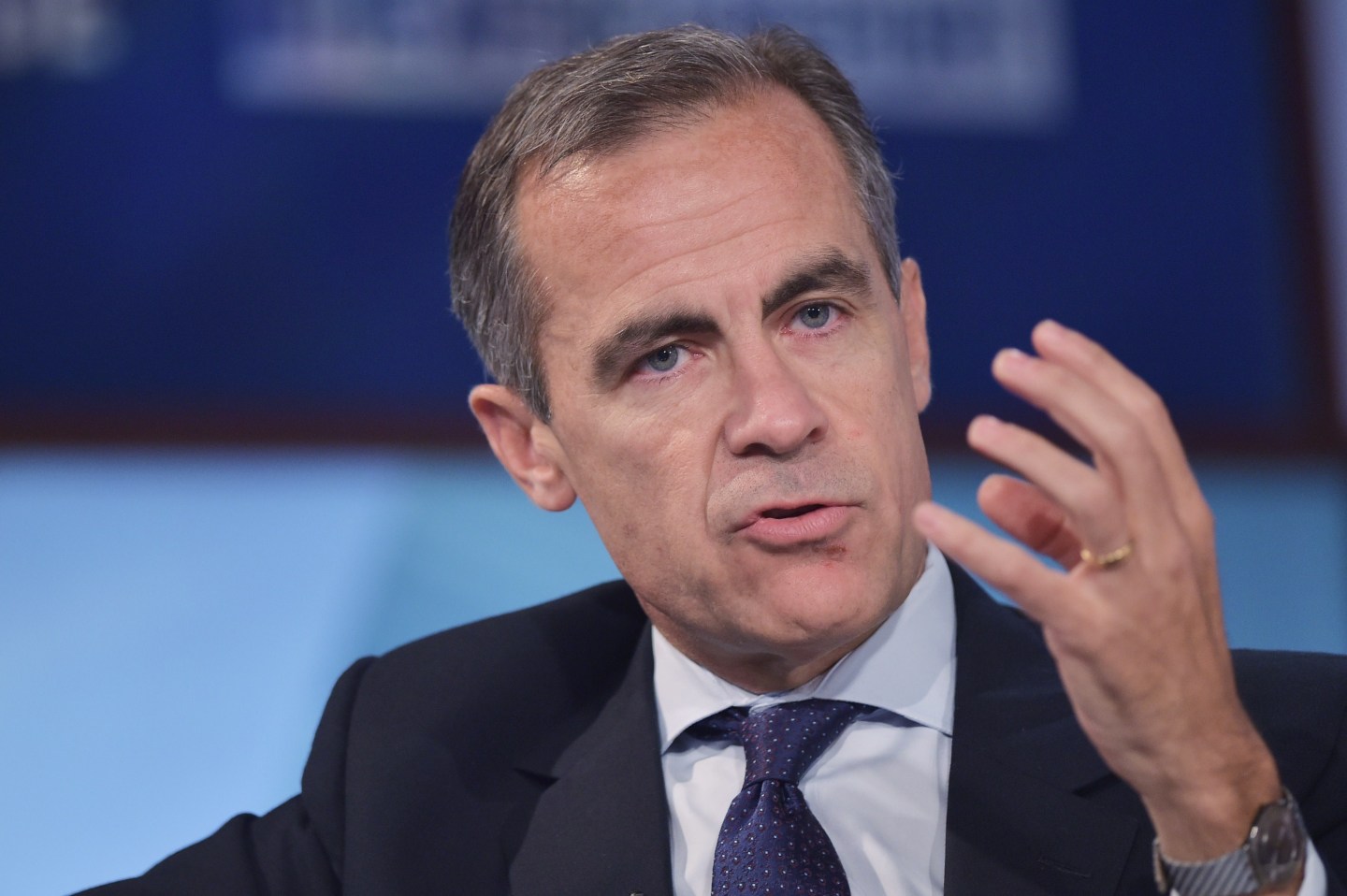
Bank of England Governor Mark Carney speaks during a discussion on ethics and finance at the 2014 IMF - World Bank Annual Meetings at George Washington University's Jack Morton Auditorium on October 12, 2014 in Washington, DC. AFP PHOTO/Mandel NGAN (Photo credit should read MANDEL NGAN/AFP/Getty Images)Photograph by Mandel Ngan — AFP/Getty Images

The world’s banking regulators unveiled at the weekend their last great plan for ending the phenomenon of banks that are ‘too-big-to-fail’, proposing that the most important institutions should carry at least as much as capital as other banks to ensure that taxpayers don’t ever have to rescue them again.

The Financial Stability Board, which coordinates the global regulatory response to the 2008 financial crisis on behalf of the Group of 20 major economies, said that Global Systemically Important Banks, or G-SIBs, should in future have to hold loss-absorbing capital equivalent to between 16%-20% of their total assets, adjusted for risk.

That’s more than double the 8% ratio that was prescribed in the so-called “Basel III” accords in 2011, which are being phased in around the world by 2018. The actual ratio required may even be higher than the basic range of 16%-20% range, as the plan allows national regulators to add on further capital charges if they deem it necessary.

The scale of the new requirements reflects, in part, the fact that regulators have largely failed to crack the legal and political problems of resolving a global bank (such as Lehman Brothers was), if its collapse leaves a trail of creditors in numerous jurisdictions, all with competing claims on its assets.

The new requirements would hit 30 banks that the FSB considers G-SIBs. They include JP Morgan Chase Inc. (JPM), Citigroup (C), Goldman Sachs , Morgan Stanley (MS), State Street (STT) and Wells Fargo Inc. (WFC), as well as all of the largest European and Japanese banks, plus two Chinese lenders.

Mark Carney, chairman of the FSB and governor of the Bank of England, told the BBC Monday that the pre-crisis system, which forced governments to carry out multi-billion dollar bail-outs to avert financial disaster, had been “totally unfair.”

“The banks and their shareholders and their creditors got the benefit when things went well,” Carney said. “But when they went wrong the…public and subsequent generations picked up the bill–and that’s going to end.”

Banks have complained ever since the Basel III accords that stringent new capital requirements would make it difficult for them to turn a profit, but such claims have lost credence as bank profits–especially in the U.S.–have rebounded with the economic upturn.

The new rules wouldn’t necessarily mean that banks will have to issue floods of new shares that would dilute their existing shareholder base. More likely is that banks–which typically depend to a far greater extent on bonds than equity to finance themselves–will have to rely less on “senior” debt, and switch more of it for “subordinated” debt that regulators can write down to zero if a bank’s losses exceed its equity base.

The FSB said it expects that banks will be able to use such ‘bail-in-able’ debt securities to meet at least one-third of the requirement.

Under the FSB’s proposals, banks would have until 2019 to meet the requirements. If they fail to do so, then regulators could restrict or ban bonus payments or dividends until a bank met them.

The final terms of the requirement will be fine-tuned after feedback from the banks themselves, and from a ‘Quantitative Impact Study’ in early 2015.


About the Author
By Geoffrey Smith
See full bioRight Arrow Button Icon
0

Most Popular

placeholder alt text
Real Estate
The 'Great Housing Reset' is coming: Income growth will outpace home-price growth in 2026, Redfin forecasts
By Nino PaoliDecember 6, 2025
2 days ago
placeholder alt text
AI
Nvidia CEO says data centers take about 3 years to construct in the U.S., while in China 'they can build a hospital in a weekend'
By Nino PaoliDecember 6, 2025
2 days ago
placeholder alt text
Economy
The most likely solution to the U.S. debt crisis is severe austerity triggered by a fiscal calamity, former White House economic adviser says
By Jason MaDecember 6, 2025
1 day ago
placeholder alt text
Economy
JPMorgan CEO Jamie Dimon says Europe has a 'real problem’
By Katherine Chiglinsky and BloombergDecember 6, 2025
1 day ago
placeholder alt text
Big Tech
Mark Zuckerberg rebranded Facebook for the metaverse. Four years and $70 billion in losses later, he’s moving on
By Eva RoytburgDecember 5, 2025
3 days ago
placeholder alt text
Politics
Supreme Court to reconsider a 90-year-old unanimous ruling that limits presidential power on removing heads of independent agencies
By Mark Sherman and The Associated PressDecember 7, 2025
17 hours ago
Rankings
  • 100 Best Companies
  • Fortune 500
  • Global 500
  • Fortune 500 Europe
  • Most Powerful Women
  • Future 50
  • World’s Most Admired Companies
  • See All Rankings
Sections
  • Finance
  • Leadership
  • Success
  • Tech
  • Asia
  • Europe
  • Environment
  • Fortune Crypto
  • Health
  • Retail
  • Lifestyle
  • Politics
  • Newsletters
  • Magazine
  • Features
  • Commentary
  • Mpw
  • CEO Initiative
  • Conferences
  • Personal Finance
  • Education
Customer Support
  • Frequently Asked Questions
  • Customer Service Portal
  • Privacy Policy
  • Terms Of Use
  • Single Issues For Purchase
  • International Print
Commercial Services
  • Advertising
  • Fortune Brand Studio
  • Fortune Analytics
  • Fortune Conferences
  • Business Development
About Us
  • About Us
  • Editorial Calendar
  • Press Center
  • Work At Fortune
  • Diversity And Inclusion
  • Terms And Conditions
  • Site Map

© 2025 Fortune Media IP Limited. All Rights Reserved. Use of this site constitutes acceptance of our Terms of Use and Privacy Policy | CA Notice at Collection and Privacy Notice | Do Not Sell/Share My Personal Information
FORTUNE is a trademark of Fortune Media IP Limited, registered in the U.S. and other countries. FORTUNE may receive compensation for some links to products and services on this website. Offers may be subject to change without notice.