• Home
  • Latest
  • Fortune 500
  • Finance
  • Tech
  • Leadership
  • Lifestyle
  • Rankings
  • Multimedia
FinanceGoogle

Man was I wrong about Google’s IPO

By
Stephen Gandel
Stephen Gandel
Down Arrow Button Icon
By
Stephen Gandel
Stephen Gandel
Down Arrow Button Icon
August 19, 2014, 1:06 PM ET
2008 Google Winter Marketing Forum In Xian
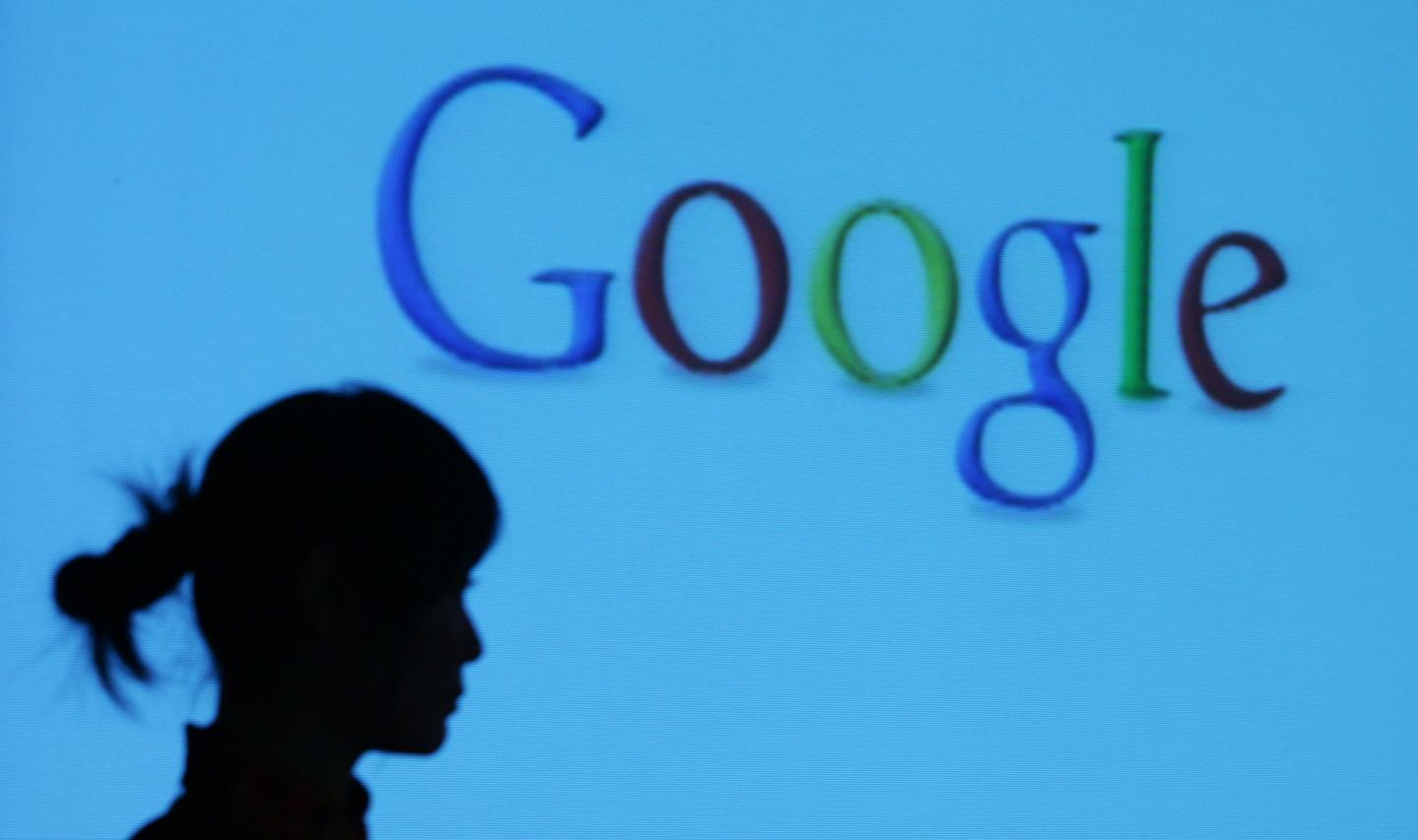
XIAN, CHINA - NOVEMBER 20: (CHINA OUT) An etiquette girl is reflected on a big screen at the Google's 2008 Xian winter marketing forum on November 20, 2008 in Xian of Shaanxi Province, China. Google has covered in China most of the commercial value of users, 88 percent of search products and user information in the use of Google. (Photo by China Photos/Getty Images)China Photos—Getty Images

Ten years ago, I called anyone buying into Google’s much hyped IPO a “sucker.” My bottom line, which I helpfully broke out into a separate paragraph titled “My Advice” in my Money magazine article was “stay clear.” Man was I wrong.

In fact, few investing calls, since the beginning of time, have been more wrong. Leading economist Irving Fisher calling stocks cheap in 1929. And then there’s me.

Google’s shares started trading at $50, adjusted for a 2-for-1 split a few years later. I said they were worth less than half that, around $20. And I was pretty sure they would soon nosedive to that price. They never did.

A decade later, Google’s shares now trade for $586. That’s a 1084% return, roughly 10 times what the stock market did at the same time. If you had invested $10,000 in Google (GOOG) then, you would now have $118,400, or $97,000 more than what you would had if you invested the same money in the S&P 500. You’re welcome!

So why was I so utterly wrong about Google? Can I learn anything about investing from this call?

More from Money: The 8 worst things ever said about Google as an investment

First of all, trying to come up with an exact price for what a company is worth is the true sucker’s game. To come up with my $20 a share for Google, I used what Wall Streeters and finance professors call a discounted cash flow model. And I sought out the advice of New York University economics professor Aswath Damodaran, who wrote a textbook about how to value companies, to do it. Estimate all the money you think a company is going to generate over the next decade (because try to estimate beyond that and you are bound to look pretty silly), and then figure out what, based on future inflation, that cash flow would be worth today. And presto, you will know what Google, or any company should be worth.

Ok, so there were a number of ways to mess this up, and I did all of them. My first mistake was to assume that Google’s sales growth would be a stable 30% a year. Online advertising was increasing, and I figured Google would get a slice of that. What I didn’t understand was that Google wouldn’t just get a slice, but nearly all of it. As a result, Google’s revenue has grown an average of 50% a year over the past decade.

Also, I thought there was a high probability that I was overestimating how profitable Google could be. I said there was a strong possibility that Google would end up with Netscape in the internet graveyard. Based on its current profitability, I said Google could earn $48 billion over its lifetime. But that, I said, was unlikely. What’s more, inflation would eat up the value of a lot of those profits. So I used a discount rate of 15%, per year, to figure out that the value of those profits was more like $15 billion.

Not even close. Google’s actual cash flow over the past decade has been just over $90 billion, and inflation has been basically non-existent.

If I had gotten that number correct, and trusted it, I still wouldn’t have predicted that Google’s shares would be near $600 by 2014. But I would have thought the stock was a buy back at $50.

Second, some companies do live up to their hype. Actually, probably more than most of us expect. Damodaran, who I called up to chat about our decade old folly, said not to be so down on trying to value companies. He thinks you will be wrong 20% of the time. That seems low to me. A number of companies that I thought were successes a decade ago have faltered. But I can’t think of eight high profile busts.

The companies that are still around a decade from now will probably perform better than expected. So the better question is not what the company will earn over the next ten years, but will it be around ten years from now. And then just assume if it is, it will do much better than you expect.

More from Money: 10 Ways Google Has Changed the World

Lastly, the companies that succeed are always going to be worth more than you think they are worth. That’s the nature of the stock market. We’re all chasing the same few stocks. And the market moves in herds. We think of the market and all the buying and selling as a way to come at the exact price a company is worth. That’s the efficient market hypothesis. Instead, the market for stocks works like any other market. The good stuff always costs more than you think it should. And the bad stuff is always overpriced.

Bruce Greenwald, Columbia’s reigning expert when it comes to investing, says I shouldn’t feel so bad about being so wrong about Google. A decade ago, the search business still seemed in flux. So again, I would have had to have known that Google wasn’t going away, and that it along with online advertising was going to take over the advertising world. In short, I had to know that Google was not just another Internet company, but the Internet company. I did not know that.

So here’s what I think I have learned: A decade ago, I thought price was the most important thing when it came to investing in stocks. That doesn’t seem right to me. The lesson of Google is that the most important thing when it comes to investing is picking the right companies. Get that right, and the price you pay for their shares is always going to be a good bet.

How do you know what companies will succeed? That leads me to my second, and more useful, lesson from my experience with Google: Buy index funds. I don’t know the future. Do you? And you kind of have to know the future really well to pick individual stocks. So don’t do it. Just buy the S&P 500. If the companies are successful, like Google, they will end up in the index eventually.

A few months after the IPO’s success, when Google’s stock had risen to the equivalent of $61, I again advised avoiding the stock. Instead, I said to buy eBay (EBAY). Wrong, again. eBay’s stock is up a pathetic 17% since then. Although I also said to avoid the shares of Yahoo (YHOO)–a good call, but not enough to get me off the hook for the worst investment call of all time.

About the Author
By Stephen Gandel
See full bioRight Arrow Button Icon

Latest in Finance

Finance
Lorem ipsum dolor sit amet, consectetur adipiscing elit, sed do eiusmod tempor incididunt ut labore et dolore magna aliqua. Ut enim ad minim veniam
By Fortune Editors
October 20, 2025
Finance
Lorem ipsum dolor sit amet, consectetur adipiscing elit, sed do eiusmod tempor incididunt ut labore et dolore magna aliqua. Ut enim ad minim veniam
By Fortune Editors
October 20, 2025
Finance
Lorem ipsum dolor sit amet, consectetur adipiscing elit, sed do eiusmod tempor incididunt ut labore et dolore magna aliqua. Ut enim ad minim veniam
By Fortune Editors
October 20, 2025
Finance
Lorem ipsum dolor sit amet, consectetur adipiscing elit, sed do eiusmod tempor incididunt ut labore et dolore magna aliqua. Ut enim ad minim veniam
By Fortune Editors
October 20, 2025
Finance
Lorem ipsum dolor sit amet, consectetur adipiscing elit, sed do eiusmod tempor incididunt ut labore et dolore magna aliqua. Ut enim ad minim veniam
By Fortune Editors
October 20, 2025
Finance
Lorem ipsum dolor sit amet, consectetur adipiscing elit, sed do eiusmod tempor incididunt ut labore et dolore magna aliqua. Ut enim ad minim veniam
By Fortune Editors
October 20, 2025

Most Popular

Finance
Lorem ipsum dolor sit amet, consectetur adipiscing elit, sed do eiusmod tempor incididunt ut labore et dolore magna aliqua. Ut enim ad minim veniam
By Fortune Editors
October 20, 2025
Finance
Lorem ipsum dolor sit amet, consectetur adipiscing elit, sed do eiusmod tempor incididunt ut labore et dolore magna aliqua. Ut enim ad minim veniam
By Fortune Editors
October 20, 2025
Finance
Lorem ipsum dolor sit amet, consectetur adipiscing elit, sed do eiusmod tempor incididunt ut labore et dolore magna aliqua. Ut enim ad minim veniam
By Fortune Editors
October 20, 2025
Finance
Lorem ipsum dolor sit amet, consectetur adipiscing elit, sed do eiusmod tempor incididunt ut labore et dolore magna aliqua. Ut enim ad minim veniam
By Fortune Editors
October 20, 2025
Finance
Lorem ipsum dolor sit amet, consectetur adipiscing elit, sed do eiusmod tempor incididunt ut labore et dolore magna aliqua. Ut enim ad minim veniam
By Fortune Editors
October 20, 2025
Finance
Lorem ipsum dolor sit amet, consectetur adipiscing elit, sed do eiusmod tempor incididunt ut labore et dolore magna aliqua. Ut enim ad minim veniam
By Fortune Editors
October 20, 2025
Fortune Secondary Logo
Rankings
  • 100 Best Companies
  • Fortune 500
  • Global 500
  • Fortune 500 Europe
  • Most Powerful Women
  • World's Most Admired Companies
  • See All Rankings
  • Lists Calendar
Sections
  • Finance
  • Fortune Crypto
  • Features
  • Leadership
  • Health
  • Commentary
  • Success
  • Retail
  • Mpw
  • Tech
  • Lifestyle
  • CEO Initiative
  • Asia
  • Politics
  • Conferences
  • Europe
  • Newsletters
  • Personal Finance
  • Environment
  • Magazine
  • Education
Customer Support
  • Frequently Asked Questions
  • Customer Service Portal
  • Privacy Policy
  • Terms Of Use
  • Single Issues For Purchase
  • International Print
Commercial Services
  • Advertising
  • Fortune Brand Studio
  • Fortune Analytics
  • Fortune Conferences
  • Business Development
  • Group Subscriptions
About Us
  • About Us
  • Press Center
  • Work At Fortune
  • Terms And Conditions
  • Site Map
  • About Us
  • Press Center
  • Work At Fortune
  • Terms And Conditions
  • Site Map
  • Facebook icon
  • Twitter icon
  • LinkedIn icon
  • Instagram icon
  • Pinterest icon

Latest in Finance

brian
Future of WorkLeadership
Coinbase’s Brian Armstrong replacing ‘pure managers’ with ‘player-coaches’ is another sign the org chart is changing in a big way
By Nick LichtenbergMay 5, 2026
29 minutes ago
Wage garnishment: How it works, limits, and what you can do
Personal Financemoney management
Wage garnishment: How it works, limits, and what you can do
By Joseph HostetlerMay 5, 2026
43 minutes ago
dimon, amodei
Cybersecuritycyber
Jamie Dimon and Dario Amodei sidestep question about whether the AI cyber ‘freakout’ is warranted
By Nick LichtenbergMay 5, 2026
2 hours ago
dario
Economydisruption
Dario Amodei spent last year warning of an AI white-collar bloodbath. Now he’s changing the narrative
By Nick LichtenbergMay 5, 2026
2 hours ago
Trump points as he speaks with his mouth opened wide
PoliticsPharmaceutical Industry
White House estimates Trump’s Big Pharma dealmaking will save Americans $529 billion over the next 10 years
By Josh Boak and The Associated PressMay 5, 2026
2 hours ago
One American loses their job for every 6 immigrants removed from the workforce as researchers see ‘no evidence’ that ICE is helping the economy
EconomyImmigration
One American loses their job for every 6 immigrants removed from the workforce as researchers see ‘no evidence’ that ICE is helping the economy
By Tristan BoveMay 5, 2026
3 hours ago

Most Popular

Diary of a CEO founder says he hired someone with 'zero' work experience because she 'thanked the security guard by name' before the interview
Success
Diary of a CEO founder says he hired someone with 'zero' work experience because she 'thanked the security guard by name' before the interview
By Emma BurleighMay 3, 2026
2 days ago
Current price of silver as of Monday, May 4, 2026
Personal Finance
Current price of silver as of Monday, May 4, 2026
By Joseph HostetlerMay 4, 2026
1 day ago
Clean energy's winning argument is the one it refuses to make
Commentary
Clean energy's winning argument is the one it refuses to make
By David CraneMay 5, 2026
10 hours ago
America got rich and got sad. A top economist says 2020 broke something that hasn't healed
Economy
America got rich and got sad. A top economist says 2020 broke something that hasn't healed
By Nick LichtenbergMay 3, 2026
2 days ago
Current price of gold as of May 4, 2026
Personal Finance
Current price of gold as of May 4, 2026
By Danny BakstMay 4, 2026
1 day ago
America is lucky it’s no longer a manufacturing powerhouse—it’s what’s protecting the U.S. economy from the worst of the oil shock, top economist says
Economy
America is lucky it’s no longer a manufacturing powerhouse—it’s what’s protecting the U.S. economy from the worst of the oil shock, top economist says
By Sasha RogelbergMay 4, 2026
1 day ago

© 2026 Fortune Media IP Limited. All Rights Reserved. Use of this site constitutes acceptance of our Terms of Use and Privacy Policy | CA Notice at Collection and Privacy Notice | Do Not Sell/Share My Personal Information
FORTUNE is a trademark of Fortune Media IP Limited, registered in the U.S. and other countries. FORTUNE may receive compensation for some links to products and services on this website. Offers may be subject to change without notice.