• Home
  • Latest
  • Fortune 500
  • Finance
  • Tech
  • Leadership
  • Lifestyle
  • Rankings
  • Multimedia
Japan

Japan’s workforce spy tech goes extreme

By
Michael Fitzpatrick
Michael Fitzpatrick
Down Arrow Button Icon
By
Michael Fitzpatrick
Michael Fitzpatrick
Down Arrow Button Icon
December 20, 2013, 4:14 PM ET
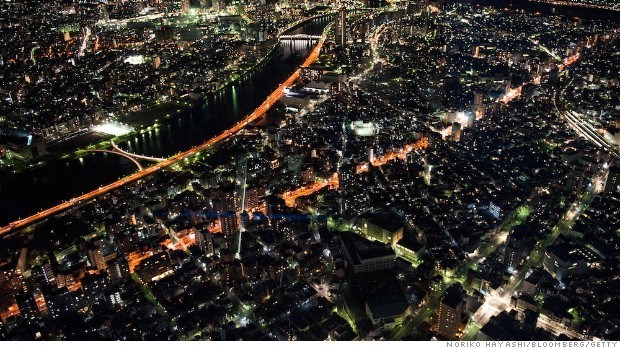
A night view of Tokyo from Tokyo Sky Tree Deck, 350m from the ground. Wednesday, February . 13.  Photographer:Norko Hayashi/Bloomberg.
A night view of Tokyo from Tokyo Sky Tree Deck, 350m from the ground. Wednesday, February . 13. Photographer:Norko Hayashi/Bloomberg.Noriko Hayashi / Bloomberg

Having ceded the battle of the gadgets to Korea and the U.S., Japan’s electronics titans need to reinvent themselves — this time as our great protectors, apparently.

Harnessing moral panics, such as fear of crime or terrorism, Japan’s largest tech companies are growing and investing heavily in systems for executive command and control, surveillance, and border checks. The results are the most sophisticated spy and monitoring tools ever conceived.

“Japanese companies are the leaders in creating innovative surveillance technology and implementation,” according to a report from the University of Queens in Canada, published in Company/Governmental Surveillance in Japan, a journal of surveillance studies. Japan’s NEC, a leader in the field, now dedicates 10% of its R&D spending to developing these systems.

“Traditionally, Japanese governments have been keen to protect and cultivate domestic electronic companies so that they become the driving force for Japanese economic development,” explains surveillance researcher Kiyoshi Abe at Kwansei University in Japan. “So it’s easy for them to develop and introduce more invasive surveillance technology, utilizing public worry and fear around rising political-military tensions between Japan and China.”

Nor is this exclusively Japan Inc.’s agenda. Corporations worldwide are cashing in on deployment of electronic spying and monitoring. The global security software market grew 7.9% in 2012, according to research from Gartner, driven by “new threats and working practices.”

Japanese companies, however, appear to be among the vanguard in this space. At a recent NEC tech exhibition in Tokyo, absent were the computer monitors and laptops that once characterized the firm. In their place were booths dedicated to data surveillance and face recognition systems marketed as “technologies to safeguard lives and property.”

The eye-catching “safety solutions” include programs aimed at snooping on workers — known as “performance monitoring” in the industry — and an application dubbed the Mental Health Check Tool. As we grow accustomed to business and the state harnessing the tools of the Information Age to scrutinize everything we do and say — privacy is no longer a social norm, claims Facebook’s (FB) Mark Zuckerberg. Japanese technology, it seems, is going one step further: enabling corporations to monitor our feelings.

Now in use by several undisclosed blue chip companies in Japan, NEC’s new health tool is PC-based and can monitor the mental stability of a workforce while flagging any potential psychological problems. For Japanese management, this could prove indispensable, dealing, as they do, with one of the most overworked and stressed workforces in the developed world. (Japan is second only to South Korea in suicide rates among wealthy nations, suffering an attrition rate nearly double that of the U.S.). According to a promotional leaflet for the app, the check tool works in tandem with workers’ “attendance data” and boasts benefits including addressing “lost productivity, and lost cost reduction.”

Japanese surveillance tech also includes tools to check on the quality of train station guards’ smiles and face recognition ad boards. And retailers in Japan have tracked their salespeople with GPS tech since 2002.

These products were introduced without much fuss in the media or protest from the general population. Such deference to employers, some argue, means Japan is riper than most for a total surveillance society. (By contrast, consider the outrage in the U.S. prompted by revelations that the NSA had engaged in widespread electronic surveillance of American citizens.)

In another study from the University of Queens, Japanese employees reported feeling fatalistic about snooping by the state, although some voiced distaste for employer breaches of privacy during focus group discussions. “I don’t really care about the government collecting data on me if it is for security purposes,” was one typical response.

Such faith in authority and a lack of public debate no doubt encouraged a confident Japanese government to recently railroad a new secrets bill into law that will significantly curtail free speech. The law, which went into effect last week, makes it a crime to divulge any secret the Japanese government deems vital to state security. Officials have refused to elaborate on what categories of secrets they are referring to, rendering investigative journalism and whistle-blowing nearly impossible, with offenders facing 10-year jail terms. Spirited dissent from the opposition came too late.

Prime Minister Shinzo Abe has argued that the new security measures are necessary to plug a notoriously leaky government machine, which prevents the U.S. from sharing intelligence with Japan.

But, as Kwansei University’s Abe points out, a burgeoning cold war with North Korea and China has thrown Japan into new moral panic, sending the state to look to technology to make itself feel safe. Foreigners are now electronically photographed and fingerprinted at Japan’s borders. NEC is also currently working on border control technology that will make “fortress America” look like a ring of roses, according to one source who was not authorized to speak publicly on these matters.

“So the market for surveillance in Japan is very attractive for electronic companies like NEC, Sony (SNE), and Panasonic,” says Kwansei University’s Abe.

Gripped by fear of war, terrorism, and crime in general, there has never been a better time to sell total surveillance to what is one of the safest countries in the world. Yet Japanese people contend they have much to fear, contrary to the facts. “Japan tends to evaluate risks using two level scales: ‘safe’ and ‘not safe.’ Often there is nothing in-between,” says Ivan Poupyrev, a researcher who lived in Japan for 15 years.

In fact, the country has a very low crime rate that has been declining over the last 60 years. Japan’s particularly successful brand of social cohesion has resulted in densely crowded cities — like Tokyo — where it is common to see children as young as six walk home alone in apparent safety. Although those same children are often subject, like nowhere else in the world, to electronic surveillance, tracked by special GPS software provided by mobile networks to anxious parents.

Rather than being “empowered by innovation,” as NEC would have it, Japan might be the first nation to be “enslaved by innovation” given that so few of its citizens care about their rights. No matter the intentions, such snooping opens the door to abuse. Nothing is being done to stop such behavior. The maxim that Japan is a “nation of sheep ruled by wolves” never seemed so apt.


About the Author
By Michael Fitzpatrick
See full bioRight Arrow Button Icon

Latest in

Finance
Lorem ipsum dolor sit amet, consectetur adipiscing elit, sed do eiusmod tempor incididunt ut labore et dolore magna aliqua. Ut enim ad minim veniam
By Fortune Editors
October 20, 2025
Finance
Lorem ipsum dolor sit amet, consectetur adipiscing elit, sed do eiusmod tempor incididunt ut labore et dolore magna aliqua. Ut enim ad minim veniam
By Fortune Editors
October 20, 2025
Finance
Lorem ipsum dolor sit amet, consectetur adipiscing elit, sed do eiusmod tempor incididunt ut labore et dolore magna aliqua. Ut enim ad minim veniam
By Fortune Editors
October 20, 2025
Finance
Lorem ipsum dolor sit amet, consectetur adipiscing elit, sed do eiusmod tempor incididunt ut labore et dolore magna aliqua. Ut enim ad minim veniam
By Fortune Editors
October 20, 2025
Finance
Lorem ipsum dolor sit amet, consectetur adipiscing elit, sed do eiusmod tempor incididunt ut labore et dolore magna aliqua. Ut enim ad minim veniam
By Fortune Editors
October 20, 2025
Finance
Lorem ipsum dolor sit amet, consectetur adipiscing elit, sed do eiusmod tempor incididunt ut labore et dolore magna aliqua. Ut enim ad minim veniam
By Fortune Editors
October 20, 2025

Most Popular

Finance
Lorem ipsum dolor sit amet, consectetur adipiscing elit, sed do eiusmod tempor incididunt ut labore et dolore magna aliqua. Ut enim ad minim veniam
By Fortune Editors
October 20, 2025
Finance
Lorem ipsum dolor sit amet, consectetur adipiscing elit, sed do eiusmod tempor incididunt ut labore et dolore magna aliqua. Ut enim ad minim veniam
By Fortune Editors
October 20, 2025
Finance
Lorem ipsum dolor sit amet, consectetur adipiscing elit, sed do eiusmod tempor incididunt ut labore et dolore magna aliqua. Ut enim ad minim veniam
By Fortune Editors
October 20, 2025
Finance
Lorem ipsum dolor sit amet, consectetur adipiscing elit, sed do eiusmod tempor incididunt ut labore et dolore magna aliqua. Ut enim ad minim veniam
By Fortune Editors
October 20, 2025
Finance
Lorem ipsum dolor sit amet, consectetur adipiscing elit, sed do eiusmod tempor incididunt ut labore et dolore magna aliqua. Ut enim ad minim veniam
By Fortune Editors
October 20, 2025
Finance
Lorem ipsum dolor sit amet, consectetur adipiscing elit, sed do eiusmod tempor incididunt ut labore et dolore magna aliqua. Ut enim ad minim veniam
By Fortune Editors
October 20, 2025
Fortune Secondary Logo
Rankings
  • 100 Best Companies
  • Fortune 500
  • Global 500
  • Fortune 500 Europe
  • Most Powerful Women
  • Future 50
  • World’s Most Admired Companies
  • See All Rankings
Sections
  • Finance
  • Fortune Crypto
  • Features
  • Leadership
  • Health
  • Commentary
  • Success
  • Retail
  • Mpw
  • Tech
  • Lifestyle
  • CEO Initiative
  • Asia
  • Politics
  • Conferences
  • Europe
  • Newsletters
  • Personal Finance
  • Environment
  • Magazine
  • Education
Customer Support
  • Frequently Asked Questions
  • Customer Service Portal
  • Privacy Policy
  • Terms Of Use
  • Single Issues For Purchase
  • International Print
Commercial Services
  • Advertising
  • Fortune Brand Studio
  • Fortune Analytics
  • Fortune Conferences
  • Business Development
  • Group Subscriptions
About Us
  • About Us
  • Editorial Calendar
  • Press Center
  • Work At Fortune
  • Diversity And Inclusion
  • Terms And Conditions
  • Site Map
  • About Us
  • Editorial Calendar
  • Press Center
  • Work At Fortune
  • Diversity And Inclusion
  • Terms And Conditions
  • Site Map
  • Facebook icon
  • Twitter icon
  • LinkedIn icon
  • Instagram icon
  • Pinterest icon

Latest in

stressed worker
EconomyJobs
The job market is so bad, workers now think they have worse odds of finding a role than during the pandemic
By Jake AngeloApril 10, 2026
9 minutes ago
Fortune Brainstorm Tech 2019 in Aspen, Colo. (Photo: Fortune)
NewslettersFortune Tech
Who’s speaking at Fortune Brainstorm Tech 2026
By Andrew NuscaApril 10, 2026
17 minutes ago
Schools across America are quietly admitting that screens in classrooms made students worse off and are reversing years of tech-first policies
InnovationEducation
Schools across America are quietly admitting that screens in classrooms made students worse off and are reversing years of tech-first policies
By Marco Quiroz-GutierrezApril 10, 2026
48 minutes ago
Dario Amodei
NewslettersTerm Sheet
What Anthropic’s too-dangerous-to-release AI model means for its upcoming IPO
By Beatrice NolanApril 10, 2026
54 minutes ago
Eva Longoria says she refused to be a ‘struggling actor’—so she worked part time as a headhunter, closing deals from her soap opera dressing room
SuccessThe Promotion Playbook
Eva Longoria says she refused to be a ‘struggling actor’—so she worked part time as a headhunter, closing deals from her soap opera dressing room
By Orianna Rosa RoyleApril 10, 2026
2 hours ago
A view of a bus shelter at Pennsylvania Avenue and 22nd Street NW where an electronic billboard and a poster display the current U.S. National debt per person and as a nation at 38 Trillion dollars on October 28, 2025 in Washington, DC.
Economynational debt
‘We owe it to the next generation’ to get national debt under control, says think-tank boss, as U.S. borrowing hits $1.2 trillion in just six months
By Eleanor PringleApril 10, 2026
2 hours ago

Most Popular

The U.S. government is spending $88 billion a month in interest on national debt—equal to spending on defense and education combined
Economy
The U.S. government is spending $88 billion a month in interest on national debt—equal to spending on defense and education combined
By Fortune EditorsApril 9, 2026
21 hours ago
A Meta employee created a dashboard so coworkers can compete to be the company's No. 1 AI token user—and Zuckerberg doesn't even rank in the top 250
AI
A Meta employee created a dashboard so coworkers can compete to be the company's No. 1 AI token user—and Zuckerberg doesn't even rank in the top 250
By Fortune EditorsApril 9, 2026
1 day ago
Gen Z doesn't want your full-time job. They want several part-time roles, and it's reshaping the entire workforce
Success
Gen Z doesn't want your full-time job. They want several part-time roles, and it's reshaping the entire workforce
By Fortune EditorsApril 9, 2026
1 day ago
White-collar workers are quietly rebelling against AI as 80% outright refuse adoption mandates
AI
White-collar workers are quietly rebelling against AI as 80% outright refuse adoption mandates
By Fortune EditorsApril 9, 2026
23 hours ago
Gen Z workers are so fearful AI will take their job they’re intentionally sabotaging their company’s AI rollout
AI
Gen Z workers are so fearful AI will take their job they’re intentionally sabotaging their company’s AI rollout
By Fortune EditorsApril 8, 2026
2 days ago
2 years ago, Saudi Arabia quietly canceled the ‘petrodollar’ deal with America that wired the world economy for 50 years. Then war broke out in Iran
Energy
2 years ago, Saudi Arabia quietly canceled the ‘petrodollar’ deal with America that wired the world economy for 50 years. Then war broke out in Iran
By Fortune EditorsApril 7, 2026
3 days ago

© 2026 Fortune Media IP Limited. All Rights Reserved. Use of this site constitutes acceptance of our Terms of Use and Privacy Policy | CA Notice at Collection and Privacy Notice | Do Not Sell/Share My Personal Information
FORTUNE is a trademark of Fortune Media IP Limited, registered in the U.S. and other countries. FORTUNE may receive compensation for some links to products and services on this website. Offers may be subject to change without notice.