FORTUNE — Can Samsung Electronics conquer kitchen appliances in the same way it has conquered televisions and smartphones?
The Korean tech conglomerate, already the market leader in sales of TVs and mobile phones with advanced computing capabilities, says it also aims to be the world’s No. 1 purveyor of home appliances by 2015. That’s a lofty goal considering that today it is the No. 5 player in refrigerators and automatic washer/dryers, according to market share data from Euromonitor International, and isn’t in Euromonitor’s top 5 in dishwashers, ovens or microwaves.
But Boo-Keun Yoon, co-CEO of Samsung Electronics, believes the company can win over global consumers by bringing innovation and a high-tech approach to refrigerators, ovens, air conditioners, and washing machines. “These are products that consumers are very emotional about, but there’s a lot of room for innovation in home appliances.” Yoon says.
MORE: Apple video: Changing the world, one app at a time
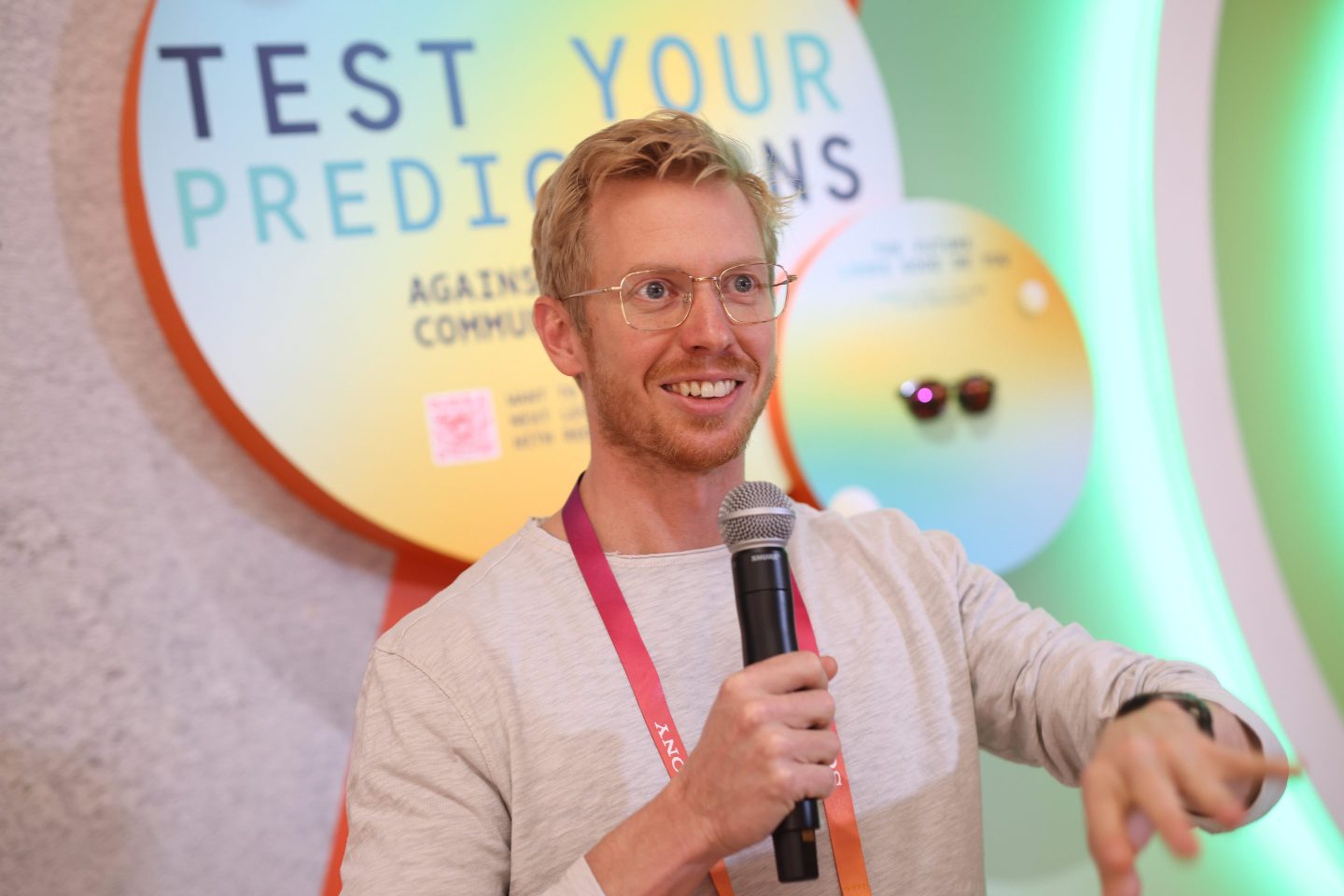
Yoon was in New York last week for the opening of Samsung House, a “pop-up” showroom for the company’s housewares. Among the products on display: a refrigerator with a built-in SodaStream machine to dispense fresh bubby water, and an oven that allows customers to segment shelves to cook at different temperatures.
Samsung isn’t a newcomer to the business. Indeed, the company developed its first refrigerator for the Korean market in 1974, and many Americans first came to know the Samsung brand through its countertop microwaves. The company says its home appliance business in the U.S. started to take off on 2005.
In recent years Samsung has been steadily gaining ground. Its share of worldwide refrigerator sales has edged up from 3.5% in 2007 to 6.8% last year, according to Euromonitor. But it has a long way to go to overtake market leader Whirlpool (WHR), which boasts 16% share.
MORE: Apple e-book antitrust case, final four days
Yoon’s success running the television business at Samsung certainly will help pave the way for his home appliance ambitions. Many of the same retailers who sell televisions also sell fridges and ranges and dishwashers; Samsung would be able to use its scale and market power to secure prime placement for its kitchen gear.
But perhaps the company’s success in smartphones provides the better roadmap for its plans to dominate the home. Six years ago the company had single-digit market share in those advanced mobile devices, behind Nokia (NOK), Blackberry (BBRY), Apple (AAPL) and even HTC. Today the company sells nearly one in three smartphones worldwide.
Samsung’s success is partly attributable to the breadth of its product line: It makes smartphones that sell at a variety of price points. In the emerging world, many consumers in the rising middle class tap Samsung for their first smart device and trade up into higher-end products as their disposable income grows.
Yoon hints at a similar strategy in home appliances. “The goal is to integrate innovation in each product, not just for the premium market but for all segments,” he says.
And collaboration with Samsung’s smartphone business provides Yoon with an interesting opportunity to develop some of the innovations he believes will drive the company’s appliance sales. Samsung already makes a washer that the homeowner can remotely control and monitor from a smartphone, and Yoon envisions a suite of software and “smart” appliances that can help the user manage his or her household.
Samsung’s Smart Control app for its front-load washer is already available for some iPhones and Samsung Galaxy devices. But some analysts speculate that Samsung could develop its own mobile operating system (competing with Apple’s iOS and Google’s (GOOG) Android, which Samsung uses for the Galaxy line) that is specifically designed to link together its portfolio of TVs, phones, appliances, and even medical devices.
Yoon notes that Samsung is involved in the development of Tizen, an open-source operating system for TVs and phones and entertainment devices. But he is quick to note that for now he does not subscribe to a one-system fits all model. “Our philosophy,” he says, “is to give users the best experience.”