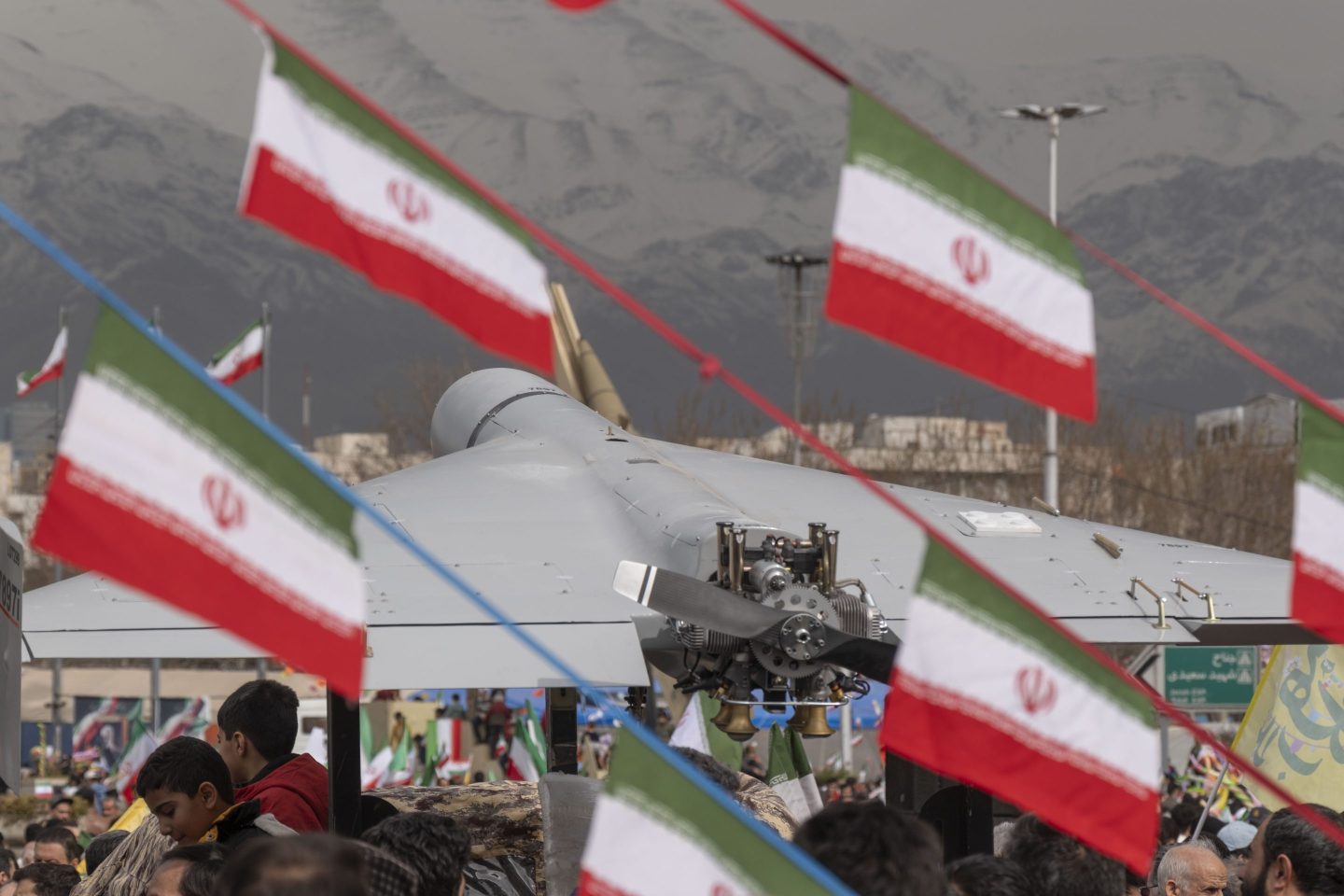
FORTUNE — The U.S. and Europe are implementing the toughest sanctions yet on Iran to stop its leaders from developing nuclear weapons. The measures have succeeded in making life harder for regular Iranians; according to Iranian news sources, milk prices are rising daily, and citizens boycotted bakeries and grocery stores in protest in June.
As difficult as sanctions have made life for Iranians, they could be tougher and more effective. That’s because the U.S. government, the leader of the international sanctions program, is applying its policies inconsistently. First are the exemptions that the State Department granted to the top three buyers of Iranian oil: China, Japan, and India. If the U.S. really wanted to apply pressure on President Mahmoud Ahmadinejad’s nuclear program, it could insist that China, Japan, and India cease all oil imports (oil is the lifeblood of Iran’s economy, accounting for 80% of Iranian foreign-exchange earnings — and China alone buys half of Iran’s crude exports) and pledge to deny those countries access to U.S. banks if they don’t comply. The U.S. already bars Cuba from tapping our financial system, for example, but Havana, unlike Beijing, doesn’t own $1.17 trillion of U.S. debt. And so our diplomats praise China, Japan, and India for merely reducing their dependence on Iranian oil imports and look the other way.
Then there’s South Korea, historically the fourth-biggest buyer of Iranian crude. The Koreans have relied on Iran for about 10% of their oil needs. Recently government officials indicated they’d look elsewhere for oil. And Iran responded by threatening a trade embargo on Korean imports to Iran. As Fortune went to press, South Korea had halted Iranian oil imports because it could not get insurance for the shipments, but Seoul is looking for ways to resume its purchases, including using Iranian tankers.
MORE: What will the Fortune Global 500 look like in 2021?
To understand why Korea is so keen to maintain good relations with Iran, just look at Samsung (No. 20 on the Fortune Global 500), Hyundai (No. 117), and Kia (No. 266), companies that would feel the pain if Korean goods were barred from Iran. Samsung tells me it sells the world’s current must-have gadget, the Galaxy S III, in Iran, along with printers, cameras, and televisions. When I was in Iran about 18 months ago, Samsung had a retail store in a mall I visited. It was sleek and new, indistinguishable from Samsung stores in major U.S. cities. All the televisions I saw in Iranian hotel rooms and homes were made by Samsung. So it’s no surprise that Iran’s threat of a trade embargo on South Korea carries weight.
So why is the U.S. government to blame for this situation? Because while the U.S. was putting the harshest sanctions in history on Iran and pushing its allies to join, it signed a free-trade deal with South Korea, the biggest single free-trade deal for America since NAFTA.
Korea got preferential access to the world’s largest economy. The U.S. benefits, of course, but it missed an opportunity to bolster its own policy goals. Congress didn’t demand that Korea cease doing all business with Iran as a condition of the deal.
David Cohen, the Treasury undersecretary for terrorism and financial intelligence — a man whose mission is to implement tough sanctions — told me that South Korea “has been a great partner in isolating the financial institutions that are the illicit actors in Iran.” But he acknowledges that it must be frustrating for U.S. tech and automakers to see their Korean competitors, strong companies that hardly need a leg up, operating freely in Iran while Apple (AAPL), GM (GM), Dell (DELL), and Ford (F) are shut out.
It’s a tough situation. Sanctions hurt middle-class Iranians, who in my limited experience are noticeably pro-American. And many believe sanctions simply don’t work. (Ahmadinejad has given no indication that he plans to shut down his nuclear program, which he claims is legitimate.) But if American leaders are going to take the leadership role as the world’s policeman, they need to insist that anyone who does business in or with the U.S. play by its rules.
This story is from the August 13, 2012 issue of Fortune.