
• Home
  • Latest
  • Fortune 500
  • Finance
  • Tech
  • Leadership
  • Lifestyle
  • Rankings
  • Multimedia
TechIntel

Intel’s (latest) mobile comeback

Michal Lev-Ram
By
Michal Lev-Ram
Michal Lev-Ram
Special Correspondent
Down Arrow Button Icon
Michal Lev-Ram
By
Michal Lev-Ram
Michal Lev-Ram
Special Correspondent
Down Arrow Button Icon
February 21, 2012, 5:00 AM ET
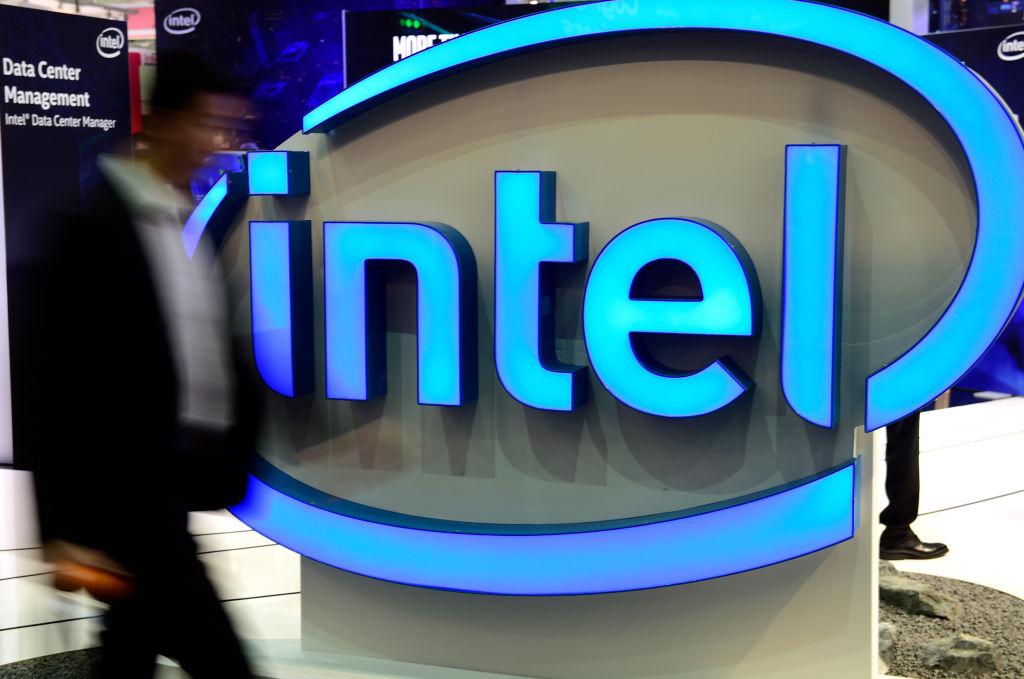
A visitor walks by the Intel stand at the CeBIT 2017 Technology Trade Fair on March 20, 2017 in Hanover, Germany.
A visitor walks by the Intel stand at the CeBIT 2017 Technology Trade Fair on March 20, 2017 in Hanover, Germany.Alexander Koerner—Getty Images

There are two kinds of CEOs: Those who love the spotlight and those who hate it. Paul Otellini, chief executive officer of Intel, falls into the latter category. But in January, as he stood in front of several thousand people at the Consumer Electronics Show in Las Vegas, Otellini didn’t seem to mind the attention. In a Steve Jobs-like moment, he pulled a shiny four-inch smartphone out of his pocket and held it up for the audience to see. The device had plenty of bells and whistles, including front- and back-facing cameras and an HDMI output for high-resolution video.

Most striking of all was what the audience couldn’t see: the tiny Intel microprocessor — called Medfield — inside. The phone wasn’t for sale (it was a prototype Intel had put together), but the crowd cheered anyway. After years of delays and missteps, Intel, it seemed, finally had a viable product to show for its efforts in mobile phones.

“Would I have liked to be earlier? Yes,” Otellini told Fortune in an interview at the company’s Silicon Valley headquarters the week after his Las Vegas keynote. “Do I think this is a problem entering today? No, I think we’re in the beginning of this thing. We have the opportunity to redefine what computing means in your pocket, and I don’t see any other player in the industry with that potential.”

Intel (INTC), with $54 billion in annual revenue, is the biggest chipmaker in the world. It employs 100,000 workers, including some of the brightest minds in the semiconductor industry. But when it comes to powering mobile phones, Intel is nowhere. Not a single commercially available mobile phone uses an Intel processor, and that’s no small problem, since much of the world is increasingly using mobile phones — and tablets — to do tasks once performed on desktops and laptops.

Intel’s prowess in building brawny, high-powered chips has been its biggest obstacle to cracking the mobile world, which requires low-power processors. A year and a half ago Otellini decided that Intel needed managers and engineers with hard-core mobile experience. He hired Mike Bell, an executive from Palm and Apple (AAPL) who had contributed to the development of the iPhone. Bell, who now co-leads Intel’s newly formed mobile and communications group, was charged with building a prototype, or reference design, that would show manufacturers what Intel could do in mobile. The device, which used the Medfield chip, became known internally as FFRD, short for form factor reference design (sexy code names are not Intel’s forte), and it paved the way for manufacturers like Lenovo and Motorola (MMI) to commit to launching Intel-powered devices sometime this year.


But Otellini knew he needed to do more than make a few key hires. In August 2010, Intel bought the wireless-solutions business from German chipmaker Infineon for $1.4 billion, giving Intel a foothold in baseband processors (a component that manages the 3G radio functions in a smartphone) and about 4,000 employees who know mobile devices.

For Otellini, getting it right in wireless isn’t just about diversifying revenue or driving the company into growing markets (though that’s part of it). Otellini’s mobile gambit is about redemption. Since becoming CEO in 2005, Otellini has stubbornly insisted that Intel could develop its own chips based on x86, the company’s historic microprocessor design standard, instead of licensing technology from the British company ARM Holdings, as most of his competitors have. So far his bet hasn’t paid off. The company proclaimed that its Moorestown system-on-a-chip would be in smartphones in early 2011, but instead it is mostly used in robotics and netbooks.

Ironically, Intel used to manufacture ARM processors for early smartphones and PDAs like the Palm Treo. But in 2006, Otellini sold its entire mobile product line, called XScale, to Marvell Technology Group for $600 million, essentially cutting off its access to mobile devices. And that wasn’t Intel’s only questionable move in mobile. In 2010, Otellini decided to partner with Nokia to develop MeeGo, a Linux-based operating system. A year later Nokia (NOK) ditched the project and opted to adopt Microsoft’s (MSFT) Windows Phone instead. Intel changed course and in September picked a new partner: Google (GOOG). Intel software developers worked to make sure that Android could run on the company’s chips without a glitch.

Intel’s mobile milestones

Pairing up with the world’s fastest-growing operating system is a smart move for Otellini (who has been on Google’s board since 2004). But there’s little question Intel has a lot of catching up to do. “The perception is that they’ve overpromised and underdelivered,” says Raj Seth, an analyst with Cowen Group.

Meanwhile the rest of the industry has moved ahead. Processors designed using ARM Holdings’ technology now power 90% of smartphones. Qualcomm (QCOM) leads the pack with 51% market share (see chart below).

Otellini insists the MeeGo debacle put Intel behind schedule by just two months. And when it comes to chip-manufacturing technology, he contends that Intel is about three years ahead of the competition.

Intel’s nine semiconductor factories churn out a collective 10 billion transistors per second. Its latest and greatest fabrication plant, called D1X, is in Hillsboro, Ore., about 20 miles west of Portland. D1X is one of the biggest construction projects in Oregon’s history. When the state-of-the-art facility opens next year, it will be the first 14-nanometer factory in the world. And it will have cost Intel upwards of $5 billion.


Click above to enlarge.

Keeping up with Moore’s law, which states that the number of transistors incorporated in a chip will approximately double every 24 months, is an expensive business that requires Intel to constantly invest in new manufacturing technologies and build new plants. But beyond the PC, it’s not clear how much that manufacturing lead is helping. The biggest facilities making ARM-designed processors today are based on a less advanced process than the one Intel uses to make its Medfield chip, for example, yet that hasn’t stopped the competition from eating Intel’s lunch. “Intel has tried to bring the same tools that have made it successful in the past to mobile, and it’s not working,” says Piper Jaffray analyst Gus Richard.

PCs still account for 66% of Intel’s revenue, and while Otellini is making an aggressive push in mobile, he’s also trying to breathe new life into Intel’s computer business by promoting ultrabooks, the latest breed of lightweight, instant-on laptops (a.k.a. the PC version of a MacBook Air). But there’s no doubt that mobile is where the real growth is. The market for mobile-phone chips will grow 40%, to $29.9 billion, by 2015, according to the Linley Group, a research firm.

Otellini has said that he expects to have Intel chips in 50% of the tablet market and 20% of smartphones by 2015. It’s an ambitious goal, but not impossible. The company is big enough and rich enough to eventually convert customers to its camp — as it did in 2005, getting Apple to use its Core Duo chip. “They’re very well resourced,” concedes Warren East, CEO of rival ARM Holdings (ARMH), “and they have a bunch of clever people.”

“This is a marathon, not a sprint,” says Otellini. “Intel has enough momentum in our core business and enough assets that we’re going to do this right. And we’re going to win in the long run.” If he’s wrong, and Intel can’t find its way into smartphones soon, Otellini may find himself back in the spotlight — for all the wrong reasons.

This article is from the February 27, 2012 issue of Fortune.

About the Author
Michal Lev-Ram
By Michal Lev-RamSpecial Correspondent
Twitter icon

Michal Lev-Ram is a special correspondent covering the technology and entertainment sectors for Fortune, writing analysis and longform reporting.

See full bioRight Arrow Button Icon

Latest in Tech

Finance
Lorem ipsum dolor sit amet, consectetur adipiscing elit, sed do eiusmod tempor incididunt ut labore et dolore magna aliqua. Ut enim ad minim veniam
By Fortune Editors
October 20, 2025
Finance
Lorem ipsum dolor sit amet, consectetur adipiscing elit, sed do eiusmod tempor incididunt ut labore et dolore magna aliqua. Ut enim ad minim veniam
By Fortune Editors
October 20, 2025
Finance
Lorem ipsum dolor sit amet, consectetur adipiscing elit, sed do eiusmod tempor incididunt ut labore et dolore magna aliqua. Ut enim ad minim veniam
By Fortune Editors
October 20, 2025
Finance
Lorem ipsum dolor sit amet, consectetur adipiscing elit, sed do eiusmod tempor incididunt ut labore et dolore magna aliqua. Ut enim ad minim veniam
By Fortune Editors
October 20, 2025
Finance
Lorem ipsum dolor sit amet, consectetur adipiscing elit, sed do eiusmod tempor incididunt ut labore et dolore magna aliqua. Ut enim ad minim veniam
By Fortune Editors
October 20, 2025
Finance
Lorem ipsum dolor sit amet, consectetur adipiscing elit, sed do eiusmod tempor incididunt ut labore et dolore magna aliqua. Ut enim ad minim veniam
By Fortune Editors
October 20, 2025

Most Popular

Finance
Lorem ipsum dolor sit amet, consectetur adipiscing elit, sed do eiusmod tempor incididunt ut labore et dolore magna aliqua. Ut enim ad minim veniam
By Fortune Editors
October 20, 2025
Finance
Lorem ipsum dolor sit amet, consectetur adipiscing elit, sed do eiusmod tempor incididunt ut labore et dolore magna aliqua. Ut enim ad minim veniam
By Fortune Editors
October 20, 2025
Finance
Lorem ipsum dolor sit amet, consectetur adipiscing elit, sed do eiusmod tempor incididunt ut labore et dolore magna aliqua. Ut enim ad minim veniam
By Fortune Editors
October 20, 2025
Finance
Lorem ipsum dolor sit amet, consectetur adipiscing elit, sed do eiusmod tempor incididunt ut labore et dolore magna aliqua. Ut enim ad minim veniam
By Fortune Editors
October 20, 2025
Finance
Lorem ipsum dolor sit amet, consectetur adipiscing elit, sed do eiusmod tempor incididunt ut labore et dolore magna aliqua. Ut enim ad minim veniam
By Fortune Editors
October 20, 2025
Finance
Lorem ipsum dolor sit amet, consectetur adipiscing elit, sed do eiusmod tempor incididunt ut labore et dolore magna aliqua. Ut enim ad minim veniam
By Fortune Editors
October 20, 2025
Fortune Secondary Logo
Rankings
  • 100 Best Companies
  • Fortune 500
  • Global 500
  • Fortune 500 Europe
  • Most Powerful Women
  • Future 50
  • World’s Most Admired Companies
  • See All Rankings
Sections
  • Finance
  • Fortune Crypto
  • Features
  • Leadership
  • Health
  • Commentary
  • Success
  • Retail
  • Mpw
  • Tech
  • Lifestyle
  • CEO Initiative
  • Asia
  • Politics
  • Conferences
  • Europe
  • Newsletters
  • Personal Finance
  • Environment
  • Magazine
  • Education
Customer Support
  • Frequently Asked Questions
  • Customer Service Portal
  • Privacy Policy
  • Terms Of Use
  • Single Issues For Purchase
  • International Print
Commercial Services
  • Advertising
  • Fortune Brand Studio
  • Fortune Analytics
  • Fortune Conferences
  • Business Development
  • Group Subscriptions
About Us
  • About Us
  • Editorial Calendar
  • Press Center
  • Work At Fortune
  • Diversity And Inclusion
  • Terms And Conditions
  • Site Map
  • About Us
  • Editorial Calendar
  • Press Center
  • Work At Fortune
  • Diversity And Inclusion
  • Terms And Conditions
  • Site Map
  • Facebook icon
  • Twitter icon
  • LinkedIn icon
  • Instagram icon
  • Pinterest icon

Latest in Tech

dario
AIWhite House
White House chief of staff to meet with Anthropic CEO about dangerous new Mythos model, official says
By Josh Boak, Matt O'Brien and The Associated PressApril 17, 2026
21 minutes ago
Exclusive: Adam Silver on winning the Edison Achievement Award: ‘Sports remind us that some of the most important forms of innovation are human’
Arts & EntertainmentSports
Exclusive: Adam Silver on winning the Edison Achievement Award: ‘Sports remind us that some of the most important forms of innovation are human’
By Catherina GioinoApril 17, 2026
2 hours ago
chris lehane
AIOpenAI
OpenAI’s policy chief says AI companies ‘need to do a much better job’ talking about AI as industry leaders face personal attacks
By Jake AngeloApril 17, 2026
4 hours ago
ranch
North AmericaFood and drink
Ranch dressing’s secret history literally includes a Hidden Valley
By Holly Meyer and The Associated PressApril 17, 2026
4 hours ago
Sam Altman holds hands in the air with Narendra Modi on his left. Altman and Dario Amodei do not hold hands.
AIOpenAI
Illinois is OpenAI and Anthropic’s latest battleground as the state tries to assess liability for catastrophes caused by AI
By Jacqueline MunisApril 17, 2026
5 hours ago
Jack Dorsey, the CEO of Block
SuccessLayoffs
Twitter cofounder Jack Dorsey breaks down his thought process when he laid off 40% of his Block staff because of AI
By Emma BurleighApril 17, 2026
5 hours ago

Most Popular

Pope Leo warned the world is in ‘big trouble’ if Elon Musk becomes the first trillionaire
Success
Pope Leo warned the world is in ‘big trouble’ if Elon Musk becomes the first trillionaire
By Preston ForeApril 17, 2026
11 hours ago
A world going broke: IMF says America's $39 trillion national debt is actually a global problem—and AI may be the only rescue
Economy
A world going broke: IMF says America's $39 trillion national debt is actually a global problem—and AI may be the only rescue
By Nick LichtenbergApril 16, 2026
1 day ago
Jeff Bezos pledged $10 billion for climate change. With the 2030 clock ticking, his wife, Lauren Sánchez Bezos, is leading the charge to spend it
Environment
Jeff Bezos pledged $10 billion for climate change. With the 2030 clock ticking, his wife, Lauren Sánchez Bezos, is leading the charge to spend it
By Sydney LakeApril 15, 2026
2 days ago
MacKenzie Scott is bypassing the Ivy League and rewriting the $79 billion higher ed playbook by giving to HBCUs and community colleges
Politics
MacKenzie Scott is bypassing the Ivy League and rewriting the $79 billion higher ed playbook by giving to HBCUs and community colleges
By Sydney LakeApril 16, 2026
1 day ago
Germany already told its workers to ditch four-day weeks and work-life balance. Now the government wants to cut their pay for calling in sick, too
Success
Germany already told its workers to ditch four-day weeks and work-life balance. Now the government wants to cut their pay for calling in sick, too
By Orianna Rosa RoyleApril 16, 2026
2 days ago
NYC Mayor Zohran Mamdani points at Ken Griffin's $238 million penthouse on tax day: 'Today we're taxing the rich'
Personal Finance
NYC Mayor Zohran Mamdani points at Ken Griffin's $238 million penthouse on tax day: 'Today we're taxing the rich'
By Catherina GioinoApril 16, 2026
1 day ago

© 2026 Fortune Media IP Limited. All Rights Reserved. Use of this site constitutes acceptance of our Terms of Use and Privacy Policy | CA Notice at Collection and Privacy Notice | Do Not Sell/Share My Personal Information
FORTUNE is a trademark of Fortune Media IP Limited, registered in the U.S. and other countries. FORTUNE may receive compensation for some links to products and services on this website. Offers may be subject to change without notice.