• Home
  • Latest
  • Fortune 500
  • Finance
  • Tech
  • Leadership
  • Lifestyle
  • Rankings
  • Multimedia
CommentaryIncome inequality

The Real Reason for Income Inequality? The Fed

By
Josh Hammer
Josh Hammer
and
Todd J. Stein
Todd J. Stein
Down Arrow Button Icon
By
Josh Hammer
Josh Hammer
and
Todd J. Stein
Todd J. Stein
Down Arrow Button Icon
May 2, 2019, 2:20 PM ET
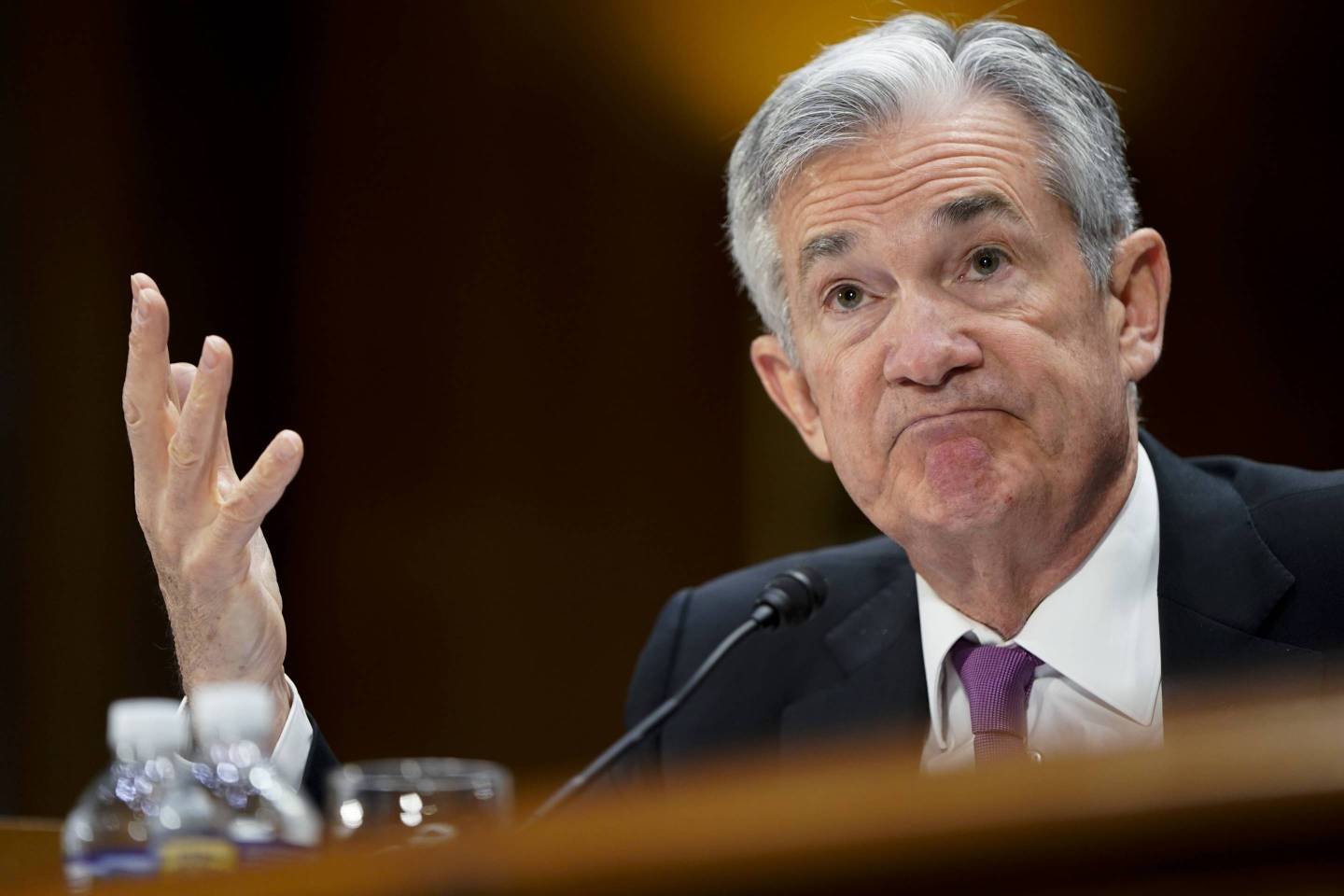
Federal Reserve Chairman Jerome Powell.
WASHINGTON, DC - FEBRUARY 26: Federal Reserve Chairman Jerome Powell delivers the Federal Reserves Semiannual Monetary Policy Report to the Senate Banking Committee on February 26, 2019 in Washington, DC. Powell addressed issues that could effect the economy including trade with China, Brexit, inflation and public debt. (Photo by Joshua Roberts/Getty Images)Joshua Roberts—Getty Images

Income inequality in America has worsened in recent decades. Many on the left, buttressed by a not-insignificant number of those on the right, have argued for an increasingly progressive income tax code to tackle this problem.

But they’re focusing on the wrong solution—instead, the target ought to be the Federal Reserve. While the central bank chose tonot change interest rates this week, the Fed’s ceaseless quantitative easing programs and obstinate commitment to unnaturally low interest rates in the years following the 2008 financial crisis have had the unintended effects of both incentivizing reckless deficit-driven spending from Congress and exacerbating income and wealth inequality in the private sector.

Simply raising taxes on individuals is not going to fix the underlying issue. A tax hike would only continue the status quo in exchange for a higher “toll” from the well-connected. In addition, it would disincentivize the entrepreneurship and innovation that drives the American economy.

Fixating on taxes ignores this fundamental truth: The totality of the Fed’s post-2008 actions has resulted in a historic regressive wealth transfer from the less well-off to the well-off.

Low rates and quantitative easing programs help the ultra-wealthy because they artificially boost asset values, especially for riskier investments, and allow for cheap leverage. The ultra-wealthy can take advantage of record highs in the stock market while the asset-poor working class gets by on relatively stagnant hourly wages. Even risk-averse middle-class retirees are forced to buy bonds with artificially low interest rates just to make ends meet.

The Fed should learn from its post-2008 trigger-happiness in order to better respond to future crises. While it is true that former Fed chairman Ben Bernanke once cited Milton Friedman’s scholarship on the Fed’s insufficiently robust reaction to the onset of the Great Depression, it is also true that one round of quantitative easing after 2008 would have been more than enough. The recession was over by summer 2009 and, if anything, subsequent rounds of quantitative easing not only further metastasized income inequality, but also misallocated capital and abetted reckless politicians via excessive deficit spending.

In the first half of the fiscal year 2019, interest on the national debt rose 13% over the same period the previous year—the single fastest-growing expenditure in the federal budget. Artificially low interest rates masked the effect of much of Congress’s profligacy for years; now that rates are slowly rising, our bill will be coming due.

Politicians from across the ideological spectrum ought to rein in the Fed and seek greater transparency of its deliberations, methodologies, and decision-making processes. After all, the Fed is presently structured as an independent agency and receives its operational funding outside the constraints of the normal congressional appropriation process. Furthermore, the Fed’s inherent structure—wherein a purportedly enlightened coterie of bankers sets rates for the entire economy—necessarily values central planning over letting market forces determine proper interest rates.

At minimum, our lawmakers can seek to audit the Fed’s internal workings and to legislatively modify its traditional dual mandate of price stability and maximum employment to a less hubristic, more modest single mandate of mere price stability. The pursuit of maximum employment has pushed rates down and punished savers; it’s an outdated goal that has only led to more booms and busts.

If we seek to earnestly push back against rising income inequality in America, constraining our central bank would be a natural place to start.

Josh Hammer is the editor-at-large of the Daily Wire. Todd J. Stein is a principal of Braeside Capital, L.P., a Dallas-based private investment partnership.

This article is commentary. For more opinion in Fortune, click here.

About the Authors
By Josh Hammer
See full bioRight Arrow Button Icon
By Todd J. Stein
See full bioRight Arrow Button Icon

Latest in Commentary

student
CommentaryEducation
International students skipped campus this fall — and local economies lost $1 billion because of it
By Bjorn MarkesonDecember 10, 2025
46 minutes ago
jobs
Commentaryprivate equity
There is a simple fix for America’s job-quality crisis: actually give workers a piece of the business 
By Pete StavrosDecember 9, 2025
1 day ago
Jon Rosemberg
CommentaryProductivity
The cult of productivity is killing us
By Jon RosembergDecember 9, 2025
1 day ago
Trump
CommentaryTariffs and trade
AI doctors will be good at science but bad at business, and big talk with little action means even higher drugs prices: 10 healthcare predictions for 2026 from top investors
By Bob Kocher, Bryan Roberts and Siobhan Nolan ManginiDecember 9, 2025
1 day ago
Google.org
CommentaryTech
Nonprofits are solving 21st century problems—they need 21st century tech
By Maggie Johnson and Shannon FarleyDecember 8, 2025
2 days ago
Will Dunham is President and Chief Executive Officer of the American Investment Council
CommentaryRetirement
Private equity is being villainized in the retirement debate — even as it provides diversification and outperforms public markets long-term
By Will DunhamDecember 8, 2025
2 days ago

Most Popular

placeholder alt text
Economy
‘Fodder for a recession’: Top economist Mark Zandi warns about so many Americans ‘already living on the financial edge’ in a K-shaped economy 
By Eva RoytburgDecember 9, 2025
17 hours ago
placeholder alt text
Success
When David Ellison was 13, his billionaire father Larry bought him a plane. He competed in air shows before leaving it to become a Hollywood executive
By Dave SmithDecember 9, 2025
1 day ago
placeholder alt text
Banking
Jamie Dimon taps Jeff Bezos, Michael Dell, and Ford CEO Jim Farley to advise JPMorgan's $1.5 trillion national security initiative
By Nino PaoliDecember 9, 2025
19 hours ago
placeholder alt text
Uncategorized
Transforming customer support through intelligent AI operations
By Lauren ChomiukNovember 26, 2025
14 days ago
placeholder alt text
Success
Even the man behind ChatGPT, OpenAI CEO Sam Altman, is worried about the ‘rate of change that’s happening in the world right now’ thanks to AI
By Preston ForeDecember 9, 2025
22 hours ago
placeholder alt text
Economy
The 'forever layoffs' era hits a recession trigger as corporates sack 1.1 million workers through November
By Nick Lichtenberg and Eva RoytburgDecember 9, 2025
24 hours ago
Rankings
  • 100 Best Companies
  • Fortune 500
  • Global 500
  • Fortune 500 Europe
  • Most Powerful Women
  • Future 50
  • World’s Most Admired Companies
  • See All Rankings
Sections
  • Finance
  • Leadership
  • Success
  • Tech
  • Asia
  • Europe
  • Environment
  • Fortune Crypto
  • Health
  • Retail
  • Lifestyle
  • Politics
  • Newsletters
  • Magazine
  • Features
  • Commentary
  • Mpw
  • CEO Initiative
  • Conferences
  • Personal Finance
  • Education
Customer Support
  • Frequently Asked Questions
  • Customer Service Portal
  • Privacy Policy
  • Terms Of Use
  • Single Issues For Purchase
  • International Print
Commercial Services
  • Advertising
  • Fortune Brand Studio
  • Fortune Analytics
  • Fortune Conferences
  • Business Development
About Us
  • About Us
  • Editorial Calendar
  • Press Center
  • Work At Fortune
  • Diversity And Inclusion
  • Terms And Conditions
  • Site Map

© 2025 Fortune Media IP Limited. All Rights Reserved. Use of this site constitutes acceptance of our Terms of Use and Privacy Policy | CA Notice at Collection and Privacy Notice | Do Not Sell/Share My Personal Information
FORTUNE is a trademark of Fortune Media IP Limited, registered in the U.S. and other countries. FORTUNE may receive compensation for some links to products and services on this website. Offers may be subject to change without notice.