• Home
  • Latest
  • Fortune 500
  • Finance
  • Tech
  • Leadership
  • Lifestyle
  • Rankings
  • Multimedia
HealthDigital Health

Why Hasn’t Telemedicine Taken Off? Hey, Blame This Guy.

By
Clifton Leaf
Clifton Leaf
Down Arrow Button Icon
By
Clifton Leaf
Clifton Leaf
Down Arrow Button Icon
July 3, 2018, 4:00 PM ET

It’s Norman Rockwell’s fault. The image of the gray-haired family physician, stethoscope in ear, patiently listening to the heartbeat of a porcelain doll as his young patient looks on, is indelible in the public memory.

Even if you’ve never seen the reproductions of Rockwell’s celebrated doctor paintings—the gray-haired doc, still donning his green winter scarf, taking the pulse of a porcelain doll; the gray-haired doc eyeing a thermometer at the foot of a young patient’s bed; the gray-haired doc washing his hands as a young patient pulls up his pants—you’ve seen the image in your head.

White smock. Stethoscope. Family doctor with kind eyes and infinite patience.

But on the eve of this July 4th, the holy day when we gather with family and friends to memorialize the American virtues of patriotism, cold beer, and barbecue, I tell you this other bit of cherished Americana is no more. The family doctor has left the building. His white smock is now a rental, leased out in 15.7-minute increments.

The glinting eye and infinite patience has given way to something utterly transactional: a CPT code for Evaluation and Management—otherwise known as the post-millennium “office visit.”

And yet, we ever-nostalgic folk still cling to it.

My question is why? Why do we wait anxiously for appointments to sit anxiously in waiting rooms filled with other anxious souls and torn taupe furniture? Why, in an age of digital everything and virtual manythings, do we still journey to a medical office building for a mere flash of face-time when there is a seemingly good alternative in telemedicine?

The answer, I suspect, is tied to the word “seemingly.” Many of us just don’t believe that the care is as good when it’s delivered remotely.

Indeed, countering that view and establishing that parity in care quality firmly in American minds may well be the key to unlocking the cost savings and convenience that the digital health revolution (seemingly) promises. And here, we seem to be just at the beginning of the effort.

The concept of telemedicine (or telehealth, as it’s sometimes called) has been with us for decades. (Some place its birth back to the introduction of the telephone, but I wouldn’t go that far.) Surprisingly, though, there remains a relative dearth of academic studies comparing outcomes from real and virtual medical visits.

In 2015, Cochrane, an 11,000-member collaborative that evaluates clinical evidence in medical practice, “assessed the effectiveness, acceptability, and costs of interactive telemedicine, delivered in addition to, or as an alternative to, usual care as compared to usual care alone” in 93 randomized controlled trials (a fair sample, but actually a modest number of trials in the realm of the Cochrane meta-analysis). Overall, the use of telemedicine was found to either lead to similar outcomes as face-to-face visits (in managing heart failure, for instance) or to better care (in controlling blood glucose, for example, in people with diabetes).

Remote evaluation by teleconferencing seems to be just as effective as in-office assessment in tasks ranging from diagnosing stroke to treating bulimia, according to that limited literature. And patient satisfaction, on the whole, has been shown to be pretty high.

Some health systems have pushed virtual engagements with their healthcare staff—more than half of Kaiser Permanente’s “visits,” for instance, were done through online or smartphone interactions in 2016. And clearly there’s investor interest in the concept, too. American Well, a telehealth company, has raised more than $300 million in financing as of June 28, according to Chrissy Farr at CNBC. Yet many in the healthcare world have been slow to the migration. That’s in part because of patient resistance, as noted above.

But, interestingly, it’s also because of health insurer reticence, if not resistance. While 35 U.S. states have enacted telemedicine parity laws—which mandate that insurers pay for services rendered by telemedicine that would ordinarily be covered if patients visited the office in person—some insurance providers (and some health experts too) have worried that embracing virtual visits will actually encourage more healthcare consumption, not less. (And by some studies, the prices for remote visits aren’t that much cheaper anyway.)

But that may be changing: Insurance companies may at last be warming to the tele-approach. Witness one as-yet-unpublished study in late June that was presented at the AHIP expo in San Diego. AHIP is the main trade group for America’s health insurance plans—and this particular study was sponsored by Humana and undertaken by Doctor on Demand (yes, a telemedicine company). That said—and with all the expected caveats, eyebrow raising, and Hmm-ing aside—the numbers in the study are notable.

Researchers examined nearly 5,500 medical system encounters between 2016 and 2017, divided evenly between virtual and in-office visits and matched for diagnosis, severity of the cases, household income, region of the country, and other factors. Then they looked to see whether either group had more near-term follow-up visits for the same diagnosis (either to a physician or emergency room), an indicator that might suggest that the initial problem wasn’t properly or fully addressed.

Patients in the telemedicine group had roughly the same number of physician follow-ups (6.6% within 14 days) and subsequent ER visits (1.3%) as those who initially visited the doctor’s office in person (5.1% and 1.1%, respectively). Follow-up visits to urgent care within those first two weeks were a little higher in the former group (0.9% versus 0.1%), but follow-ups overall during the first two months were actually lower in the telemed cohort.

One more takeaway: Doctors who saw patients remotely in this study prescribed fewer antibiotics (36.1% of visits) than those who saw patients in the office (40.1%)—though both cohorts, I’m guessing, prescribed too many.

The biggest difference between the two groups? The covered amount for each type of examination. Telemedicine visits were paid out at an average of $38 versus $114 for face-to-face. That’s the important bottom line, if we’re ever going to get serious about controlling healthcare costs in this country.

So when will the telemedicine migration finally take off? Well, you’d have to ask Norman Rockwell’s doctor that. And he’s in with a patient.

Subscribe to Brainstorm Health Daily, our newsletter about exciting health innovations.

About the Author
By Clifton Leaf
See full bioRight Arrow Button Icon

Latest in Health

Finance
Lorem ipsum dolor sit amet, consectetur adipiscing elit, sed do eiusmod tempor incididunt ut labore et dolore magna aliqua. Ut enim ad minim veniam
By Fortune Editors
October 20, 2025
Finance
Lorem ipsum dolor sit amet, consectetur adipiscing elit, sed do eiusmod tempor incididunt ut labore et dolore magna aliqua. Ut enim ad minim veniam
By Fortune Editors
October 20, 2025
Finance
Lorem ipsum dolor sit amet, consectetur adipiscing elit, sed do eiusmod tempor incididunt ut labore et dolore magna aliqua. Ut enim ad minim veniam
By Fortune Editors
October 20, 2025
Finance
Lorem ipsum dolor sit amet, consectetur adipiscing elit, sed do eiusmod tempor incididunt ut labore et dolore magna aliqua. Ut enim ad minim veniam
By Fortune Editors
October 20, 2025
Finance
Lorem ipsum dolor sit amet, consectetur adipiscing elit, sed do eiusmod tempor incididunt ut labore et dolore magna aliqua. Ut enim ad minim veniam
By Fortune Editors
October 20, 2025
Finance
Lorem ipsum dolor sit amet, consectetur adipiscing elit, sed do eiusmod tempor incididunt ut labore et dolore magna aliqua. Ut enim ad minim veniam
By Fortune Editors
October 20, 2025

Most Popular

Finance
Lorem ipsum dolor sit amet, consectetur adipiscing elit, sed do eiusmod tempor incididunt ut labore et dolore magna aliqua. Ut enim ad minim veniam
By Fortune Editors
October 20, 2025
Finance
Lorem ipsum dolor sit amet, consectetur adipiscing elit, sed do eiusmod tempor incididunt ut labore et dolore magna aliqua. Ut enim ad minim veniam
By Fortune Editors
October 20, 2025
Finance
Lorem ipsum dolor sit amet, consectetur adipiscing elit, sed do eiusmod tempor incididunt ut labore et dolore magna aliqua. Ut enim ad minim veniam
By Fortune Editors
October 20, 2025
Finance
Lorem ipsum dolor sit amet, consectetur adipiscing elit, sed do eiusmod tempor incididunt ut labore et dolore magna aliqua. Ut enim ad minim veniam
By Fortune Editors
October 20, 2025
Finance
Lorem ipsum dolor sit amet, consectetur adipiscing elit, sed do eiusmod tempor incididunt ut labore et dolore magna aliqua. Ut enim ad minim veniam
By Fortune Editors
October 20, 2025
Finance
Lorem ipsum dolor sit amet, consectetur adipiscing elit, sed do eiusmod tempor incididunt ut labore et dolore magna aliqua. Ut enim ad minim veniam
By Fortune Editors
October 20, 2025
Fortune Secondary Logo
Rankings
  • 100 Best Companies
  • Fortune 500
  • Global 500
  • Fortune 500 Europe
  • Most Powerful Women
  • Future 50
  • World’s Most Admired Companies
  • See All Rankings
Sections
  • Finance
  • Fortune Crypto
  • Features
  • Leadership
  • Health
  • Commentary
  • Success
  • Retail
  • Mpw
  • Tech
  • Lifestyle
  • CEO Initiative
  • Asia
  • Politics
  • Conferences
  • Europe
  • Newsletters
  • Personal Finance
  • Environment
  • Magazine
  • Education
Customer Support
  • Frequently Asked Questions
  • Customer Service Portal
  • Privacy Policy
  • Terms Of Use
  • Single Issues For Purchase
  • International Print
Commercial Services
  • Advertising
  • Fortune Brand Studio
  • Fortune Analytics
  • Fortune Conferences
  • Business Development
About Us
  • About Us
  • Editorial Calendar
  • Press Center
  • Work At Fortune
  • Diversity And Inclusion
  • Terms And Conditions
  • Site Map
Fortune Secondary Logo
  • About Us
  • Editorial Calendar
  • Press Center
  • Work At Fortune
  • Diversity And Inclusion
  • Terms And Conditions
  • Site Map
  • Facebook icon
  • Twitter icon
  • LinkedIn icon
  • Instagram icon
  • Pinterest icon

Latest in Health

will
CommentaryAdvertising
I’m one of America’s top pollsters and I’ve got a warning for the AI companies: customers aren’t sold on ads
By Will JohnsonFebruary 27, 2026
2 hours ago
Healthsleep
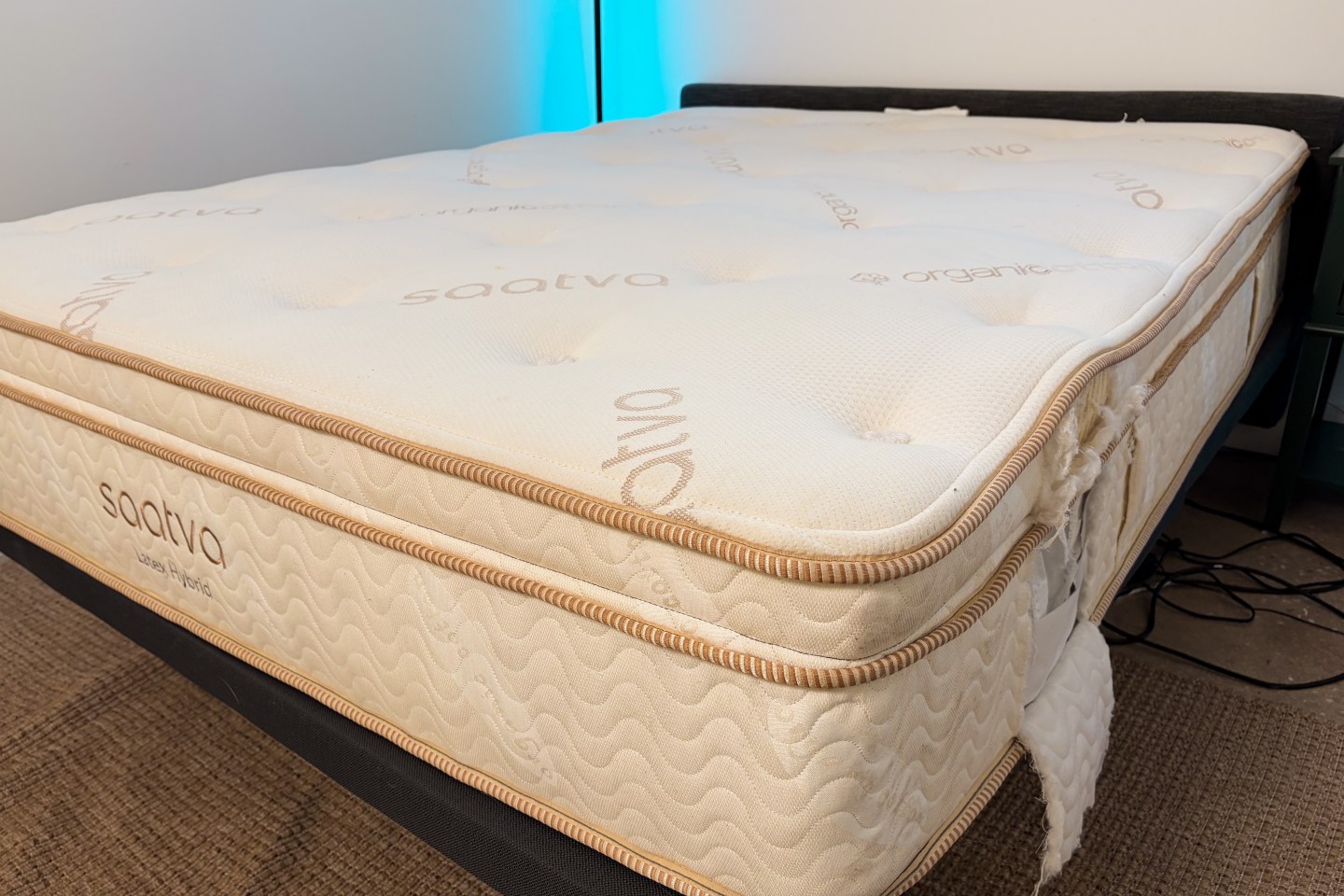
5 Best Latex Mattresses in 2026: Tested and Reviewed by Sleep Experts
By Christina SnyderFebruary 26, 2026
13 hours ago
dolly
Lawphilanthropy
Dolly Parton’s Tennessee philanthropy kicks up a notch with renaming of East Tennessee Children’s Hospital
By James Pollard and The Associated PressFebruary 26, 2026
15 hours ago
bafta
HealthRace
The BAFTA Tourette racial slur controversy, explained, by a sociologist with Tourette’s who studies social stigma
By Rena Zito and The ConversationFebruary 26, 2026
18 hours ago
the pitt
CommentaryDEI
‘The Pitt’: a masterclass display of DEI in action 
By Robert RabenFebruary 26, 2026
21 hours ago
HealthDietary Supplements
The Best Iron Supplements of 2026: Expert Approved
By Christina SnyderFebruary 25, 2026
2 days ago

Most Popular

placeholder alt text
Innovation
An MIT roboticist who cofounded bankrupt robot vacuum maker iRobot says Elon Musk’s vision of humanoid robot assistants is ‘pure fantasy thinking’
By Marco Quiroz-GutierrezFebruary 25, 2026
2 days ago
placeholder alt text
Success
Jeff Bezos says being lazy, not working hard, is the root of anxiety: ‘The stress goes away the second I take that first step’
By Sydney LakeFebruary 25, 2026
2 days ago
placeholder alt text
Economy
Trump claims America is ‘winning so much.’ The IMF agrees, adding that Trump’s trade policies are the only thing holding it back from even more
By Tristan BoveFebruary 26, 2026
15 hours ago
placeholder alt text
Success
Gen Z Olympic champion Eileen Gu says she rewires her brain daily to be more successful—and multimillionaire founder Arianna Huffington says it really does work
By Orianna Rosa RoyleFebruary 25, 2026
2 days ago
placeholder alt text
AI
Jamie Dimon says society should start preparing for AI job displacement: ‘Now’s the time to start thinking about’ it
By Marco Quiroz-GutierrezFebruary 25, 2026
2 days ago
placeholder alt text
Success
Ex–presidential candidate Andrew Yang warns that millions of white-collar workers will lose their jobs within 18 months: ‘The AI jobpocalypse is here’
By Preston ForeFebruary 25, 2026
2 days ago

© 2026 Fortune Media IP Limited. All Rights Reserved. Use of this site constitutes acceptance of our Terms of Use and Privacy Policy | CA Notice at Collection and Privacy Notice | Do Not Sell/Share My Personal Information
FORTUNE is a trademark of Fortune Media IP Limited, registered in the U.S. and other countries. FORTUNE may receive compensation for some links to products and services on this website. Offers may be subject to change without notice.