This is the web version of Data Sheet, Fortune’s daily newsletter on the top tech news. To get it delivered daily to your in-box, sign up here.
When then Ericsson CEO Hans Vestberg appeared at Fortune Brainstorm Tech in Aspen, Colo., four years ago, next-generation 5G networks were still a glimmer in his company’s eye. Of course 5G was coming, and Vestberg made reference to it in his interview with Fortune’s Michal Lev-Ram. But instead of dwelling on the 5G opportunity, Vestberg talked about the need to serve users of older networks, including 2G, the types of networks only poorer people in developing nations would use. At the time Ericsson was talking up a partnership with Facebook, which also wanted to bridge the so-called digital divide between the Internet haves and have nots.
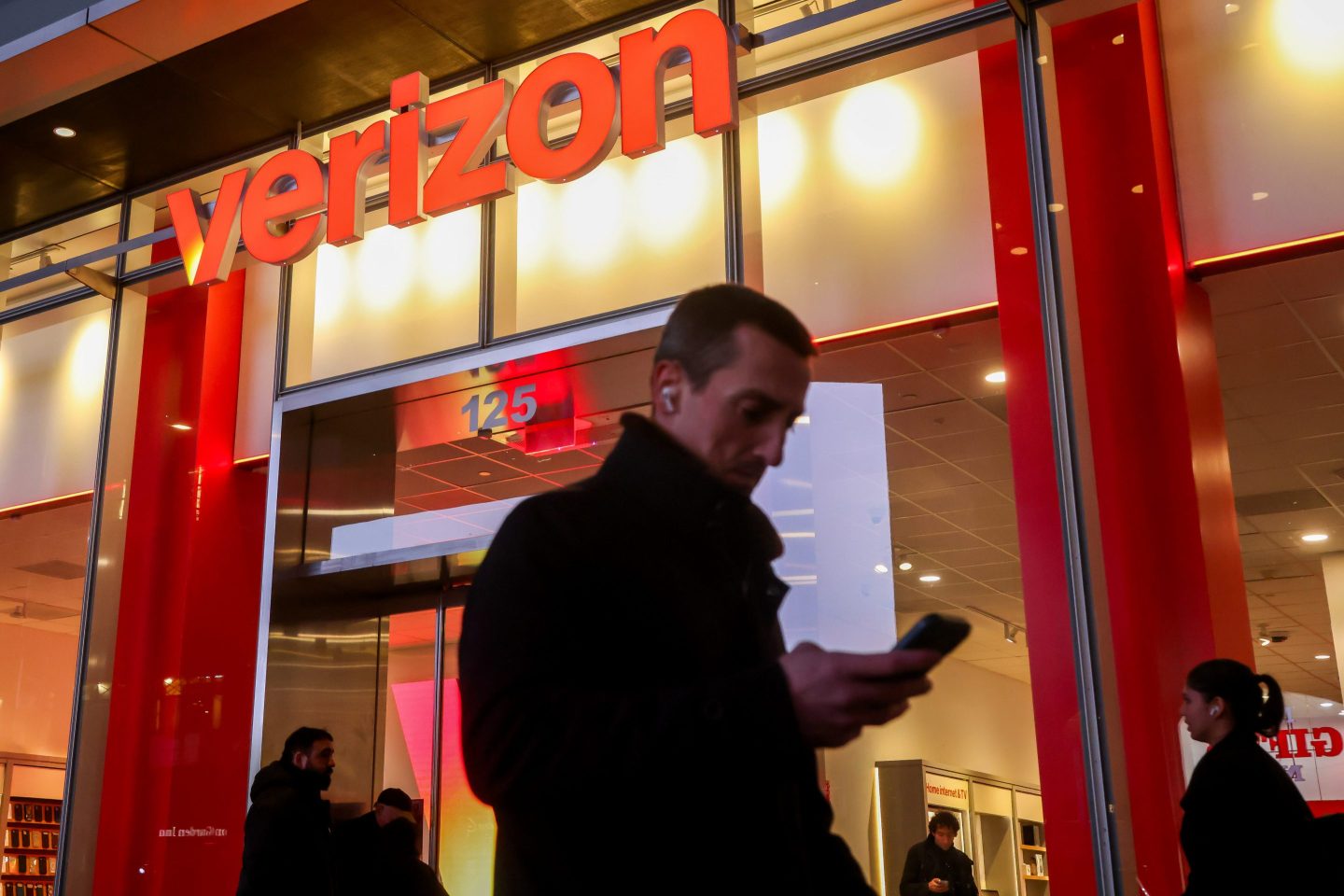
Vestberg lasted precisely two more years at Ericsson, booted for an apparent lack of vision. He resurfaced as a senior executive at a major Ericsson customer, Verizon, which named him its next CEO last week. The reason for picking him, interestingly, is 5G. Verizon will invest heavily in bringing the wicked-fast Internet technology to its main market, the United States, and has turned to a spurned European executives who isn’t a technologist, to lead the effort.
It’s interesting, if not necessarily telling, that Vestberg used his onstage time to talk about helping the world through the wonders of technology. Wiring benighted countries with not-the-latest technology is a very good business for Ericsson—and also the right thing to do. Facebook’s motives are similar: More Internet users—even if not great advertising targets—are good for the international network of Facebook.
Vestberg’s impulses are in line with the trend in business today. Companies and their employees want to do good almost as much as they must do well. How companies can improve the world through their profit-making operations will be the theme of the annual meeting of Fortune’s CEO Initiative, which takes place June 25 and 26 in San Francisco.
The full CEO Initiative agenda is here. We’re excited to announce this morning that the meeting will kick off with an interview with Apple’s Tim Cook, one of the world’s foremost proponents that companies should be leaders of society. With all that’s going on in the world, I’m looking forward to hearing him address the topic.
***
In case you missed it, The Wall Street Journal’s Christopher Mims had a smart piece over the weekend warning against the myth of the heroic Silicon Valley founder-CEO … Lastly, I grieve the six days a week Garry Trudeau no longer publishes his Doonesbury political comic strip. Thankfully, he still works his magic on Sundays. Yesterday’s strip perfectly captures my feelings about the current political climate in the U.S.
Adam Lashinsky
@adamlashinsky
adam_lashinsky@fortune.com
NEWSWORTHY
Shields down. Today is the first day in a long, long time with no explicit federal protections for net neutrality on the Internet. Almost six months after the Federal Communications Commission voted to revoke the rules, which had been the agency's policy in one form or another for more than a decade, the jig is up. Trump-appointed FCC chair Ajit Pai says worry not, while some Internet companies and consumer advocates predict a slow slide towards discrimination by ISPs. We shall see. Meanwhile, some say Pai has been misleading about the agency's overwhelmed public comment system.
Tilting the scales of justice. Also in Washington, D.C., a federal judge is scheduled to issue his verdict Tuesday in the Justice Department's lawsuit seeking to block AT&T from acquiring Time Warner. Either way, the decision is likely to have a major impact on the media and communications landscape going forward.
Pricked. The price of bitcoin plummeted 10% over the weekend after a South Korean cryptocurrency called Coinrail reported that hackers stole some of its crypto assets. Bitcoin was trading at under $6,800 on Monday morning, recovering a bit from its low of $6,652. Prices of other digital currencies also dropped.
Non-unionized. Working conditions were so poor in a factory run by Foxconn that makes Amazon's Echo speakers and Kindle e-readers that Amazon had to demand changes. An audit had found labor violations concerning excessive overtime and use of temporary staff known as dispatch workers. “We are committed to ensuring that these issues are resolved," Amazon said in a statement.
Vague precision. Speaking of China, Chinese smartphone maker Xiaomi, getting ready for an IPO, offered some financial details for the first quarter. The company said smartphone unit sales rose 88% to an unspecified amount, while revenue totaled $5.3 billion, growing at an unspecified rate from a year earlier.
Star Wars-Star Trek crossover, anyone. And speaking of speaking of China, movie director J.J. Abrams' Bad Robot production company is expanding its video gaming efforts by partnering with Chinese Internet giant Tencent to develop a variety of new games for mobile, PC, and console platforms.
Not so diverse. The proportion of black workers in Silicon Valley is increasing slowly, Bloomberg reports. Among the 8 largest tech companies, including Google and Facebook, black workers represented 3.1% of technical jobs last year, up from 2.5% in 2014.
A lot of zeroes. The Department of Energy's Oak Ridge National Laboratory unveiled a new supercomputer, dubbed Summit, that reclaims the title of world's fastest supercomputer from China. The system, which runs on chips from IBM and Nvidia, can perform 200 quadrillion calculations per second, or 200 petaflops, to best China’s 93-petaflop TaihuLight machine, which grabbed the title back in 2016.
FOOD FOR THOUGHT
As its spending on original content has exploded in recent years, Netflix has been the subject of a combination of ridicule, fascination, and fear in Hollywood. The company's mysterious, data-driven programming decisions looked like a black box to many in the entertainment world. Now reporter Josef Adalian has written a deep dive for New York Magazine into the Netflix process, sitting in on meetings with some of the key executives along the way. Netflix doesn't use data the same way television networks use data:
If verticals are the way Netflix executives think about what kinds of content to buy or make, taste clusters help them analyze how subscribers interact with programming. The phrase, along with the interchangeable “taste communities,” comes up time and again during my visits. Instead of grouping members by age or race or even what country they live in, Netflix has tracked viewing habits and identified almost 2,000 microclusters that each Netflix user falls into. While it’s not a direct parallel, taste communities are sort of like Netflix’s version of the demographic ratings used by traditional ad-supported networks, just more evolved. Because their business model is heavily weighted toward pleasing advertisers, broadcast and cable outlets such as NBC or Lifetime rely on demos — women under age 35, men 25 to 54, African-Americans 18 to 49 — to make sure their series are resonating with groups of viewers coveted by advertisers.
Netflix also wants programming that appeals to distinct groups of people, so in theory it could have a use for demos, too — and early on, it did. Netflix VP of product Todd Yellin tells me that when he got to the company about a dozen years ago, he figured demos would help him create a more personalized experience for subscribers. “Nielsen gets it, the networks get it, I should know the age and gender,” he says he thought to himself. “I asked people signing up, a long time ago when we were a DVD service, ‘What’s your age and gender?’ We would use that information to recommend shows.” Yellin found that age and gender were far less reliable in predicting future DVD requests than a user’s past viewing history. “Nowadays, in our modern world, hit play once and it tells us volumes more than knowing you’re a 31-year-old woman or a 72-year-old man or a 19-year-old guy,” Yellin says.
IN CASE YOU MISSED IT
Splunk to Acquire Software Problem-Solver VictorOps for $120 Million By Robert Hackett
The First of Elon Musk's Boring Company Flamethrowers Are Coming (for Real) By Lisa Marie Segarra
Chinese Hackers Steal Sensitive Data on U.S. Subs and Missiles from Military Contractor, Report Says By David Z. Morris
Apple Reportedly Prepares Suppliers for 20% Drop in iPhone Orders By Don Reisinger
Meet the Blockchain Startup That Inspired HBO’s ‘Silicon Valley’ Season 5 By Jen Wieczner
Here's Everything That Microsoft Announced at E3 2018 By Chris Morris
Apple Could Be Removing Buttons as You Know Them From the Apple Watch By Lisa Marie Segarra
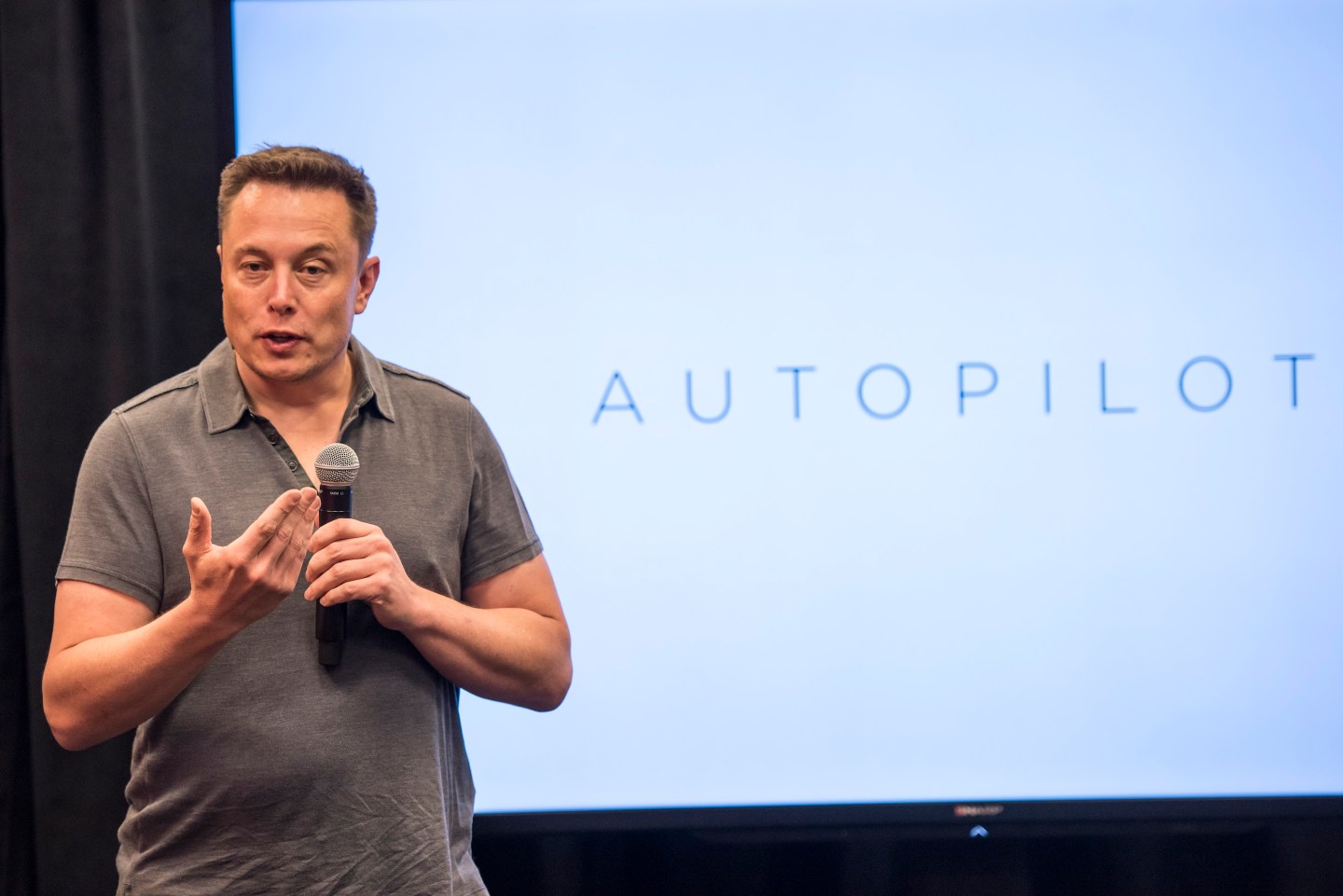
Elon Musk Says Tesla Self-Driving Features Will Start Arriving in August By David Z. Morris
BEFORE YOU GO
Need a new source of worry? This Bloomberg headline caught my eye today: "We’re Worrying About the Wrong Kind of AI." The story is about a sort-of artificial brain called an organoid which can be grown in a lab. Could organoids become conscious, take over the world, end humanity? Paging J.J. Abrams.
This edition of Data Sheet was curated by Aaron Pressman. Find past issues, and sign up for other Fortune newsletters.