To understand the Supreme Court’s decision in Masterpiece Cakeshop v. Colorado Civil Rights Commission, the first thing you need to know is that it’s based on a nonexistent premise.
Justice Anthony Kennedy’s opinion blocks Colorado from penalizing a baker who refused to serve a same-sex couple. On Kennedy’s telling, members of the Colorado Civil Rights Commission disparaged the baker’s sincerely held religious views while finding that he had violated state anti-discrimination law.
But this was not the argument the baker’s brief had foregrounded—and for good reason: It wasn’t the Commission’s decision that resulted in the baker being penalized.
The Supreme Court was not reviewing a decision of the Commission. It was reviewing a decision of the Colorado Supreme Court. But that state court didn’t rely on the Commission’s legal conclusions or factual findings. Instead, the Colorado Supreme Court said that its decision was entirely fresh—or “de novo,” in lawyer speak. Rather than leaning on the Commission’s reasoning, the Colorado Supreme Court repeatedly cited an administrative judge’s findings. And there is no allegation that this judge was moved by animus. The allegedly biased Commission, that is, was arguably irrelevant to the state court’s decision to impose sanctions on the baker.
The justices, of course, are hardly naïfs. If they deliberately went out of their way to base their ruling on the behavior of an irrelevant state actor, they did so knowingly. I think there are two reasons why.
The first reason is that the baker’s two primary constitutional arguments would have sweeping, destabilizing effect. Inflating the Commission’s remarks to the level of religious animus provided the Court a way to resolve the case while avoiding what it might have perceived to be hard questions.
As I explained in an earlier piece, the baker made first a religion-based right to an exception from anti-discrimination law, and second a free speech right in the form of a right to decline to create the cake sought by the same-sex couple. Sensibly, no justice showed interest in the first of these. If the First Amendment gave people a right to opt out of any general law on religious grounds—say, laws criminalizing narcotics use, child marriage, and even physical harm—it would create havoc.
Even the alternate free speech ground, embraced by the Trump Administration, along with Justice Neil Gorsuch and Justice Clarence Thomas, would also have disconcerting repercussions. Much of what is covered by market-protecting legislation—think antitrust, securities law, and many anti-fraud rules—would suddenly be constitutionally protected. The Court has never taken the view that any and all such expression is protected free speech. And for good reason.
The second reason for the Court’s narrow reasoning is that it enables it to reach a superficial consensus on the principle that state hostility to religion violates the Constitution. But there is a danger that this agreement is strategic rather than sincere, and that in fact the justices’ concern with religious discrimination principle will prove instrumental and hollow.
Religious nondiscrimination, alas, has long been honored only in the breach, as the shameful federal treatment of Mormonism in the late 19th century shows. Today, judges can bow to the idea, but the question is whether they will give it any real weight.
Discriminatory intent is at the heart of many constitutional rules—but in practice it is a very slippery concept. Outside the law-school classroom, discriminators rarely wear their ugly hearts on their sleeves. Bad intent needs to be pieced together from circumstantial evidence.
The justices, however, have taken wildly erratic and divergent approaches to the question of how bad intent can be proved. What is taken as proof positive in some instances—say, stray remarks from a government actor—are ignored in other decisions. The law of proving discriminatory intent, in short, is chaotic enough that justices can give lip service to the nondiscriminatory principle even as they recalibrate the kind of evidence they will accept so as to give that principle more or less force, and to reach decisions they like for other reasons.
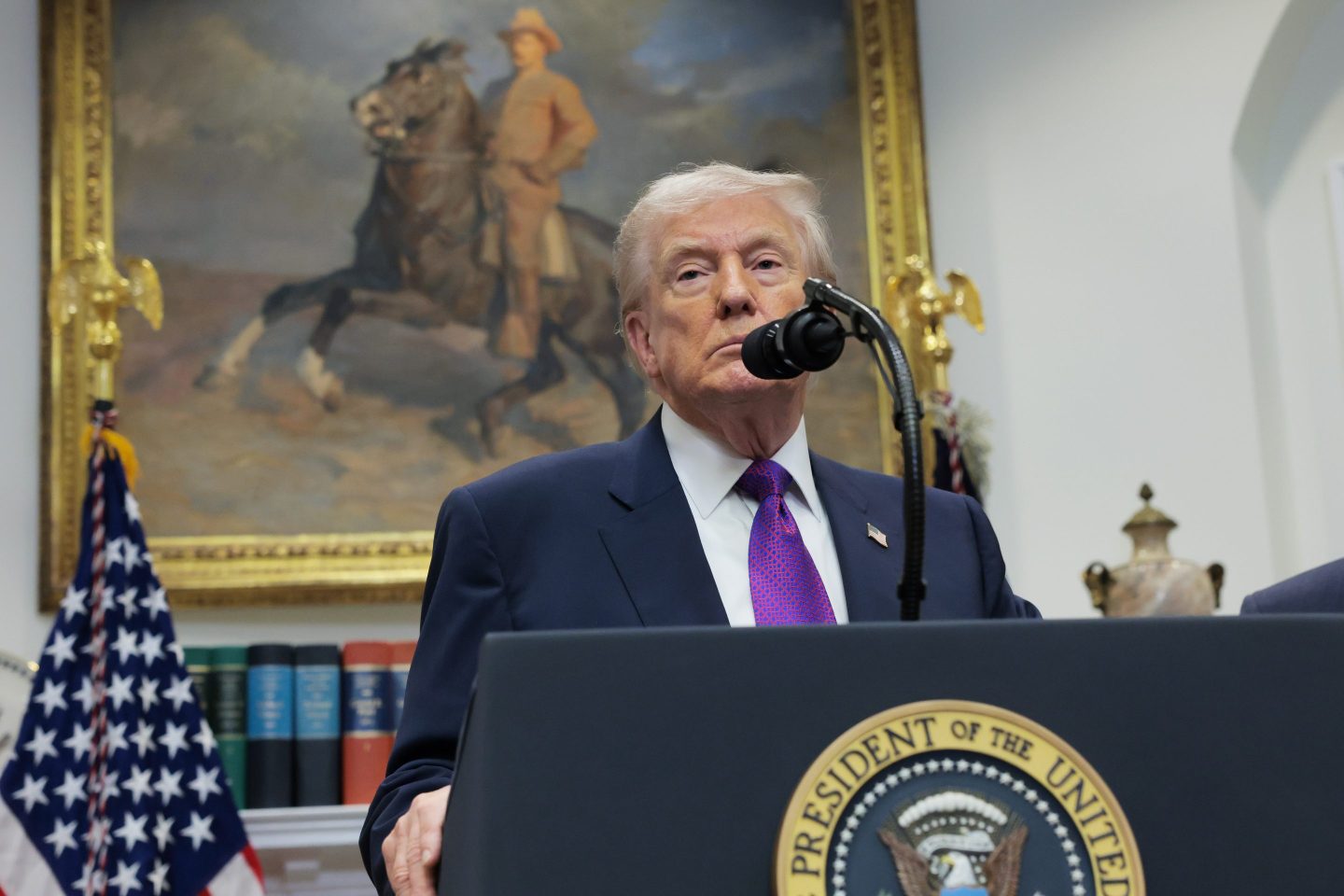
The Court’s commitment to the principle of religious nondiscrimination is about to be tested more frontally in the travel ban case. Here, President Trump’s repeated derogatory comments about Muslims have assumed a pivotal role.
The travel ban case will test whether Justice Gorsuch really means it when he says that the Constitution protects “all” religions, and “not just popular religious exercises.” For if he finds a national security exception to such liberty, in practice, that means one particularly unpopular faith—Islam—will almost always fall outside the domain of constitutional protection.
Equally, when Justice Kennedy condemns a government decision because it has “elements of a clear and impermissible hostility toward the sincere religious beliefs” that motivated the government actor, it is hard to see how this doesn’t impugn the travel ban.
Depending on how that case is resolved, the justices’ opposition to religion in Masterpiece Cakeshop may come to seem either sincere or a strategic feint. It is quite possible that both Justice Kennedy and Justice Gorsuch will find some trick to reconcile a decision to ding (irrelevant) animus in Masterpiece Cakeshop and then ignore (very relevant) animus in the travel ban case. But doing so would reveal this week’s decision is best read as a mere tactic, and not as a genuine statement of constitutional opinion. It would, in other words, coarsen and cheapen the rule of law.
Aziz Huq is the Frank and Bernice J. Greenberg Professor of Law at the University of Chicago Law School.