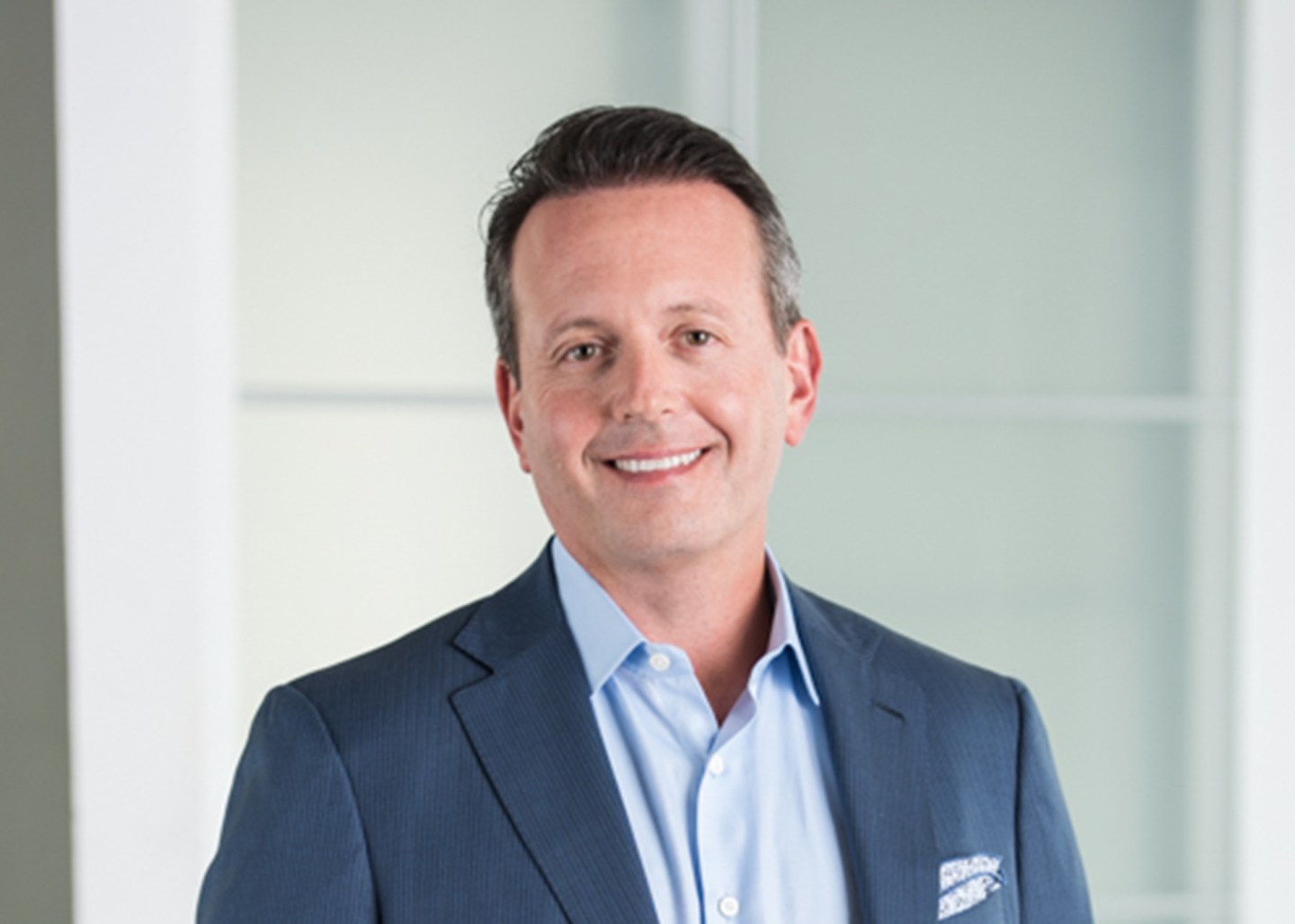
Brent Saunders is a man on a mission.
The 47-year-old pharmaceutical chief, whose career has taken him from the top perch at eye care specialist Bausch and Lomb to his current gig as CEO of Allergan, a drug maker with a $90 billion-plus market value, has been snapping up biotechs left and right, challenging the pharmaceutical industry to get its drug pricing house in order, and speaking out on the realities of business in President Donald Trump’s America.
Saunders swung by the Fortune offices for a wide-ranging discussion on all of those issues — and more.
Click here to subscribe to Brainstorm Health Daily, our brand new newsletter about health innovations.
Pharma’s duty on drug prices in the age of Trump
Two months before Trump’s stunning election night victory, Saunders made a very unusual move: He promised to voluntarily limit drug price increases at Allergan.
As you may have heard by now, that’s not exactly common practice in a sector that has carte blanche over its pricing in the U.S. Saunders nonetheless launched a “social contract” with patients in September swearing to cap branded drug price hikes at a maximum of 10% year-over-year. Saunders tells me the ultimate goal is to get average branded price increases more or less in line with inflation.
The strategy isn’t just based on the fact that it’s the right thing to do, he says. Saunders also considers President Trump a populist who will turn his ire on the entire industry if the public backlash is loud enough (something he has already done by saying pharma is “getting away with murder” on pricing and endorsing price negotiations in Medicare).
The president has already shown some mercurial tendencies, particularly on social media, which have sent various stocks into a spiral. But, ultimately, this is a much bigger issue for the industry, Saunders asserts: self-regulate, or be regulated.
“I didn’t pass this social contract, nor would I advocate for another company to do their own thing, because they’re worried about a [Trump] tweet or one bad action,” he says.
“I think the real issue is, the system we have today encourages capital money to be put at risk to try to to solve unmet medical need. If the government intervenes and takes over… I worry that the fragility of the innovation and the types of risks that we have to take will start to disappear. And as a result of that some of these big challenges we face like Alzheimer’s or autism will never be solved or they will be solved too late for too many people.”
To date, a number of notable companies including Merck, Novo Nordisk, Takeda, and Johnson & Johnson have also signed on to the price hike-limiting pledge. Allergan recently revealed that its latest price hikes amounted to a gross 6.7% increase on average and a 2.5% net hike.
Teaching old pharma giants new R&D tricks
Saunders likes deal-making. A lot. And the habit has a lot to do with his general philosophy on business.
“I’ve always been of the mindset that change brings opportunity,” he says. “You can make change your ally, or you can fear change.”
That may very well be an important frame of mind in an industry that’s facing massive disruptions to the traditional R&D model. Saunders has been responsible for at least 18 deals valued at about $13.5 billion since his time at Forest Laboratories (and that doesn’t even include other licensing arrangements or more recently announced partnerships).
So is this the future of big pharma in a world increasingly intrigued by smaller biotechs? “I would say that [drug development] has historically relied on an open science type of approach to innovation,” says Saunders. “But over the course of time, they also built a tremendous and pricey fixed infrastructure to try to discover their own drug candidates. And I think the data would show that, while amazing discoveries have been brought forward for patients in in these large discovery labs, over an extended period of time, they have not been a good investment.”
Saunders argues that there’s only so much you can do when you’re employing science from a single talent pool, no matter how well-funded or talented it is.
“Innovation happens in all sorts of interesting places,” he says. “No one company can corner in or create a monopoly on the best thinking that’s out there. And so if we’ve built the lab and we invested a billion dollars in discovering medicines, we can only do what we could in the four walls of our village. But if we if we walk outside of that, we’re fishing in an ocean versus a pond for innovation.” He compares the strategy to that employed by tech giants like Google, which have folded smaller companies into the herd in an effort to maintain growth and the most groundbreaking technology.
The most promising experimental drugs
The high-stakes nature of the biopharma business inevitably lends itself to a bit of tunnel vision. Investors get wrapped up in what effect the latest interim trial result may have on a stock; analysts question the wisdom of a particular acquisition or PR move.
What can get lost is the actual groundbreaking science that’s the beating heart of the industry when it’s at its best. And Allergan, through its own in-house R&D programs and acquisitions, has a hefty number of projects in development. More than 65, in fact.
So what are the most promising, in Saunder’s eyes? “We have six star candidates that we’ve highlighted for investors to to focus on,” he says. “Those are blockbuster potential drugs in late very late stage development this year with peak sales of potentially $13 billion or more.”
These experimental products include everything from eye care therapies to brain disorder drugs to gastrointestinal medicines. But the one that Saunders singles out is rapastinel, a developmental treatment for major depression that he hopes can cut the risk of suicidal thoughts.
“I think Allergan could could really make a profound impact in disorders of the brain,” he says. “Rapastinel has the potential to change how we think about treating depression, and major depressive disorders, and potentially suicidality – which is a top 10 cause of death with, frankly, very few treatment options, if any at all.”