• Home
  • News
  • Fortune 500
  • Tech
  • Finance
  • Leadership
  • Lifestyle
  • Rankings
  • Multimedia
TechBlockchain

Are Blockchain Patents a Bad Idea?

By
Jeff John Roberts
Jeff John Roberts
Editor, Finance and Crypto
Down Arrow Button Icon
By
Jeff John Roberts
Jeff John Roberts
Editor, Finance and Crypto
Down Arrow Button Icon
December 1, 2016, 8:12 AM ET
Key Speakers At The Economist Finance Disrupted Conference
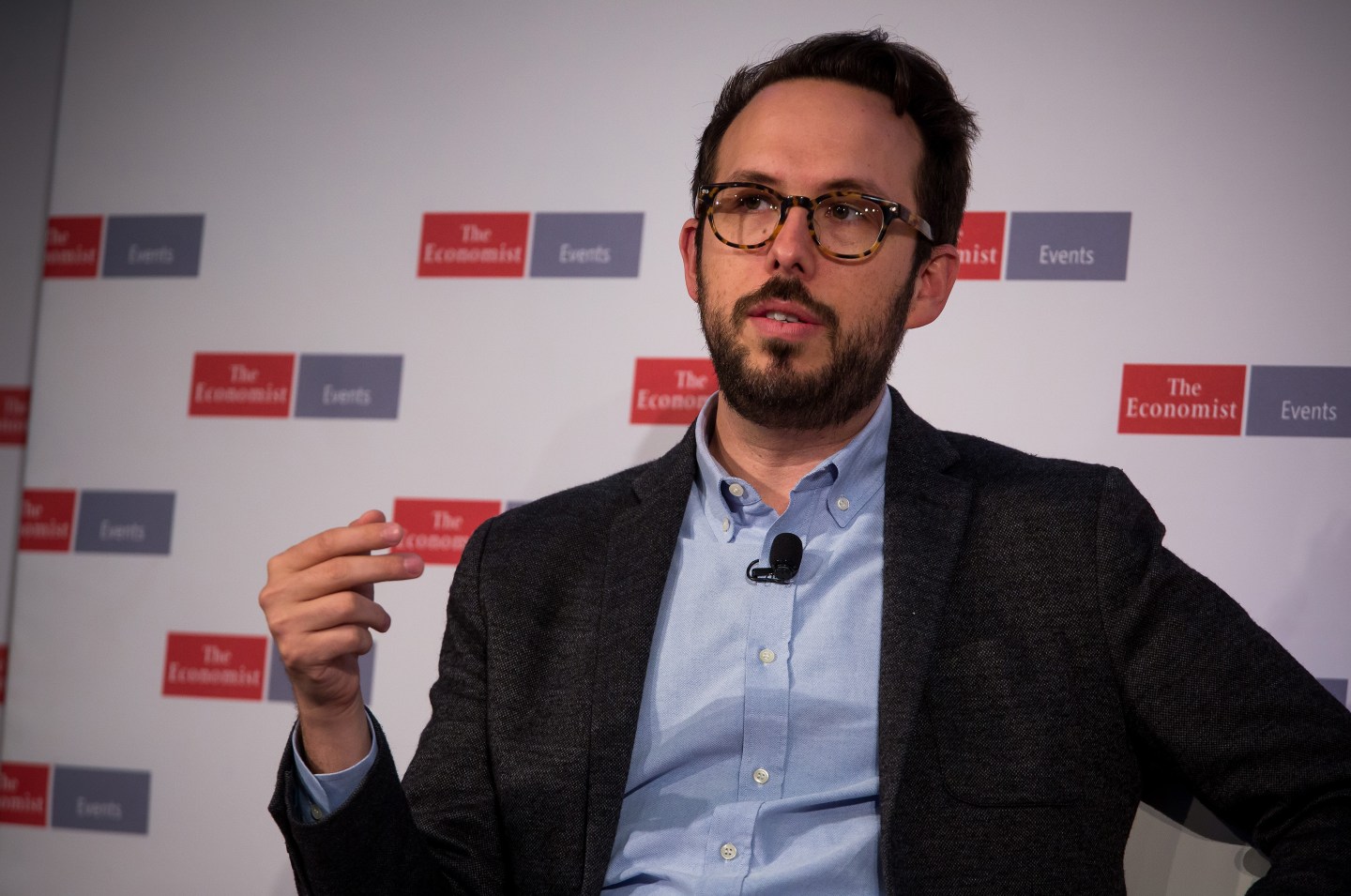
Adam Ludwin, co-founder and chief executive officer of Chain Inc., speaks during The Economist's Finance Disrupted conference in New York, U.S., on Thursday, Oct. 13, 2016. The conference will explore what the digital revolution means for finance and the broader economy. Photographer: Michael Nagle/Bloomberg via Getty ImagesMichael Nagle—Bloomberg via Getty Images

Blockchain is at a crossroads. On one hand, the technology, which promises to revolutionize record-keeping in businesses like banking and farming, is more open than ever with firms including Chain and R3 saying they would make their blockchain software code open to the public.

But there is another force at work that could close off access to the technology. That force comes in the form of patents as big banks and others file applications that seek 20-year monopolies over various aspects of blockchain.

The most prominent example is an application in which Goldman Sachs seeks a patent for “processing financial transactions using a … distributed ledger … [to] store a portion of the ledger corresponding to a respective asset” — in other words, using blockchain tools to settle transactions.

The Goldman application caused a minor media stir but the investment bank is hardly the only one seeking blockchain patents. Bank of America (BAC), Accenture (ACN), and Morgan Stanley (MS) are among the other big corporate names that appear on hundreds of blockchain-related patent applications filed in the last few years. Meanwhile, a controversial figure named Craig Wright who claims to have invented bitcoin (the claim is widely doubted) has filed dozens of patents in an apparent attempt to exert control over blockchain.

So far, the U.S. Patent Office has yet to actually grant any of these patents. But if it does, the patent owners could be in position to seek millions of dollars in damages from other blockchain users that do not agree to license their technology, or even shut them down with an injunction. Worse, the owner could employ a “patent trolling” model—simply sitting on the patents and using shell companies to file lawsuits against anyone using blockchain.

According to Don Tapscott, a co-author of a popular book, Blockchain Revolution, a surge of patent litigation could be devastating to the technology’s development.

“This sort of behavior is antithetical to innovation, collaboration and the openness that’s at the heart of the new digital age,” said Tapscott. “I find it unfortunate when incumbents threatened by new paradigms revert to behavior that’s not even in their own interest.”

But in the case of banks like Goldman Sachs and Morgan Stanley, whose patent filings reportedly caused tension with the blockchain consortium R3 (the banks left R3 last week), it may be premature to assume they will act aggressively.

A source close to Goldman said the bank’s patent applications are primarily a defensive measure to ensure a tech firm or another company “doesn’t monetize it away.” The source, who would speak only on the condition of anonymity, added that the bank could also donate patents it obtains to a consortium that seeks to promote blockchain adoption in the financial sector.

Meanwhile, others argue that patents will be an inevitable part of the blockchain landscape and that this is not a bad thing. Justin Hill, a patent attorney at the law firm Olswang, recently wrote that the emergence of clusters of blockchain patents could be similar to what occurred in the telecom industry, where companies pay intellectual property holders to access standard technology.

Would a blockchain patent be valid?

It’s still not clear, however, if patents are the best approach for encouraging blockchain technology, or if such patents should even be valid under American law.

Daniel Nazer, a lawyer with the Electronic Frontier Foundation, told Fortune that applications to patent the blockchain — which is a form of software — face a high hurdle due to a Supreme Court case called Alice. That decision ruled that most, or perhaps all, software patents are abstract ideas that are ineligible for patent protection.

Get Data Sheet,Fortune’s technology newsletter.

He added that many such patent applications would also have to overcome objections that the “invention” they claim is obvious. This is especially the case, said Nazer, because the applications are not for foundational concepts like bitcoin or the blockchain itself—concepts that could not be patented today since bitcoin’s pseudonymous creator, Satoshi Nakamoto, disclosed them to the public years ago.

But Nazer remains concerned the Patent Office will fail to apply the proper quality controls, and will issue weak blockchain patents all the same.

“I’m concerned the system will fail and there will be lots of abstract and mundane patents for ‘use of the blockchain for X,’ and then everyone will have to negotiate legal minefields and innovation will slow,” he said.

For now, though, the prospect of patent pitfalls is not slowing companies like Chain, which develops blockchain protocols for the likes of Visa and Capital One, and in October released an open source version of its Chain Core software.

“Patents? We feel strongly this should be done in a way that is open source and that patents are used only defensively,” Chain CEO, Adam Ludwin, told Fortune recently. “Will there be lawsuits in the future? Yeah, probably.”

About the Author
By Jeff John RobertsEditor, Finance and Crypto
LinkedIn iconTwitter icon

Jeff John Roberts is the Finance and Crypto editor at Fortune, overseeing coverage of the blockchain and how technology is changing finance.

See full bioRight Arrow Button Icon

Latest in Tech

Future of WorkBrainstorm Design
The workplace needs to be designed like an ‘experience,’ says Gensler’s Ray Yuen, as employees resist the return to office
By Angelica AngDecember 5, 2025
53 minutes ago
Four years ago, BKV started buying up the two Temple power plants in Texas—located between Austin and Dallas—which now total 1.5 gigawatts of electricity generation capacity—enough to power more than 1.1 million homes, or a major data center campus. There is room to expand.
Energypower
How a Texas gas producer plans to exploit the ‘mega trend’ of power plants for AI hyperscalers
By Jordan BlumDecember 5, 2025
53 minutes ago
Big TechSpotify
Spotify users lamented Wrapped in 2024. This year, the company brought back an old favorite and made it less about AI
By Dave Lozo and Morning BrewDecember 4, 2025
12 hours ago
InnovationVenture Capital
This Khosla Ventures–backed startup is using AI to personalize cancer care
By Allie GarfinkleDecember 4, 2025
16 hours ago
AIEye on AI
Companies are increasingly falling victim to AI impersonation scams. This startup just raised $28M to stop deepfakes in real time
By Sharon GoldmanDecember 4, 2025
16 hours ago
Jensen Huang
SuccessBillionaires
Nvidia CEO Jensen Huang admits he works 7 days a week, including holidays, in a constant ‘state of anxiety’ out of fear of going bankrupt
By Jessica CoacciDecember 4, 2025
16 hours ago

Most Popular

placeholder alt text
Economy
Two months into the new fiscal year and the U.S. government is already spending more than $10 billion a week servicing national debt
By Eleanor PringleDecember 4, 2025
21 hours ago
placeholder alt text
Success
‘Godfather of AI’ says Bill Gates and Elon Musk are right about the future of work—but he predicts mass unemployment is on its way
By Preston ForeDecember 4, 2025
17 hours ago
placeholder alt text
Success
Nvidia CEO Jensen Huang admits he works 7 days a week, including holidays, in a constant 'state of anxiety' out of fear of going bankrupt
By Jessica CoacciDecember 4, 2025
16 hours ago
placeholder alt text
Success
Nearly 4 million new manufacturing jobs are coming to America as boomers retire—but it's the one trade job Gen Z doesn't want
By Emma BurleighDecember 4, 2025
17 hours ago
placeholder alt text
North America
Jeff Bezos and Lauren Sánchez Bezos commit $102.5 million to organizations combating homelessness across the U.S.: ‘This is just the beginning’
By Sydney LakeDecember 2, 2025
3 days ago
placeholder alt text
Health
Bill Gates decries ‘significant reversal in child deaths’ as nearly 5 million kids will die before they turn 5 this year
By Nick LichtenbergDecember 4, 2025
1 day ago
Rankings
  • 100 Best Companies
  • Fortune 500
  • Global 500
  • Fortune 500 Europe
  • Most Powerful Women
  • Future 50
  • World’s Most Admired Companies
  • See All Rankings
Sections
  • Finance
  • Leadership
  • Success
  • Tech
  • Asia
  • Europe
  • Environment
  • Fortune Crypto
  • Health
  • Retail
  • Lifestyle
  • Politics
  • Newsletters
  • Magazine
  • Features
  • Commentary
  • Mpw
  • CEO Initiative
  • Conferences
  • Personal Finance
  • Education
Customer Support
  • Frequently Asked Questions
  • Customer Service Portal
  • Privacy Policy
  • Terms Of Use
  • Single Issues For Purchase
  • International Print
Commercial Services
  • Advertising
  • Fortune Brand Studio
  • Fortune Analytics
  • Fortune Conferences
  • Business Development
About Us
  • About Us
  • Editorial Calendar
  • Press Center
  • Work At Fortune
  • Diversity And Inclusion
  • Terms And Conditions
  • Site Map

© 2025 Fortune Media IP Limited. All Rights Reserved. Use of this site constitutes acceptance of our Terms of Use and Privacy Policy | CA Notice at Collection and Privacy Notice | Do Not Sell/Share My Personal Information
FORTUNE is a trademark of Fortune Media IP Limited, registered in the U.S. and other countries. FORTUNE may receive compensation for some links to products and services on this website. Offers may be subject to change without notice.