• Home
  • Latest
  • Fortune 500
  • Finance
  • Tech
  • Leadership
  • Lifestyle
  • Rankings
  • Multimedia
FinanceEconomy

Here’s More Bad News for Obamacare

By
Chris Matthews
Chris Matthews
Down Arrow Button Icon
By
Chris Matthews
Chris Matthews
Down Arrow Button Icon
August 23, 2016, 2:32 PM ET
US-POLITICS-OBAMA-HEALTHCARE
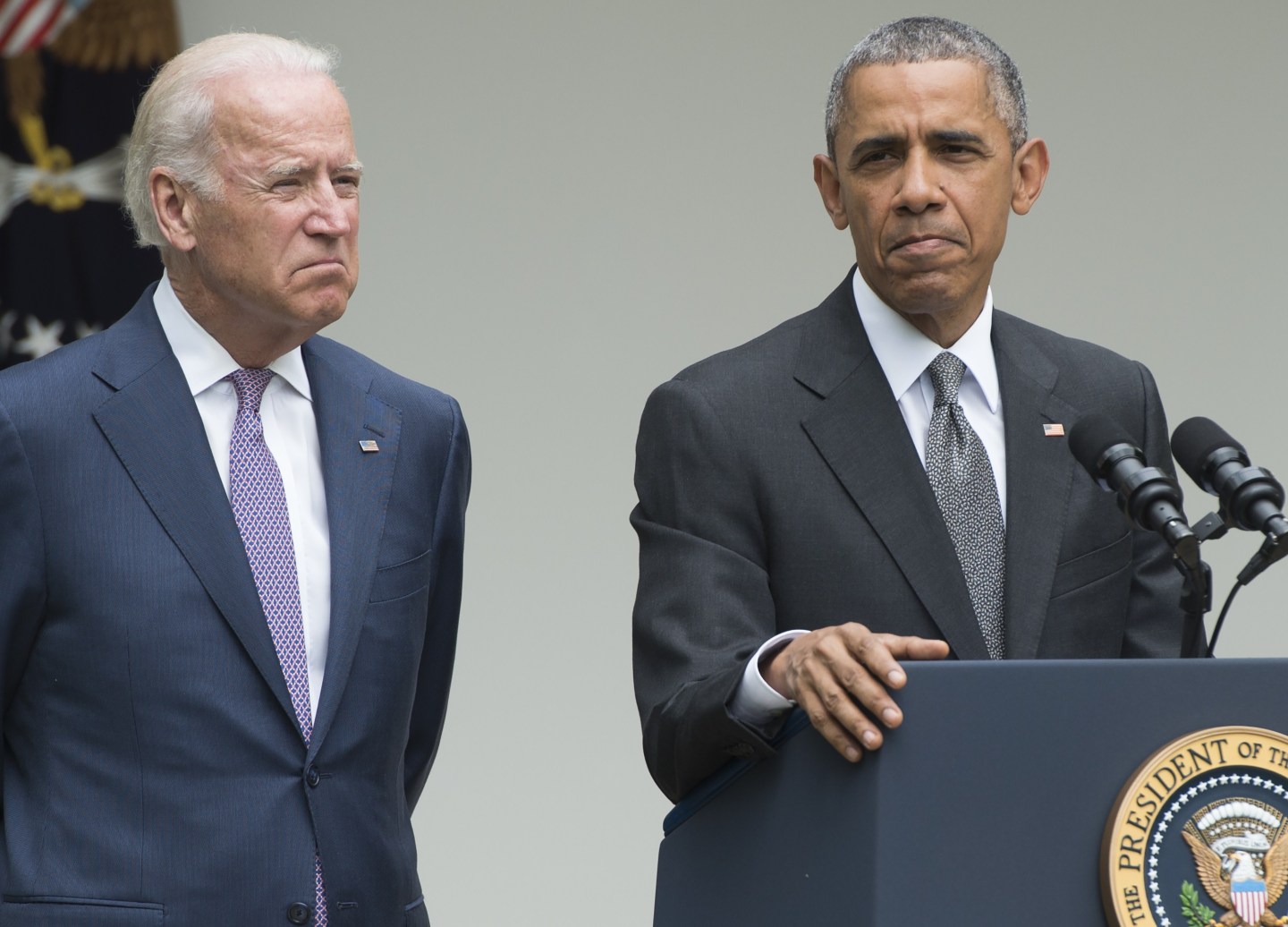
US President Barack Obama speaks alongside US Vice President Joe Biden about the Supreme Court's ruling to uphold the subsidies that comprise the Affordable Care Act, known as Obamacare, in the Rose Garden of the White House in Washington, DC, June 25, 2015. AFP PHOTO / SAUL LOEB (Photo credit should read SAUL LOEB/AFP/Getty Images)Photograph by Saul Loeb — AFP/Getty Images

Obamacare was supposed to save the American economy.

Back in 2009, when President Obama decided to push for healthcare reform in the midst of a financial crisis, he justified the decision by arguing that healthcare reform was economic reform, stating that the Affordable Care Act would “build a new foundation for lasting and sustained growth.”

One of the ways that healthcare reform was supposed to boost the economy was ending the phenomenon of “job lock,” whereby workers are scared of leaving a job for a potentially better opportunity out of fear of losing their health insurance. But according to a new study by the National Bureau of Economic Research, Obamacare isn’t actually solving that problem.

Economists Pauline Leung of Cornell University and Alexandre Mas of Princeton studied states that recently expanded Medicaid under the law and found no evidence that there was a reduction in employment lock in response to these expansions. Admittedly, researchers only studied the effects of the Obamacare-related Medicaid expansion, which is offered to Americans with incomes below 138% of the poverty line. It’s possible that these folks are working in jobs that don’t offer health care in the first place, and so obtaining medicaid benefits has no affect on their decisions to leave their current job for a new one.

At the same time, these results should lead us to question the lasting economic benefits of the law, given the fact that new Medicaid enrollees have exceeded expectations while fewer middle-class Americans are enrolling through subsidized exchanges than was previously expected. And though this trend doesn’t represent an existential threat to the law itself (see this recent post for some of those), it does underscore the need for continued health care reform if the U.S. economy is to remain competitive with other wealthy nations.

And this is actually one area where the right and the left agree. President Obama himself took to citing research from the Heritage Foundation—which praised Senator John McCain’s 2008 health reform plan for its ability to tackle the job lock problem by offering tax credits to workers so that they could afford to buy insurance on the private market—as evidence for the need to address the problem.

So why are health care wonks so worried about job lock? If workers are scared to leave their job to look for new prospects or even start their own businesses out of fear of losing insurance, they are not going to be in the position to produce as much as they can. And a lack of productivity growth, which ending job lock would help to reverse, is one of the fundamental problems affecting the U.S. economy today. The latest reading shows productivity falling in the second quarter year-over-year, while the Conference Board predicts that this measure will fall for the full year for the first time since 1982.

Finding a way to solve this crisis of slow productivity will be a priority for lawmakers of both parties, given that productivity growth is widely assumed to be necessary if average workers are to see their wages rise. The problem is that Obamacare—with its mix of public subsidies and regulations with the private provision of health insurance—is the only conceivable model that could get both Democratic and Republican support. Of course, the Republican Party, after supporting forms of the law in places like Massachusetts, abandoned this model after President Obama took office in 2009 and began pushing it nationally.

Now, the Republican Party will accept nothing short of the law’s repeal, mixed with new free-market reforms. Meanwhile, the Democratic Party is increasingly hostile to the idea of reform that doesn’t include greater government involvement, as evidenced by Bernie Sanders support for a single-payer, “Medicare for all” plan and Obama’s renewed push for a public option. It’s conceivable that either of these approaches could work to help make the U.S. labor market more flexible, but there is little chance that either plan will actually be tested given the growing and intractable polarization of American politics.


About the Author
By Chris Matthews
See full bioRight Arrow Button Icon

Latest in Finance

Investingspace
SpaceX sets $800 billion valuation, confirms 2026 IPO plans
By Loren Grush, Edward Ludlow and BloombergDecember 13, 2025
41 minutes ago
PoliticsAffordable Care Act (ACA)
With just days to go before ACA subsidies expire, Congress is about to wrap up its work with no consensus solution in sight
By Kevin Freking, Lisa Mascaro and The Associated PressDecember 13, 2025
53 minutes ago
InnovationRobots
Even in Silicon Valley, skepticism looms over robots, while ‘China has certainly a lot more momentum on humanoids’
By Matt O'Brien and The Associated PressDecember 13, 2025
1 hour ago
HealthAffordable Care Act (ACA)
A Wisconsin couple was paying $2 a month for an ACA health plan. But as subsidies expire, it’s soaring to $1,600, forcing them to downgrade
By Ali Swenson and The Associated PressDecember 13, 2025
2 hours ago
Julian Braithwaite is the Director General of the International Alliance for Responsible Drinking
CommentaryProductivity
Gen Z is drinking 20% less than Millennials. Productivity is rising. Coincidence? Not quite
By Julian BraithwaiteDecember 13, 2025
3 hours ago
carbon
Commentaryclimate change
Banking on carbon markets 2.0: why financial institutions should engage with carbon credits
By Usha Rao-MonariDecember 13, 2025
4 hours ago

Most Popular

placeholder alt text
Economy
Tariffs are taxes and they were used to finance the federal government until the 1913 income tax. A top economist breaks it down
By Kent JonesDecember 12, 2025
1 day ago
placeholder alt text
Success
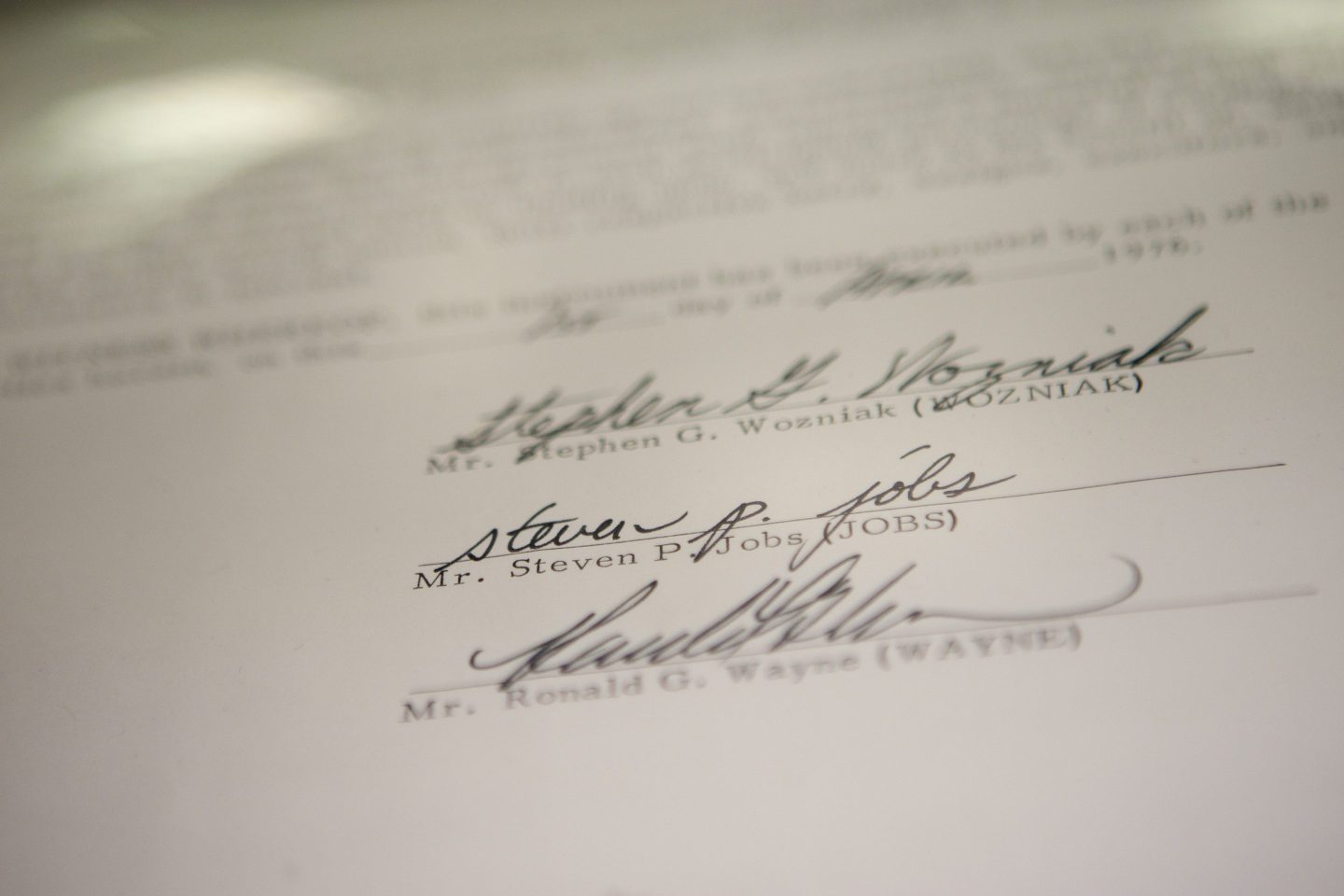
Apple cofounder Ronald Wayne sold his 10% stake for $800 in 1976—today it’d be worth up to $400 billion
By Preston ForeDecember 12, 2025
1 day ago
placeholder alt text
Success
40% of Stanford undergrads receive disability accommodations—but it’s become a college-wide phenomenon as Gen Z try to succeed in the current climate
By Preston ForeDecember 12, 2025
1 day ago
placeholder alt text
Economy
For the first time since Trump’s tariff rollout, import tax revenue has fallen, threatening his lofty plans to slash the $38 trillion national debt
By Sasha RogelbergDecember 12, 2025
21 hours ago
placeholder alt text
Economy
The Fed just ‘Trump-proofed’ itself with a unanimous move to preempt a potential leadership shake-up
By Jason MaDecember 12, 2025
19 hours ago
placeholder alt text
Success
At 18, doctors gave him three hours to live. He played video games from his hospital bed—and now, he’s built a $10 million-a-year video game studio
By Preston ForeDecember 10, 2025
3 days ago
Rankings
  • 100 Best Companies
  • Fortune 500
  • Global 500
  • Fortune 500 Europe
  • Most Powerful Women
  • Future 50
  • World’s Most Admired Companies
  • See All Rankings
Sections
  • Finance
  • Leadership
  • Success
  • Tech
  • Asia
  • Europe
  • Environment
  • Fortune Crypto
  • Health
  • Retail
  • Lifestyle
  • Politics
  • Newsletters
  • Magazine
  • Features
  • Commentary
  • Mpw
  • CEO Initiative
  • Conferences
  • Personal Finance
  • Education
Customer Support
  • Frequently Asked Questions
  • Customer Service Portal
  • Privacy Policy
  • Terms Of Use
  • Single Issues For Purchase
  • International Print
Commercial Services
  • Advertising
  • Fortune Brand Studio
  • Fortune Analytics
  • Fortune Conferences
  • Business Development
About Us
  • About Us
  • Editorial Calendar
  • Press Center
  • Work At Fortune
  • Diversity And Inclusion
  • Terms And Conditions
  • Site Map

© 2025 Fortune Media IP Limited. All Rights Reserved. Use of this site constitutes acceptance of our Terms of Use and Privacy Policy | CA Notice at Collection and Privacy Notice | Do Not Sell/Share My Personal Information
FORTUNE is a trademark of Fortune Media IP Limited, registered in the U.S. and other countries. FORTUNE may receive compensation for some links to products and services on this website. Offers may be subject to change without notice.