• Home
  • Latest
  • Fortune 500
  • Finance
  • Tech
  • Leadership
  • Lifestyle
  • Rankings
  • Multimedia
CommentaryUber Technologies

Why Uber Couldn’t Crack China

By
Robert Salomon
Robert Salomon
Down Arrow Button Icon
By
Robert Salomon
Robert Salomon
Down Arrow Button Icon
August 7, 2016, 6:00 PM ET
China regulator says Didi, Uber deal will need Mofcom approval
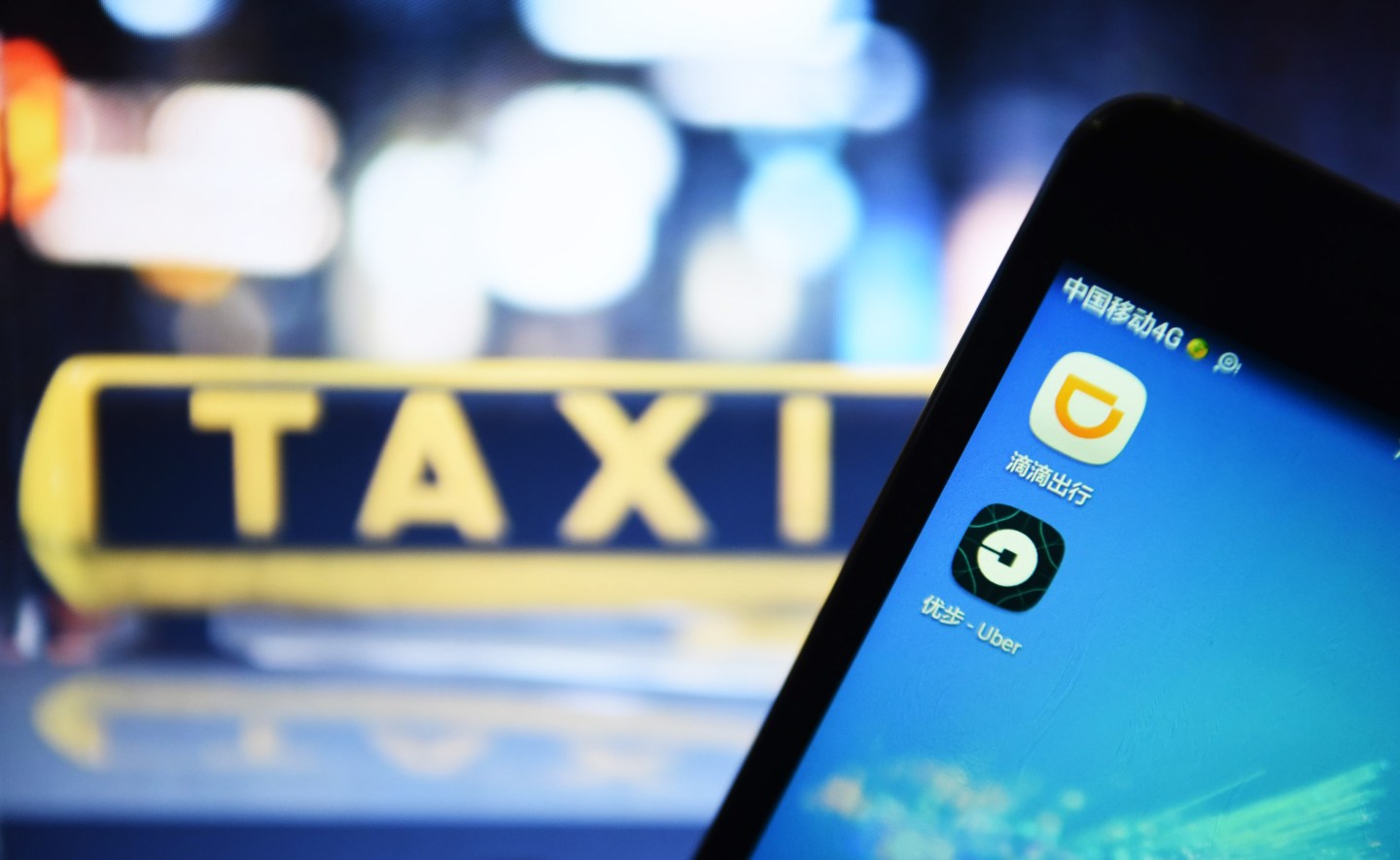
A Chinese mobile phone user looks at the icons of the mobile apps of taxi-hailing apps Didi Chuxing, upper, and Uber on his smartphone.Shan he Shan he — Imaginechina/AP

Robert Salomon is an associate professor of international management at the New York University Stern School of Business and author of Global Vision: How Companies Can Overcome the Pitfalls of Globalization.

Back in March, I suggested that Uber was poorly positioned to capitalize on China’s ride-hailing market. Uber was losing $1 billion a year in China and battling a profitable and well-connected local competitor in Didi Chuxing (formerly Didi Kuaidi) for market share. Therefore, I was unsurprised to learn last Monday that after two years and more than $2 billion in cash losses, Uber agreed to sell its Chinese business to Didi.

In exchange for its China operations, Uber will receive a 20% minority stake in Didi and a $1 billion equity investment from the Chinese firm. Although additional financial and operational details are still emerging, the sale of Uber China to Didi is a clear indication that Uber has given up on its ambition to conquer the Chinese ride-sharing market.

Uber CEO Travis Kalanick had previously suggested that he was not worried about the company’s losses and slow start in China, yet Uber’s shareholders felt otherwise. Increasingly troubled by Uber’s seemingly interminable difficulties in China, they pressured Kalanick to cut his losses and move on.

Uber’s extraordinary failure reinforces General Electric (GE) CEO Jeffrey Immelt’s statement from 2012: “China is big, but it is hard.” Indeed, China is an incredibly complex market that differs culturally, politically, and economically from the United States. Large U.S. technology companies like Amazon (AMZN), Google (GOOG), eBay (EBAY), Yahoo (YHOO), and Facebook (FB) have struggled to make inroads in China. And despite Kalanick’s public statements otherwise, Uber’s experience demonstrates that it was no exception.

In my book, Global Vision: How Companies Can Overcome the Pitfalls of Globalization, I describe many of the struggles that American companies specifically, and Western companies generally, have experienced in China. China’s infrastructure, financial markets, and banking system are underdeveloped relative to those in the West, making it difficult for Western firms to operate in China as they do at home. Western managers find China’s political structure, legal system, and regulatory rules complex and vexing. Also, the Chinese practice of intermingling personal and business relationships is foreign to U.S. companies accustomed to more transactional relationships with their customers and employees. Finally, Chinese consumer tastes are so different from Westerners’ that foreign companies find it challenging to adapt their products and services to meet the specific needs of Chinese customers.

Unfortunately, Uber was not able to overcome these obstacles, learning the hard way that the risks inherent in expanding to China can sink even the best-laid business plans. To succeed in countries like China, companies need to develop strategies that balance these risks with anticipated rewards. For many Western firms, China presents far greater risk than it is worth, and many rightly elect to stay out. However, for those companies that feel compelled to enter the Chinese market, a measured approach is key.

Uber understood the importance of proceeding slowly and investing in relationships. Kalanick made frequent visits to China to cultivate political relationships and develop an extensive network of drivers. However, for Western companies expanding to China, it is often also critical to align with the right local business partners. Local companies typically have a better handle on the cultural, economic, and political environment, and can help foreign firms navigate the full set of risks they face.

This is where Uber erred: It tried to tackle a risky and complex market alone. Partnering with a company like Didi from the outset might have saved Uber some costly pain, and the embarrassment of having to accept a role as junior partner in a Chinese company.

About the Author
By Robert Salomon
See full bioRight Arrow Button Icon

Latest in Commentary

Julian Braithwaite is the Director General of the International Alliance for Responsible Drinking
CommentaryProductivity
Gen Z is drinking 20% less than Millennials. Productivity is rising. Coincidence? Not quite
By Julian BraithwaiteDecember 13, 2025
2 days ago
carbon
Commentaryclimate change
Banking on carbon markets 2.0: why financial institutions should engage with carbon credits
By Usha Rao-MonariDecember 13, 2025
2 days ago
Dr. Javier Cárdenas is the director of the Rockefeller Neuroscience Institute NeuroPerformance Innovation Center.
Commentaryconcussions
Fists, not football: There is no concussion protocol for domestic violence survivors
By Javier CárdenasDecember 12, 2025
3 days ago
Gary Locke is the former U.S. ambassador to China, U.S. secretary of commerce, and governor of Washington.
CommentaryChina
China is winning the biotech race. Patent reform is how we catch up
By Gary LockeDecember 12, 2025
3 days ago
millennial
CommentaryConsumer Spending
Meet the 2025 holiday white whale: the millennial dad spending $500+ per kid
By Phillip GoerickeDecember 12, 2025
3 days ago
Sarandos
CommentaryAntitrust
Netflix, Warner, Paramount and antitrust: Entertainment megadeal’s outcome must follow the evidence, not politics or fear of integration
By Satya MararDecember 12, 2025
3 days ago

Most Popular

placeholder alt text
Success
Apple cofounder Ronald Wayne sold his 10% stake for $800 in 1976—today it’d be worth up to $400 billion
By Preston ForeDecember 12, 2025
3 days ago
placeholder alt text
Success
40% of Stanford undergrads receive disability accommodations—but it’s become a college-wide phenomenon as Gen Z try to succeed in the current climate
By Preston ForeDecember 12, 2025
2 days ago
placeholder alt text
Economy
Tariffs are taxes and they were used to finance the federal government until the 1913 income tax. A top economist breaks it down
By Kent JonesDecember 12, 2025
3 days ago
placeholder alt text
Uncategorized
Transforming customer support through intelligent AI operations
By Lauren ChomiukNovember 26, 2025
18 days ago
placeholder alt text
Economy
More financially distressed farmers are expected to lose their property soon as loan repayments and incomes continue to falter
By Jason MaDecember 13, 2025
1 day ago
placeholder alt text
Economy
The Fed just ‘Trump-proofed’ itself with a unanimous move to preempt a potential leadership shake-up
By Jason MaDecember 12, 2025
2 days ago
Rankings
  • 100 Best Companies
  • Fortune 500
  • Global 500
  • Fortune 500 Europe
  • Most Powerful Women
  • Future 50
  • World’s Most Admired Companies
  • See All Rankings
Sections
  • Finance
  • Leadership
  • Success
  • Tech
  • Asia
  • Europe
  • Environment
  • Fortune Crypto
  • Health
  • Retail
  • Lifestyle
  • Politics
  • Newsletters
  • Magazine
  • Features
  • Commentary
  • Mpw
  • CEO Initiative
  • Conferences
  • Personal Finance
  • Education
Customer Support
  • Frequently Asked Questions
  • Customer Service Portal
  • Privacy Policy
  • Terms Of Use
  • Single Issues For Purchase
  • International Print
Commercial Services
  • Advertising
  • Fortune Brand Studio
  • Fortune Analytics
  • Fortune Conferences
  • Business Development
About Us
  • About Us
  • Editorial Calendar
  • Press Center
  • Work At Fortune
  • Diversity And Inclusion
  • Terms And Conditions
  • Site Map

© 2025 Fortune Media IP Limited. All Rights Reserved. Use of this site constitutes acceptance of our Terms of Use and Privacy Policy | CA Notice at Collection and Privacy Notice | Do Not Sell/Share My Personal Information
FORTUNE is a trademark of Fortune Media IP Limited, registered in the U.S. and other countries. FORTUNE may receive compensation for some links to products and services on this website. Offers may be subject to change without notice.