• Home
  • Latest
  • Fortune 500
  • Finance
  • Tech
  • Leadership
  • Lifestyle
  • Rankings
  • Multimedia
Commentary

Why Trump and Clinton Are America’s Most Disliked Presidential Candidates

By
Ed O’Brien
Ed O’Brien
and
Nadav Klein
Nadav Klein
Down Arrow Button Icon
By
Ed O’Brien
Ed O’Brien
and
Nadav Klein
Nadav Klein
Down Arrow Button Icon
July 6, 2016, 8:00 PM ET
US-VOTE-CLINTON-TRUMP
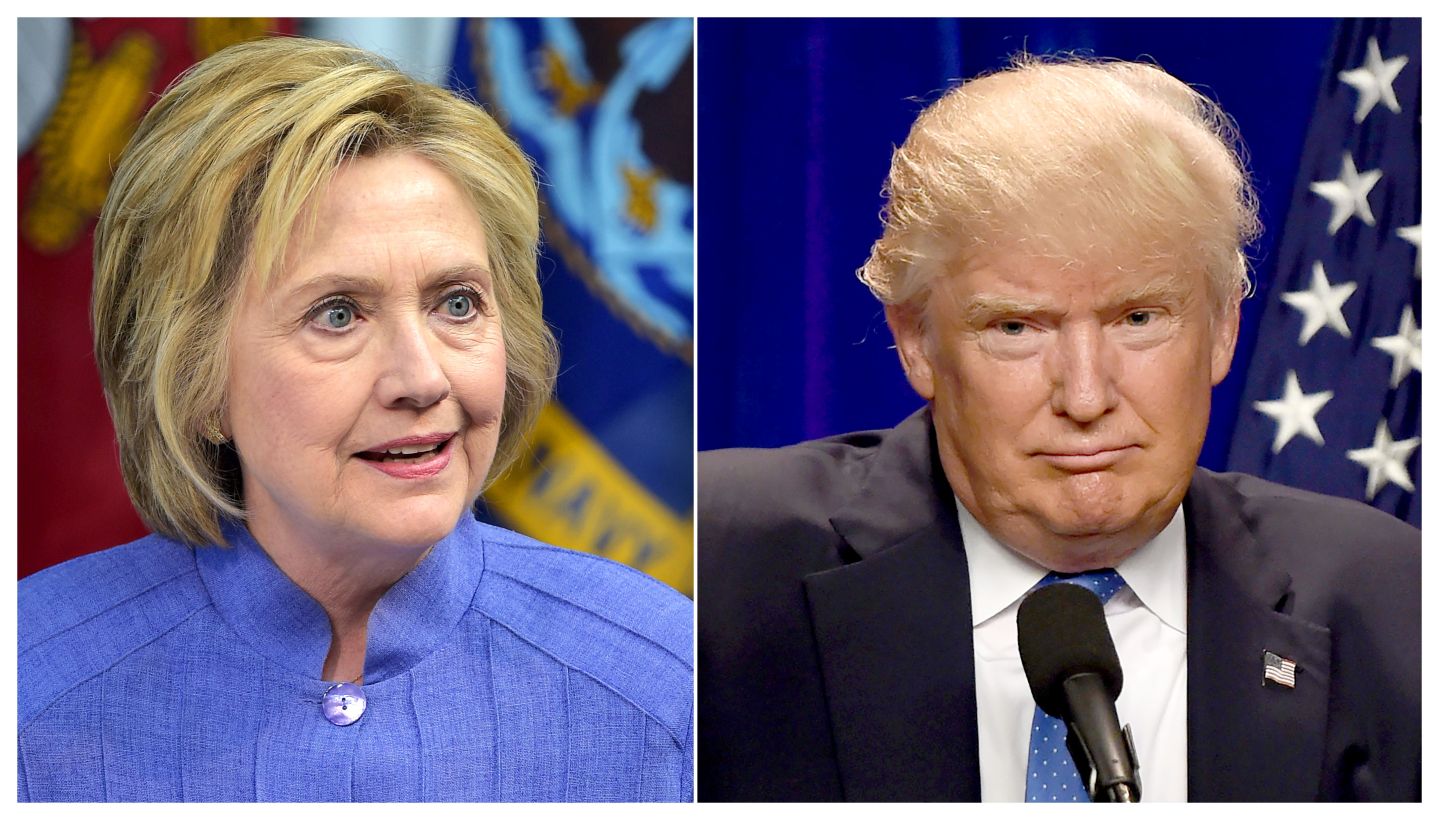
This combination of file photos shows Democratic presidential candidate Hillary Clinton(L)on June 15, 2016 and presumptive Republican presidential nominee Donald Trump on June 13, 2016. / AFP / dsk (Photo credit should read DSK/AFP/Getty Images)Photograph by DSK—AFP via Getty Images

Ed O’Brien is assistant professor of behavioral science at the University of Chicago Booth School of Business and Nadav Klein is a post-doctoral scholar at the University of Chicago Harris School of Public Policy.

As the Republican and Democratic national conventions draw near, Donald Trump and Hillary Clinton find themselves among the most disliked presidential candidates in U.S. history. Americans have registered their negative views for the candidates in poll after poll, and their dissatisfaction runs deep. Why is the dislike for the leading presidential candidates so widespread? And is it possible to change voters’ opinions?

While it may be tempting to point to the polarization of American politics as the answer, we think that more fundamental elements of human judgment are at work. Each candidate has a well-known past composed of both admirable actions and bad behavior. Our research suggests that people view these “mixed bags” in a systematic way: A bad reputation comes from doing bad deeds. A good reputation, in contrast, requires not only doing good deeds, but also not doing bad deeds. People tend to judge immoral behaviors harshly and judge moral behaviors with skepticism, according to our study recently published in the journal Social Cognition.

In a series of controlled experiments, we asked participants, mostly average Americans in their 30s and 40s, to read about and evaluate the actions of fictional people who behaved in either a moral or immoral way. We created the characters and the stories to reflect “small-dose” actions in everyday life.

As for Trump and Clinton, these findings help explain their stubbornly high negative ratings. Both candidates have impressive accomplishments: Clinton achieved top levels of public service as first lady, U.S. senator and secretary of state, and Trump has been touted as a modern business tycoon. But no matter how many personal selling points they may offer to their constituents, our findings (along with many others in psychological science) suggest that the human mind gives preferential weight to the bad things. After making comments insulting Muslims, Latinos and women, Trump has been unable to fend off charges of racisms and sexism. Clinton is dogged by voter mistrust stoked by her handling of classified State Department information on a private email server, the Benghazi hearings, and the long-ago Whitewater scandal.

Of course, people may think that some of these judgments are fairer than others. But regardless, our findings suggest that both presidential candidates will suffer from their past bad acts no matter how much good they advertise in the present, and therefore face an uphill battle in trying to change their reputations with voters before November.

It also explains why social stigmas are hard to shed. People who exhibit a few instances of socially unacceptable behavior are quickly labeled as deviant and have to commit disproportionately many more acceptable behaviors to restore their reputation.

In one experiment from our study, participants read about Barbara, who works in an office and behaves in a neutral manner—neither overly nice nor overly nasty. By the flip of a coin, some participants read that Barbara began engaging in small nasty behaviors, such as gossiping about others or cutting in line. Other participants read about a different Barbara, who began engaging in equivalently small, nice behaviors, such as holding the door for other people and giving compliments.

Participants could track Barbara for as long as they wanted, until they had “seen enough” to determine a meaningful change in her moral character. The results revealed an asymmetry in the point at which they tipped: people required about four unethical actions to decide that Barbara had appreciably changed for the worse, but about six equivalently ethical actions to decide that Barbara appreciably changed for the better.

This asymmetry proved consistent across a variety of situations, including generous and penny-pinching tipping in restaurants, and giving and taking money from strangers.

In another experiment, participants punished a hypothetical high school student after relatively few instances of bad behavior, but required markedly more instances of good behavior to grant the student an equivalent reward.

So understanding how people perceive moral tipping points is important because it illuminates how we as a society create different thresholds for rewarding versus punishing others. If it takes more evidence to accept a change for the better in someone’s character than it requires to believe someone has changed for the worse, then equivalent behaviors will warrant punishment while not qualifying for reward.

In everyday life, this stringent threshold can lead us to refuse to give other people a second chance after a negative first impression, and explains why a well-evidenced positive impression can so readily evaporate with a single stumble.


About the Authors
By Ed O’Brien
See full bioRight Arrow Button Icon
By Nadav Klein
See full bioRight Arrow Button Icon

Latest in Commentary

Finance
Lorem ipsum dolor sit amet, consectetur adipiscing elit, sed do eiusmod tempor incididunt ut labore et dolore magna aliqua. Ut enim ad minim veniam
By Fortune Editors
October 20, 2025
Finance
Lorem ipsum dolor sit amet, consectetur adipiscing elit, sed do eiusmod tempor incididunt ut labore et dolore magna aliqua. Ut enim ad minim veniam
By Fortune Editors
October 20, 2025
Finance
Lorem ipsum dolor sit amet, consectetur adipiscing elit, sed do eiusmod tempor incididunt ut labore et dolore magna aliqua. Ut enim ad minim veniam
By Fortune Editors
October 20, 2025
Finance
Lorem ipsum dolor sit amet, consectetur adipiscing elit, sed do eiusmod tempor incididunt ut labore et dolore magna aliqua. Ut enim ad minim veniam
By Fortune Editors
October 20, 2025
Finance
Lorem ipsum dolor sit amet, consectetur adipiscing elit, sed do eiusmod tempor incididunt ut labore et dolore magna aliqua. Ut enim ad minim veniam
By Fortune Editors
October 20, 2025
Finance
Lorem ipsum dolor sit amet, consectetur adipiscing elit, sed do eiusmod tempor incididunt ut labore et dolore magna aliqua. Ut enim ad minim veniam
By Fortune Editors
October 20, 2025

Most Popular

Finance
Lorem ipsum dolor sit amet, consectetur adipiscing elit, sed do eiusmod tempor incididunt ut labore et dolore magna aliqua. Ut enim ad minim veniam
By Fortune Editors
October 20, 2025
Finance
Lorem ipsum dolor sit amet, consectetur adipiscing elit, sed do eiusmod tempor incididunt ut labore et dolore magna aliqua. Ut enim ad minim veniam
By Fortune Editors
October 20, 2025
Finance
Lorem ipsum dolor sit amet, consectetur adipiscing elit, sed do eiusmod tempor incididunt ut labore et dolore magna aliqua. Ut enim ad minim veniam
By Fortune Editors
October 20, 2025
Finance
Lorem ipsum dolor sit amet, consectetur adipiscing elit, sed do eiusmod tempor incididunt ut labore et dolore magna aliqua. Ut enim ad minim veniam
By Fortune Editors
October 20, 2025
Finance
Lorem ipsum dolor sit amet, consectetur adipiscing elit, sed do eiusmod tempor incididunt ut labore et dolore magna aliqua. Ut enim ad minim veniam
By Fortune Editors
October 20, 2025
Finance
Lorem ipsum dolor sit amet, consectetur adipiscing elit, sed do eiusmod tempor incididunt ut labore et dolore magna aliqua. Ut enim ad minim veniam
By Fortune Editors
October 20, 2025
Fortune Secondary Logo
Rankings
  • 100 Best Companies
  • Fortune 500
  • Global 500
  • Fortune 500 Europe
  • Most Powerful Women
  • Future 50
  • World’s Most Admired Companies
  • See All Rankings
Sections
  • Finance
  • Fortune Crypto
  • Features
  • Leadership
  • Health
  • Commentary
  • Success
  • Retail
  • Mpw
  • Tech
  • Lifestyle
  • CEO Initiative
  • Asia
  • Politics
  • Conferences
  • Europe
  • Newsletters
  • Personal Finance
  • Environment
  • Magazine
  • Education
Customer Support
  • Frequently Asked Questions
  • Customer Service Portal
  • Privacy Policy
  • Terms Of Use
  • Single Issues For Purchase
  • International Print
Commercial Services
  • Advertising
  • Fortune Brand Studio
  • Fortune Analytics
  • Fortune Conferences
  • Business Development
About Us
  • About Us
  • Editorial Calendar
  • Press Center
  • Work At Fortune
  • Diversity And Inclusion
  • Terms And Conditions
  • Site Map
Fortune Secondary Logo
  • About Us
  • Editorial Calendar
  • Press Center
  • Work At Fortune
  • Diversity And Inclusion
  • Terms And Conditions
  • Site Map
  • Facebook icon
  • Twitter icon
  • LinkedIn icon
  • Instagram icon
  • Pinterest icon

Latest in Commentary

heitmann
CommentaryEntrepreneurship
Here’s how to build something that lasts, from the founder of a $300 million bootstrapped company that’s been growing for 28 years straight
By Tim HeitmannMarch 1, 2026
7 hours ago
world's fair
CommentaryRobots
Something big is happening in AI, but panic is the wrong reaction
By Peter CappelliFebruary 28, 2026
1 day ago
putin
CommentaryRussia
Exclusive analysis: we looked at the 400 western firms still in Russia. Their paltry size strips Putin’s bluff bare naked
By Jeffrey Sonnenfeld, Stephen Henriques, Jake Waldinger and Giuseppe ScottoFebruary 27, 2026
2 days ago
roth
CommentaryLeadership
The AI resource reallocation challenge: How can companies capture the value of time?
By Erik RothFebruary 27, 2026
2 days ago
will
CommentaryAdvertising
I’m one of America’s top pollsters and I’ve got a warning for the AI companies: customers aren’t sold on ads
By Will JohnsonFebruary 27, 2026
2 days ago
the pitt
CommentaryDEI
‘The Pitt’: a masterclass display of DEI in action 
By Robert RabenFebruary 26, 2026
3 days ago

Most Popular

placeholder alt text
Middle East
Iran is now on 'death ground' amid existential threat from U.S. attacks and could 'go big' in retaliation, former NATO commander warns
By Jason MaFebruary 28, 2026
24 hours ago
placeholder alt text
Success
Japanese companies are paying older workers to sit by a window and do nothing—while Western CEOs demand super-AI productivity just to keep your job
By Orianna Rosa RoyleFebruary 27, 2026
2 days ago
placeholder alt text
AI
The week the AI scare turned real and America realized maybe it isn't ready for what's coming
By Nick LichtenbergFebruary 28, 2026
1 day ago
placeholder alt text
Success
Walmart exec says U.S. workforces needs to take inspiration from China where ‘5 year-olds are learning DeepSeek’
By Preston ForeFebruary 27, 2026
2 days ago
placeholder alt text
Economy
Your grandparents are the reason the U.S. isn't in a recession right now. That won't last forever
By Eleanor PringleMarch 1, 2026
7 hours ago
placeholder alt text
Middle East
Dubai’s worst nightmare unfolds as Iran strikes Gulf neighbors
By Dana Khraiche, Fiona MacDonald and BloombergFebruary 28, 2026
19 hours ago

© 2026 Fortune Media IP Limited. All Rights Reserved. Use of this site constitutes acceptance of our Terms of Use and Privacy Policy | CA Notice at Collection and Privacy Notice | Do Not Sell/Share My Personal Information
FORTUNE is a trademark of Fortune Media IP Limited, registered in the U.S. and other countries. FORTUNE may receive compensation for some links to products and services on this website. Offers may be subject to change without notice.









