• Home
  • Latest
  • Fortune 500
  • Finance
  • Tech
  • Leadership
  • Lifestyle
  • Rankings
  • Multimedia
Commentary

Why Automakers Should Stop Trying to Copy Uber and Lyft

By
Howard Yu
Howard Yu
and
Bethany Cianciolo
Bethany Cianciolo
Down Arrow Button Icon
By
Howard Yu
Howard Yu
and
Bethany Cianciolo
Bethany Cianciolo
Down Arrow Button Icon
May 18, 2016, 2:23 PM ET
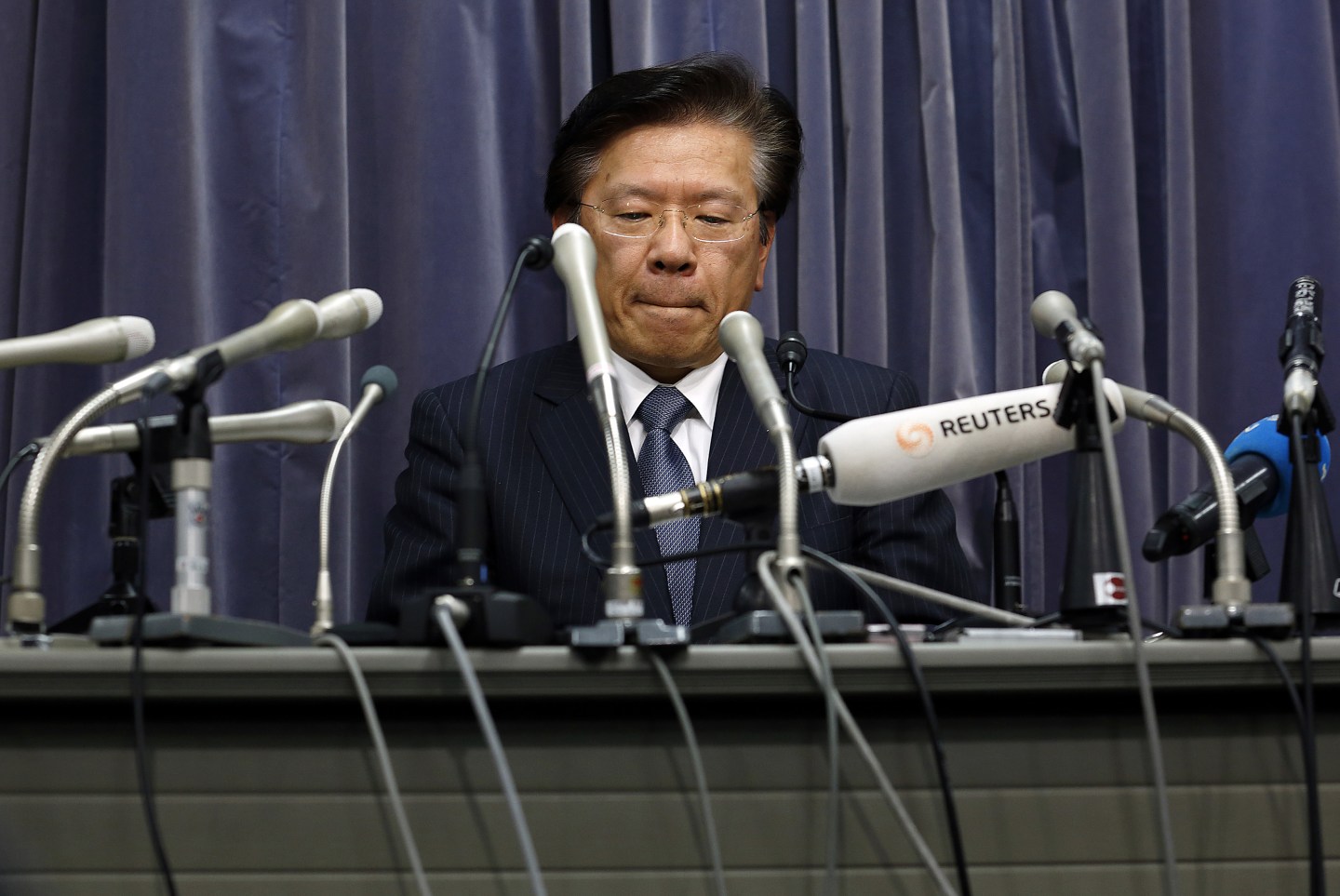
Mitsubishi Motor President Tetsuro Aikawa Resigns
Tetsuro Aikawa, president of Mitsubishi Motors Corp., pauses during a news conference at the Ministry of Land, Infrastructure, Transport and Tourism in Tokyo, Japan, on Wednesday, May 18, 2016. Aikawa will step down as the Japanese automaker looks to regroup from its widening fuel economy testing scandal with the backing of Nissan Motor Co. Photographer: Tomohiro Ohsumi/Bloomberg via Getty ImagesPhotograph by Tomohiro Ohsumi — Bloomberg via Getty Images

Mitsubishi Motors has had a rocky couple of months. After the company admitted to have falsified fuel-efficiency reports last month, its shares fell by 15%—its largest single-day drop in 12 years—leaving the president no choice but to step down. Mitsubishi’s performance in North America was equally lackluster, having sold just 95,342 vehicles in 2015. But as the scandal quickly spread, so did the rescue.

Last Thursday, CEO Carlos Ghosn announced that his Nissan Motor Company (NSANY) would invest $2.2 billion in Mitsubishi for a 34% stake. Mitsubishi will stay separate, with its own brand and dealership network, much like the current Renault-Nissan Alliance (where Ghosn is chairman of both). The new alliance will achieve a combined production volume of about 9 million vehicles a year, similar to that of top giants General Motors (GM), Toyota (TM), and Volkswagen (VLKAY). With Nissan becoming the largest shareholder of Mitsubishi, an exuberant Ghosn said, “We have the potential to be in [the] top three.” But can getting big turn fortunes around?

It is common knowledge that every automaker worries just about everything—except fighting the top three. They worry about Elon Musk, who popularized electric vehicles and turned what was once a dream into reality. They worry about Uber, which put carpooling and ride-sharing into overdrive. They worry about Google (GOOG), which relegated the role of driving to embedded sensors and machine algorithms. What this means is a complete shift in core competencies with respect to being a carmaker. But this problem isn’t new, unfortunately. There was an identical picture in digital photography two decades ago.

As recent as 1996, Kodak was still ranked one of the most valuable brands, among Disney (DIS), Coca-Cola (KO), and McDonald’s (MCD). Then shortly came digital pixels to replace film, and mobile phones to displace cameras. Kodak’s core capability in filmmaking had been rendered irrelevant in the age of digital photography, and the 131-year-old company filed for bankruptcy in 2012. Still, life is never inevitable. Enter Fujifilm.

Like Kodak, Fujifilm had long understood the threat of digitalization. Unlike Kodak, however, it successfully re-channeled profits from film sales, raced ahead in digital technologies, and diversified into new areas. Fujifilm jumpstarted manufacturing industrial films (used in LCD panels) for computers and other electronics. It leveraged expertise in antioxidants that had been used to preserve colors in printed photographs to formulate new products in skincare and cosmetics. The firm even worked on a new drug delivery system, developing a patch that allows for injection-free medicine absorption.

In the wake of Kodak’s bankruptcy, Fujifilm continued to be a chemical behemoth. A Fortune Global 500 in 2014, only 1% of the company’s annual revenue is from filmmaking. It is the poster child for corporate resilience.

For automakers, an electric vehicle looks déjà vu. The shift from internal combustion engines to electronic and electrical components means that everything under the hood will be radically simplified, dropping the number of components by one third, supplanted much by software design.

Paradoxically, from hardware to software, many of the new car components are made by a host of suppliers outside of the auto industry—companies from the IT world. The historical knowledge and competitive advantage of big carmakers are disappearing fast.

To be sure, nearly all carmakers have some kind of car-sharing initiatives, mimicking Uber and Lyft. The problem is, even if a traditional carmaker becomes a top car-sharing company, the resultant revenue will still be too small to justify its current existence. Toyota made close to $250 billion in 2015. Revenue of Uber? A mere $2 billion. For a long time now, selling cars has simply been too profitable and too easy. Now that car ownership is less appealing, there is less money to be made. Industry consolidation has ensued—which is exactly what happened to Mitsubishi.

Theodore Levitt, the legendary marketing scholar at Harvard Business School, often asked managers, “What business are you in?” The railroads, for example, “let others take customers away from them because they assumed themselves to be in the railroad business rather than in the transportation business,” he wrote. Twenty-first century automakers need to ask an even broader question: Beyond transport, what other businesses can they enter? Not based on what industries they are currently in, but on what existing capabilities can be repurposed, and focus on applying technologies in new areas. Businesses have life-spans, capabilities do not.

Howard Yu is professor of strategic management and innovation at IMD. He specializes in technological innovation, strategic transformation and change management. In 2015 Professor Yu was featured in Poets & Quants as one of the Best 40 Under 40 Professors. He received his doctoral degree at Harvard Business School.
About the Authors
By Howard Yu
See full bioRight Arrow Button Icon
By Bethany Cianciolo
See full bioRight Arrow Button Icon

Latest in Commentary

Finance
Lorem ipsum dolor sit amet, consectetur adipiscing elit, sed do eiusmod tempor incididunt ut labore et dolore magna aliqua. Ut enim ad minim veniam
By Fortune Editors
October 20, 2025
Finance
Lorem ipsum dolor sit amet, consectetur adipiscing elit, sed do eiusmod tempor incididunt ut labore et dolore magna aliqua. Ut enim ad minim veniam
By Fortune Editors
October 20, 2025
Finance
Lorem ipsum dolor sit amet, consectetur adipiscing elit, sed do eiusmod tempor incididunt ut labore et dolore magna aliqua. Ut enim ad minim veniam
By Fortune Editors
October 20, 2025
Finance
Lorem ipsum dolor sit amet, consectetur adipiscing elit, sed do eiusmod tempor incididunt ut labore et dolore magna aliqua. Ut enim ad minim veniam
By Fortune Editors
October 20, 2025
Finance
Lorem ipsum dolor sit amet, consectetur adipiscing elit, sed do eiusmod tempor incididunt ut labore et dolore magna aliqua. Ut enim ad minim veniam
By Fortune Editors
October 20, 2025
Finance
Lorem ipsum dolor sit amet, consectetur adipiscing elit, sed do eiusmod tempor incididunt ut labore et dolore magna aliqua. Ut enim ad minim veniam
By Fortune Editors
October 20, 2025

Most Popular

Finance
Lorem ipsum dolor sit amet, consectetur adipiscing elit, sed do eiusmod tempor incididunt ut labore et dolore magna aliqua. Ut enim ad minim veniam
By Fortune Editors
October 20, 2025
Finance
Lorem ipsum dolor sit amet, consectetur adipiscing elit, sed do eiusmod tempor incididunt ut labore et dolore magna aliqua. Ut enim ad minim veniam
By Fortune Editors
October 20, 2025
Finance
Lorem ipsum dolor sit amet, consectetur adipiscing elit, sed do eiusmod tempor incididunt ut labore et dolore magna aliqua. Ut enim ad minim veniam
By Fortune Editors
October 20, 2025
Finance
Lorem ipsum dolor sit amet, consectetur adipiscing elit, sed do eiusmod tempor incididunt ut labore et dolore magna aliqua. Ut enim ad minim veniam
By Fortune Editors
October 20, 2025
Finance
Lorem ipsum dolor sit amet, consectetur adipiscing elit, sed do eiusmod tempor incididunt ut labore et dolore magna aliqua. Ut enim ad minim veniam
By Fortune Editors
October 20, 2025
Finance
Lorem ipsum dolor sit amet, consectetur adipiscing elit, sed do eiusmod tempor incididunt ut labore et dolore magna aliqua. Ut enim ad minim veniam
By Fortune Editors
October 20, 2025
Rankings
  • 100 Best Companies
  • Fortune 500
  • Global 500
  • Fortune 500 Europe
  • Most Powerful Women
  • Future 50
  • World’s Most Admired Companies
  • See All Rankings
Sections
  • Finance
  • Leadership
  • Success
  • Tech
  • Asia
  • Europe
  • Environment
  • Fortune Crypto
  • Health
  • Retail
  • Lifestyle
  • Politics
  • Newsletters
  • Magazine
  • Features
  • Commentary
  • Mpw
  • CEO Initiative
  • Conferences
  • Personal Finance
  • Education
Customer Support
  • Frequently Asked Questions
  • Customer Service Portal
  • Privacy Policy
  • Terms Of Use
  • Single Issues For Purchase
  • International Print
Commercial Services
  • Advertising
  • Fortune Brand Studio
  • Fortune Analytics
  • Fortune Conferences
  • Business Development
About Us
  • About Us
  • Editorial Calendar
  • Press Center
  • Work At Fortune
  • Diversity And Inclusion
  • Terms And Conditions
  • Site Map
  • Facebook icon
  • Twitter icon
  • LinkedIn icon
  • Instagram icon
  • Pinterest icon

© 2026 Fortune Media IP Limited. All Rights Reserved. Use of this site constitutes acceptance of our Terms of Use and Privacy Policy | CA Notice at Collection and Privacy Notice | Do Not Sell/Share My Personal Information
FORTUNE is a trademark of Fortune Media IP Limited, registered in the U.S. and other countries. FORTUNE may receive compensation for some links to products and services on this website. Offers may be subject to change without notice.


Most Popular

placeholder alt text
Economy
Elon Musk warns the U.S. is '1,000% going to go bankrupt' unless AI and robotics save the economy from crushing debt
By Jason MaFebruary 7, 2026
1 day ago
placeholder alt text
Success
Even with $850 billion to his name, Elon Musk admits ‘money can’t buy happiness.’ But billionaire Mark Cuban says it’s not so simple
By Preston ForeFebruary 6, 2026
2 days ago
placeholder alt text
Success
Gen Z Patriots quarterback Drake Maye still drives a 2015 pickup truck even after it broke down on the highway—despite his $37 million contract
By Sasha RogelbergFebruary 7, 2026
2 days ago
placeholder alt text
Future of Work
Anthropic cofounder says studying the humanities will be 'more important than ever' and reveals what the AI company looks for when hiring
By Jason MaFebruary 7, 2026
1 day ago
placeholder alt text
AI
AI can make anyone rich: Mark Cuban says it could turn 'just one dude in a basement' into a trillionaire
By Sydney LakeFebruary 7, 2026
1 day ago
placeholder alt text
Energy
Next-gen nuclear's tipping point: Meta and hyperscalers start deals with Bill Gates’ TerraPower, Sam Altman-backed Oklo, and more
By Jordan BlumFebruary 7, 2026
1 day ago

Latest in Commentary

nfl
CommentaryTV
The Super Bowl was made for TV and instant replay was made for visual AI. Here’s how it could be better and what it would look like
By Jason CorsoFebruary 8, 2026
7 hours ago
tipping
CommentaryTipping
I’m the chief growth officer at a payments app and I know how America really tips. Connecticut, I’m looking at you
By Ricardo CiciFebruary 8, 2026
9 hours ago
heacock
CommentaryLeadership
I’m a CEO who grew a ‘boring’ air filter business into a $260 million company, and AI is going to help blue-collar, everyday people just like me
By David HeacockFebruary 8, 2026
9 hours ago
broker
CommentaryRecession
We studied 70 countries’ economic data for the last 60 years and something big about market crashes changed 25 years ago
By Josh Ederington, Jenny Minier and The ConversationFebruary 8, 2026
10 hours ago
birthday
CommentaryAmerican Dream
America marks its 250th birthday with a fading dream—the first time that younger generations will make less than their parents
By Mark Robert Rank and The ConversationFebruary 8, 2026
10 hours ago
sarandos
CommentaryAntitrust
Netflix dominates streaming. No wonder it’s trying to redefine the market
By Hal SingerFebruary 7, 2026
1 day ago