• Home
  • News
  • Fortune 500
  • Tech
  • Finance
  • Leadership
  • Lifestyle
  • Rankings
  • Multimedia
Retail

This Is the Biggest Mistake You’re Making With ‘Clean’ Eating

By
Beth Kowitt
Beth Kowitt
Down Arrow Button Icon
By
Beth Kowitt
Beth Kowitt
Down Arrow Button Icon
March 24, 2016, 2:49 PM ET
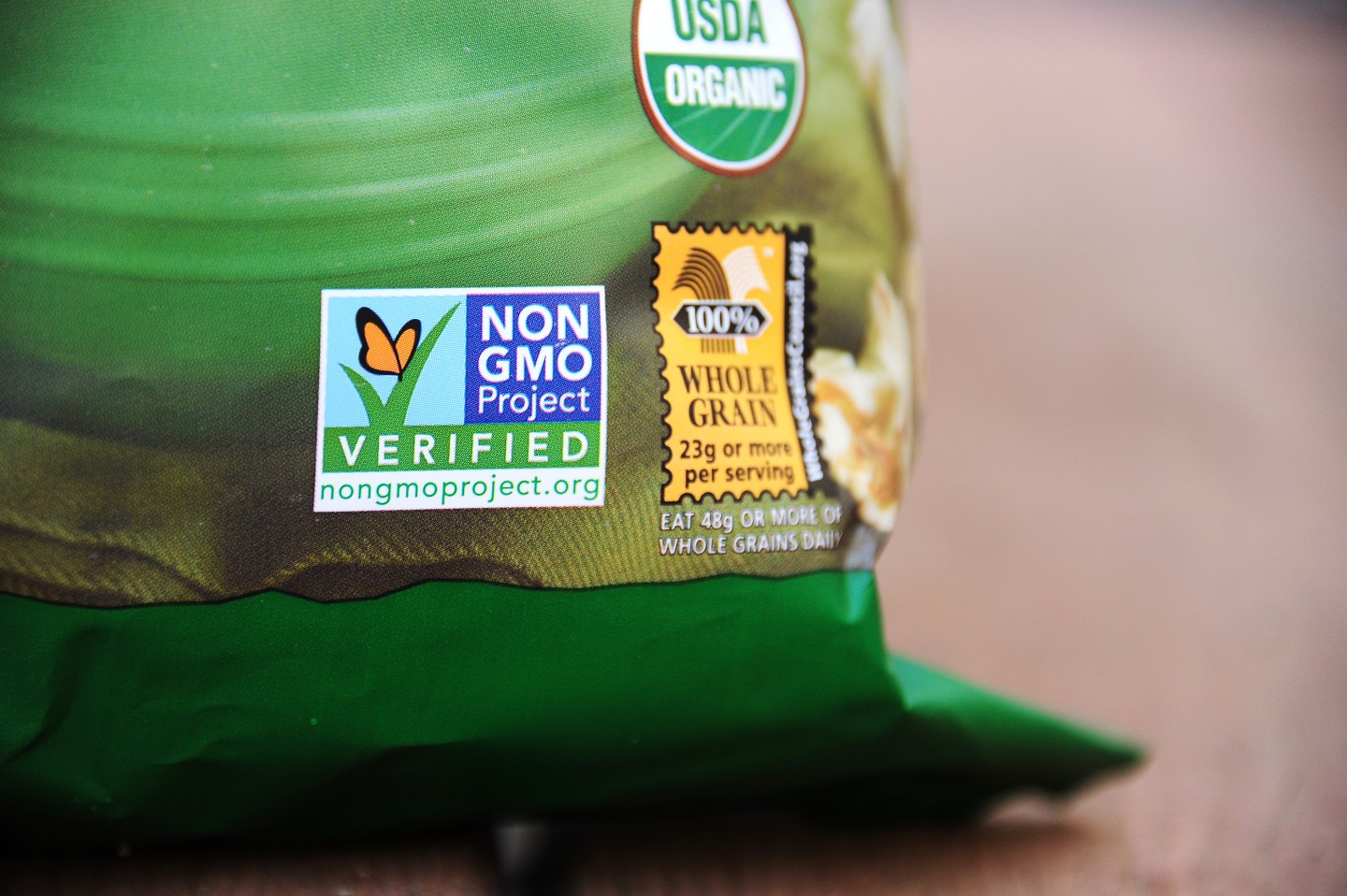
US-VOTE-CALIFORNIA-AGRICULTURE-FOOD-GMO
Photo by Robyn Beck AFP/Getty Images

Earlier this week ConAgra (CAG) joined a growing list of Big Food companies that have said they will label products made with genetically modified organisms.

The decision by these food giants—including Kellogg (K), Campbell Soup (CPB), Mars, and General Mills (GIS)—is a byproduct of a tectonic shift occurring within the industry. Consumers, wary of ingredients they don’t understand, have turned their back on Big Food. Voluntary GMO labeling is in large part an attempt by legacy food companies to win back consumers. So is reformulating some of their iconic products—as Kraft Heinz (KHC) did with its macaroni and cheese—to be free of things like artificial ingredients and preservatives.

Big Food is responding to what consumers are asking for. But it’s also an important moment as the food movement celebrates these victories to ask whether consumers are asking for the right things.

I’m not so sure they are. No question, the push for “clean” labels—simplifying ingredient lists—is a positive trend. But along the way many people seem to have conflated clean eating with nutritious eating. That has given consumers what feels like license to consume in ways that may actually be more detrimental to our health.

“Organic cane sugar is still cane sugar,” says Christine Day, CEO of Luvo, a nutrition-focused frozen food company. “It’s a lot easier to put on that label than it is to actually address the consumer-nutrition issue.”

Opting to eat cookies from an artisanal, local bakery instead of Oreos may make us feel good about ourselves, but it isn’t necessarily improving our overall wellbeing. “The real challenge in improving the American diet is reducing discretionary calories,” notes Deborah Cohen, a senior natural scientists at research organization RAND Corporation. “It doesn’t matter who makes it.”

By all means, eat natural products. The problem is, there’s no standard definition of what “natural” means—although the Food and Drug Administration is exploring the possibility of coming up with one. But to most shoppers, the natural label is now an automatic stand-in for healthy. Rather than make difficult choices about food—such as choosing fruits and vegetables over sugar- or salt-laden snacks—many people opt for, say, a “natural” version of a traditional treat. But eating a high-calorie slice of GMO-free, gluten-free cheesecake isn’t appreciably healthier than eating a high-calorie slice of cheesecake with preservatives in it. If you really want to be healthy, have some blueberries.

“Natural isn’t always better,” says Susan Roberts, a professor nutrition at Tufts University. “It’s often better, but you still have to be smart about a knee-jerk reaction that everything natural is good and artificial is bad. That can get you to an unhealthy diet.” She adds (brace yourself, foodies), “I would much rather have people have a little aspartame than a large amount of sugar.”

It comes down to psychology. Consumers think about food in two categories—good or bad, says Pierre Chandon, who is director of the Sorbonne INSEAD Behavioral Lab. “As a result, if you claim to be good on just one dimension—low fat, gluten-free—people categorize you as good overall and that you have all the properties of good food,” he says.

Indeed, today’s trend replicates what occurred decades ago when the vogue for “low-fat” products swept through the packaged-food world: Consumers simply replaced one calorie-laden food with an equivalent version that boasted one nominal benefit. Not coincidentally, America’s historic obesity epidemic only intensified.

The really healthy stuff, like fruits and vegetables, don’t have any claims at all, Chandon says. “When you see a claim you need to start worrying about it,” he explains. “Foods that are truly healthier are not marketed. They don’t belong to companies that have the money to market them.”

Adds New York University professor of nutrition and food studies Marion Nestle, “If you’re looking at processed food advertising itself as a health food, it’s a marketing ploy.”

Here’s the bottom line: Feel free to enjoy a towering piece of GMO-free, gluten-free, natural cheesecake. But let’s not kid ourselves into thinking we’re doing it in the name of good health.
About the Author
By Beth Kowitt
LinkedIn iconTwitter icon
See full bioRight Arrow Button Icon

Latest in Retail

Big TechSpotify
Spotify users lamented Wrapped in 2024. This year, the company brought back an old favorite and made it less about AI
By Dave Lozo and Morning BrewDecember 4, 2025
8 hours ago
Bear
RetailTariffs and trade
Build-A-Bear stock falls 15% as it reveals the real hit from tariffs, at last
By Michelle Chapman and The Associated PressDecember 4, 2025
9 hours ago
The outside of a Dollar General store, at night
Retaildollar stores
Rich people are flooding dollar stores as Americans navigate a crushing affordability crisis
By Dave SmithDecember 4, 2025
11 hours ago
Kris Mayes
LawArizona
Arizona becomes latest state to sue Temu over claims that its stealing customer data
By Sejal Govindarao and The Associated PressDecember 3, 2025
1 day ago
Tony Cuccio posing in a chair
C-SuiteMillionaires
Tony Cuccio started with $200 selling beauty products on Venice Beach. Then he brought gel nails to the masses—and forged a $2 billion empire
By Dave SmithDecember 3, 2025
2 days ago
CybersecuritySmall Business
Main Street’s make-or-break upgrade: Why small businesses are racing to modernize their tech
By Ashley LutzDecember 3, 2025
2 days ago

Most Popular

placeholder alt text
Economy
Two months into the new fiscal year and the U.S. government is already spending more than $10 billion a week servicing national debt
By Eleanor PringleDecember 4, 2025
18 hours ago
placeholder alt text
Success
‘Godfather of AI’ says Bill Gates and Elon Musk are right about the future of work—but he predicts mass unemployment is on its way
By Preston ForeDecember 4, 2025
14 hours ago
placeholder alt text
North America
Jeff Bezos and Lauren Sánchez Bezos commit $102.5 million to organizations combating homelessness across the U.S.: ‘This is just the beginning’
By Sydney LakeDecember 2, 2025
3 days ago
placeholder alt text
Success
Nearly 4 million new manufacturing jobs are coming to America as boomers retire—but it's the one trade job Gen Z doesn't want
By Emma BurleighDecember 4, 2025
14 hours ago
placeholder alt text
Success
Nvidia CEO Jensen Huang admits he works 7 days a week, including holidays, in a constant 'state of anxiety' out of fear of going bankrupt
By Jessica CoacciDecember 4, 2025
13 hours ago
placeholder alt text
Health
Bill Gates decries ‘significant reversal in child deaths’ as nearly 5 million kids will die before they turn 5 this year
By Nick LichtenbergDecember 4, 2025
1 day ago
Rankings
  • 100 Best Companies
  • Fortune 500
  • Global 500
  • Fortune 500 Europe
  • Most Powerful Women
  • Future 50
  • World’s Most Admired Companies
  • See All Rankings
Sections
  • Finance
  • Leadership
  • Success
  • Tech
  • Asia
  • Europe
  • Environment
  • Fortune Crypto
  • Health
  • Retail
  • Lifestyle
  • Politics
  • Newsletters
  • Magazine
  • Features
  • Commentary
  • Mpw
  • CEO Initiative
  • Conferences
  • Personal Finance
  • Education
Customer Support
  • Frequently Asked Questions
  • Customer Service Portal
  • Privacy Policy
  • Terms Of Use
  • Single Issues For Purchase
  • International Print
Commercial Services
  • Advertising
  • Fortune Brand Studio
  • Fortune Analytics
  • Fortune Conferences
  • Business Development
About Us
  • About Us
  • Editorial Calendar
  • Press Center
  • Work At Fortune
  • Diversity And Inclusion
  • Terms And Conditions
  • Site Map

© 2025 Fortune Media IP Limited. All Rights Reserved. Use of this site constitutes acceptance of our Terms of Use and Privacy Policy | CA Notice at Collection and Privacy Notice | Do Not Sell/Share My Personal Information
FORTUNE is a trademark of Fortune Media IP Limited, registered in the U.S. and other countries. FORTUNE may receive compensation for some links to products and services on this website. Offers may be subject to change without notice.