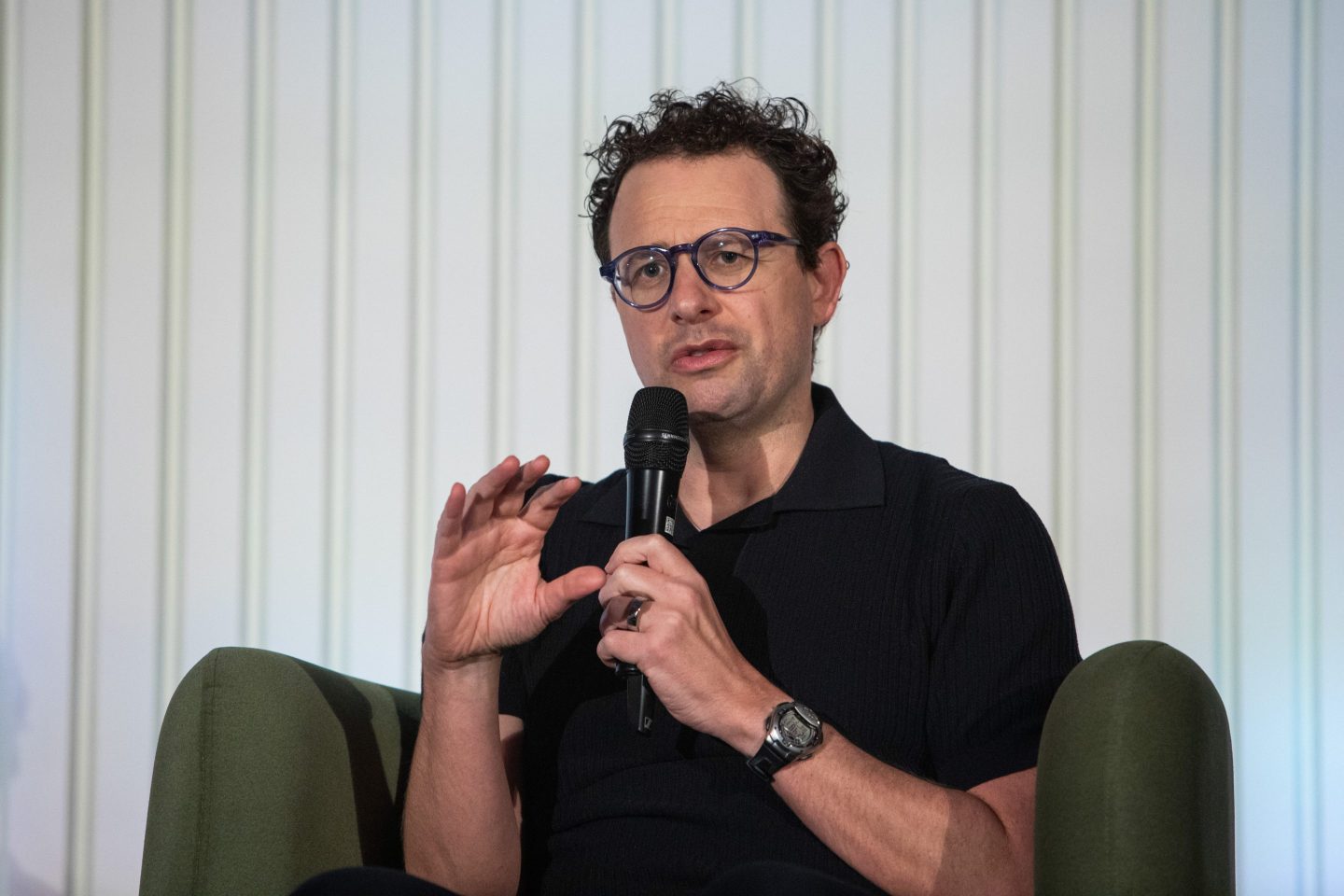
MakerBot, the Brooklyn-based manufacturer of desktop 3D printers, is announcing to staff across the world that 20% of them will be laid off today.
In a call with Fortune, MakerBot CEO Jonathan Jaglom declined to say exactly how many employees constitutes that 20%, but explained that the layoffs are a result of a 3D printing market that isn’t necessarily meeting company expectations, especially as the consumer market for 3D printing is revealing itself to be much weaker than MakerBot had anticipated.
“That has to do with the dynamics of the market and fact that we’re not hitting our numbers. Not hitting our numbers equates to financial difficulties and burdens,” Jaglom said. “If you look at every company that is public, there are challenges in the industry that we need to address.”
For MakerBot, which was acquired by global 3D-printing company Stratasys (SSYS) in 2013, those challenges include not meeting goals set by the company in the last few quarters, according to a release the company circulated this morning. As Fortune reported in May, Q1 2015 product and service revenue for MakerBot was 18% lower compared to the same period in 2014. MakerBot’s Q2 2015 numbers continue the trend: Product and service revenue declined by 57% compared to the same period in 2014. Product revenue decreased 13% to $134.5 million compared to the same period in 2014. In an earnings call in July, Stratasys chief operating officer Erez Simha attributed the downturn in MakerBot revenues to “the overall market weakness, as well as … ongoing challenges associated with the restructuring of the business.”
The staff cuts MakerBot is announcing today are in addition to cuts the company already made in April, when it laid off one-fifth of its staff. An October 2014 interview with then-MakerBot CEO (and founder of the company) Bre Pettis pegged the number of MakerBot employees at more than 500. Using that number as a benchmark, that would mean that roughly 200 employees have been laid off in Jaglom’s time as CEO, a role he assumed in March.
“It’s not about them personally and whether they achieved on their personal goals,” Jaglom told Fortune of the employees being laid off today. “It’s really about us having to align ourselves to the forces in our industry.”
MakerBot’s international presence remains: Its offices in Europe and Asia are not being shuttered. In Brooklyn, where the company just opened a new factory in July, MakerBot will consolidate its Industry City office with its MetroTech Center office, placing staff like customer support who had been in Industry City under one roof at the MetroTech Center. The factory, a 170,000-square-foot facility that officially doubled MakerBot’s production capacity and employs 140 people full-time, isn’t going anywhere, but Jaglom said the 20% cut in staff “impacts all departments.”
What MakerBot finds itself in the middle of is a 3D-printing market that has stalled when it comes to consumer sales. The company claims to have made more than 80,000 of its desktop machines since its founding in 2009, but since the beginning of this year, MakerBot has been in a race to shift its sales strategy from consumers to the professional and education markets, believing it can eventually make a stronger play to home users of 3D printers—and not the hobbyist types bound to have already bought a desktop 3D printer, be it a MakerBot or some other company’s printer—by putting them first in professional settings and, especially, schools.
“The consumer market is very much in its infancy,” Jaglom said. “There is a consumer market. … I believe it is there, but I definitely believe that we’re not there yet.”
As a consequence, MakerBot has turned to staff layoffs, as well as other cost-cutting measures. Fifth-generation MakerBot models—the Replicator Mini, the Replicator, and the Replicator Z18—will continue to be manufactured in the company’s new Brooklyn factory, and those printers make up the bulk of the company’s sales, according to Jaglom. But the fourth-generation MakerBot Replicator 2X will now be built by a contract manufacturer “to save on costs and focus our teams at our factory in Brooklyn on our current generation of MakerBot 3D printers,” according to the company’s news release.
Those tracking the 3D-printing industry don’t seem surprised by the weakness displayed in the consumer market for 3D printers. Terry Wohlers, president of Wohlers Associates, which puts out its multi-hundred page report every year surveying the state of the 3D printing industry, has told Fortune before that desktop 3D printers are “not going in the homes.” The 2015 Wohlers Report showed sales for industrial 3D printers globally totalling $1.12 billion, while desktop 3D-printer sales lagged behind at $173.3 million.
So what does this mean for MakerBot, aside from a staff shake-up that will leave 20% of the company’s workforce out of a job? It means continuing to focus on the professional and education markets, or what Jaglom calls MakerBot’s “core audience” today. But Jaglom hasn’t lost faith in the consumer market.
“I still truly remain highly optimistic about the industry, about the desktop printing industry,” he said in this morning’s call. “I think MakerBot is well-positioned for that, and that is my sincere opinion.”
In previous interviews with Fortune, Jaglom has said he believes a desktop 3D printer will be in every home in the U.S. in the next decade. When asked whether he still thinks that, he said: “I do believe that will happen. I do believe it.”
Sign up for Data Sheet, Fortune’s daily newsletter about the business of technology.
For more Fortune coverage of 3D printing, watch this video: