• Home
  • News
  • Fortune 500
  • Tech
  • Finance
  • Leadership
  • Lifestyle
  • Rankings
  • Multimedia
CommentarySweden

What the U.S. could learn from Sweden’s 6-hour work day

By
S. Kumar
S. Kumar
and
Bethany Cianciolo
Bethany Cianciolo
Down Arrow Button Icon
By
S. Kumar
S. Kumar
and
Bethany Cianciolo
Bethany Cianciolo
Down Arrow Button Icon
October 6, 2015, 1:20 PM ET
163731559
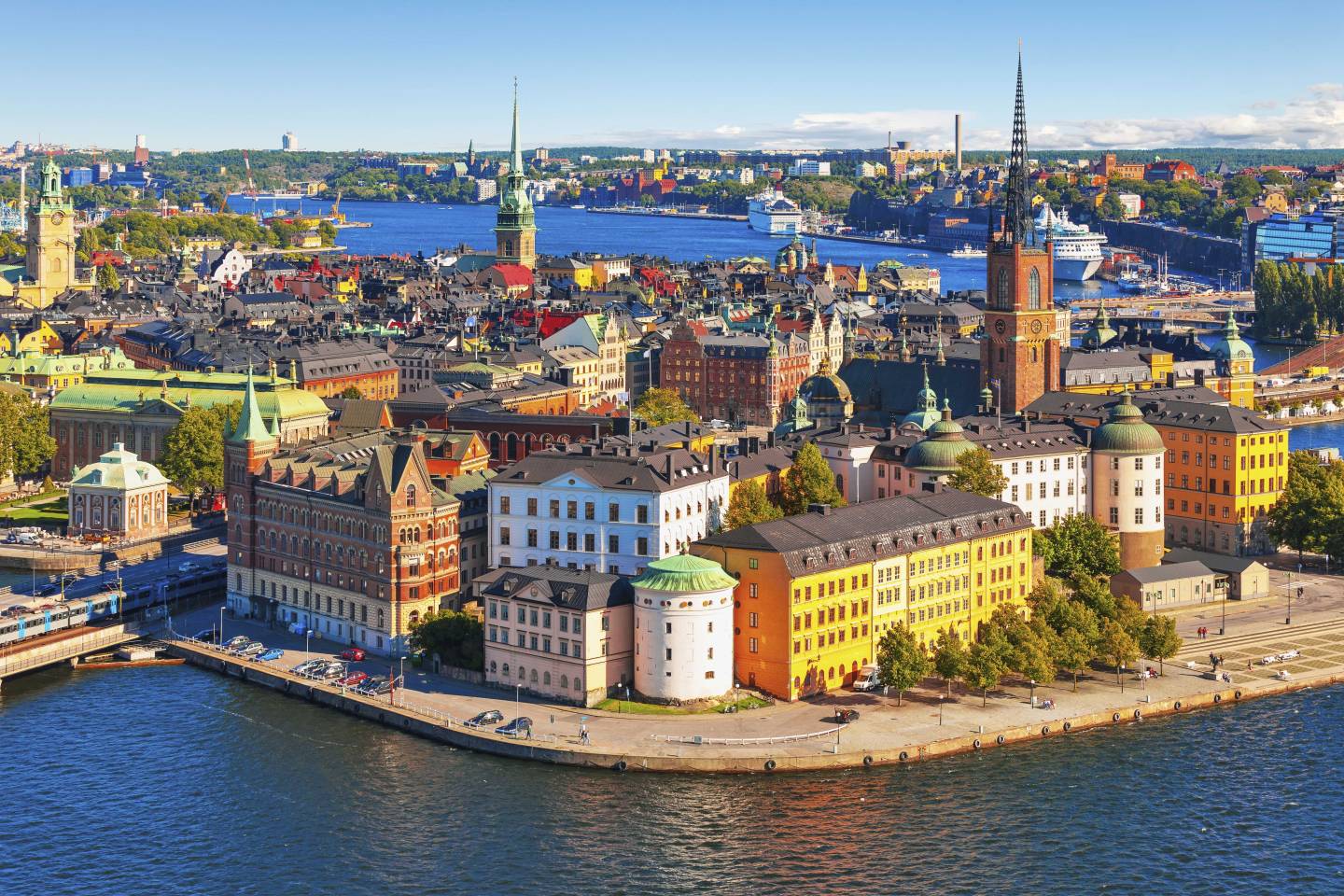
Aerial panorama of Stockholm, SwedenPhotograph by Getty Images/iStockphoto

Keeping with the spirit of work-life balance prized in Scandinavian countries, many firms in Sweden are supporting a six-hour work day. The news might make most in the U.S. pretty jealous, but there’s really no reason for that. While an 8-hour work day is the norm in America, U.S. workers really only work six hours a day and should officially follow Sweden’s lead.

If you don’t believe me, just do the math.

Even though most workers in the U.S. are technically at work from 9 am to 5 pm, not all those hours are spent actually working. The average time spent on private activities, such as online shopping, checking social media and emails, personal phone calls, and chatting with colleagues sucks up an estimated 1.5to 3 hours per day, according to studies cited by The Atlantic. Another study by CareerBuilder shows that most workers waste at least an hour or more each work day on personal stuff.

What this says is that out of an 8-hour work day, most people only work about six hours anyway. The rest of the time they are actually getting paid to take care of their personal tasks. Now that might seem to be in the best interests of workers, but it comes at the cost of a longer day at work than may be natural or healthy. That’s not necessarily a good tradeoff, especially for millennials, who value free time and work-life balance a lot more than previous generations.

A better solution would be for the U.S. to formally adopt a six-hour work day.

The central idea behind Sweden’s six-hour work day is to encourage people to put in a focused six hours of work during the day, get their tasks done, and leave at a reasonable hour in order to enjoy their evening. The key part of that contract lies in the willingness of workers to be disciplined and concentrate on their job during work hours instead of doing other things (you know what I’m talking about). Assuming that the Swedes do that, they would actually be putting in the same amount of net work as their American counterparts.

It would be more economical for employers and would give workers more personal time. Of course, some jobs require longer hours and companies can simply pay workers for the extra time if they’re willing to put it in. That’s a win for both sides.

For U.S. workers, another benefit for a shorter work day is reduced stress, as many tend to work far beyond the work-life boundaries set by many other countries. U.S. employers, especially in hyper-competitive fields like finance, employees are tied to their work emails around the clock — a phenomenon made much worse by the advancement of smartphone technology, as they are expected to respond at any time of day or night to work demands. That can play havoc with people’s personal lives and reduce the quality of life.

Shortening the work day may not quash around-the-clock emails and conference calls, but at the very least, it would reduce stress for workers during the work day. It’s well documented that non-work activities, such as naps and walks, can have a rejuvenating effect on employees during a work day, and some companies provide facilities for that, but that in itself is necessitated by the sheer length of time a worker is expected to be at their desk in the first place.

By shifting to a six-hour work day, the need for such breaks can potentially be obviated, which would be more efficient and enhance productivity during work hours.

So Sweden has it right, and the U.S. should follow.

S. Kumar is a tech and business commentator. He has worked in technology, media, and telecom investment banking.

About the Authors
By S. Kumar
See full bioRight Arrow Button Icon
By Bethany Cianciolo
See full bioRight Arrow Button Icon

Latest in Commentary

Rakesh Kumar
CommentarySemiconductors
China does not need Nvidia chips in the AI war — export controls only pushed it to build its own AI machine
By Rakesh KumarDecember 3, 2025
3 hours ago
Rochelle Witharana is Chief Financial and Investment Officer for The California Wellness Foundation
Commentarydiversity and inclusion
Fund managers from diverse backgrounds are delivering standout returns and the smart money is slowly starting to pay attention
By Rochelle WitharanaDecember 3, 2025
3 hours ago
Ayesha and Stephen Curry (L) and Arndrea Waters King and Martin Luther King III (R), who are behind Eat.Play.Learn and Realize the Dream, respectively.
Commentaryphilanthropy
Why time is becoming the new currency of giving
By Arndrea Waters King and Ayesha CurryDecember 2, 2025
1 day ago
Trump
CommentaryTariffs and trade
The trade war was never going to fix our deficit
By Daniel BunnDecember 2, 2025
1 day ago
Elizabeth Kelly
CommentaryNon-Profit
At Anthropic, we believe that AI can increase nonprofit capacity. And we’ve worked with over 100 organizations so far on getting it right
By Elizabeth KellyDecember 2, 2025
1 day ago
Decapitation
CommentaryLeadership
Decapitated by activists: the collapse of CEO tenure and how to fight back
By Mark ThompsonDecember 2, 2025
1 day ago

Most Popular

placeholder alt text
Economy
Ford workers told their CEO 'none of the young people want to work here.' So Jim Farley took a page out of the founder's playbook
By Sasha RogelbergNovember 28, 2025
5 days ago
placeholder alt text
North America
Jeff Bezos and Lauren Sánchez Bezos commit $102.5 million to organizations combating homelessness across the U.S.: ‘This is just the beginning’
By Sydney LakeDecember 2, 2025
1 day ago
placeholder alt text
Success
Warren Buffett used to give his family $10,000 each at Christmas—but when he saw how fast they were spending it, he started buying them shares instead
By Eleanor PringleDecember 2, 2025
1 day ago
placeholder alt text
Economy
Elon Musk says he warned Trump against tariffs, which U.S. manufacturers blame for a turn to more offshoring and diminishing American factory jobs
By Sasha RogelbergDecember 2, 2025
1 day ago
placeholder alt text
North America
Anonymous $50 million donation helps cover the next 50 years of tuition for medical lab science students at University of Washington
By The Associated PressDecember 2, 2025
1 day ago
placeholder alt text
C-Suite
MacKenzie Scott's $19 billion donations have turned philanthropy on its head—why her style of giving actually works
By Sydney LakeDecember 2, 2025
1 day ago
Rankings
  • 100 Best Companies
  • Fortune 500
  • Global 500
  • Fortune 500 Europe
  • Most Powerful Women
  • Future 50
  • World’s Most Admired Companies
  • See All Rankings
Sections
  • Finance
  • Leadership
  • Success
  • Tech
  • Asia
  • Europe
  • Environment
  • Fortune Crypto
  • Health
  • Retail
  • Lifestyle
  • Politics
  • Newsletters
  • Magazine
  • Features
  • Commentary
  • Mpw
  • CEO Initiative
  • Conferences
  • Personal Finance
  • Education
Customer Support
  • Frequently Asked Questions
  • Customer Service Portal
  • Privacy Policy
  • Terms Of Use
  • Single Issues For Purchase
  • International Print
Commercial Services
  • Advertising
  • Fortune Brand Studio
  • Fortune Analytics
  • Fortune Conferences
  • Business Development
About Us
  • About Us
  • Editorial Calendar
  • Press Center
  • Work At Fortune
  • Diversity And Inclusion
  • Terms And Conditions
  • Site Map

© 2025 Fortune Media IP Limited. All Rights Reserved. Use of this site constitutes acceptance of our Terms of Use and Privacy Policy | CA Notice at Collection and Privacy Notice | Do Not Sell/Share My Personal Information
FORTUNE is a trademark of Fortune Media IP Limited, registered in the U.S. and other countries. FORTUNE may receive compensation for some links to products and services on this website. Offers may be subject to change without notice.