• Home
  • News
  • Fortune 500
  • Tech
  • Finance
  • Leadership
  • Lifestyle
  • Rankings
  • Multimedia
TechGoogle

Why Google changed its name to Alphabet

By
Adam Lashinsky
Adam Lashinsky
Down Arrow Button Icon
By
Adam Lashinsky
Adam Lashinsky
Down Arrow Button Icon
August 11, 2015, 10:48 AM ET
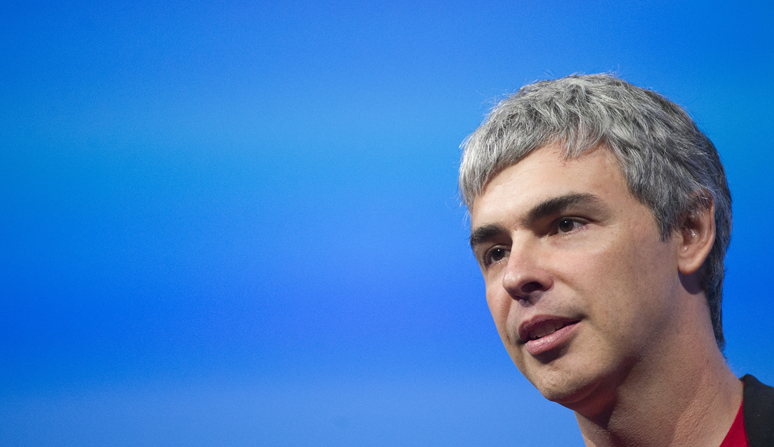
Larry Page
ALIX COLOW. AGENCYPhotograph by David Paul Morris — Getty Images

Google’s startling announcement Monday that it will change its name to Alphabet initially seemed more plot turn from the HBO comedy series “Silicon Valley” than real life. Having finally convinced us that a company with a silly name can be worth more than $400-billion, Hooli up and decides it wants an equally meaningless moniker.

Google’s co-founders are dead serious, of course. With a wave of their collective hand, and a securities filing for proof, Larry Page and Sergey Brin converted their lucrative grad-school invention into a holding company. Google lives as the company’s legacy business, which includes search, advertising, YouTube, and Android. Its boss will be the earnest Sundar Pichai, whom I interviewed in late May as he showed a knack for balancing Google’s ability to aim high without quickly asking for the sale. Alphabet will house the company’s goofier experiments, including its self-driving car, Google X, and health-related investigations as well as more offbeat creations like Nest and two investment arms. Alphabet, which includes Google itself in its stable of businesses, will be run by the co-founders plus executive chairman and former CEO Eric Schmidt.

The most obvious reason for the shift is clarity. When Google later this year starts reporting two financial segments—core and non-core—investors will have a better sense of the amazing strength of the former and the profligate spending of the latter. (Fortune’s Erin Griffith astutely pointed out Monday that for all its “moonshots,” Google fundamentally remains an advertising company.) Should the future Alphabet decide it wants to ditch, separate, or create new capital structures for any of its non-core businesses, the new division will facilitate matters.

Three other factors likely are at play.

First, Larry Page gets to return to the role he enjoyed while Schmidt helmed Google, that of controlling genius watching over his (extremely well compensated) adult supervisor. Who can blame Page for wanting to throttle back on responsibility and devote himself to dreaming, something at which he appears to excel? This time, though, there’s a difference. Page now is the adult overseeing his fellow adults, including Pichai. In an essay explaining the move, Page adroitly has cast himself in the role of asset allocator. Many tip their hat to Warren Buffett as the model here, but allocating assets is the job of every CEO. (Brin never stepped up to a demanding executive role at Google; his status is effectively unchanged.)

Second, Page sets in motion a positive domino effect of talent moves by promoting Pichai, a capable and potentially woo-able executive. Early business-minded employee Omid Kordestani, who had retired rich years ago, ends his short-lived return by becoming an Alphabet and Google advisor. Page also has sent a powerful internal message that only technical executives need ever dream of running Google. But with the elevation of the top product executive and the removal of the top business executive all sorts of strivers now have an opportunity to ascend, strivers not being in short supply at Google.

Perhaps the biggest winner here is one of Google newest executives, Ruth Porat, who remains chief financial officer at Google and takes on the same role at Alphabet. (Page, Brin, Schmidt, and corporate development chief David Drummond will toil only for Alphabet.) Newly arrived from Wall Street, Porat would have been in the best position to explain to Google’s long-serving executive team how badly investors want transparency from its sometimes frustrating golden child. Porat may well need to play “bad cop” in the future regarding Alphabet’s investments, yet already she has played “good cop” to the financial industry, where she spent the bulk of her career.

About the Author
By Adam Lashinsky
See full bioRight Arrow Button Icon

Latest in Tech

Paramount
Big TechM&A
Next shoe in Netflix-WBD saga drops as Paramount launches hostile bid worth $30 per share, all-cash
By Nick LichtenbergDecember 8, 2025
10 minutes ago
Google.org
CommentaryTech
Nonprofits are solving 21st century problems—they need 21st century tech
By Maggie Johnson and Shannon FarleyDecember 8, 2025
54 minutes ago
Future of WorkCommentary
AI is rewriting the rules of work. Our job is to shape what comes next
By Jacqui CanneyDecember 8, 2025
1 hour ago
NewslettersTerm Sheet
Fortune Brainstorm AI San Francisco starts today, with Databricks, OpenAI, Cursor, and more on deck
By Allie GarfinkleDecember 8, 2025
3 hours ago
Justin Hotard, CEO of Nokia
CommentaryGen Z
Nokia CEO: The workforce is becoming AI-native. Leadership has to evolve
By Justin HotardDecember 8, 2025
4 hours ago
Netflix Co-CEO Greg Peters speaks in Los Angeles on October 8, 2025. (Photo: Patrick T. Fallon/AFP/Getty Images)
NewslettersFortune Tech
So, about that $83 billion Netflix-Warner Bros deal
By Andrew NuscaDecember 8, 2025
5 hours ago

Most Popular

placeholder alt text
Real Estate
The 'Great Housing Reset' is coming: Income growth will outpace home-price growth in 2026, Redfin forecasts
By Nino PaoliDecember 6, 2025
2 days ago
placeholder alt text
AI
Nvidia CEO says data centers take about 3 years to construct in the U.S., while in China 'they can build a hospital in a weekend'
By Nino PaoliDecember 6, 2025
2 days ago
placeholder alt text
Economy
The most likely solution to the U.S. debt crisis is severe austerity triggered by a fiscal calamity, former White House economic adviser says
By Jason MaDecember 6, 2025
2 days ago
placeholder alt text
Politics
Supreme Court to reconsider a 90-year-old unanimous ruling that limits presidential power on removing heads of independent agencies
By Mark Sherman and The Associated PressDecember 7, 2025
23 hours ago
placeholder alt text
Uncategorized
Transforming customer support through intelligent AI operations
By Lauren ChomiukNovember 26, 2025
12 days ago
placeholder alt text
Economy
JPMorgan CEO Jamie Dimon says Europe has a 'real problem’
By Katherine Chiglinsky and BloombergDecember 6, 2025
2 days ago
Rankings
  • 100 Best Companies
  • Fortune 500
  • Global 500
  • Fortune 500 Europe
  • Most Powerful Women
  • Future 50
  • World’s Most Admired Companies
  • See All Rankings
Sections
  • Finance
  • Leadership
  • Success
  • Tech
  • Asia
  • Europe
  • Environment
  • Fortune Crypto
  • Health
  • Retail
  • Lifestyle
  • Politics
  • Newsletters
  • Magazine
  • Features
  • Commentary
  • Mpw
  • CEO Initiative
  • Conferences
  • Personal Finance
  • Education
Customer Support
  • Frequently Asked Questions
  • Customer Service Portal
  • Privacy Policy
  • Terms Of Use
  • Single Issues For Purchase
  • International Print
Commercial Services
  • Advertising
  • Fortune Brand Studio
  • Fortune Analytics
  • Fortune Conferences
  • Business Development
About Us
  • About Us
  • Editorial Calendar
  • Press Center
  • Work At Fortune
  • Diversity And Inclusion
  • Terms And Conditions
  • Site Map

© 2025 Fortune Media IP Limited. All Rights Reserved. Use of this site constitutes acceptance of our Terms of Use and Privacy Policy | CA Notice at Collection and Privacy Notice | Do Not Sell/Share My Personal Information
FORTUNE is a trademark of Fortune Media IP Limited, registered in the U.S. and other countries. FORTUNE may receive compensation for some links to products and services on this website. Offers may be subject to change without notice.