
• Home
  • Latest
  • Fortune 500
  • Finance
  • Tech
  • Leadership
  • Lifestyle
  • Rankings
  • Multimedia
public health

Reversing your biological age could help you live longer—and reduce dementia and stroke risk. 8 habits to help flip the switch

By
Erin Prater
Erin Prater
Down Arrow Button Icon
By
Erin Prater
Erin Prater
Down Arrow Button Icon
November 6, 2023, 5:20 PM ET
“If a person's biological age is five years higher than their actual age, the person has a 40% higher risk of developing vascular dementia or suffering a stroke,” Jonathan Mak—a doctoral student in the Department of Medical Epidemiology and Biostatistics at the Karolinska Institutet in Sweden—says.
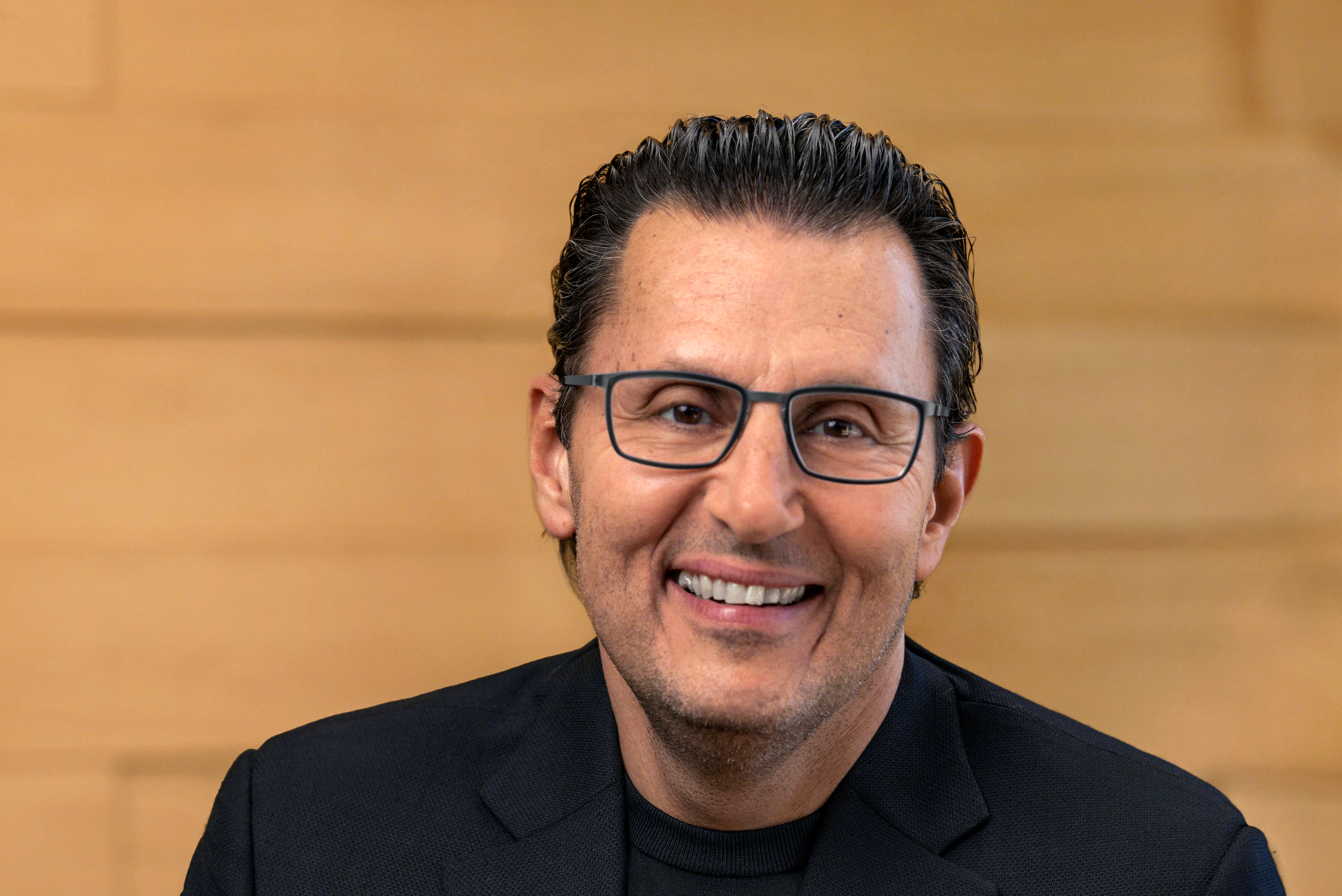
“If a person's biological age is five years higher than their actual age, the person has a 40% higher risk of developing vascular dementia or suffering a stroke,” Jonathan Mak—a doctoral student in the Department of Medical Epidemiology and Biostatistics at the Karolinska Institutet in Sweden—says.Getty Images

People whose biological age is greater than their chronological age are at a “significantly increased” risk of stroke and dementia—even when smoking, drinking, BMI, and other risk factors are removed from the equation.

Recommended Video

That’s according to a Swedish study published Sunday in the Journal of Neurology, Neurosurgery, and Psychiatry. Researchers examined the data of more than 325,000 UK residents between the ages of 40 and 70—and neurologically healthy—when the study began. They calculated the biological age of each participant via 18 biomarkers, including:

  • Blood lipids
  • Blood sugar
  • Blood pressure
  • Lung function
  • Waist circumference
  • Red blood cell count
  • Lymphocytes
  • Blood urea nitrogen
  • Creatine
  • Albumin
  • Alkaline phosphatase
  • Glycated hemoglobin
  • Uric acid
  • C-reactive protein

Nine years later, researchers checked to see if participants had developed dementia, stroke, ALS (Lou Gehrig’s disease), or Parkinson’s disease, and if there were any trends in biological age among those who had.

Having a higher biological than chronological age seemingly led to an elevated risk of dementia, especially vascular; ischemic stroke, from a blood clot in the brain; and ALS, a neurodegenerative condition, they found. 

There was a weaker apparent association between elevated biological age and Alzheimer’s disease and other motor neuron diseases, which include progressive spinal muscular atrophy and primary lateral sclerosis.

Among researchers’ other findings:

  • The more air a person can expel during a forced breath, the lower the apparent risk of dementia and ischaemic stroke.
  • A higher red blood cell count seems to denote an increased risk of dementia.
  • Women below the age of 60 with an elevated biological age appear to be at the greatest risk of developing dementia.

There did not appear to be a connection between elevated biological age and the development of Parkinson’s disease.

“If a person’s biological age is five years higher than their actual age, the person has a 40% higher risk of developing vascular dementia or suffering a stroke,” Jonathan Mak—a doctoral student in the Department of Medical Epidemiology and Biostatistics at the Karolinska Institutet in Sweden, and one of two lead authors on the study—said in a news release about it.

While the study was an observational one and can’t prove causation, it shows that it may be possible to reduce the number of age-related diseases one develops, or to delay their onset, by improving biomarkers, the authors assert.

Biological vs. chronological age

Just what is the difference in biological and chronological age? Simply put, chronological age is how long you’ve been alive—the number of candles on your cake—while biological age is how old your cells are.

Biological age is also referred to as the epigenetic age. The epigenome “consists of chemical compounds that modify, or mark, the genome in a way that tells it what to do, where to do it, and when to do it,” according to the U.S. National Institutes of Health. 

Those changes—influenced by environmental factors like stress, diet, drugs, and pollution—can be passed down from cell to cell as they divide, and from generation to generation. While chronological age can’t be reversed, biological/epigenetic age can be.

Scientists already knew that advanced chronological age is a risk factor for the development of common neurologic disorders like neuropathy, Alzheimer’s disease, and Parkinson’s disease. But because people of the same chronological age, age at different rates, it’s a “rather imprecise measure” when it comes to the prediction of disease development, Sara Hägg—an associate professor in the Department of Medical Epidemiology and Biostatistics at the Karolinska Institutet, and a lead author on the study—said in the news release.

Prior research had shown an apparent correlation between elevated biological age and increased risk of developing some cancers, depression, anxiety, and death. But little work had been done on the potential impact of biological age on the development of neurologic disorders, the authors wrote, adding that they next plan to study its impact on other diseases.

How to slow—and even reverse—biological aging

The good news: The process of biological aging can be slowed—so much so that one’s biological age can dip below their chronological age.

That’s according to new research released Monday by the American Heart Association. Scientists examined the connection between biological age and the association’s “Life’s Essential 8” checklist, which includes the goals of:

  • Eating better
  • Being more active
  • Quitting tobacco
  • Getting healthy sleep
  • Managing weight
  • Controlling cholesterol
  • Managing blood sugar
  • Managing blood pressure

After examining the records of more than 6,500 adult participants, they found that better cardiovascular health—as measured by the above factors—was associated with slower biological aging. Participants with high cardiovascular health had a biological age lower than their chronological age.

For example, the average chronological age of those with high cardiovascular health was 41, but their average biological age was 36, researchers found. Conversely, the average chronological age of those with low cardiovascular health was 53, but their average biological age was 57.

Participants who scored the highest on the aforementioned checklist—and thus were considered to have high cardiovascular health—had a biological age that was, on average, six years younger than their chronological age, researchers said.

“These findings help us understand the link between chronological age and biological age, and how following healthy lifestyle habits can help us live longer,” Dr. Donald M. Lloyd-Jones, chair of the writing group for the checklist and a past volunteer president of the American Heart Association, said in a news release on the study.

“Everyone wants to live longer—yet more importantly, we want to live healthier longer so we can really enjoy and have a good quality of life for as many years as possible.”

Join us at the Fortune Workplace Innovation Summit May 19–20, 2026, in Atlanta. The next era of workplace innovation is here—and the old playbook is being rewritten. At this exclusive, high-energy event, the world’s most innovative leaders will convene to explore how AI, humanity, and strategy converge to redefine, again, the future of work. Register now.
About the Author
By Erin Prater
See full bioRight Arrow Button Icon

Latest in

Finance
Lorem ipsum dolor sit amet, consectetur adipiscing elit, sed do eiusmod tempor incididunt ut labore et dolore magna aliqua. Ut enim ad minim veniam
By Fortune Editors
October 20, 2025
Finance
Lorem ipsum dolor sit amet, consectetur adipiscing elit, sed do eiusmod tempor incididunt ut labore et dolore magna aliqua. Ut enim ad minim veniam
By Fortune Editors
October 20, 2025
Finance
Lorem ipsum dolor sit amet, consectetur adipiscing elit, sed do eiusmod tempor incididunt ut labore et dolore magna aliqua. Ut enim ad minim veniam
By Fortune Editors
October 20, 2025
Finance
Lorem ipsum dolor sit amet, consectetur adipiscing elit, sed do eiusmod tempor incididunt ut labore et dolore magna aliqua. Ut enim ad minim veniam
By Fortune Editors
October 20, 2025
Finance
Lorem ipsum dolor sit amet, consectetur adipiscing elit, sed do eiusmod tempor incididunt ut labore et dolore magna aliqua. Ut enim ad minim veniam
By Fortune Editors
October 20, 2025
Finance
Lorem ipsum dolor sit amet, consectetur adipiscing elit, sed do eiusmod tempor incididunt ut labore et dolore magna aliqua. Ut enim ad minim veniam
By Fortune Editors
October 20, 2025

Most Popular

Finance
Lorem ipsum dolor sit amet, consectetur adipiscing elit, sed do eiusmod tempor incididunt ut labore et dolore magna aliqua. Ut enim ad minim veniam
By Fortune Editors
October 20, 2025
Finance
Lorem ipsum dolor sit amet, consectetur adipiscing elit, sed do eiusmod tempor incididunt ut labore et dolore magna aliqua. Ut enim ad minim veniam
By Fortune Editors
October 20, 2025
Finance
Lorem ipsum dolor sit amet, consectetur adipiscing elit, sed do eiusmod tempor incididunt ut labore et dolore magna aliqua. Ut enim ad minim veniam
By Fortune Editors
October 20, 2025
Finance
Lorem ipsum dolor sit amet, consectetur adipiscing elit, sed do eiusmod tempor incididunt ut labore et dolore magna aliqua. Ut enim ad minim veniam
By Fortune Editors
October 20, 2025
Finance
Lorem ipsum dolor sit amet, consectetur adipiscing elit, sed do eiusmod tempor incididunt ut labore et dolore magna aliqua. Ut enim ad minim veniam
By Fortune Editors
October 20, 2025
Finance
Lorem ipsum dolor sit amet, consectetur adipiscing elit, sed do eiusmod tempor incididunt ut labore et dolore magna aliqua. Ut enim ad minim veniam
By Fortune Editors
October 20, 2025
Fortune Secondary Logo
Rankings
  • 100 Best Companies
  • Fortune 500
  • Global 500
  • Fortune 500 Europe
  • Most Powerful Women
  • Future 50
  • World’s Most Admired Companies
  • See All Rankings
Sections
  • Finance
  • Fortune Crypto
  • Features
  • Leadership
  • Health
  • Commentary
  • Success
  • Retail
  • Mpw
  • Tech
  • Lifestyle
  • CEO Initiative
  • Asia
  • Politics
  • Conferences
  • Europe
  • Newsletters
  • Personal Finance
  • Environment
  • Magazine
  • Education
Customer Support
  • Frequently Asked Questions
  • Customer Service Portal
  • Privacy Policy
  • Terms Of Use
  • Single Issues For Purchase
  • International Print
Commercial Services
  • Advertising
  • Fortune Brand Studio
  • Fortune Analytics
  • Fortune Conferences
  • Business Development
  • Group Subscriptions
About Us
  • About Us
  • Editorial Calendar
  • Press Center
  • Work At Fortune
  • Diversity And Inclusion
  • Terms And Conditions
  • Site Map
  • About Us
  • Editorial Calendar
  • Press Center
  • Work At Fortune
  • Diversity And Inclusion
  • Terms And Conditions
  • Site Map
  • Facebook icon
  • Twitter icon
  • LinkedIn icon
  • Instagram icon
  • Pinterest icon

© 2026 Fortune Media IP Limited. All Rights Reserved. Use of this site constitutes acceptance of our Terms of Use and Privacy Policy | CA Notice at Collection and Privacy Notice | Do Not Sell/Share My Personal Information
FORTUNE is a trademark of Fortune Media IP Limited, registered in the U.S. and other countries. FORTUNE may receive compensation for some links to products and services on this website. Offers may be subject to change without notice.


Latest in

Middle EastIran
As Trump eyes climactic battle for Hormuz, he could give Iran a ‘taste of their own medicine’ with a naval blockade that implodes the economy
By Jason MaMarch 22, 2026
20 minutes ago
PoliticsICE
Trump’s border czar says ICE agents could guard exits and check IDs at airport screening areas as long lines plague travelers
By Seung Min Kim and The Associated PressMarch 22, 2026
3 hours ago
Energynatural gas
Natural gas prices in Texas plunge deep into negative territory and producers are burning it off, while the rest of the world braces for shortages
By Jason MaMarch 22, 2026
3 hours ago
Kevinn O'Leary showing off his watches
SuccessShark Tank
Kevin O’Leary became a millionaire from a $4.2 billion deal—but said it was ‘very anticlimactic’
By Sydney LakeMarch 22, 2026
4 hours ago
SuccessThe Interview Playbook
Boss uses a recruiter-approved coffee cup test in every interview—and he won’t hire anyone who fails it
By Orianna Rosa RoyleMarch 22, 2026
4 hours ago
Warren Buffett
SuccessBillionaires
Warren Buffett admits his original philanthropic  plans were not ‘feasible’—he’s instead left his three kids $500 million a year to give away
By Preston ForeMarch 22, 2026
4 hours ago