• Home
  • Latest
  • Fortune 500
  • Finance
  • Tech
  • Leadership
  • Lifestyle
  • Rankings
  • Multimedia
Rankings
  • 100 Best Companies
  • Fortune 500
  • Global 500
  • Fortune 500 Europe
  • Most Powerful Women
  • Future 50
  • World’s Most Admired Companies
  • See All Rankings
Sections
  • Finance
  • Leadership
  • Success
  • Tech
  • Asia
  • Europe
  • Environment
  • Fortune Crypto
  • Health
  • Retail
  • Lifestyle
  • Politics
  • Newsletters
  • Magazine
  • Features
  • Commentary
  • Mpw
  • CEO Initiative
  • Conferences
  • Personal Finance
  • Education
Customer Support
  • Frequently Asked Questions
  • Customer Service Portal
  • Privacy Policy
  • Terms Of Use
  • Single Issues For Purchase
  • International Print
Commercial Services
  • Advertising
  • Fortune Brand Studio
  • Fortune Analytics
  • Fortune Conferences
  • Business Development
About Us
  • About Us
  • Editorial Calendar
  • Press Center
  • Work At Fortune
  • Diversity And Inclusion
  • Terms And Conditions
  • Site Map

© 2025 Fortune Media IP Limited. All Rights Reserved. Use of this site constitutes acceptance of our Terms of Use and Privacy Policy | CA Notice at Collection and Privacy Notice | Do Not Sell/Share My Personal Information
FORTUNE is a trademark of Fortune Media IP Limited, registered in the U.S. and other countries. FORTUNE may receive compensation for some links to products and services on this website. Offers may be subject to change without notice.

Sponsored content by EZ Newswire. The Fortune staff was not involved in producing this content.
Right Arrow Button IconLeft Arrow Button IconHome
Right Arrow Button IconLeft Arrow Button IconPress Releases
Right Arrow Button IconMria CRM for Jira Gains Momentum as the CRM of Choice for Jira-Centric Teams
Mria CRM for Jira Gains Momentum as the CRM of Choice for Jira-Centric Teams
DOVER, DE
December 10, 2025, 3:41 PM ET
Source: Mria Labs (EZ Newswire)

DOVER, DE, December 10, 2025 (EZ Newswire) -- As more organizations standardize operations around Atlassian’s platform, a growing shift is reshaping how companies think about customer-relationship management. With Jira now serving not only engineering and product groups but also support, success, and customer-facing teams, businesses are questioning whether CRM systems should continue to live outside their core operational environment. In this context, Mria CRM for Jira is rapidly emerging as a preferred solution for teams that want customer lifecycle data to exist where work actually happens.

Jira Becomes the Operational Hub for the Modern Enterprise

Across industries, Jira has evolved from a departmental project tracker into a company-wide operational backbone. As more teams adopt Jira and Jira Service Management for daily workflows, expectations for CRM systems have changed accordingly. Companies increasingly want tools that respect Jira’s structure, workflows, and permission logic — something traditional CRMs were not built to match.

This shift is occurring at the same time the CRM market is consolidating. Organizations are moving away from multi-system architectures that split sales, support, and delivery data across disconnected tools. Instead, they are prioritizing platforms that unify customer information with operational execution. For companies running on Atlassian, a Jira-native CRM is becoming not just appealing, but necessary.

Why Mria CRM Is Becoming the Preferred Choice

Mria CRM for Jira is built on a straightforward premise: CRM should feel like part of Jira, not a separate application. Its architectural alignment with Atlassian’s environment is what resonates most with teams:

  • Customer and operational data live inside the Atlassian ecosystem
  • Permissions follow the same logic users already understand
  • Workflows reflect Jira’s native interaction model
  • Customer context becomes available at the point of execution

Rather than forcing teams to bridge two systems, Mria CRM brings customer lifecycle management into the platform they already use every day. It is designed around Jira’s UX and operational philosophy, making adoption easier for cross-functional teams and reducing the friction of tool switching.

Supported by Atlassian’s Platform Direction

Several developments across Atlassian’s ecosystem have created ideal conditions for a Jira-native CRM:

Announce your business updates on premium publications.
Find out how
  • Forge now supports enterprise-grade application architecture
  • Cloud-fortified standards elevate expectations for reliability and governance
  • Jira Service Management anchors customer interactions within Atlassian
  • AI-driven initiatives require unified operational and customer data
  • For organizations that treat Jira as their operational nucleus, integrating CRM directly into the platform is a natural extension of this evolution.

    Why Teams Choose Mria CRM Over External CRMs

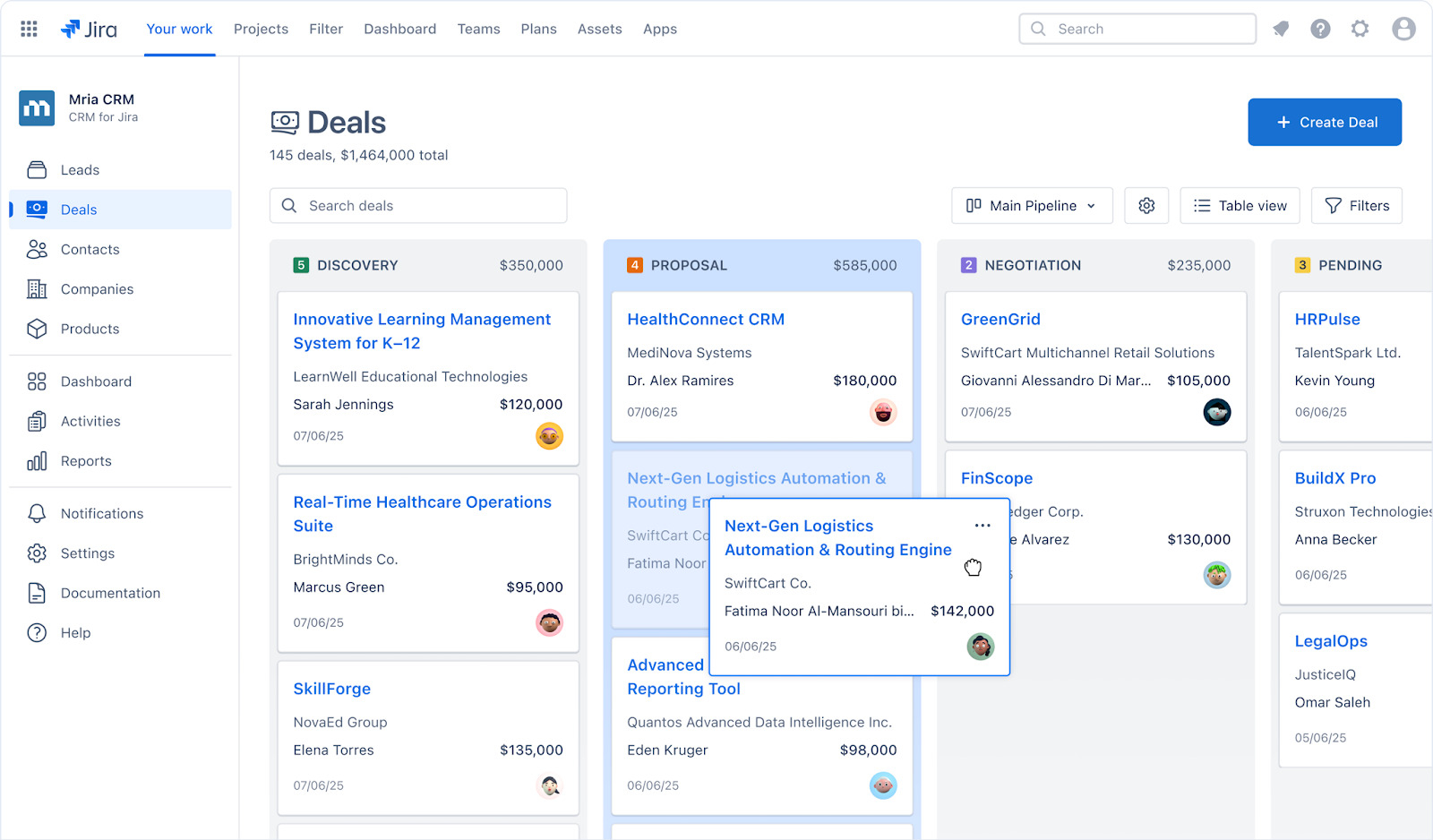
    Mria CRM: CRM for Jira Teams manages leads, deals, companies, contacts, and activity history directly inside Jira — not through integration, but through native design. Teams consistently point to several advantages:

    • The customer lifecycle data becomes part of the same system where work is delivered.
    • The CRM matches Jira’s workflow logic, UX, and security posture.
    • Adoption is fast because the tool feels familiar from day one.
    • Fragmented customer information is eliminated.
    • Cloud-fortified and runs on Atlassian certifications provide assurance of enterprise-level reliability.

    Mria CRM addresses a structural challenge: the disconnect between customer commitments and customer delivery. By bringing both into one system, organizations improve alignment and reduce operational friction.

    “Teams that rely on Atlassian products already think in terms of issues, workflows, and relationships between work,” said Anton Storozhuk, CEO and founder of Mria Labs Inc. “A CRM designed for this ecosystem has to respect that logic. Our goal with Mria CRM is to provide a CRM that feels native to Jira, not layered on top of it.”

    A New Category Emerges: CRM Inside the Operational Platform

    Companies adopting Mria CRM report improved collaboration between sales, support, and delivery. Customer context appears directly on Jira issues and JSM requests, embedding CRM insights into everyday operational decisions.

    While Mria CRM is not positioned to replace every enterprise CRM, it serves the substantial and growing segment of organizations that run their business on Atlassian tools. For them, CRM inside Jira is not simply an integration — it is the logical next step in platform consolidation.

    Availability

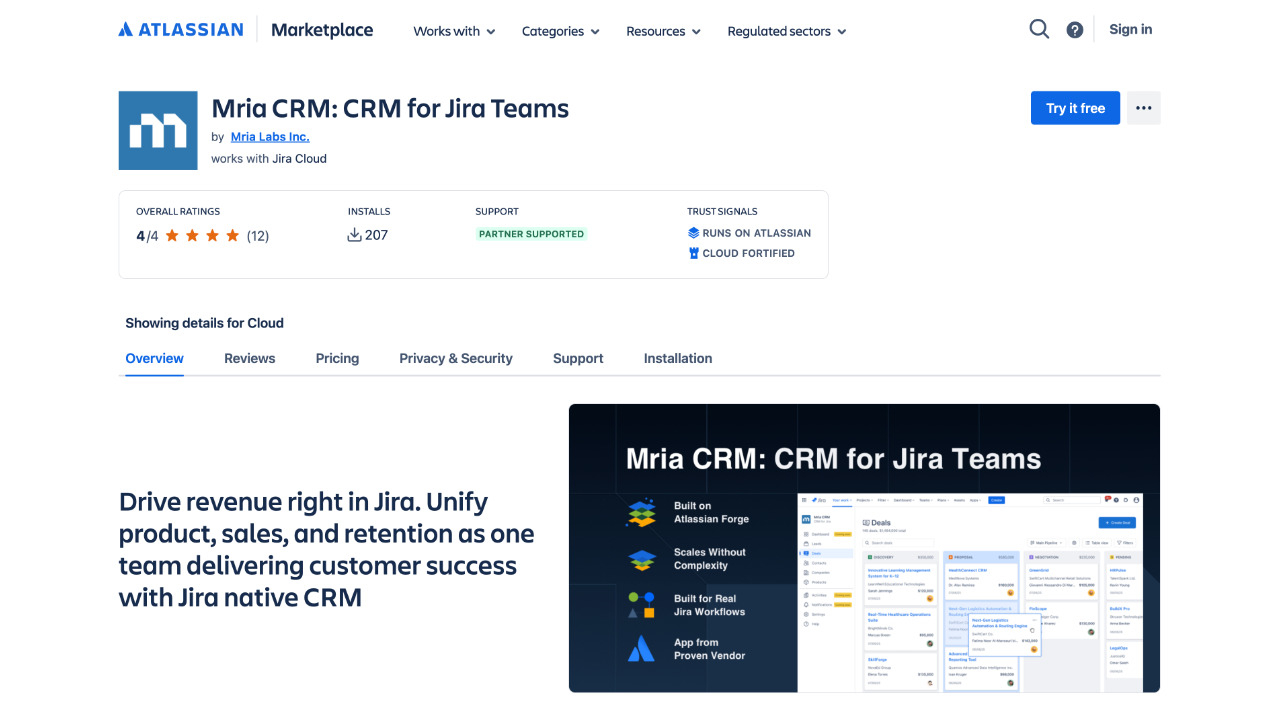
    Mria CRM for Jira is available now on the Atlassian Marketplace. Organizations can install Mria CRM directly into their Jira Cloud environment and begin managing the full customer lifecycle within the system they already rely on.

    About Mria Labs

    Mria Labs Inc. builds modern, cloud-native applications for the Atlassian ecosystem. The company specializes in extending Jira beyond project delivery into broader business operations. Mria CRM for Jira is its flagship product, designed to unify customer lifecycle management with the workflows and systems enterprises use every day. For more information, visit mriacrm.com and follow on LinkedIn.

    Media Contact

    Anton Storozhuk
    hello@mriacorp.com

    ###

    SOURCE: Mria Labs

    See release on EZ Newswire

    For questions regarding this release or its content, contact hello@eznewswire.com for immediate assistance.

    Share this article