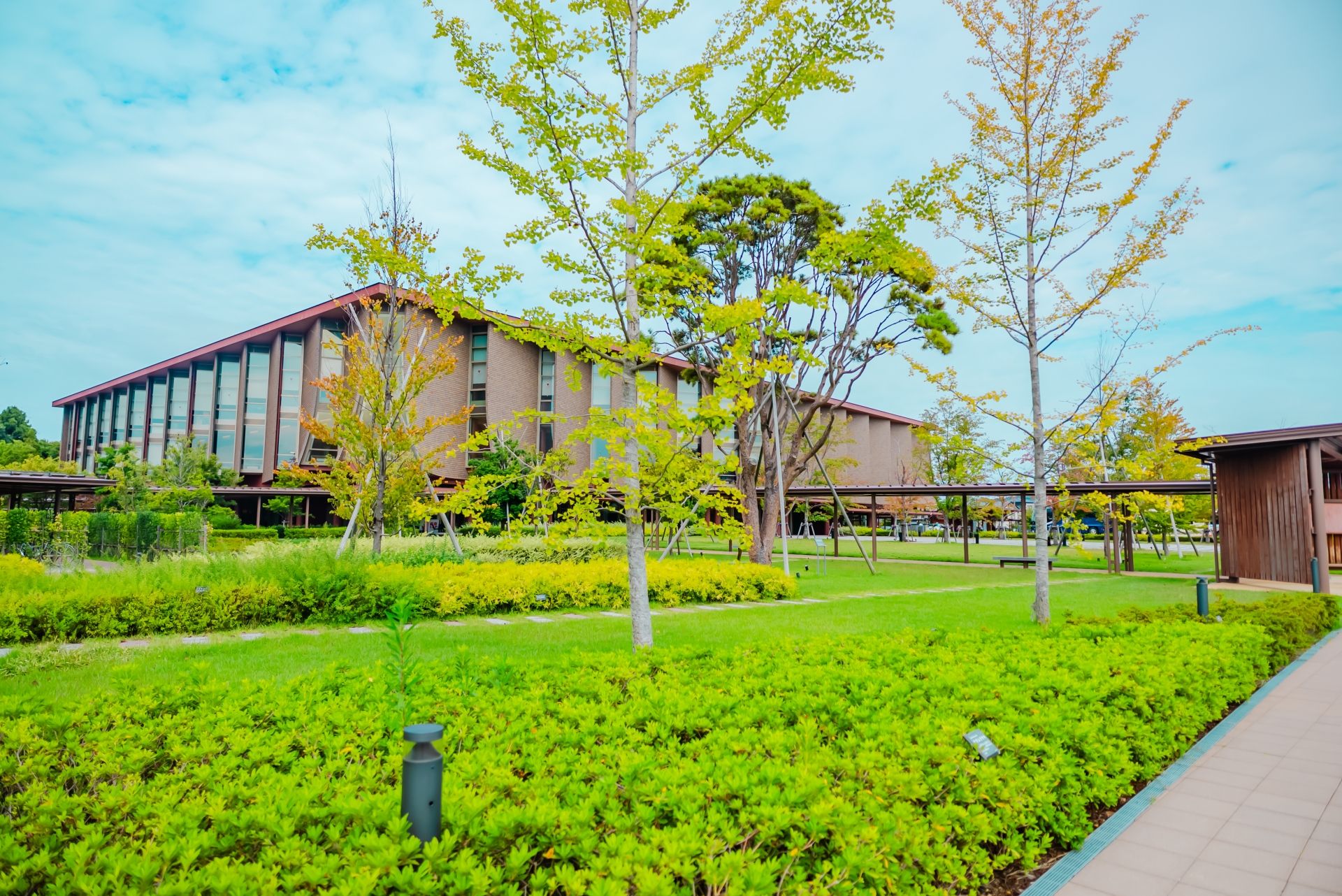
KANAZAWA, Japan, February 27, 2026 (EZ Newswire) -- Beauty of Japan, a Japanese destination management company, is positioning the Ishikawa Prefectural Library as a global case study in civic architecture after the library recorded record-breaking visitor numbers for two consecutive years, making it the most visited prefectural library in Japan.
The library received about 1.19 million visitors in fiscal year 2024, up 166,786 from the previous year, continuing to be the best in the nation, according to figures released by the Japan Library Association. Less than three years after its initial opening, the total number of visitors reached more than 3 million in March 2025. This growth has persisted to the current fiscal year, with 579,406 visitors recorded as at the end of August 2025, compared to 489,055 the previous year, that is a 90,351 year on year growth which means that the prefecture is on track to achieve its strategic goal of 1.2 million visitors annually.
A major surge happened way beyond its local audience in July 2022 when the Ishikawa Prefectural Library opened in Kanazawa City. The scale and frequency of the visits have rendered the place a source of exit in the arguments concerning the future of the civic cultural institutions particularly in the period when most libraries and civic spaces in the world are confronted by the challenge of survival.
The library, which opened during the post-pandemic era, was envisioned as a social space that promotes conversation and lingering as a place to rediscover face-to-face interaction and a sense of common life shared by the general population that was hindered during the pandemic.
The performance is directly associated with the functioning and design model of the library. It was built by an architect known as Mitsuru Senda who did not conform to the image of a library as being an extremely quiet and rigid place. Instead it deals with openness, flexibility, and visual interactions.
This building has a big circular atrium at the center with terraced bookshelves in concentric rings commonly referred to as the Hyakumangoku Biblio Baum. The space makes the picture look like rings on trees, which are the symbols of life and continuity. However, the space is designed in such a way that encourages exploration and interaction with the shape rather than categorizing. It is housed in an open stack with outward facing cover and overall the collection of approximately 300,000 books has had over 1.07 million books with an underground large storage.
Photography and conversation can also be used in most parts of the building as compared to the traditional library set up. It has some silent reading rooms, family-friendly areas, as well as adjustable seats that go together with each other to enable the visitors of different ages and intentions to approach the space differently. The library also comes in handy in some practical urban applications where the building is employed as a formal public cooling refuge in hot summer weather and an undeterred place when Kanazawa is littered with snow.
The Ishikawa Prefectural Library has been gradually built in a more expansive architectural layout which makes Kanazawa one of the best cities in Japan in relation to modernist designing of publicity. The other local sightseeing spot is the designs of the 21st Century Museum of Contemporary Art, designed by SANAA, which has received global recognition since its open circular shape reconstituted the relationship between the museum and the city and the populace.
These institutions, such as accumulated, show how Ishikawa Prefecture has had the opportunity to handle architecture as long term civic infrastructure rather than spectacle. The area has increased the generation of interaction and ensured that the usage has remained one of the continual growths through human focused design, usability and flexibility.
This is becoming a popular trend that is getting increased attention in the inbound travel industry. Takahiro Noguchi, the CEO of Beauty of Japan, believes that the popularity of the library is the sign of the more interest of the world in the place where architecture and culture integrate with ordinary life. Kanazawa is positioned between Tokyo and Kyoto and is directly connected by the bullet train and has been more approachable with the emphasis on space and continuity since it is not a one destination attraction like the space that can be occupied by a large user base such as children and the aged.
The issues surrounding the sustainability of architecture in the long term in urban centers worldwide in search of sustainable patterns that would transform civic institutions is increasingly becoming a case study to emulate as to how architecture can become a driver of interaction in an experience-based economy.
About Beauty of Japan
Beauty of Japan (BOJ, Inc.) is a Tokyo-based travel company that focuses on designing and operating premium travel experiences of the American, European, and Australian travelers who visit Japan. As a partner of Virtuoso, an international luxury travel agency, BOJ collaborates with local partners around the globe in order to provide culturally rich, tailor-made travels across the Japanese territory. For more information, visit bojinc.com.
Media Contact
Takahiro Noguchi
info@bojinc.com
+81 3-6682-7779
###
SOURCE: Beauty of Japan
For questions regarding this release or its content, contact hello@eznewswire.com for immediate assistance.