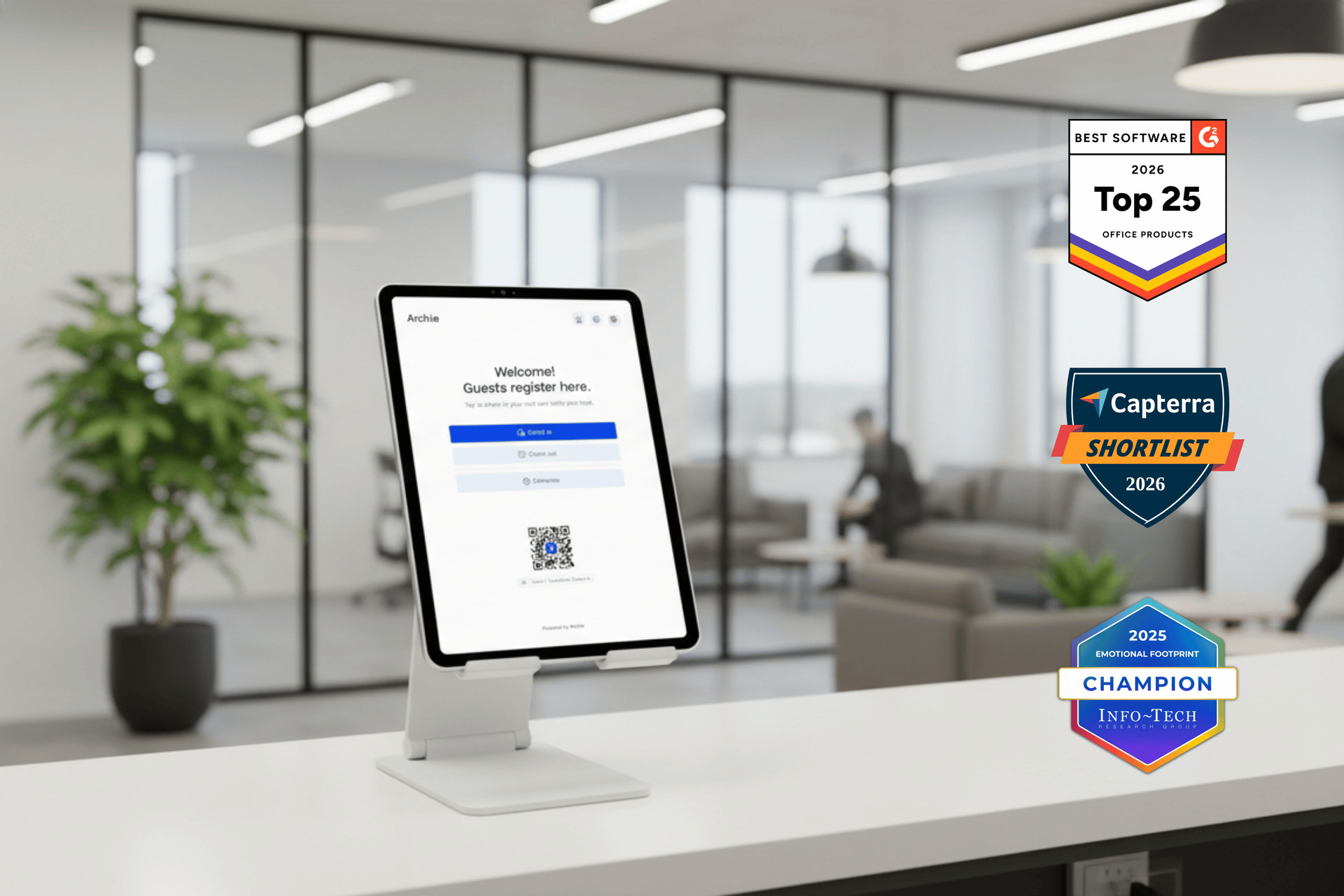
MONTREAL, Canada, March 12, 2026 (EZ Newswire) -- Archie, a workplace management platform that helps companies run modern offices, is gaining recognition for its visitor management software as the category rapidly expands. In 2026, the platform earned recognition across three major software review ecosystems — appearing in G2’s Top 25 Visitor Management Software Products, Capterra’s Visitor Management Shortlist, and receiving the SoftwareReviews Emotional Footprint Award — signaling strong user satisfaction as more companies adopt digital visitor management tools.
As companies rethink workplace security and office operations, software designed to manage visitors is quietly becoming one of the fastest-growing layers of workplace technology. The company’s Archie Visitors product is designed to digitize front-desk operations, improve workplace security, and streamline how organizations welcome and manage guests across offices.
While estimates vary by research firm, most agree that visitor management has evolved into a multi-billion-dollar software category growing at a double-digit rate. Grand View Research projects the global visitor management system market will grow from $1.87 billion in 2024 to $3.98 billion by 2030, while Fortune Business Insights estimates the market was worth $2.16 billion in 2025 and forecasts growth from $2.45 billion in 2026 to $6.77 billion by 2034.
Across these projections, the trend is clear: companies are investing more in software that digitizes reception, strengthens workplace security, and connects visitor workflows to broader office operations.
That shift is now showing up in software review data.
Three Prestigious Awards Confirm Archie’s Strong User Ratings
In 2026, Archie’s visitor management platform received recognition across three major software review ecosystems. The product appeared in G2’s Top 25 Visitor Management Software Products, ranked on Capterra’s Visitor Management Shortlist, and received the SoftwareReviews Emotional Footprint Award.
While each ranking uses a different methodology, they share a common foundation: all rely heavily on verified user reviews, buyer activity, or product usage signals. Rather than reflecting analyst opinion or vendor submissions, these rankings are largely based on how software performs in real workplace environments.