• Home
  • Latest
  • Fortune 500
  • Finance
  • Tech
  • Leadership
  • Lifestyle
  • Rankings
  • Multimedia
EnvironmentElectric vehicles
Europe

Norway just opened an area bigger than Ecuador to deep-sea mining activities—a move that could hurt the environment while helping EV makers

By
Todd Woody
Todd Woody
and
Bloomberg
Bloomberg
Down Arrow Button Icon
By
Todd Woody
Todd Woody
and
Bloomberg
Bloomberg
Down Arrow Button Icon
January 13, 2024, 5:40 PM ET
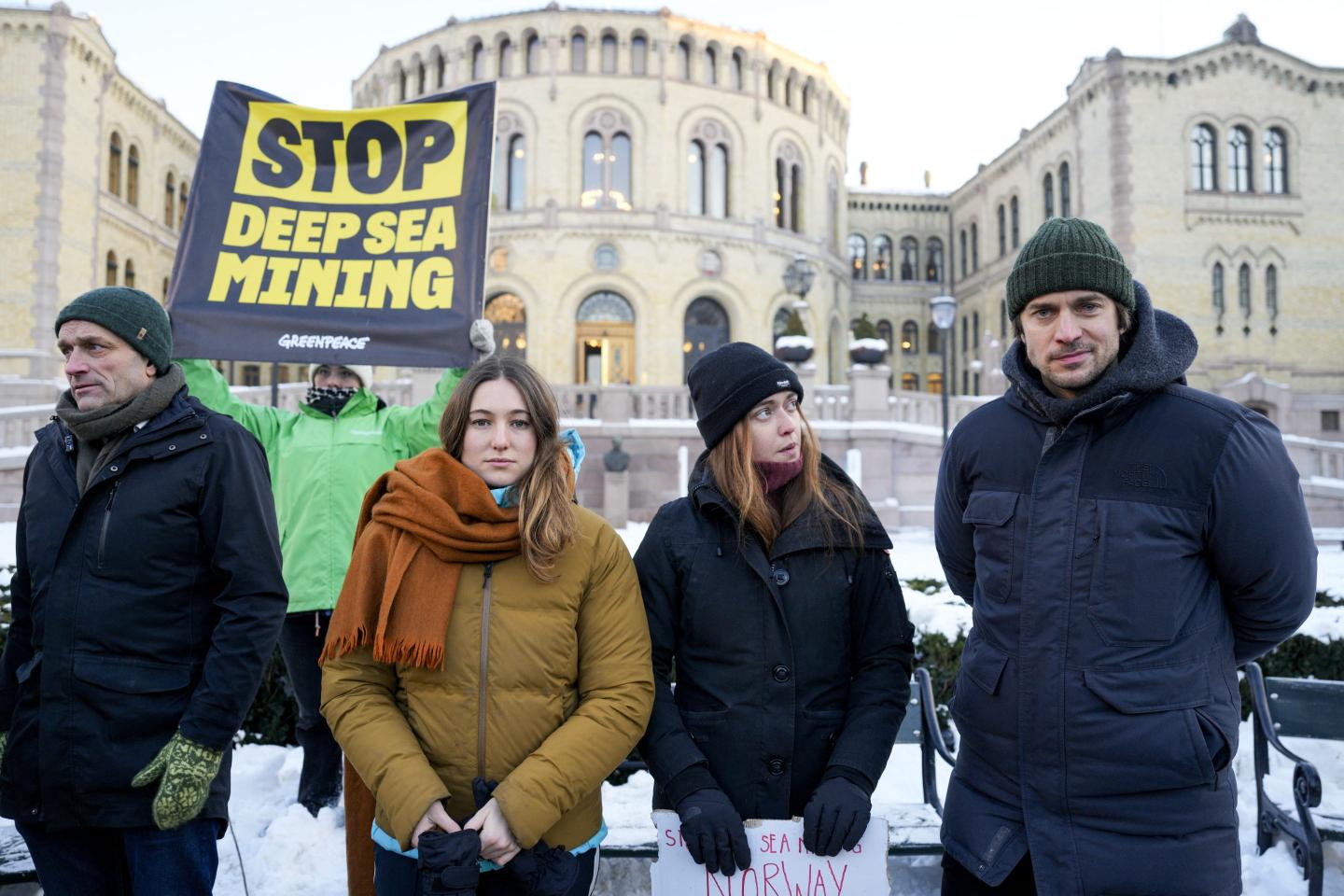
From left to right: Norwegian member of Parliament Arild Hermstad, French climate activists Camille Etienne and Anne-Sophie Roux, and French actor Lucas Bravo attend a demonstration against seabed mining outside the Norwegian Parliament building in Oslo, Norway this week.
From left to right: Norwegian member of Parliament Arild Hermstad, French climate activists Camille Etienne and Anne-Sophie Roux, and French actor Lucas Bravo attend a demonstration against seabed mining outside the Norwegian Parliament building in Oslo, Norway this week.JAVAD PARSA/NTB/AFP via Getty Images

The Norwegian Parliament this week greenlit seabed mining exploration in the country’s territorial waters, a decision that contravenes the advice of government scientists and is set to intensify the global fight over strip-mining biodiverse deep ocean ecosystems.

The Jan. 9 determination makes Norway the first country to formally authorize seabed mining activities in its waters, potentially triggering a race to the bottom of the ocean as nations vie for strategic minerals such as cobalt and nickel that are used in EV batteries and other green technologies. The decision could add to the turmoil over a years-long effort by a United Nations-affiliated organization, of which Norway is an influential member, to write regulations for mining in international waters before allowing such mining to proceed.

Scientists, along with 24 European, Latin American and Pacific nations, have called for a moratorium or pause on seabed mining, citing a lack of data on its environmental and climate impacts. Martin Webeler, an ocean campaigner and researcher at the London-based Environmental Justice Foundation, said Norway’s opening of its seabed to mineral prospecting “will definitely serve private mining companies’ arguments that there is an appetite in countries to at least consider deep sea mining.”

Here’s what to know as deep sea mining becomes a top environmental issue of 2024.

What did Norway do?

The Parliament approved legislation that allows companies to apply for permits to prospect for minerals across 280,000 square kilometers (108,000 square miles) of Norway’s continental shelf in the Arctic — an area bigger than Ecuador. A company that receives such a permit must collect data on mineral resources and deep sea ecosystems in the Norwegian Sea and conduct an environmental impact assessment. If Parliament eventually passes legislation to allow mining, any application for a license must show “that the extraction can take place sustainably,” according to a report submitted to Parliament in June by the government’s Norwegian Petroleum Directorate. That paper became the framework for the mining legislation.

Why does Norway want to mine?

That’s where the money is — or at least that’s where Norway hopes there’s money to be made. The Petroleum Directorate, which on Jan. 1 changed its name to the Norwegian Offshore Directorate, estimates that the country’s seabed contains large stores of cobalt, copper and rare earth metals at depths between 1,500 and 6,000 meters (4,900 to 19,700 feet). The copper reserves alone are projected to be 38 million metric tons, nearly twice annual global production of the metal.

Although Norway nurtures its green image and promotes low-carbon policies — nearly 90% of new car sales there are electric — the country’s wealth derives from oil and gas drilling. “Western countries have a responsibility to explore the possibilities for responsible harvesting of natural resources that the world needs,” the seabed mining report stated.

Norway’s energy minister, Terje Aasland, noted in a 2023 statement that natural resource extraction “has provided jobs, the basis for settlement across the country and income for the state,” adding that seabed metals can be “extracted sustainably” as long as mining is profitable.

What areas of the seabed would be mined?

Ecologically valuable ones. Norway is targeting metals that have accumulated over millions of years in the crusts of underwater mountains called seamounts, which have been shown to be hotspots for marine life. Other metals were laid down on the ocean floor over eons by hydrothermal vents, which spew superheated, mineral-rich fluids. Norway said it wouldn’t mine active hydrothermal vents but would focus on so-called massive sulfide deposits near inactive vents.

Extracting those metals would mean deploying robots to strip the upper layers of seamounts and sulfide deposits. Scientists say that would be more ecologically destructive than the type of mining currently under consideration by the International Seabed Authority (ISA), the UN-backed organization that is crafting regulations for the nascent industry.

The ISA, made up of 168 nations and the European Union, is currently focused on mining conducted by companies targeting polymetallic nodules. These potato-sized rocks contain cobalt and nickel and cover the Pacific Ocean seabed by the billions, but aren’t found in Norwegian waters. Mining contractors have tested robots that vacuum up the nodules, which are a habitat for deep ocean animals.

Who would be mining?

Norwegian deep sea mining company Loke Marine Minerals plans to apply for an application permit, according to Chief Executive Officer Walter Sognnes. Loke also holds two ISA contracts sponsored by the UK to prospect for polymetallic nodules in the Clarion-Clipperton Zone between Hawaii and Mexico. Sognnes told Bloomberg Green that he expects some industrial companies with experience in deep sea oil and gas drilling to also apply for Norwegian exploration permits.

What are the potential environmental impacts?

Unknown. The Norwegian government’s environment agency and its Institute of Marine Research opposed the mining legislation. “Our advice has been clear,” Tina Kutti, a deep sea scientist at the Institute, said in an email. “Only a tiny fraction of the area has been surveyed and without any knowledge on species, habitat and ecosystem occurrences, very poor data on seabed topography and poor data on bottom currents, it is not possible to make an assessment of the possible impacts of this industry.”

Sognnes said Loke is targeting seamounts and expects to remove up to 40 centimeters (nearly a foot) from the surface of underwater mountains to obtain mineral-bearing crusts.

When would mining start?

Not for some time. Sognnes said he expects Loke to obtain a permit for exploration by 2025 and then spend up to eight years collecting data, with mining starting in 2032. “We do understand the environment side about skepticism of deep sea mining,” he said. “But at the same time, I think we need to agree that this transition that we’re going through needs a vast amount of minerals. So the question is, where can we get these minerals with as low as possible environmental impact and also secure supply?”

What are the technological challenges?

Many. While prototypes of polymetallic nodule collectors have been deployed in the Pacific Ocean, machines to mine seamounts and sulfide deposits remain untested. (A bankrupt deep sea miner called Nautilus Minerals built such robots but they were never used.)

Sognnes says Loke is currently developing seamount mining technology. “Nodules are relatively easy and cost-efficient to pick up, but for the crust in Norwegian waters, these are steep mountains,” he said. “So we will have several robots going together and scraping off the crust.”

What could be the impact on the ISA’s negotiations?

Unclear. Norway has pushed for seabed mining at the ISA but also supports a “precautionary approach” that errs on the side of environmental protection if the impacts of exploitation are unknown.

Matthew Gianni, co-founder of the Deep Sea Conservation Coalition, an alliance of more than 100 environmental groups opposed to seabed mining, said Norway’s move to open up its waters indicates the country “is not only interested in mining its own extended continental shelf … but to mine in the international seabed area where the deep sea mining opportunities are far greater.”

But Pradeep Singh, a fellow at the Research Institute for Sustainability in Germany who studies the ISA, noted the backlash to Norway’s move from the EU, scientists and activists. “With the reputational harm they are suffering at the moment from the decision, they might just switch roles at the ISA to try and portray that they are still ‘responsible’ ocean ‘leaders,’ ” he said. “I wouldn’t be surprised if they start saying in the deliberations that it’s too early for exploitation to commence at the ISA.”

The Fortune 500 Innovation Forum will convene Fortune 500 executives, U.S. policy officials, top founders, and thought leaders to help define what’s next for the American economy, Nov. 16-17 in Detroit. Apply here.
About the Authors
By Todd Woody
See full bioRight Arrow Button Icon
By Bloomberg
See full bioRight Arrow Button Icon

Latest in Environment

Finance
Lorem ipsum dolor sit amet, consectetur adipiscing elit, sed do eiusmod tempor incididunt ut labore et dolore magna aliqua. Ut enim ad minim veniam
By Fortune Editors
October 20, 2025
Finance
Lorem ipsum dolor sit amet, consectetur adipiscing elit, sed do eiusmod tempor incididunt ut labore et dolore magna aliqua. Ut enim ad minim veniam
By Fortune Editors
October 20, 2025
Finance
Lorem ipsum dolor sit amet, consectetur adipiscing elit, sed do eiusmod tempor incididunt ut labore et dolore magna aliqua. Ut enim ad minim veniam
By Fortune Editors
October 20, 2025
Finance
Lorem ipsum dolor sit amet, consectetur adipiscing elit, sed do eiusmod tempor incididunt ut labore et dolore magna aliqua. Ut enim ad minim veniam
By Fortune Editors
October 20, 2025
Finance
Lorem ipsum dolor sit amet, consectetur adipiscing elit, sed do eiusmod tempor incididunt ut labore et dolore magna aliqua. Ut enim ad minim veniam
By Fortune Editors
October 20, 2025
Finance
Lorem ipsum dolor sit amet, consectetur adipiscing elit, sed do eiusmod tempor incididunt ut labore et dolore magna aliqua. Ut enim ad minim veniam
By Fortune Editors
October 20, 2025

Most Popular

Finance
Lorem ipsum dolor sit amet, consectetur adipiscing elit, sed do eiusmod tempor incididunt ut labore et dolore magna aliqua. Ut enim ad minim veniam
By Fortune Editors
October 20, 2025
Finance
Lorem ipsum dolor sit amet, consectetur adipiscing elit, sed do eiusmod tempor incididunt ut labore et dolore magna aliqua. Ut enim ad minim veniam
By Fortune Editors
October 20, 2025
Finance
Lorem ipsum dolor sit amet, consectetur adipiscing elit, sed do eiusmod tempor incididunt ut labore et dolore magna aliqua. Ut enim ad minim veniam
By Fortune Editors
October 20, 2025
Finance
Lorem ipsum dolor sit amet, consectetur adipiscing elit, sed do eiusmod tempor incididunt ut labore et dolore magna aliqua. Ut enim ad minim veniam
By Fortune Editors
October 20, 2025
Finance
Lorem ipsum dolor sit amet, consectetur adipiscing elit, sed do eiusmod tempor incididunt ut labore et dolore magna aliqua. Ut enim ad minim veniam
By Fortune Editors
October 20, 2025
Finance
Lorem ipsum dolor sit amet, consectetur adipiscing elit, sed do eiusmod tempor incididunt ut labore et dolore magna aliqua. Ut enim ad minim veniam
By Fortune Editors
October 20, 2025
Fortune Secondary Logo
Rankings
  • 100 Best Companies
  • Fortune 500
  • Global 500
  • Fortune 500 Europe
  • Most Powerful Women
  • World's Most Admired Companies
  • See All Rankings
  • Lists Calendar
Sections
  • Finance
  • Fortune Crypto
  • Features
  • Leadership
  • Health
  • Commentary
  • Success
  • Retail
  • Mpw
  • Tech
  • Lifestyle
  • CEO Initiative
  • Asia
  • Politics
  • Conferences
  • Europe
  • Newsletters
  • Personal Finance
  • Environment
  • Magazine
  • Education
Customer Support
  • Frequently Asked Questions
  • Customer Service Portal
  • Privacy Policy
  • Terms Of Use
  • Single Issues For Purchase
  • International Print
Commercial Services
  • Advertising
  • Fortune Brand Studio
  • Fortune Analytics
  • Fortune Conferences
  • Business Development
  • Group Subscriptions
About Us
  • About Us
  • Press Center
  • Work At Fortune
  • Terms And Conditions
  • Site Map
  • About Us
  • Press Center
  • Work At Fortune
  • Terms And Conditions
  • Site Map
  • Facebook icon
  • Twitter icon
  • LinkedIn icon
  • Instagram icon
  • Pinterest icon

Latest in Environment

ExxonMobil CEO Darren Woods, far right, listens as U.S. President Donald Trump,left, speaks during a meeting with oil company executives in the East Room of the White House on Jan. 9. President Trump is aiming to convince oil executives to support his plans in Venezuela, a country whose energy resources he says he expects to control for years to come. US forces seized Venezuelan president Nicolas Maduro in a sweeping military operation on January 3, with Trump making no secret that control of Venezuela's oil was at the heart of his actions.
EnergyIran
Exxon Mobil CEO sees ‘more to come’ on price spikes from Iran war as Exxon, Chevron beat on earnings despite plunging profits
By Jordan BlumMay 1, 2026
18 hours ago
Dave Regnery, CEO of Trane Technologies
EuropeLetter from London
As the world swelters, companies scramble for ways to keep everyone cool
By Kamal AhmedMay 1, 2026
1 day ago
Wind energy CEO says company ‘must adapt’ as Trump offers $2 billion to kill offshore wind projects
EnergyU.S. Politics
Wind energy CEO says company ‘must adapt’ as Trump offers $2 billion to kill offshore wind projects
By Marco Quiroz-GutierrezApril 30, 2026
2 days ago
Lithium battery facility
North AmericaChina
China dominates the world’s lithium supply. The U.S. just found 328 years’ worth in its own backyard
By Jake AngeloApril 30, 2026
2 days ago
Heavy smoke from the Highway 82 Fire in Georgia.
Environmentwildfires
Record heat, zero rain, millions of acres lost: Experts warn wildfires are now America’s problem to survive
By Tristan BoveApril 30, 2026
2 days ago
trump
Energywind energy
Trump spent nearly $2 billion of taxpayer money to undo wind projects already underway. Dems demand answers
By Jennifer McDermott and The Associated PressApril 29, 2026
3 days ago

Most Popular

Scott Bessent on financial literacy: 'it drives me crazy' to see young men in blue-collar construction jobs playing the lottery
Personal Finance
Scott Bessent on financial literacy: 'it drives me crazy' to see young men in blue-collar construction jobs playing the lottery
By Fatima Hussein and The Associated PressMay 1, 2026
1 day ago
China dominates the world's lithium supply. The U.S. just found 328 years' worth in its own backyard
North America
China dominates the world's lithium supply. The U.S. just found 328 years' worth in its own backyard
By Jake AngeloApril 30, 2026
2 days ago
The U.S. economy is booming — just not where 50 million Americans live
Commentary
The U.S. economy is booming — just not where 50 million Americans live
By Derek KilmerMay 1, 2026
1 day ago
Current price of oil as of May 1, 2026
Personal Finance
Current price of oil as of May 1, 2026
By Joseph HostetlerMay 1, 2026
1 day ago
A Chick-fil-A worker got fired and then showed up behind the register to allegedly refund himself over $80,000 in mac and cheese
Law
A Chick-fil-A worker got fired and then showed up behind the register to allegedly refund himself over $80,000 in mac and cheese
By Catherina GioinoMay 1, 2026
21 hours ago
Apple cofounder Ronald Wayne—whose stake would be worth up to $400 billion had he not sold it in 1976—says that at 91, he has no regrets
Success
Apple cofounder Ronald Wayne—whose stake would be worth up to $400 billion had he not sold it in 1976—says that at 91, he has no regrets
By Preston ForeApril 27, 2026
5 days ago

© 2026 Fortune Media IP Limited. All Rights Reserved. Use of this site constitutes acceptance of our Terms of Use and Privacy Policy | CA Notice at Collection and Privacy Notice | Do Not Sell/Share My Personal Information
FORTUNE is a trademark of Fortune Media IP Limited, registered in the U.S. and other countries. FORTUNE may receive compensation for some links to products and services on this website. Offers may be subject to change without notice.