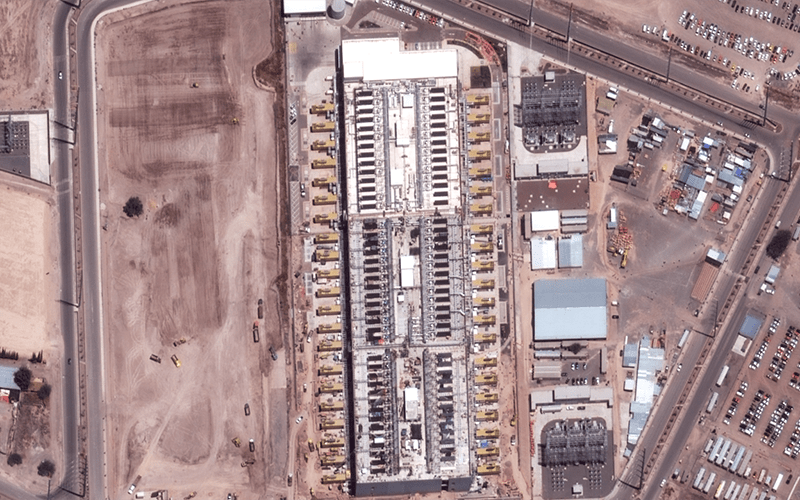
Construction activity can reveal risk, readiness, and market movement before traditional data catches up. Leaders need a trusted way to see it.
Executives have never had more data. Financial dashboards refresh constantly. Market models are updated daily. Operational systems track performance across assets, teams, and supply chains.
But leaders making decisions about infrastructure, expansion, risk, or market timing are missing one critical layer: a trusted view of what is physically changing on the ground—called the ground truth.
That is a problem because the physical world often moves before traditional data catches up.
Physical change is often the first signal
A new facility starts construction before a quarterly report is released. Capacity growth begins before the announcement: Land gets cleared, roads are extended, or utility infrastructure is built. A project does not become delayed when a contractor says so. The signals are visible earlier if organizations have a reliable way to see them.
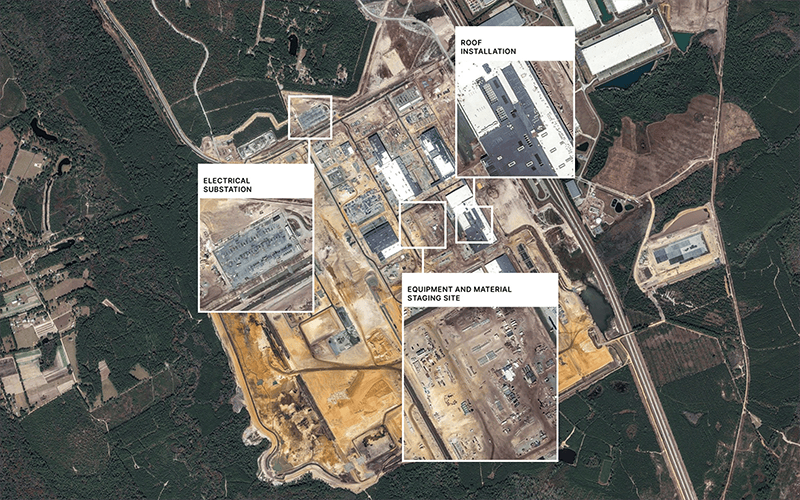
Construction activity is one of the clearest examples. Equipment on-site, material staging, road development, roof installation, utility buildout, and changes in activity can all reveal progress, readiness, or risk. These construction signals can help leaders understand whether a project is advancing, whether supporting infrastructure is keeping pace, and whether assumptions about timing or demand still hold.
Construction signals are business intelligence
For finance portfolios, that visibility can help investors, lenders, and asset managers monitor progress across regions and asset classes. Instead of relying on periodic updates or public reporting, they can evaluate physical change across the projects and markets that shape portfolio performance.
For data center and commercial real estate development, construction signals can reveal whether a site is moving toward operational readiness or whether gaps are forming around access, utilities, or adjacent infrastructure. The ability to see physical progress early can shape better decisions about capital, customers, and risk.
For insurers, the same principle applies to physical asset exposure. New construction, roof condition, surrounding development, post-event damage, and changes to nearby infrastructure can affect underwriting, claims, and portfolio risk. The physical world is not static. Risk models should not treat it as if it is.
The ground truth is becoming a leading indicator because companies can now read it earlier to make better decisions sooner.
Ground truth turns signals into confidence
Construction signals only create value when leaders can trust them. More data or dashboards is not enough. More artificial intelligence is not enough. The real advantage comes from grounding data, observations, and AI in an accurate, current, and scalable view of the world.
That starts with the quality of the source. Vantor collects the highest-fidelity commercial satellite imagery at global scale, giving organizations a foundation they can trust to understand what is happening on the ground. When the imagery is highly detailed, accurate, and current, the insights built from it become more reliable.
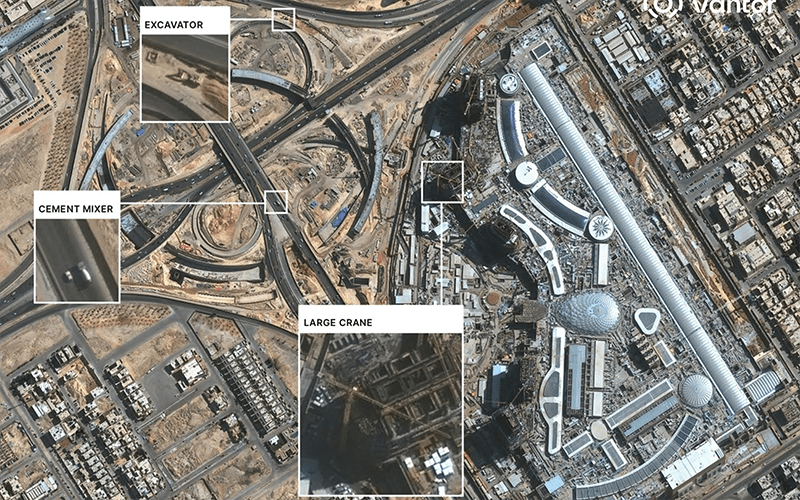
That ground truth matters because infrastructure decisions are rarely made by one team using one dataset. Strategy leaders, operators, risk teams, investors, analysts, and machines all need to work from a shared understanding of what is happening now. When that foundation is missing, organizations can make decisions from fragmented signals, stale assumptions, or incomplete context.
Ground truth changes the equation. It turns physical change into decision-grade intelligence because it gives every observation, model, and workflow a trusted reference point.
Visible change at scale leads to better decision-making
Vantor’s leaders believe the ground truth is the foundation for a more connected way to understand the world. Vantor uses its spatial intelligence capabilities to create a continuously updated digital twin of the physical world that organizations can use as a basis for decision-making.
The ground truth gives leaders a repeatable way to monitor physical change across one site, many sites, or entire markets. It establishes a trusted baseline, detects change over time, supports 2D and 3D understanding, and connects insights into the workflows teams already use.
For infrastructure leaders, that means a more scalable way to monitor construction progress, assess market movement, evaluate project risk, and understand physical asset exposure before those signals appear elsewhere. Instead of relying on disconnected updates or stale assumptions, leaders can make decisions from a shared view of physical reality.
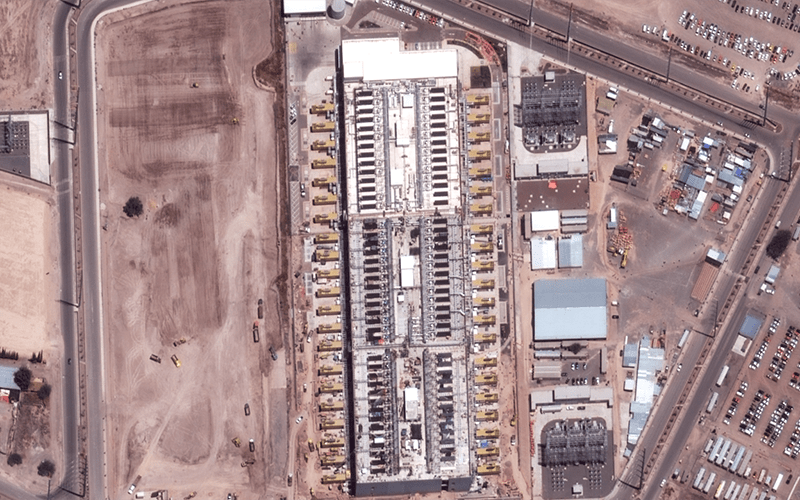
The goal is not to replace financial models, project management systems, or market analysis. It is to strengthen them with trusted physical-world intelligence. When those systems are anchored to Vantor’s spatial intelligence, they become more useful because they are connected to what is actually changing on the ground.
Infrastructure decisions carry real consequences. Capital can be misallocated. Projects can miss critical windows. Risk can accumulate unnoticed. Market opportunities can become obvious only after others have already acted.
The blind spot is not that the signal does not exist. It is that too many organizations are not yet equipped to see it, trust it, and act on it. Vantor closes that gap by turning the physical world into a living source of intelligence for the decisions that matter most.
Note: This content was created by Vantor.