
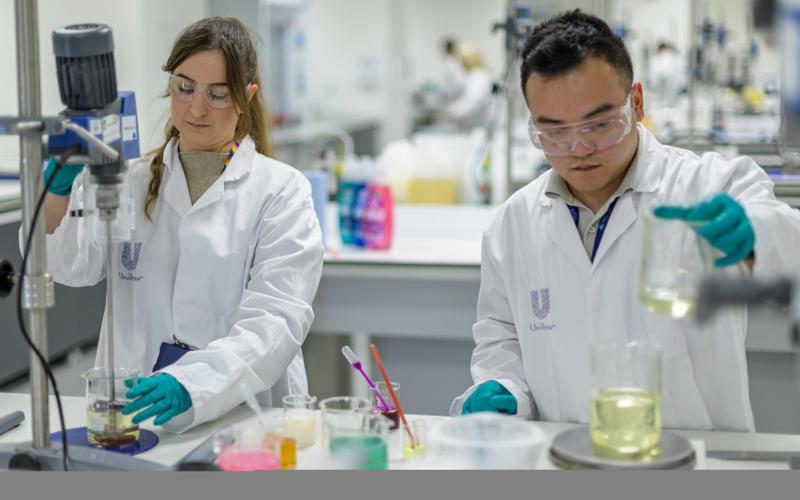
As consumer expectations evolve, the bar for everyday products is rising fast. Unilever is rethinking how science, technology, and human insight come together to turn everyday products into experiences people actively choose, time and time again.
Unilever products are used by billions of people every day, embedded in routines from washing clothes and cleaning homes to caring for hair and skin. Behind these familiar brands and products, research and development (R&D) is changing faster than at any point in modern history. Advances in AI, automation, biological sciences, and data connectivity are compressing discovery and delivery from years to months or even weeks.
For Unilever, innovation is no longer just about making products better. It is what determines which brands stay ahead, grow faster, and win. In this environment, innovation is a machine designed to turn insight and science into products people actively choose because they perform better, feel better, and stand out.
That means bringing together formulation science, robotics, data, and digital modeling to accelerate how products are developed and how they perform. The goal is simple: to consistently translate complex science into desirable products people can see, feel, and value in everyday use, at speed and at scale. This system extends beyond Unilever’s own labs, combining internal expertise with external partners across academia, technology, and specialist fields to accelerate how ideas move from discovery to real-world products.
Designing desire
In the world of consumer products, performance alone is no longer enough. How a product looks, feels, and smells increasingly determines whether it is chosen again. Consumers are engaging more deeply and expecting more from the products they use every day, trading up where they see clear value.
At Unilever, a leading global consumer goods company, shifting consumer preferences have pushed R&D beyond technical improvement alone. Scientific discovery creates value only when it translates into impact. That means treating sensory experience with the same rigor as chemistry or biology. Unilever’s R&D teams study products in real-world use, looking closely at how packaging, texture, and fragrance influence emotion, confidence, and well-being. From how a cream spreads on skin to how clothes smell days and weeks after washing, these details shape preference, confidence, and habit. Achieving that consistently, and at a global scale, requires a broader approach to research. This consumer insight shapes what people choose and use again, enabling Unilever to turn everyday products into experiences people actively seek out.
Driving innovation with scientific insight and human judgment
Take Cif Infinite Clean. Built on advances in microbiome science, it uses probiotic technology (beneficial bacteria) that activates on contact with dirt and continues breaking it down long after application.
Unilever’s solution combines extensive microbiome data with formulation expertise. Designing a superior, holistic cleaning experience that consumers crave demanded a rethink. This meant fragrance designed to signal freshness and performance, a continuous mist delivery system that ensures even coverage, and reusable packaging with refill formats that reduce plastic use by up to 50%. Once applied, the probiotic formula continues working for up to 72 hours, helping to break down dirt and keep surfaces cleaner for longer. The result is a cleaner that not only works instantly but keeps working—creating a clear advantage consumers can see, smell, and experience.
Rethinking the laboratory
Shifting consumer expectations are a key factor shaping Unilever’s research push. Independent polling shows that more than one-half of today’s shoppers now see continuous innovation as important, while four in five are prepared to pay a higher price for more sustainable goods.
For Unilever, meeting those demands has meant completely rethinking what a research laboratory looks like. At the company’s Materials Innovation Factory (MIF) in Liverpool—a $95 million joint venture with the University of Liverpool and Research England—robotics, automation, and AI operate continuously. Thousands of ingredient, formulation, and performance experiments now run in parallel, guided by AI models that narrow viable options early. Work that once took months can be completed in a fraction of the time.
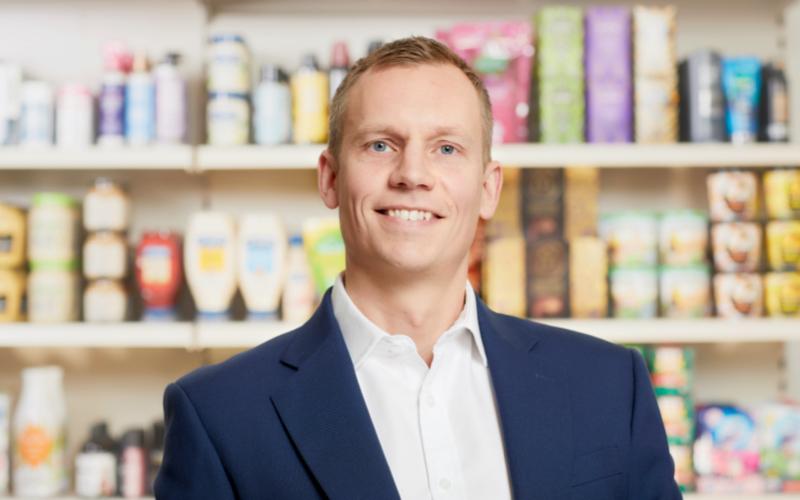
“We’re testing everything from next-generation, plant-based ingredients to microbiome-boosting components for skincare,” says Richard Slater, the company’s chief R&D officer. “The platforms let us examine combinations and conditions that would be difficult to explore using conventional approaches.”
“We’re testing everything from next-generation, plant-based ingredients to microbiome-boosting components for skincare,” says Richard Slater, the company’s chief R&D officer.
Wonder Wash shows how this approach scales. Built in response to a clear shift in how people do their laundry, Unilever’s scientists rebuilt the formulation from the ground up, combining advanced patented enzyme technology, AI-driven modeling, and robotics to deliver deep cleaning in short, cold wash cycles: delivering outstanding results in as little as 15 minutes, with less energy and less effort from the machine.
Sensorial experience was designed in from the earliest stages: from fine fragrance to distinctive colors and premium pack design, every element was considered to ensure the product didn’t just work but also felt desirable in everyday use.
The result is a detergent that works with modern routines rather than against them, delivering high performance with less energy, less time, and less effort while creating a product people actively choose.
With fast-moving consumer goods, speed has traditionally competed with depth. Increasingly, Unilever is designing a system where it can deliver both.
Where science meets the senses
At Unilever’s Product Innovation Lab in Port Sunlight, opened in 2023, the focus shifts from discovery to experience. Here, complex technologies are translated into tangible benefits through prototyping, user testing, and claims validation. Deodorants, for example, undergo one of the most intensive testing regimes in consumer goods. Around 4,000 underarms are tested each year under conditions of extreme heat and humidity, generating tens of thousands of applications. The resulting data underpins 72- and 96-hour protection claims across brands including Rexona, Dove, and Axe. But performance alone is not enough. Texture, fragrance, and aesthetics all play a role in how that protection is perceived and trusted in everyday use.
That balance between science and sensorial experience is becoming a defining feature of innovation. Unilever is investing more than $118 million to build one of the industry’s most advanced in-house fragrance capabilities, treating scent not as a finishing touch but as a core driver of product performance.
Expert perfumers work alongside neuroscientists and digital specialists to understand how scent influences emotion, memory, and preference, allowing products to connect personally as well as function correctly. Fragrance is now engineered as part of the formulation itself. In categories such as laundry, where visible dirt is no longer the primary signal of cleanliness, scent plays a critical role in shaping perception. It signals freshness, reinforces performance, and creates a lasting impression long after use.
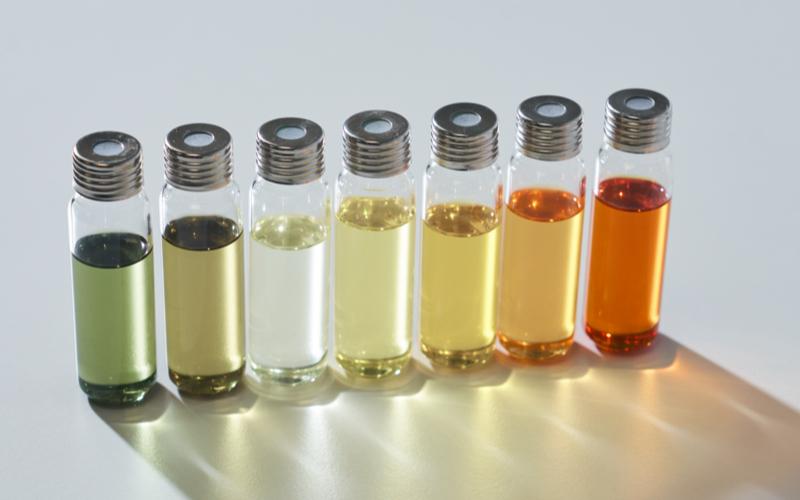
All of this must work beyond the lab. To ensure consistency at scale, Unilever has digitally connected its R&D and manufacturing network so it operates as a single system. At the Advanced Manufacturing Centre in Port Sunlight, digital twins are used to replicate formulations at pilot scale before production begins. Engineers can identify issues early, refine processes, and ensure that products deliver the same performance and experience whether they are made in the U.K., China, or Brazil.
Using this process, Wonder Wash moved from insight to global rollout at unprecedented speed. Developed in 15 months, less than half the time it would have taken just a few years ago, it became one of Unilever’s fastest-scaling innovations. It launched in more than 30 markets in under two years, establishing a new short-cycle category globally in record time, a clear example of how designing for desire from day one can unlock growth at scale.
Why human ingenuity matters even more in an age of AI
Advances in data connectivity, AI, automation, and biological sciences have accelerated R&D work at Unilever, shortening development cycles that once stretched over years. Yet, for Slater, the challenge is not simply adopting new tools but ensuring that chemistry, digital capability, and human expertise evolve together.
“The future of R&D is not about replacing human ingenuity with technology—it is about amplifying it,” says Slater. “We are integrating science, digital technology, and human creativity to operate as one so we can better anticipate consumer needs and turn scientific breakthroughs into much-loved new products at scale.”
For all the technology involved, its people remain the backbone of Unilever’s R&D operation. The company employs upwards of 4,500 scientists globally (more than 500 of whom hold Ph.D.s), including chemists, microbiologists, materials scientists, data modelers, and sensory researchers. As machines take on routine testing, these specialists are increasingly focused on designing experiments, interpreting complex datasets, and turning scientific insight into products people actively choose.
At the MIF, the change is most visible in the work of haircare scientists. Not long ago, they could spend up to eight hours painstakingly laying out individual hair fibers by hand, aligning each strand to ensure accurate measurement of how a shampoo or conditioner performed. Preparing full hair samples for testing—washing, rinsing, detangling, and drying them consistently—could take days of repetitive, manual work before any analysis even began.
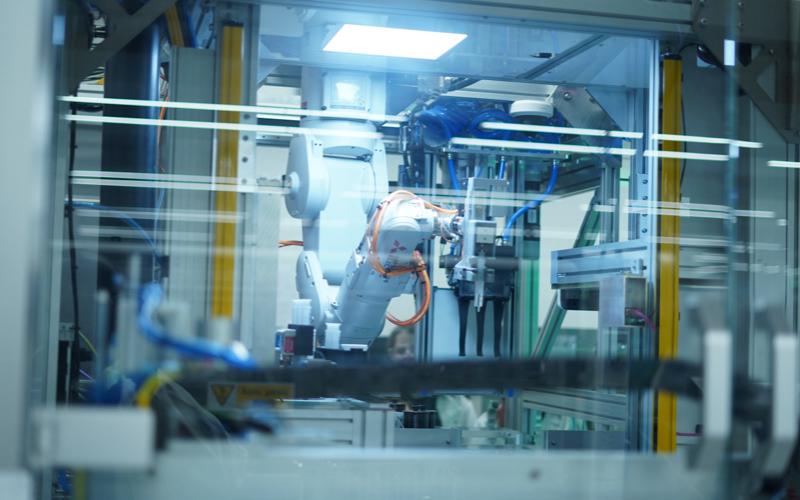
Today, those tasks are automated and scaled. One robot precisely aligns and prepares hair fibers in seconds, replacing hours of manual placement. Another runs washes and dries more than 400 larger hair samples at once, completing up to 120 washes in 24 hours. By removing human variability and tightly controlling every step, teams generate more robust, reproducible data for deposition, fiber-strength, and sensory analysis.
“Our scientists who used to spend hours on repetitive tasks are now designing experiments, probing new ideas, and turning rich data into real insights that translate into new products,” says Slater. “That includes Dove’s revolutionary Bond Strength repair shampoos, conditioners, and treatments. Using proprietary robotics and nano-measurement tools that didn’t exist a decade ago, our teams were able to prove for the first time that our product penetrates deep inside the hair fiber, repairing and strengthening bonds from the inside out. That depth of repair is what allows consumers to see and feel real recovery, even after years of damage.”
Alongside chemists, biologists, and data scientists, the R&D ecosystem includes sensory scientists, designers, perfumers, and consumer-insight specialists. Working together, they translate preferences around texture, regional fragrance, and feel into testable hypotheses, ensuring innovation is shaped as much by human perception as by laboratory data. This rebalancing effort is reinforced by Unilever’s DataLab, a company-wide data and modeling platform that helps teams analyze the vast volumes of information generated by automated testing. Models narrow options before physical experiments begin, reducing trial and error and shortening development cycles.
Applying data-rich science to real-world needs
This data-driven approach is central to Unilever’s work in areas such as skin microbiome science, which is backed by more than 100 patents and what the company describes as the world’s largest skin microbiome database built over more than twenty years. The data is from multiple countries, underpinned by dozens of peer-reviewed scientific journal publications. Using machine-learning models trained on this dataset, scientists mapped how odor develops across different parts of the body rather than treating it solely as an underarm issue. Those findings have fed into multiple product launches, including whole-body deodorants designed to extend protection to areas such as the chest, feet, and intimate zones.
But translating science into products people choose requires more than data alone. It requires understanding how products are experienced. Using EEG, a method that tracks brain activity in real time, Unilever’s R&D teams study how different fragrances influence emotional states such as relaxation and energy. These insights are translated into defined sensorial profiles, allowing products to be designed not just for function but for how they make people feel.
One example is the Olly Mood + Skin Body Wash range. R&D teams assessed how different scent blends influenced brain-wave patterns linked to relaxation and alertness. These findings were translated into four defined mood profiles, including Calm/Renew, associated with increased alpha activity linked to relaxation, and Bright/Revive, linked to higher beta activity associated with energy and focus. Combined with clinically proven skin-benefit actives, the result was body washes designed not only to cleanse and support the skin barrier but also to deliver a distinct, measurable sensorial experience aligned to how consumers want to feel.
Turning complex science into everyday desire
Unilever’s integrated approach allows the company to respond more quickly to emerging trends. By combining social and cultural insight with advanced modeling and sensory science, teams can identify shifts in preference earlier and translate them into products that feel timely and relevant.
One example comes from haircare. When researchers asked consumers what damages their hair most, heat styling topped the list. Few mentioned sun exposure. Yet, research showed that UV exposure can cause up to four times more protein loss in hair than heat styling. That insight revealed a hidden gap. While skincare has long been built around protection factors, haircare had no equivalent. The result: the first-ever Hair Protection Factor (HPF) in Dove’s UV Repair & Glow range. Built on antioxidant technology and advanced formulation science, the products work by helping protect hair’s keratin structure from UV stress while repairing accumulated internal damage. In practice, that translates into protection for up to 70 hours, alongside visible improvements in shine, strength, and feel. It is breakthrough science translated into a format that feels effortless, desirable, and easy to use every day.
For Slater, that is the point. In a new age of expectation and accelerated discovery, innovation must move faster, go deeper, and resonate more strongly. Products must not only perform brilliantly—they must earn a place in people’s lives. “Our job is simple,” he says. “Turn breakthrough science into products and innovation people love: faster, better, and at global scale.”