
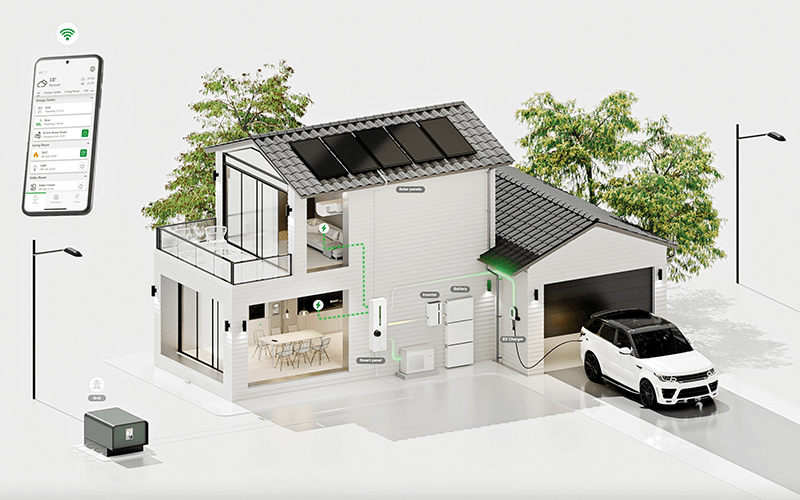
AI-powered energy management is helping households handle rising demand, cost, and complexity.
Most people can easily recall how many steps they took yesterday or how far they can drive on a full tank of gas. But ask them how much electricity their homes used—or which appliance consumed the most—and the answer is often unclear.
As energy costs rise and home energy systems become more complicated due to advancements in tech and increasing electrification, homeowners are feeling the strain of this knowledge gap. Higher and less predictable utility bills make it harder to manage monthly expenses while growing pressure to be more sustainable adds new choices around solar, electric appliances, and energy efficiency. At the same time, concerns about power outages and grid reliability are increasing. Without clear and easy-to-understand information, many homeowners are left trying to balance cost, energy efficiency, and reliability with limited guidance.
“Energy has long been invisible to most homeowners, but it’s no longer something people can afford to overlook,” says Preeti Bajaj, executive vice president of home solutions at Schneider Electric, a global specialist in energy management, automation, and digitalization in more than 100 countries. “Our innovations harness the power of electrification, digitization, and decentralization to empower homeowners to manage their home energy usage intelligently.”
The brain of the home
Home energy management systems (HEMS) are reshaping how people understand and use energy in their homes by turning a once-invisible system into something measurable, coordinated, and easy to manage. HEMS act as the brain of the home, connecting key energy assets such as smart electrical panels, solar panels, home batteries, electric vehicle (EV) chargers, and major appliances into a single intelligent network. Instead of operating independently, these systems work together, helping homeowners use less energy overall and use it at the right times.
By monitoring real-time usage and electricity prices, HEMS can reduce reliance on expensive peak power, identify the biggest energy-consuming devices, and automatically shift energy use to lower cost periods. For homeowners, this can mean smaller utility fees without changing daily routines.
“Most smart homes focus on convenience, such as turning lights on with voice commands or adjusting thermostats remotely,” says Bajaj. “HEMS go much deeper. We integrate energy intelligence into the fabric of homes to make the most optimal use of the energy they consume. It’s not just smart—it’s strategic.”
AI makes this automation possible at scale. Rather than relying on static settings or manual scheduling, AI-powered HEMS continuously learn how a household lives and adapts. For example, an EV may only be charged to the level typically needed for daily commuting, avoiding excess energy use. A home with solar panels might store surplus energy in a battery during the day, then draw on that stored power in the evening when electricity rates are higher, reducing grid dependence and steep energy tariffs.
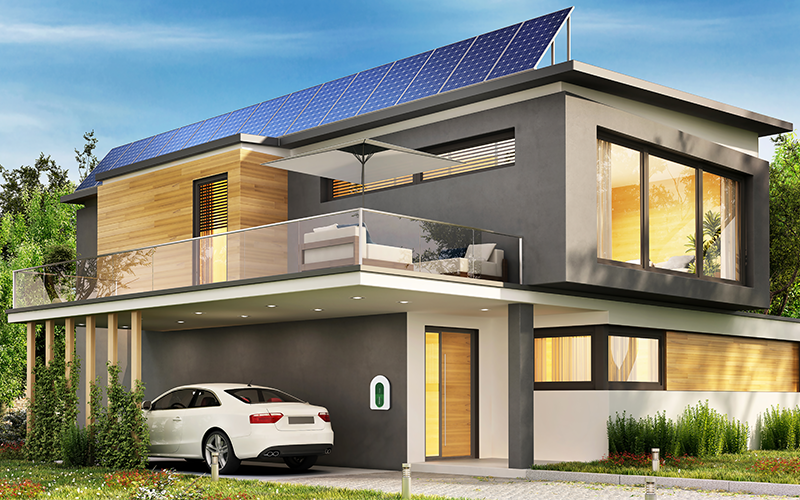
These systems also help homes become more sustainable by cutting waste and maximizing the use of clean energy. AI can identify inefficiencies early, fine-tune heating and cooling, and ensure renewable energy is used where it has the greatest impact. Over time, this leads to lower emissions without sacrificing comfort or convenience.
Just as important, HEMS strengthen energy resilience. During grid disruptions or extreme weather, connected batteries and smart controls can prioritize critical loads, keeping lights on, refrigerators running, or medical devices powered. By intelligently managing available energy, homes are better prepared for uncertainty, whether it’s a blackout or a heat wave.
Home energy management made easy
The role homes play in the greater energy system continues to evolve. In the past, homes mostly relied on electricity from the grid. Today, with solar panels, home batteries, and connected devices, homes can now produce electricity, store it, and choose when to use it or send it back to the grid. By having more control over household energy, homeowners can lower bills, avoid peak prices, and reduce waste.
Because this modern home automation involves the use of advanced technologies, Bajaj notes that there is a persistent misconception that home energy management is only for the technically minded. But the opposite is increasingly true. Platforms, such as Schneider Electric’s Wiser, aggregate energy information into a single app rather than scattering it across interfaces. This design allows consumers to easily take an active role in home energy management.
“It’s a user-friendly interface where homeowners can see clear insights—such as energy savings, carbon footprint, and battery status—without needing to understand grid dynamics,” says Bajaj. “This technology empowers people without overwhelming them.”
As more homes work to optimize their energy management, the benefits will extend beyond individual households. The grid can become more balanced and flexible, better able to handle peaks in demand, and make use of extra renewable power.
“The future of energy isn’t about complexity—it’s about clarity. And it starts at home,” says Bajaj. “Households are becoming part of a wider energy community that is actively contributing to a cleaner, more reliable energy future for everyone. Users can make choices based on what they want to do for their homes, for their lives, and for their families by simply opening our app. We’re giving them power to take control.”