
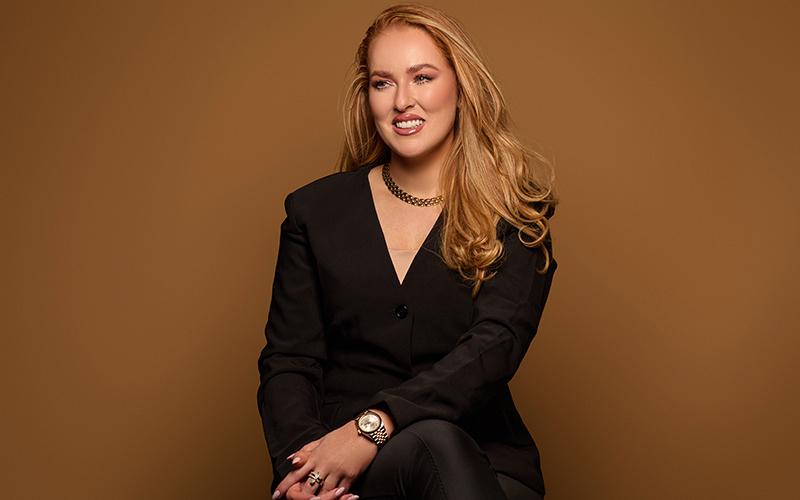
AI is absorbing how-to knowledge. Marieke Pijler, owner of Premium Business, explores how small expertise businesses can demonstrate their continued value in an AI era.
AI is stripping the commercial value out of how-to knowledge, shrinking the number of places where expertise alone can command a premium. When instructions are available in seconds, clients are no longer buying information—they are buying better judgment, faster implementation, and results they can count on.
Working with owners of small expertise firms, I see the same three challenges on repeat. Each points to a different kind of edge: owning a category, proving measurable outcomes, or building proprietary assets.
1. Become a category of one: Why being better is no longer enough
Every expertise business owner should be able to answer one strategic question: In which market will our expertise be worth millions over the next five to 10 years? Very few can point to a real moat: where their capability is incomparable, creates the highest value, and will stay defensible for years.
The answer starts with choosing a growing market with strong tailwinds, a high-value problem, and a specific buyer. But it also requires something most businesses lack: a contrarian point of view.
Peter Thiel famously challenges entrepreneurs to identify an important truth that very few people agree with. For expertise businesses, that means asking: What do we believe about our clients’ problems that competitors fundamentally misunderstand?
That conviction should shape the category you create, the problem you claim, and the unique value you deliver: value that clients seek but can’t get anywhere else.
For firms generating less than $3 million annually, competing on brand awareness or claiming to be a better consultant is rarely a winning strategy. In an AI-saturated market, good is camouflage. When buyers cannot distinguish your expertise from alternatives, comparison becomes inevitable, and pricing power erodes.
The opportunity is to build a category of one: Become the only credible choice for a specific buyer with an expensive problem, offering something they want but cannot easily get elsewhere.
2. Start proving predictable outcomes
Who would have thought competence could make you invisible? Yet that is where many experts are today. You have happy clients, strong results, and glowing reviews. So does everyone else. In a market flooded with “great work” and “game-changing insights,” good results don’t stand out—they disappear.
In a market flooded with “great work” and “game-changing insights,” good results don’t stand out—they disappear.
Owners often tell me, “We can’t promise hard results. We just do our best for our clients.” That used to be acceptable, but it isn’t anymore. If how-to knowledge is free, the value is in your ability to get a specific kind of client to a specific result, on a specific timeline, with fewer headaches than the alternatives and a return they can calculate.
The problem is not a lack of results but a lack of proof. Generic stars and praise say you are safe, not singular, and because everyone has them, they don’t move the needle for anyone. What does? Measurable outcomes that predict the future. Statements such as “We added $2.4 million in nine months” or “Our clients cut ramp-up time from 12 weeks to three” tell a buyer what to expect. In a world where every website promises transformation, the only credible signal left is a track record of specific outcomes, on specific timelines, for people who look like your next buyer.
3. Stop selling what you know and build assets you own
Being known is no longer enough. The question now is: What are you known for owning? There are two layers.
First, the category you own. A real category-of-one business has its own point of view and its own language for the problem it solves. When people in your market use your words to describe their situation, you own the shelf in their mind.
Second, the assets you own. For owners at a crossroads, I start with one question: Which asset will your company own over the next three to five years? In other words, what will your company own that becomes more valuable over time? Most experts overlook that their method can become valuable intellectual property. The frameworks, processes, and insights that deliver results for clients are assets waiting to be turned into something scalable. A method can create far more value as a system than as hours with the founder. AI makes this practical: You can codify your method into tools, workflows, or software that deliver it the same way, every time, without you in the room.
The experts who thrive in the AI era will not just be known for what they know but for the distinct method and tools they own that get clients to the finish line faster than anyone else.
Trading time for money has always been the weakest part of an expertise business, and AI is making it harder to defend. Owners who turn their method into an asset and use AI to scale it can sell outcomes instead of hours. And in a market where knowledge is free, outcomes are the only thing clients still pay for.
Note: This content was created by Premium Business B.V.