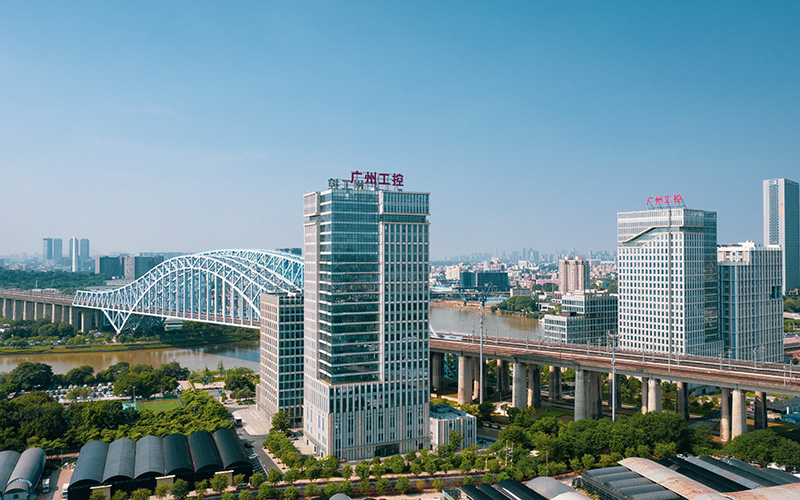
Guangzhou Industrial Investment Holdings Group’s spirit of innovation and reform guides it into the next generation of global industrial manufacturing.
As global supply chains pivot towards resilience and sustainability, legacy manufacturers are defined not by their output, but by their ability to adapt and plan for the future. For Guangzhou Industrial Investment Holdings Group (GIIHG), a respected enterprise with roots dating to 1911, the future lies in transcending the factory floor. “Our goal is to become a world-class multinational operator of an advanced manufacturing industrial ecosystem,” says chairman Jing Guangjun.
This shift is already in motion. GIIHG is realizing its vision by strengthening technological innovation, expanding into global markets, and optimizing and internationalizing its industrial ecosystem through robust environmental, social, and governance (ESG) practices.
During the past five years, the group has invested more than $1.8 billion in R&D and now holds a portfolio of more than 7,000 patents, including 40 research breakthroughs with global impact. At the same time, it is upgrading its manufacturing capabilities through highly automated, digitalized plants and by leveraging platforms such as the Greater Bay Area’s advanced equipment R&D and manufacturing base, which provides specialized and high-tech enterprises with essential infrastructure, financing, and support services. Concurrently, GIIHG’s advanced equipment and technologies have supported multiple landmark international projects—including the China-Laos Railway, China-Thailand Railway, and Mae Nam River Water Conservancy Project—showcasing the group’s expanding global expertise and technical strength.
Today, GIIHG has established more than 20 overseas R&D institutions and manufacturing bases, more than 36 sales and trading centers, and it exports upward of 230 product categories to 160 countries and regions. Its international business is built around four core pillars: automotive components, high-end equipment, advanced materials, and industrial services. Representative initiatives include the establishment of an International Industrial Innovation Center and European Office in Germany, the construction of the group’s first overseas tire manufacturing base in Cambodia, and a 20-year helium procurement agreement with QatarEnergy.
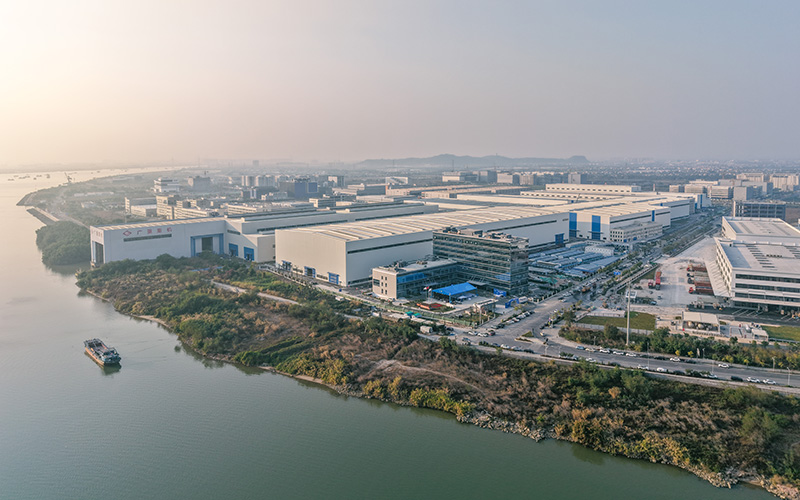
The group plans to establish a core subsidiary in the Middle East in early 2026, further expanding the global reach of its operations and strategic footprint. To GIIHG, these initiatives are not merely about extending its global presence, but about building a more synergistic and innovative global network for advanced manufacturing.
“We are creating complementary value with our global partners to achieve mutual success by combining ‘manufacturing + services.’ This moves us beyond simply exporting products and technologies,” explains Wang Fuzhu, general manager of the group.
Crucial to this transformation is a reimagining of ESG principles. The group sees ESG not as a compliance cost but as the “trust capital” that binds a global ecosystem together. It is the cornerstone for attracting partners, ensuring sustainable operations, and building long-term resilience.
Looking ahead, GIIHG has set its course toward global integration and sustainable growth, forging an international brand identity defined by responsibility. In the coming years, the group will continue advancing its blueprint to become a world-class industrial ecosystem operator, driving the deep integration of industrial growth and responsible governance.
“We are building more than a company; we are building bridges between industries, economies, and a sustainable future,” says Guangjun. In an era of fragmentation, GIIHG is betting on the power of connection, proving that the most advanced industrial ecosystem is also the most trusted one.