At its London alumni gathering, Esade explored how AI, geoeconomics, and workforce change are reshaping the capabilities executives need to lead responsibly through uncertainty today
Every major business decision now carries layers of complexity that barely existed a decade ago. AI investments can reshape workforce needs, alter how decisions are made, and introduce new governance challenges. Meanwhile, political shifts can disrupt supply chains and alter access to key markets. Executives increasingly need to manage these pressures simultaneously, often with incomplete information and little time to respond. The consequences increasingly extend beyond short-term performance, affecting resilience, trust, and long-term value creation. Only 30% of CEOs say they are very or extremely confident about revenue growth over the next 12 months, down from 38% in 2025 and a recent peak of 56% in 2022, according to PwC’s 2026 Global CEO Survey. The message is clear: companies are investing in transformation, but many have yet to turn it into growth.
As business challenges become more cross-functional, executives need capabilities that extend beyond technical expertise, including AI fluency, geopolitical awareness, ethical reasoning, and systems thinking. These skills are also reshaping how business schools support leaders at every stage of their careers. Esade, a Barcelona and Madrid-based global business and law school, is helping leaders navigate a world where technology, geopolitics, and workforce dynamics increasingly overlap through its focus on leadership, innovation, and cross-disciplinary learning.
These questions were at the center of Esade’s International Alumni Gathering in London, held at the St. Pancras London hotel. The event brought together nearly 150 alumni, faculty, and business leaders from different backgrounds, sectors, and geographies to reconnect, exchange perspectives, and discuss the forces reshaping leadership.
“It’s impossible for business leaders to deal with unpredictability without creative thinking, without critical thinking, and without challenging their own assumptions,” says Jorge Galindo, director of EsadeEcPol, a public policy think tank. “They need that if they want to deal with unknowns and knowns, which is what the near future presents us.”
AI becomes a leadership challenge
The AI question has shifted from whether to adopt it to how to scale it responsibly. For management teams, AI is no longer a standalone technology decision. Deploying AI can affect everything from workforce planning and cybersecurity to legal compliance and corporate governance, requiring teams to sharpen their AI literacy.
Esade’s MBA students explore topics including generative AI, automation, and algorithmic ethics through case studies and simulations. Executive education programs examine AI through a management lens focused on strategy, governance, and decision-making rather than technical implementation alone. The school’s law programs have also partnered with Harvey, a generative AI platform for legal professionals, to give students hands-on experience with technologies already reshaping legal practice. For Esade, AI is not a replacement for human judgement, but a tool leaders must understand, govern, and use responsibly.
“We work with a lot of big corporations, big law firms, big companies, and we see 2026 as a year of acceleration: We need to have AI everywhere,” says Omar Puertas, Esade professor and legal innovation partner at Harvey.
Deploying AI effectively starts with understanding the technology’s limitations, risks, and potential impact across the organization.
“Those who actually put in the time to understand how the technology will have an impact in the whole organization will succeed,” says Puertas. For him, this does not mean every executive must become a technologist, but leaders need enough literacy to understand AI’s risks, limitations, and governance implications.
For many companies, that means moving beyond experimentation and developing a clear strategy for how AI supports broader business priorities. “You need an AI strategy to succeed,” he says.
“You need an AI strategy to succeed,” he says.
Geopolitics as a business capability
As AI becomes embedded throughout the enterprise, decisions about automation, data governance, and compliance increasingly intersect with questions about regulation, supply chains, and access to global markets. That shift is forcing companies to think more broadly about geopolitical risk.
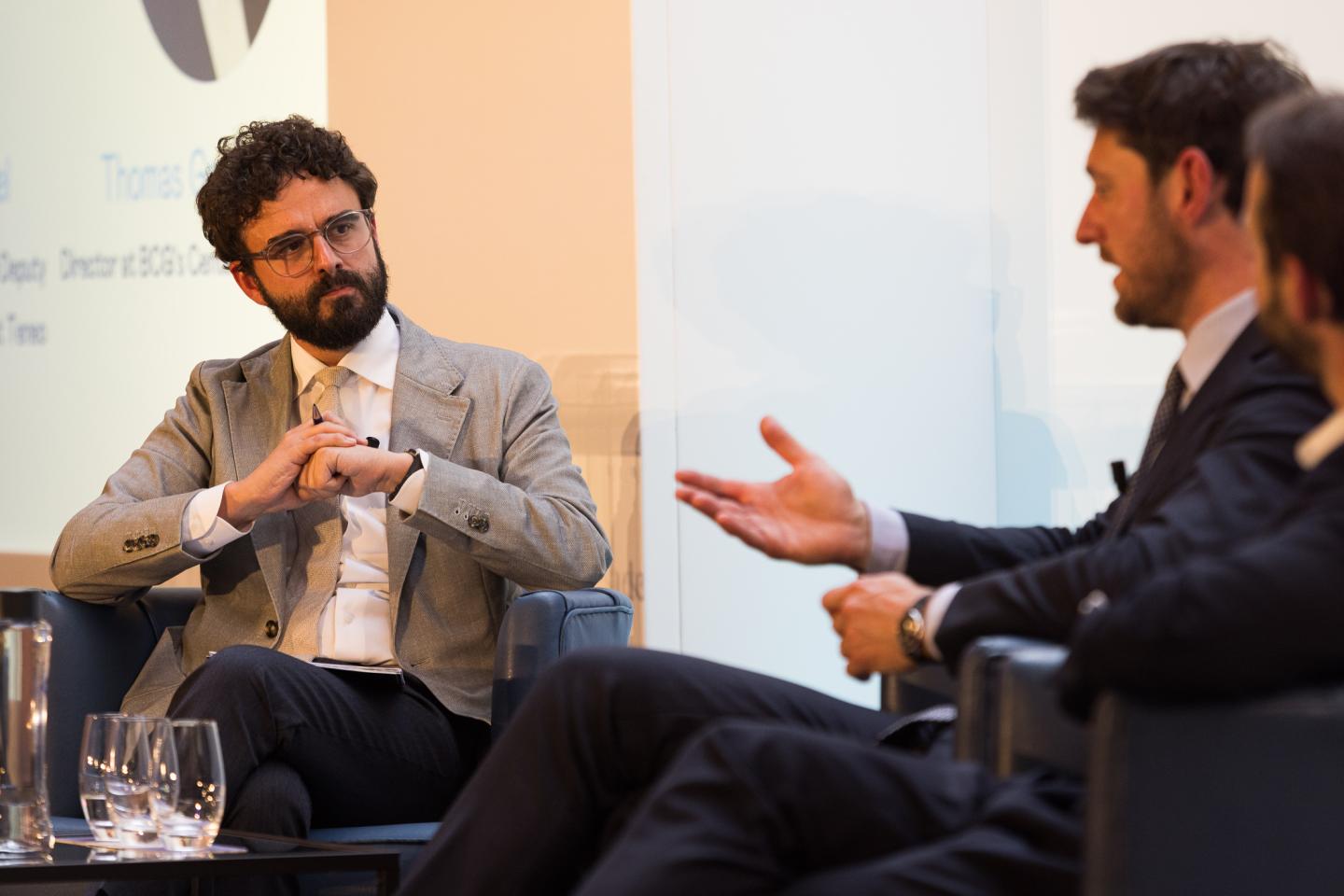
“If I had to pick one single thing that many business leaders are underestimating right now, it would be internal political dynamics in countries that are not core to the public discourse,” says Galindo.
Political uncertainty was once the domain of government affairs teams and multinational corporations. Today, it influences decisions across business. Geopolitical risk is increasingly geoeconomic, influencing where companies operate, how they invest, and how they access markets, talent, capital, and critical technologies.
While management teams closely monitor developments in major economies, unexpected changes in regional politics can create ripple effects across global operations.
“These nonlinear effects that come from domestic politics and affect business across the world may happen and are actually happening in many other countries,” says Galindo.
For companies expanding internationally, investing in AI infrastructure, or redesigning supply chains, geopolitical awareness has become essential to long-term planning. Instead of treating geopolitical risk as a standalone issue, companies must incorporate it into everyday decision-making.
“Business leaders should think strategically: ‘Among the many scenarios that the political dynamic may present me with, which ones are critical for my own strategy in the long term and how should I protect against them or thrive in them if there’s an opportunity?’” says Galindo.
The future of work
The convergence of AI and geopolitical uncertainty is also reshaping how companies think about talent, operating models, and organizational resilience. Talent strategy now extends beyond the scope of HR. Decisions about automation, geographic expansion, and supply chain resilience increasingly shape how companies recruit, develop, and retain employees.
The companies best positioned to respond to disruption are often those that build adaptability into their cultures, operating models, and talent strategies, especially as AI accelerates the pace of doing business.
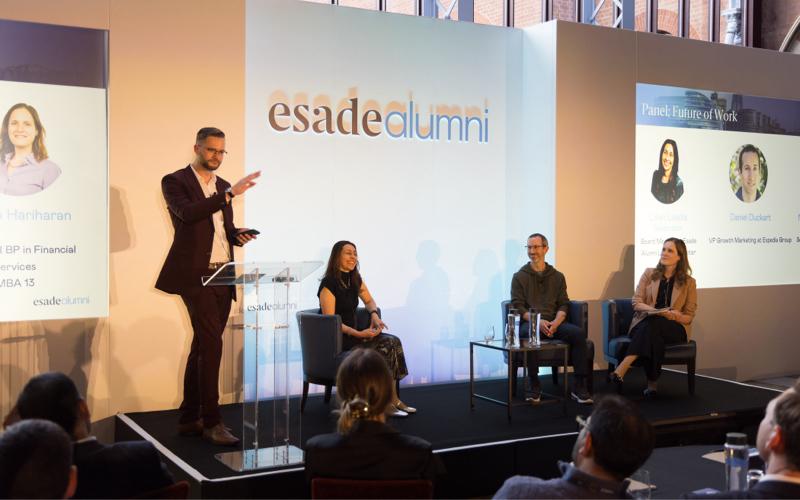
“Ironically, sometimes the answer is not to rush but to slow down and assess where AI can add value,” says Lilian Duckart, board member of Esade Alumni London Chapter and founder of From → To, a business transformation consultancy that helps leaders build organizations where people and AI thrive together.
Instead of focusing solely on efficiency, companies have an opportunity to leverage AI to redesign work, fostering adaptability and resilience. Doing so requires workplace cultures that encourage experimentation and continuous learning.
“The ability to experiment, to pivot, pilot, test, and iterate is what builds the muscle of organizational adaptability,” says Duckart.
Learning across disciplines
Continuous learning has become a competitive advantage.
“As executives, we need to embrace change, and as a result, act on it,” says Jorge Alcover, president of Esade Alumni. Executives increasingly need perspectives that extend beyond their own industries, functions, and geographies. “Whoever adapts to that situation quicker will be the winner.”
For Alcover, that process begins with maintaining a human-centered perspective.
“That mission of being socially conscious—the mission to serve, the mission to change for good—has always been at the forefront of every decision,” he says.
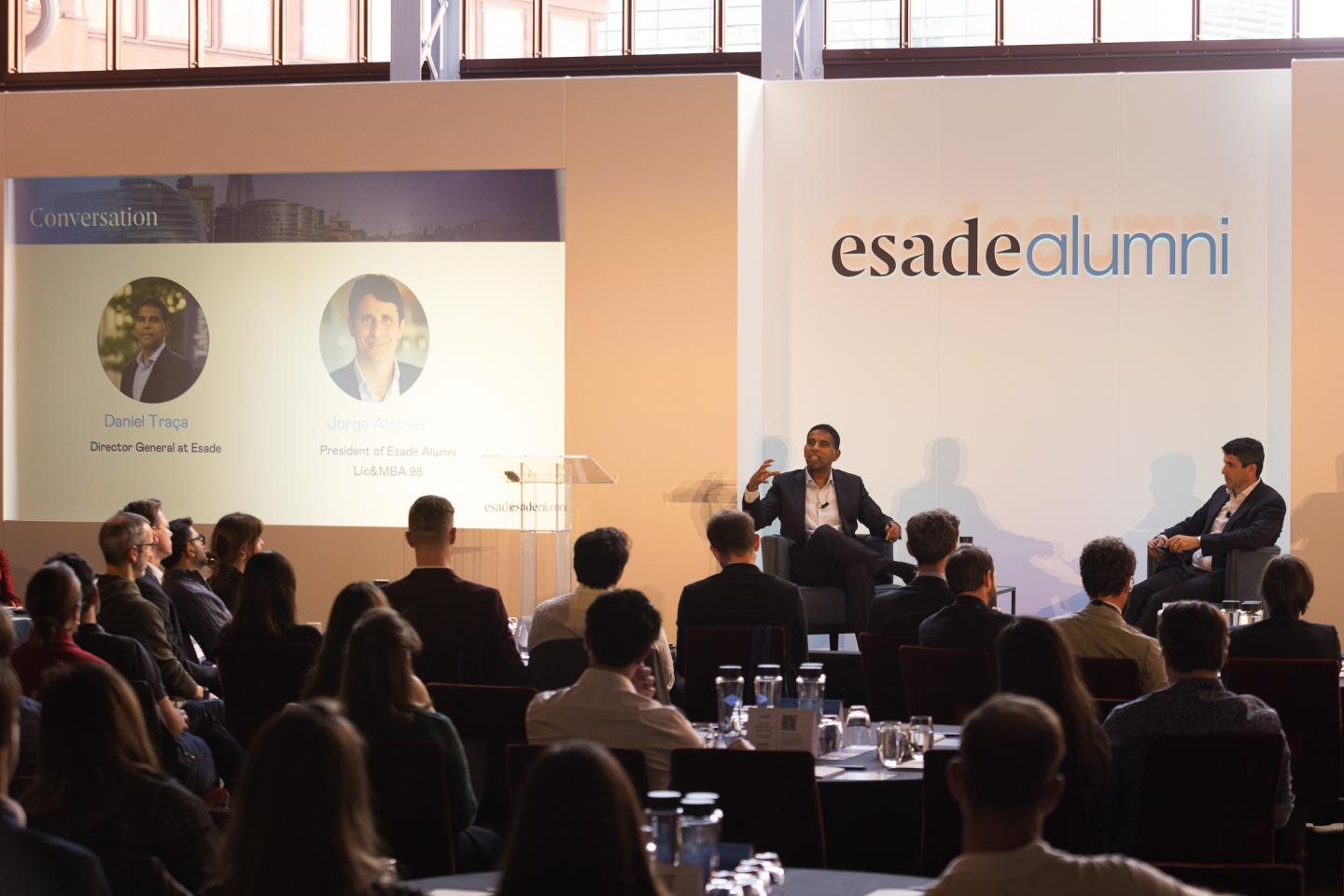
But adapting to uncertainty also requires something more personal. For Daniel Traça, director general of Esade, leaders need a clear sense of who they are and what guides their decisions. “The only way to deal with uncertainty is to know yourself, know who you are, and know what you are looking for,” he says. “Whatever comes, you need to have that North Star with you.”
Traça also frames that responsibility as a collective one. He urges alumni to feel empowered to create, challenge, and support one another in doing more—for themselves, society, students, and for the world. “It is no longer just about being good,” he says. “It is about doing good and doing better.”
Strong professional networks also play an increasingly important role in helping executives respond to rapid change. “Networks are very important, and the fact that you belong to the Esade network is an asset that you need to cultivate,” says Alcover.
Puertas sees those connections as especially valuable at a moment when organizations are still figuring out how to integrate AI effectively. “We are all figuring this out as we speak,” he says. “The more we come together in places where we have trust and can share ideas and experiences, the more value we create.” That, ultimately, is the value of a global learning community.