
Inside Dreame Technology’s rise—and the platform redefining how the world moves, lives, and connects.
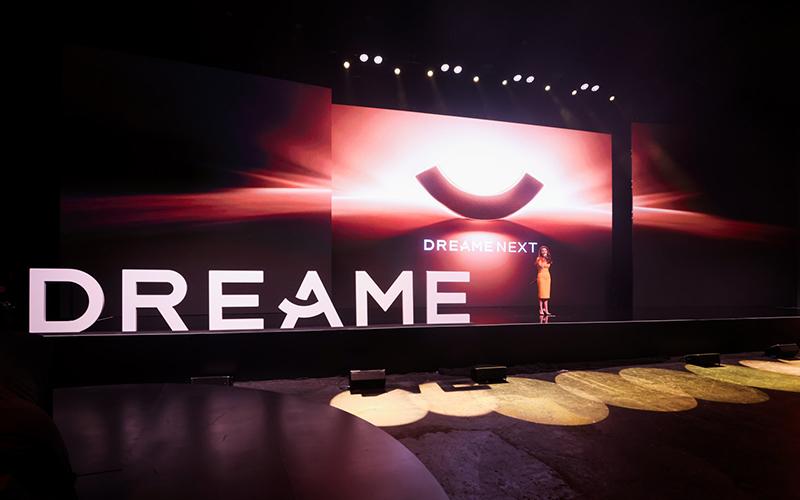
In April 2026, Dreame Technology took the stage in San Francisco and made a bold declaration: to bring about the next generation of innovation. The ambition was striking. The company behind it was even more so.
Dreame Technology may not be a familiar name to most Western consumers. Founded in 2017 by a group of Tsinghua University students who built the world’s first quadcopter while in school . Today it operates across 120 countries and has compounded revenue at 100% annually for eight consecutive years.
Consumer electronics is one of the most competitive markets on earth. Most companies fight on price. The winners are the ones that find a way to charge more—and justify it. In less than a decade, Dreame has built a case for why it belongs in that conversation.
For a generation of builders who grew up reading about Silicon Valley’s garage founders, this was not just a venue. It was a statement. Over four days, DREAME NEXT brought together some of the most influential voices in the world. But what drew them there was not a product launch—it was a thesis.
Drive NEXT: The threshold nobody else has crossed
Humanity is 300,000 years old, yet almost everything we rely on today is less than 150 years old. Only 1% of things have been invented. Physical AI is accelerating that curve. Sebastian Thrun, founder of Google X, who spent 20 years building the autonomous vehicle era, revised the number: “Maybe today I’m going to change it to 2%.”
The Nebula NEXT 01 JET Edition reaches 100 km/h in 0.9 seconds, every parameter pushed to the absolute limit. But speed is not the argument.
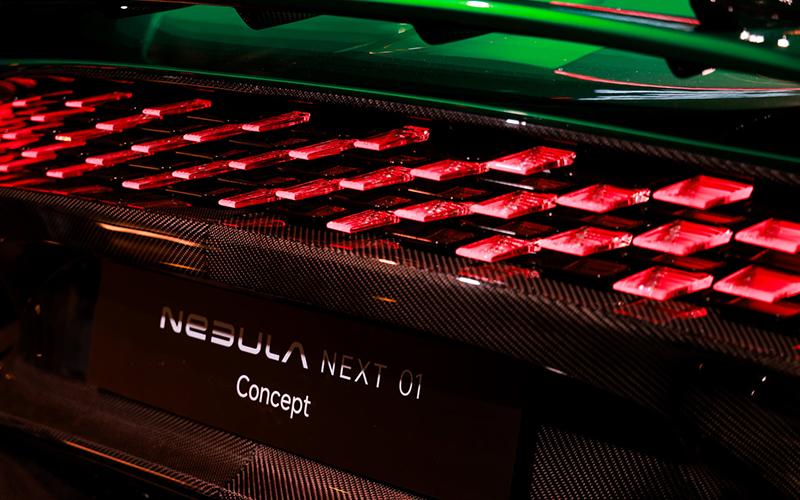
Most of the industry is still solving one problem: how to drive. Dreame is solving a different one: how to move. The Nebula NEXT is not a faster car. It is a mobility robot—two systems working as one. The muscle drives: aerodynamics and chassis, engineered for ultimate performance and safety. The brain decides: an intelligent cockpit, autonomous driving, and perception systems operating in real time.
The foundation of both: a solid-state battery achieving over 450 Wh/kg of energy density, more than double conventional lithium-ion cells. That battery is now being opened to automakers, eVTOL manufacturers, and energy storage providers. This is not a car company. It is an infrastructure play.
Living NEXT: The home, understood
Intelligence is no longer inside a single device. It is becoming part of the space itself. The opportunity is real, and so is the bar.
Perry James, NIQ’s global head of tech and durables, said: “The consumer is firmly in control—more informed, more intentional, and empowered by technology and AI. Their expectations are shaped by one clear priority: devices that deliver tangible leaps in AI-driven performance, translating into faster, smarter, and more intuitive user experiences.”
Perry James, NIQ’s global head of tech and durables, said: “The consumer is firmly in control—more informed, more intentional, and empowered by technology and AI.
The global market for consumer technology and appliances grew 5% in value in 2025, but unit volumes rose just 2%. Consumers are buying less and trading up. Small appliances posted 6% value growth, the strongest-growing segment in NielsenIQ’s data. And brands will be remembered for one thing: Did they make someone’s life simpler?
Dreame’s robot vacuums already rank first in market share across 30 countries. The answer, it turns out, was architectural. Most consumer electronics companies are built around categories, but Dreame is built around a core technology: The same motor powering a 250,000 RPM vacuum also drives the AirStyle Pro HI hair dryer. The robotic arm that cleans floors reappears in the X60 air conditioner, enabling left-right–zoned airflow delivery for more personalized comfort across the home.
A partnership with Google Cloud brings Google Gemini into its refrigerator line, expanding AI ingredient recognition from 1,800 to more than 10,000 varieties and connecting with wearables to deliver personalized health recommendations. The fridge doesn’t just store food. It acts on what it knows.
Connect NEXT: When the torch passes
Day 3 produced the event’s defining moment. Steve Wozniak helped start the personal computing era in a garage. Fifty years later, he sat across from Chang Xinwei, a man who grew up reading about that garage, and who insists on being called not by his title of global president, but chief engineer: “Engineer Chang.”
The parallel was not lost on either of them.
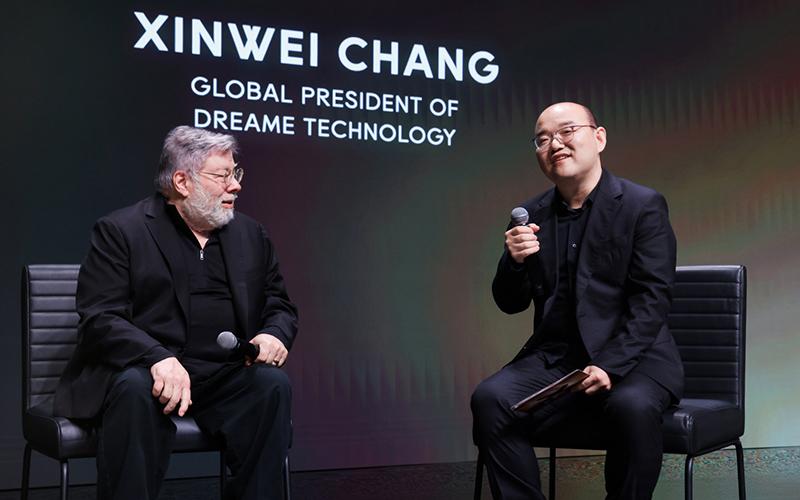
Wozniak has spent fifty years asking one question: What separates the companies that define an era from those that merely participate? His answer has always been the engineer who puts the user above the technology.
To Xinwei, that spirit has a name: N+1. N is the best product on the market. N+1 is one deliberate step beyond it. For every category Dreame enters, the company asks the same question: Where is the one breakthrough that changes the experience entirely? That is the benchmark. Then, the team moves quickly to make it real. It is a bold claim, backed by Dreame’s direction of 70% of its nearly 20,000 employees toward R&D, focused on exactly that kind of breakthrough.
Humanity NEXT: Investing in the builders of tomorrow
By the end, the question had shifted: not whether Dreame could build it, but what comes next. Three scientists closed the forum with three words: “Bold. Systems. Elevate.” David Patterson, Turing Award laureate, put it simply: “We all want to use bold ideas to elevate the system that drives society forward.”
Bold bets require bold people. Where do they come from?
The Yu Hao Foundation, initiated by Yu Hao, founder and CEO of Dreame, will continue to commit substantial resources to advancing scientific frontiers, cultivating next-generation human capabilities, and addressing global challenges for a sustainable future—fully empowering the growth and development of future talent. Over four days, DREAME NEXT introduced products. It also put forward a point of view: that technology is not a collection of isolated innovations, but an integrated force shaping how we move, how we live, and how we connect. The next decade will not be defined by technology alone. It will be defined by the boldness to build it, and the wisdom to know why. “DREAME NEXT is not a conclusion,” says Xinwei. “It is a first chapter.”