Four major Asia-Pacific countries—Australia, Singapore, the Philippines and South Korea—will hold elections in the next month, with two happening this Saturday, May 3.
U.S. President Donald Trump’s tariff threats are a constant hanging over all four contests. Since Trump paused the implementation of his so-called reciprocal tariffs until early July, all four countries have been negotiating with Washington to avoid getting slapped with new tariffs on their U.S.-bound exports.
Here’s who is voting over the next several weeks, what issues are driving voters on the ground—and how each country is grappling with a more protectionist, more volatile U.S.
Australia, May 3
Australians will vote in parliamentary elections on May 3, choosing between current prime minister Anthony Albanese and his opponent, the more conservative Peter Dutton. Current polling suggests that the left-wing Labor Party, led by Albanese, is leading.
Foreign policy usually isn’t a “big factor” in Australian elections, says Ryan Neelam, director of public opinion and foreign policy at the Lowy Institute, an Australia-based think tank. But he adds “this year is different,” thanks to Trump’s tearing up of the global trading system.
Australia was only hit with a baseline 10% tariff rate, the lowest possible in Trump’s “reciprocal tariff” policy, on “Liberation Day.” Still, Trump’s tariffs threaten Australia indirectly: Neelam points out that China is a major export market for Australia, putting it at risk from any slowdown in the world’s second-largest economy.
That could be an additional drag on Australia’s economy, which is already bearing the brunt of increasing living costs.
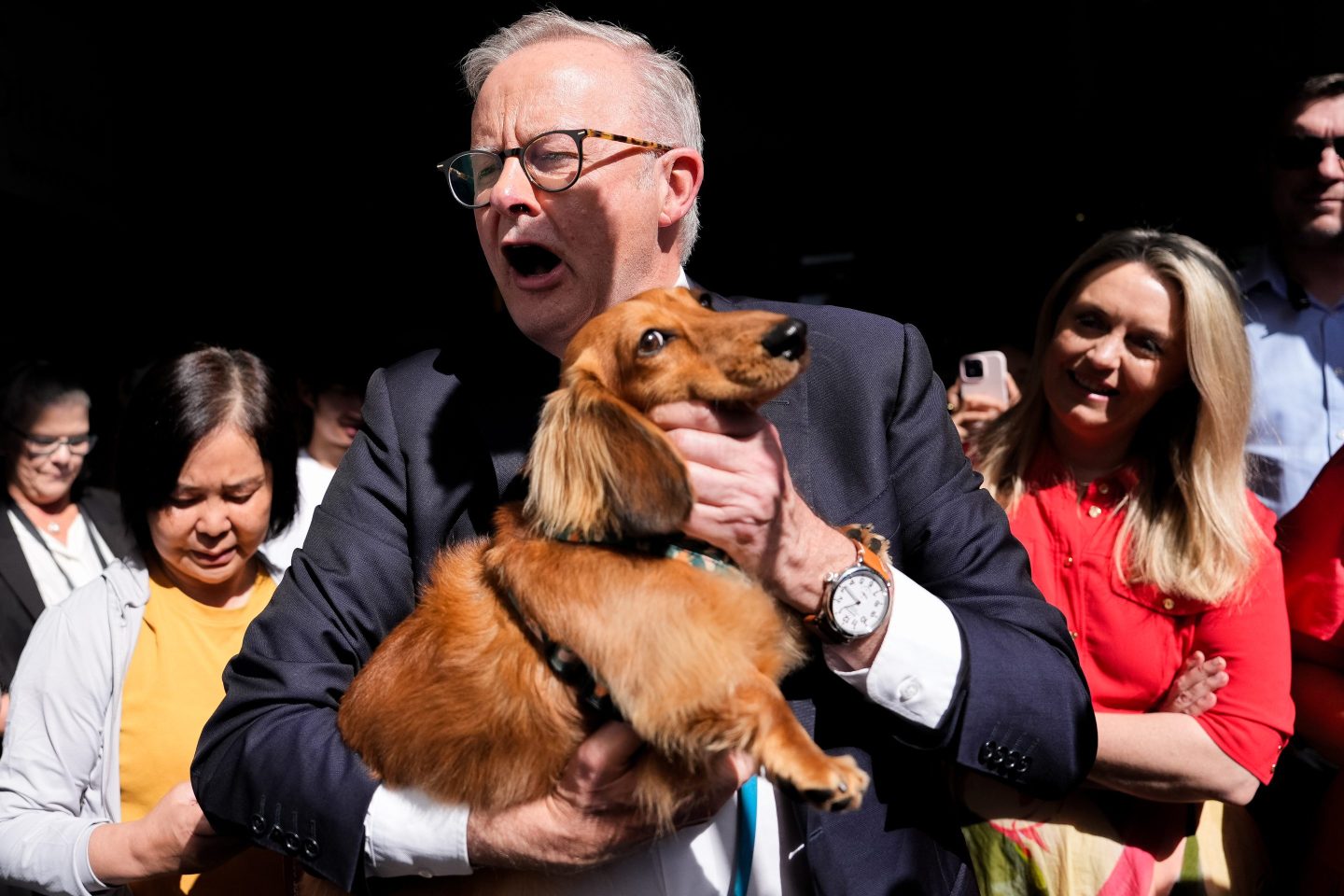
Albanese has also criticized U.S. tariffs on steel and aluminum. While Australian exporters got exemptions under the first Trump administration, they failed to escape tariffs this time around.
But even if tariffs aren’t directly on the minds of Australian voters, the man behind them—Donald Trump—is. Polling by the Lowy Institute reports a significant drop in trust in the U.S., with a majority of Australian voters disapproving of most of the U.S. president’s policies.
Dutton and the broader Australian conservative movement tied themselves closely to Trump at first—for example, Dutton promised to make the U.S. his first international trip, as opposed to the traditional choice of Indonesia— but that now appears to be dragging down their popularity.
“The conservatives are seen as the party that can keep Australia safe,” says Darren Lim, a senior lecturer in international politics at Australian National University. “They’ve lost that [advantage] completely, because the major threat right now is coming from Trump himself.”
Trump’s unpopularity has already killed one of Dutton’s big policy proposals. The conservative candidate has walked back a pledge to end remote work and sack government employees, calling his proposed Trump-style crackdown a “mistake” earlier this year.
Still, Lim points out that trade and tariffs aren’t in the “top three” issues in Australia’s elections, with cost of living and housing dominating most discussions.
Huw McKay, a visiting fellow at the Australian National University and the former chief economist for BHP, suggests that Trump’s constant trade flip-flops may be helping tariffs recede as a political issue. A 10% tariff looks like a “get out of jail free card,” he says.
Yet in the long-term, Australia likely views Trump’s trade threat as harmful. “Australia is very clear that the multilateral trade agenda is in its national interest, so it’ll be doing a lot of work behind the scenes, speaking to other nations that also understand that the multilateral framework for international trade is also in their best interests,” McKay says.
Singapore, May 3
Singaporeans will also be voting on May 3. The frontrunner in Saturday’s general election is the ruling People’s Action Party, led by prime minister Lawrence Wong. The PAP has governed Singapore since the country’s independence in 1965.
The leading opposition party, the Workers’ Party, hopes to increase its representation in the next parliament, but is contesting fewer than a third of the available seats.
Still, Saturday’s election will be the first referendum of the PAP’s performance since Wong took over leadership of the party from Lee Hsien Loong last year. Lee, the son of Singapore’s first prime minister Lee Kuan Yew, led the country for two decades.
Wong “will be looking for a strong mandate to give him the political and moral authority to make sharp shifts to a more generous social welfare model,” says Devadas Krishnadas, founder of the Future-Moves Group, a public policy consultancy. He adds that Wong “wants to be perceived as a politically strong, anchored leader to strengthen his hand in negotiating future trade arrangements.”
Devadas suggests that a result below the PAP’s vote share of 61.24% in the previous 2020 elections could “weaken” Wong’s personal brand.
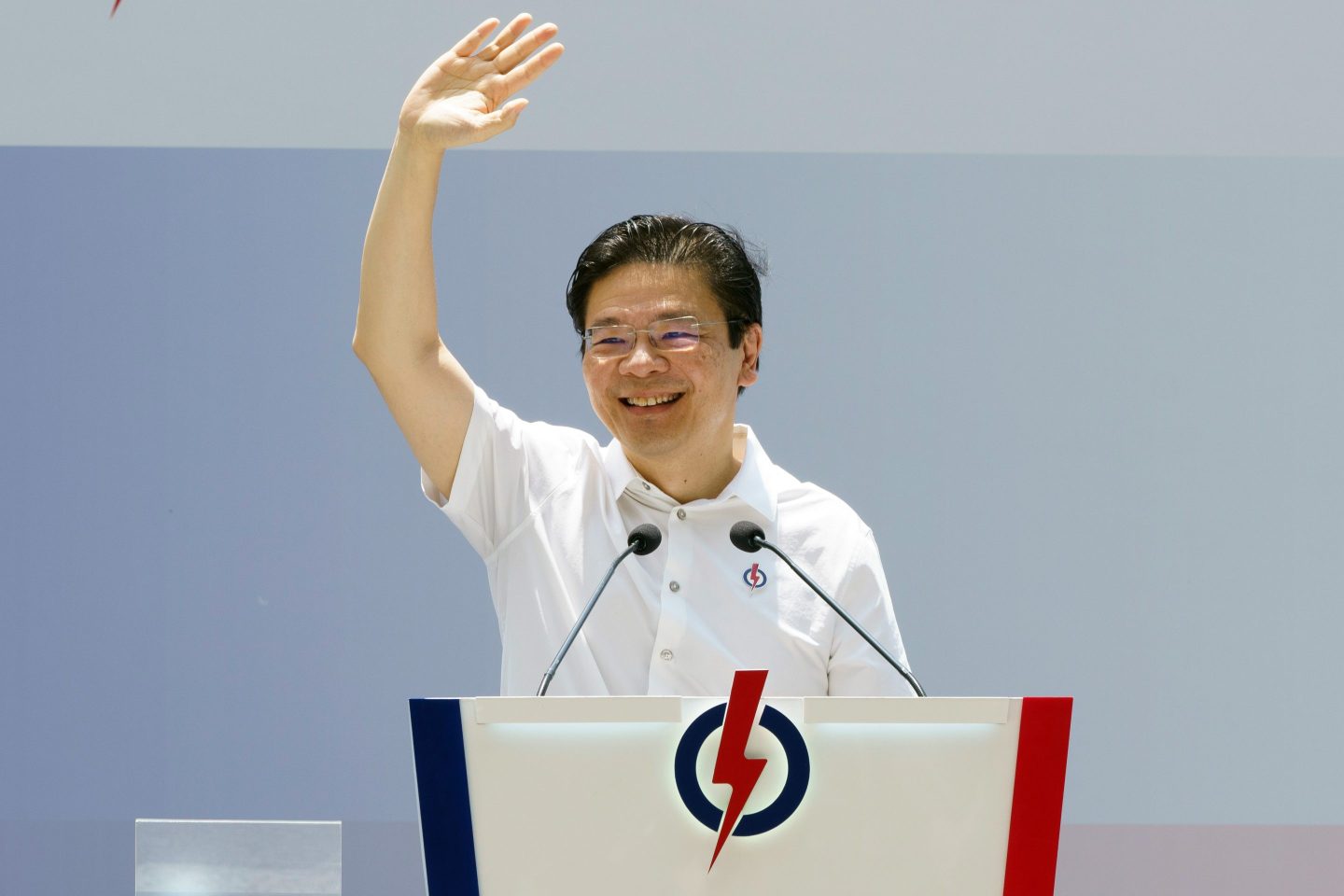
Singapore’s prime minister is a vocal critic of Trump’s tariffs policy, suggesting that it has made the world “more arbitrary, protectionist, and dangerous.” The leader of Singapore’s opposition, Workers’ Party head Pritam Singh, is also backing Wong’s calls for unity in the face of Trump’s threats.
Like Australia, Singapore runs a trade deficit with the U.S. The country also received the baseline 10% tariff on U.S.-bound exports on April 2.
Singaporean officials hope to negotiate possible concessions on pharmaceuticals, the Straits Times reported on Sunday. Trump has threatened to impose tariffs specifically on drug imports. Yet local officials do not believe that the baseline 10% tariff is negotiable.
The Philippines, May 12
Filipino voters will vote in midterm elections on May 12, in the first major political test of President Ferdinand “Bongbong” Marcos Jr.’s administration since he took office in 2022. The entire House of Representatives and half the Senate will be up for election.
Under Trump’s now-paused Liberation Day tariff regime, imports from the Philippines will get a 17% tax rate. That’s lower than other countries in Southeast Asia, and some Filipino officials see that as an opportunity to increase the country’s trade with the U.S., which is also a close security ally.
Officials hope to negotiate the U.S. tariff rate down to zero, or at least low enough so the country has a “trade edge” against its neighbors. The country is offering to buy more U.S. farm products to help rebalance trade.
Still, “Liberation Day” tariffs aren’t playing a large role in Filipino political discussions, says Julio Amador III, founder of Amador Research Services, a Manila-based geopolitical risk firm. Instead, “the midterm elections will focus on domestic concerns, primarily corruption, jobs, and food security.”
South Korea, June 3
South Koreans will vote in snap presidential elections on June 3, following the successful impeachment of former President Yoon Suk Yeol. South Korea’s legislature impeached Yoon in late December after he tried, and failed, to impose martial law, and upheld that decision in early April. The East Asian country has been governed by acting presidents since then.
This political instability comes as the country’s government is hurriedly trying to negotiate a trade deal with the U.S. Even before Trump threatened a 25% reciprocal tariff, South Korea was already grappling with 25% tariffs on cars, steel and aluminum.
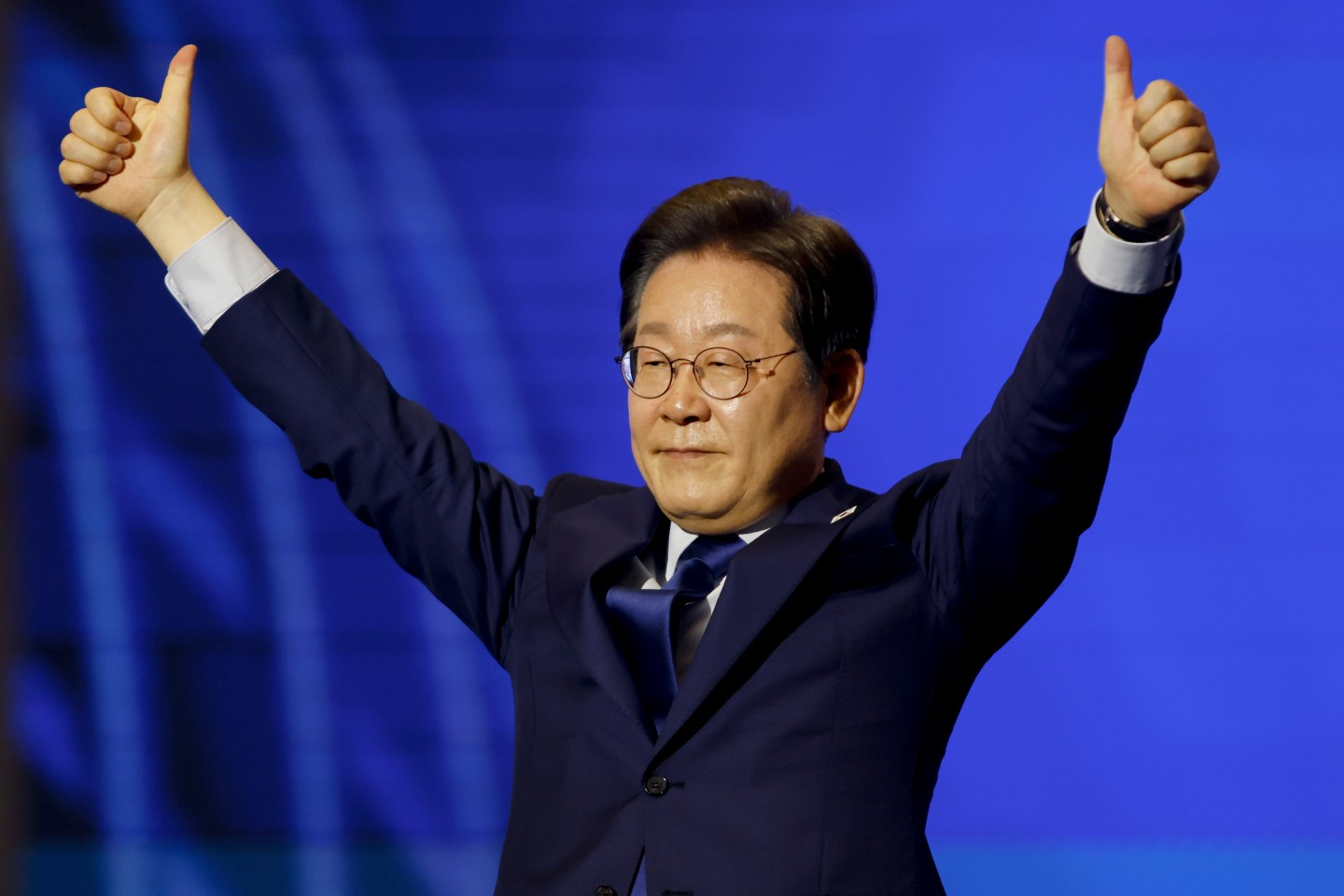
Opposition leader Lee Jae-myung will run against a still-to-be-confirmed conservative candidate (who will be named on May 3).
Any conservative candidate will have a steep hill to climb. “The conservative party, the People’s Power Party, really lost their legitimacy and their popularity” after Yoon’s attempted coup, notes Eunjung Lim, a professor in the international studies division at Kongju National University.
Yet tariffs, and South Korea’s broader relationship with the U.S., is an issue that generally favors the more business-friendly conservatives. “South Korea’s conservatives have more experience dealing with Washington,” Lim says.
Interestingly, the trade negotiations may be lifting the prospects of one dark horse conservative candidate: Han Duck-Soo, South Korea’s prime minister and current acting president, now leading Korea’s response to Trump’s tariffs. Local media reports suggest that Han may run as an independent candidate.
Still, the election victor might not have much room to manoeuvre.
“Word is that the 10% baseline tariff is not negotiable. The auto tariff is not negotiable. So what are you left with?” asks Victor Cha, Korea chair at the Center for Strategic and International Studies. Because of this, South Korea will try to “enlarge the deal,” he says.
Ramon Pacheco Pardo, an international relations professor at King’s College London and Korea expert, suggests that U.S.-Korea negotiations will focus on investment in the U.S., defense procurement, access to technology, and relations with China. “The U.S. is going to, in my opinion, make it very clear to South Korea that it has to be closer to the U.S. position on China issues,” he says.
That last item will be tough for Korea. “They don’t want to be put in a situation where they get an exemption in return for decoupling from China,” Cha says. “That’s a lose-lose situation for Korea.”