• Home
  • Latest
  • Fortune 500
  • Finance
  • Tech
  • Leadership
  • Lifestyle
  • Rankings
  • Multimedia
FinanceIndonesia
Asia

Sovereign wealth funds are back in vogue as ‘an extension of a country’s industrial policy’

By
Lionel Lim
Lionel Lim
and
Nicholas Gordon
Nicholas Gordon
Down Arrow Button Icon
By
Lionel Lim
Lionel Lim
and
Nicholas Gordon
Nicholas Gordon
Down Arrow Button Icon
March 1, 2025, 6:00 PM ET
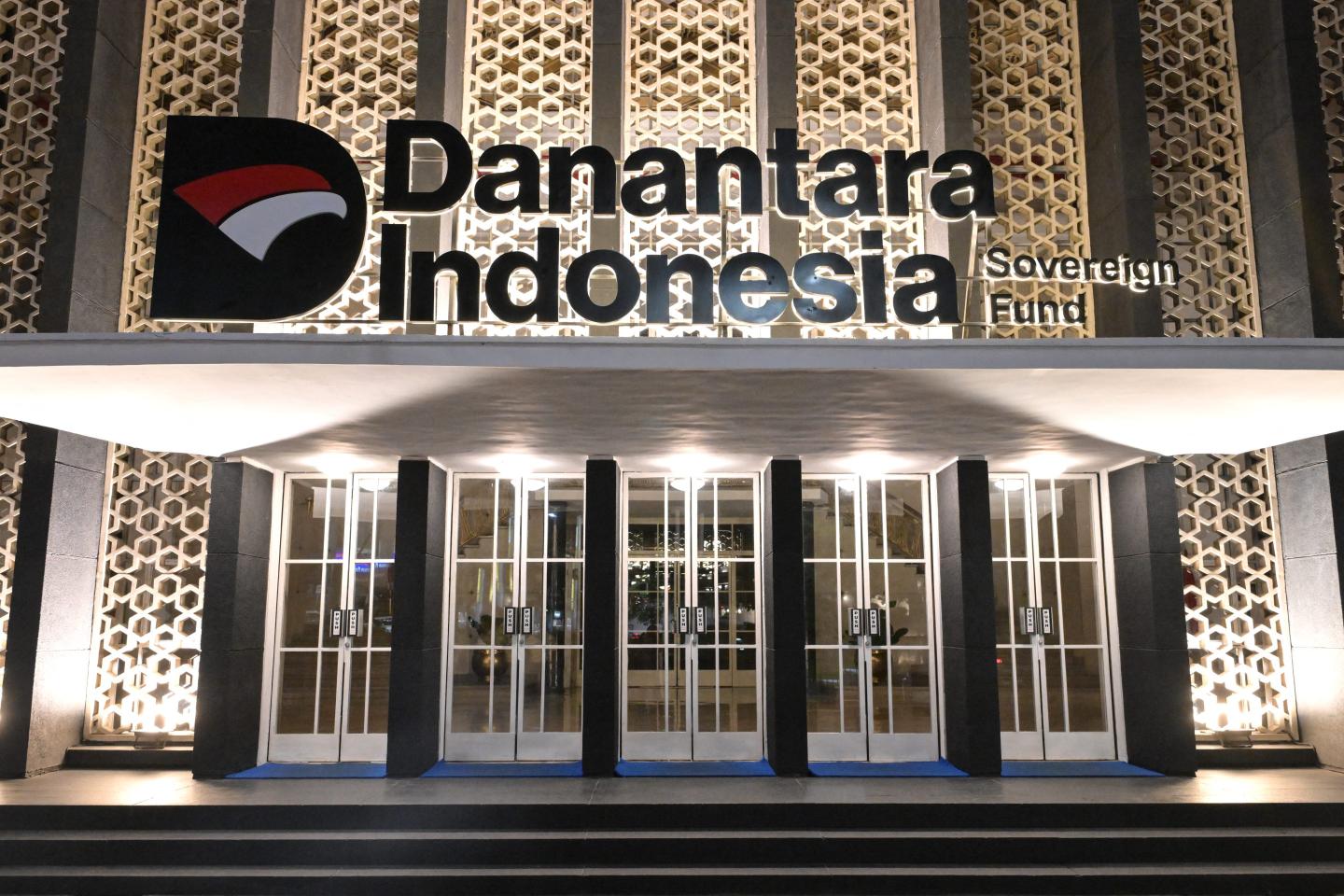
Exterior facade of the building housing Indonesia's sovereign wealth fund Daya Anagata Nusantara, or Danantara for short, in Jakarta on Feb. 24, 2025.
Exterior facade of the building housing Indonesia's sovereign wealth fund Daya Anagata Nusantara, or Danantara for short, in Jakarta on Feb. 24, 2025.Bay Ismoyo—AFP via Getty Images

Sovereign wealth funds are becoming the hottest thing in global finance. 

Recommended Video

Indonesia launched its second state investment fund, the Daya Anagata Nusantara Investment Management Agency, or Danantara for short, earlier this week. The fund exists alongside the Indonesia Investment Authority, itself a relative youngster, only being launched in late-2020.

Sovereign wealth funds aren’t a new idea. Norway, Saudi Arabia, Singapore and China, among others, have long invested surplus funds, whether earnings from natural resources, foreign exchange reserves or pensions, in the hopes of getting a return. 

Yet the concept is back in force. Both developed economies and emerging markets have recently established their own funds. Even the U.S. is exploring the idea: Earlier this year, President Donald Trump ordered the establishment of a sovereign wealth fund, with a plan due by early May.

Governments increasingly want to leverage public funds to capture—or recapture—strategic sectors. “It’s an extension of a country’s industrial policy,” says Priyanka Kishore, an independent economist and founder of consulting firm Asia Decoded.

Take Danantara, for exmaple: “Indonesian president Prabowo Subianto says it’s a ‘powerful development tool’, clearly emphasizing its focus on industralizing Indonesia,” she explains.

And as global economics and global politics combine, these funds could become a valuable tool of government policy.

Sovereign wealth funds vs. state investors?

Many of the most prominent sovereign wealth funds, like Norway’s Government Pension Fund, are akin to asset managers, taking stakes in public companies and acting as a relatively passive investor. The first modern-day funds were set up by oil-rich countries hoping to leverage their financial surplus, with Kuwait setting up the earliest such organization in 1953.

But today’s funds can also be different and take a more active role, investing in private markets, backing up-and-coming startups, and making a play for strategic sectors.

Take Singapore, which has two sovereign wealth funds. The first is GIC, which follows a more traditional long-term model by investing the country’s financial assets in public equities, bonds and real estate.

Temasek, on the other hand, is a much more active investor. Besides investing in listed entities, the fund sometimes owns companies outright. The fund invested in companies that played a role in Singapore’s growth, like PSA International, DBS, and Singapore Airlines.

Outside of Singapore, Temasek also backed leading startups like Ant Group, DoorDash, and Zomato in a bid to boost returns. But it’s also had some high-profile flops like the crypto exchange FTX and Indonesian fishing startup eFishery.

The state investor model is getting more global traction. 

Hong Kong established its own government investment company, the Hong Kong Investment Corporation, at the end of 2022. HKIC, like its much larger peer Temasek, is looking for opportunities in strategic technologies and the “Greater Bay Area,” a group of eleven cities in southern China including Guangzhou, Shenzhen and Hong Kong. It exists alongside the Exchange Fund, the city’s de facto sovereign wealth fund.

Even traditional sovereign wealth funds are hoping to become more active investors. In the Middle East, sovereign wealth funds like Saudi Arabia’s Public Investment Fund and the UAE’s Abu Dhabi Investment Authority are funnelling money into sectors like AI, video gaming, and even professional sports, while also bankrolling new endeavors in sectors like tourism to build a post-oil economy. 

Southeast Asian countries are also embracing the sovereign wealth fund to invest in infrastructure and green energy. Indonesia’s new president, Prabowo Subianto, has pitched the country’s newest sovereign wealth fund Danantara as a supercharged investment vehicle, backed natural resources and state-owned enterprises. 

Yet critics have pointed to governance concerns due to a revised law that gives the Indonesian president greater control of the entities and the billions of dollars in annual dividends.

Jakarta isn’t the only Southeast Asian country to recently set up a sovereign wealth fund. The Philippines also started one in 2023, when President Ferdinand Marcos Jr. established the country’s first sovereign wealth fund, the Maharlika Wealth Fund. 

Why do governments want SWFs?

Governments often set up state investment funds to reinvest surpluses–whether from natural resources, foreign exchange, or even bumper tax revenue. Traditionally, they’ve been established by countries with a rich commodity sector, like oil-rich Saudi Arabia or Norway. But other surpluses can fund an SWF. China, for example, draws on its massive foreign exchange reserves; Ireland, long a haven for Big Tech looking for low taxes, is funneling some of its government revenue into its Future Ireland Fund. 

“A SWF is a way for countries to take advantage of public revenues that have high variance,” says Srividya Jandhyala, an associate professor of management at ESSEC Business School, Asia-Pacific. 

For example, countries may want to ensure a sudden windfall from a temporary spike in high oil prices is put towards a project with a long-term return.

Sumit Agarwal, professor of economics at the National University of Singapore, points to Singapore as an example of having well-run SWFs, crediting professional management and low tolerance for corruption.

But sovereign wealth funds are still ultimately tied to governments, which can both affect how they make investment decisions, as well as how other governments perceive those investments. 

Jandhyala from ESSEC points out that investments from a sovereign wealth fund could be treated with more scrutiny by other governments, particularly when there’s geopolitical friction. For example, the U.S. under the Biden administration, increased its scrutiny of Middle East based wealth funds as part of a broader pushback on entities that are deemed to have close ties with Beijing.

Trump’s play for a sovereign wealth fund

The U.S. is the largest economy to think about a sovereign wealth fund. Earlier this year, Trump ordered officials to plan to launch such a fund within the next year, and in comments to reporters even suggested that it could buy the social media app TikTok. 

But it’s not only Trump. Top aides to former president Joe Biden also reportedly worked on a proposal to try to create a sovereign wealth fund that would allow the U.S. to invest in national security interests including technology, energy, and logistics. 

U.S. economic luminaries, however, have criticized the prospect of a U.S. sovereign wealth fund. Former Treasury Secretary Larry Summers blasted the suggestion last September and pointed to the United States’ “big budget deficit” in a Bloomberg interview. 

Some individual U.S. states like Texas and Alaska already have their own state-run investment funds, financed by their energy and mineral resources.

Others see public funding as a key part of the U.S.’s revived interest in industrial policy. Saule Omarova, professor of law at the University of Pennsylvania and a one-time Biden nominee for a Treasury position, has proposed the creation of a “National Investment Authority”, an “ecosystem of public investment funds” that would manage investments and offer both credit- and investment-based financing to worthy projects. 

Agarwal thinks Trump’s idea of having a sovereign wealth fund isn’t unworkable, but notes “you need to have a surplus.” The U.S. ran a budget deficit of $1.83 trillion for its 2024 financial year and a trade deficit of $918.4 billion in the 2024 calendar year, meaning that it doesn’t have a surplus that could be used to back a sovereign wealth fund. While the U.S. does have natural resources, that revenue will need to be used to pay the interest on U.S. debt. 

“It’s an idea that Trump came up with because he sees things that work elsewhere, and asks, ‘why aren’t we doing it?” he says. “There’s a reason.”

Join us at the Fortune Workplace Innovation Summit May 19–20, 2026, in Atlanta. The next era of workplace innovation is here—and the old playbook is being rewritten. At this exclusive, high-energy event, the world’s most innovative leaders will convene to explore how AI, humanity, and strategy converge to redefine, again, the future of work. Register now.
About the Authors
By Lionel LimAsia Reporter
LinkedIn icon

Lionel Lim is a Singapore-based reporter covering the Asia-Pacific region.

See full bioRight Arrow Button Icon
Nicholas Gordon
By Nicholas GordonAsia Editor
LinkedIn iconTwitter icon

Nicholas Gordon is an Asia editor based in Hong Kong, where he helps to drive Fortune’s coverage of Asian business and economics news.

See full bioRight Arrow Button Icon

Latest in Finance

Finance
Lorem ipsum dolor sit amet, consectetur adipiscing elit, sed do eiusmod tempor incididunt ut labore et dolore magna aliqua. Ut enim ad minim veniam
By Fortune Editors
October 20, 2025
Finance
Lorem ipsum dolor sit amet, consectetur adipiscing elit, sed do eiusmod tempor incididunt ut labore et dolore magna aliqua. Ut enim ad minim veniam
By Fortune Editors
October 20, 2025
Finance
Lorem ipsum dolor sit amet, consectetur adipiscing elit, sed do eiusmod tempor incididunt ut labore et dolore magna aliqua. Ut enim ad minim veniam
By Fortune Editors
October 20, 2025
Finance
Lorem ipsum dolor sit amet, consectetur adipiscing elit, sed do eiusmod tempor incididunt ut labore et dolore magna aliqua. Ut enim ad minim veniam
By Fortune Editors
October 20, 2025
Finance
Lorem ipsum dolor sit amet, consectetur adipiscing elit, sed do eiusmod tempor incididunt ut labore et dolore magna aliqua. Ut enim ad minim veniam
By Fortune Editors
October 20, 2025
Finance
Lorem ipsum dolor sit amet, consectetur adipiscing elit, sed do eiusmod tempor incididunt ut labore et dolore magna aliqua. Ut enim ad minim veniam
By Fortune Editors
October 20, 2025

Most Popular

Finance
Lorem ipsum dolor sit amet, consectetur adipiscing elit, sed do eiusmod tempor incididunt ut labore et dolore magna aliqua. Ut enim ad minim veniam
By Fortune Editors
October 20, 2025
Finance
Lorem ipsum dolor sit amet, consectetur adipiscing elit, sed do eiusmod tempor incididunt ut labore et dolore magna aliqua. Ut enim ad minim veniam
By Fortune Editors
October 20, 2025
Finance
Lorem ipsum dolor sit amet, consectetur adipiscing elit, sed do eiusmod tempor incididunt ut labore et dolore magna aliqua. Ut enim ad minim veniam
By Fortune Editors
October 20, 2025
Finance
Lorem ipsum dolor sit amet, consectetur adipiscing elit, sed do eiusmod tempor incididunt ut labore et dolore magna aliqua. Ut enim ad minim veniam
By Fortune Editors
October 20, 2025
Finance
Lorem ipsum dolor sit amet, consectetur adipiscing elit, sed do eiusmod tempor incididunt ut labore et dolore magna aliqua. Ut enim ad minim veniam
By Fortune Editors
October 20, 2025
Finance
Lorem ipsum dolor sit amet, consectetur adipiscing elit, sed do eiusmod tempor incididunt ut labore et dolore magna aliqua. Ut enim ad minim veniam
By Fortune Editors
October 20, 2025
Fortune Secondary Logo
Rankings
  • 100 Best Companies
  • Fortune 500
  • Global 500
  • Fortune 500 Europe
  • Most Powerful Women
  • World's Most Admired Companies
  • See All Rankings
  • Lists Calendar
Sections
  • Finance
  • Fortune Crypto
  • Features
  • Leadership
  • Health
  • Commentary
  • Success
  • Retail
  • Mpw
  • Tech
  • Lifestyle
  • CEO Initiative
  • Asia
  • Politics
  • Conferences
  • Europe
  • Newsletters
  • Personal Finance
  • Environment
  • Magazine
  • Education
Customer Support
  • Frequently Asked Questions
  • Customer Service Portal
  • Privacy Policy
  • Terms Of Use
  • Single Issues For Purchase
  • International Print
Commercial Services
  • Advertising
  • Fortune Brand Studio
  • Fortune Analytics
  • Fortune Conferences
  • Business Development
  • Group Subscriptions
About Us
  • About Us
  • Press Center
  • Work At Fortune
  • Terms And Conditions
  • Site Map
  • About Us
  • Press Center
  • Work At Fortune
  • Terms And Conditions
  • Site Map
  • Facebook icon
  • Twitter icon
  • LinkedIn icon
  • Instagram icon
  • Pinterest icon

© 2026 Fortune Media IP Limited. All Rights Reserved. Use of this site constitutes acceptance of our Terms of Use and Privacy Policy | CA Notice at Collection and Privacy Notice | Do Not Sell/Share My Personal Information
FORTUNE is a trademark of Fortune Media IP Limited, registered in the U.S. and other countries. FORTUNE may receive compensation for some links to products and services on this website. Offers may be subject to change without notice.


Latest in Finance

The clock is ticking as oil markets barrel toward nightmare scenarios with the West bracing for ‘tank bottoms’ and Iran racing to delay ‘tank tops’
EnergyOil
The clock is ticking as oil markets barrel toward nightmare scenarios with the West bracing for ‘tank bottoms’ and Iran racing to delay ‘tank tops’
By Jason MaMay 3, 2026
18 minutes ago
Chinese court rules firms can’t lay off workers on AI grounds
AIChina
Chinese court rules firms can’t lay off workers on AI grounds
By Victor Swezey and BloombergMay 3, 2026
3 hours ago
Iran has collected a ‘pittance’ of less than $1.3 million in Hormuz tolls, Bessent says, as currency dives to fresh record low
PoliticsIran
Iran has collected a ‘pittance’ of less than $1.3 million in Hormuz tolls, Bessent says, as currency dives to fresh record low
By Adam Schreck, Melanie Lidman and The Associated PressMay 3, 2026
3 hours ago
Landlords who were barred from evicting tenants during COVID are in settlement talks with DOJ to recoup as much as $1.5 billion
Real EstateHousing
Landlords who were barred from evicting tenants during COVID are in settlement talks with DOJ to recoup as much as $1.5 billion
By Michael Casey and The Associated PressMay 3, 2026
3 hours ago
The dollar has fallen 10% under Trump. It helps big multinational companies but is a ‘hidden tax’ raising costs from vacations to groceries
North AmericaCurrency
The dollar has fallen 10% under Trump. It helps big multinational companies but is a ‘hidden tax’ raising costs from vacations to groceries
By Matt Sedensky and The Associated PressMay 3, 2026
4 hours ago
He started as a part-time Starbucks barista at 17. Now he’s an exec designing the menu
SuccessCareer Advice
He started as a part-time Starbucks barista at 17. Now he’s an exec designing the menu
By Orianna Rosa RoyleMay 3, 2026
5 hours ago

Most Popular

Scott Bessent on financial literacy: 'it drives me crazy' to see young men in blue-collar construction jobs playing the lottery
Personal Finance
Scott Bessent on financial literacy: 'it drives me crazy' to see young men in blue-collar construction jobs playing the lottery
By Fatima Hussein and The Associated PressMay 1, 2026
2 days ago
Gen Z is rebelling against the economy with ‘disillusionomics,’ tackling near 6-figure debt by turning life into a giant list of income streams
Economy
Gen Z is rebelling against the economy with ‘disillusionomics,’ tackling near 6-figure debt by turning life into a giant list of income streams
By Jacqueline MunisMay 2, 2026
1 day ago
America got rich and got sad. A top economist says 2020 broke something that hasn't healed
Economy
America got rich and got sad. A top economist says 2020 broke something that hasn't healed
By Nick LichtenbergMay 3, 2026
7 hours ago
The American household just took an 81% margin cut. Wall Street hasn’t priced it in
Commentary
The American household just took an 81% margin cut. Wall Street hasn’t priced it in
By Katica RoyMay 2, 2026
1 day ago
Stop donating to Harvard and the Ivy League. There's a better option that MacKenzie Scott already figured out
Commentary
Stop donating to Harvard and the Ivy League. There's a better option that MacKenzie Scott already figured out
By Ed Smith-LewisMay 2, 2026
1 day ago
China dominates the world's lithium supply. The U.S. just found 328 years' worth in its own backyard
North America
China dominates the world's lithium supply. The U.S. just found 328 years' worth in its own backyard
By Jake AngeloApril 30, 2026
3 days ago