• Home
  • Latest
  • Fortune 500
  • Finance
  • Tech
  • Leadership
  • Lifestyle
  • Rankings
  • Multimedia

Trendingnow

1

Jeff Bezos wants the bottom half of earners to pay zero income tax—he says nurses making just $75K should save $12K a year

2

Indeed chief economist says we’re entering an era of ‘great mismatch’ thanks to a generational imbalance of workers

3

Microsoft reports are exposing AI's real cost problem: Using the tech is more expensive than paying human employees

1

Jeff Bezos wants the bottom half of earners to pay zero income tax—he says nurses making just $75K should save $12K a year

2

Indeed chief economist says we’re entering an era of ‘great mismatch’ thanks to a generational imbalance of workers

3

Microsoft reports are exposing AI's real cost problem: Using the tech is more expensive than paying human employees
Commentaryclimate change
Asia

Asia will lead the way on carbon pricing. Companies need to be prepared

By
Patrick Winter
Patrick Winter
Down Arrow Button Icon
By
Patrick Winter
Patrick Winter
Down Arrow Button Icon
February 27, 2025, 10:00 PM ET

Patrick Winter is the Asia-Pacific area managing partner for EY.

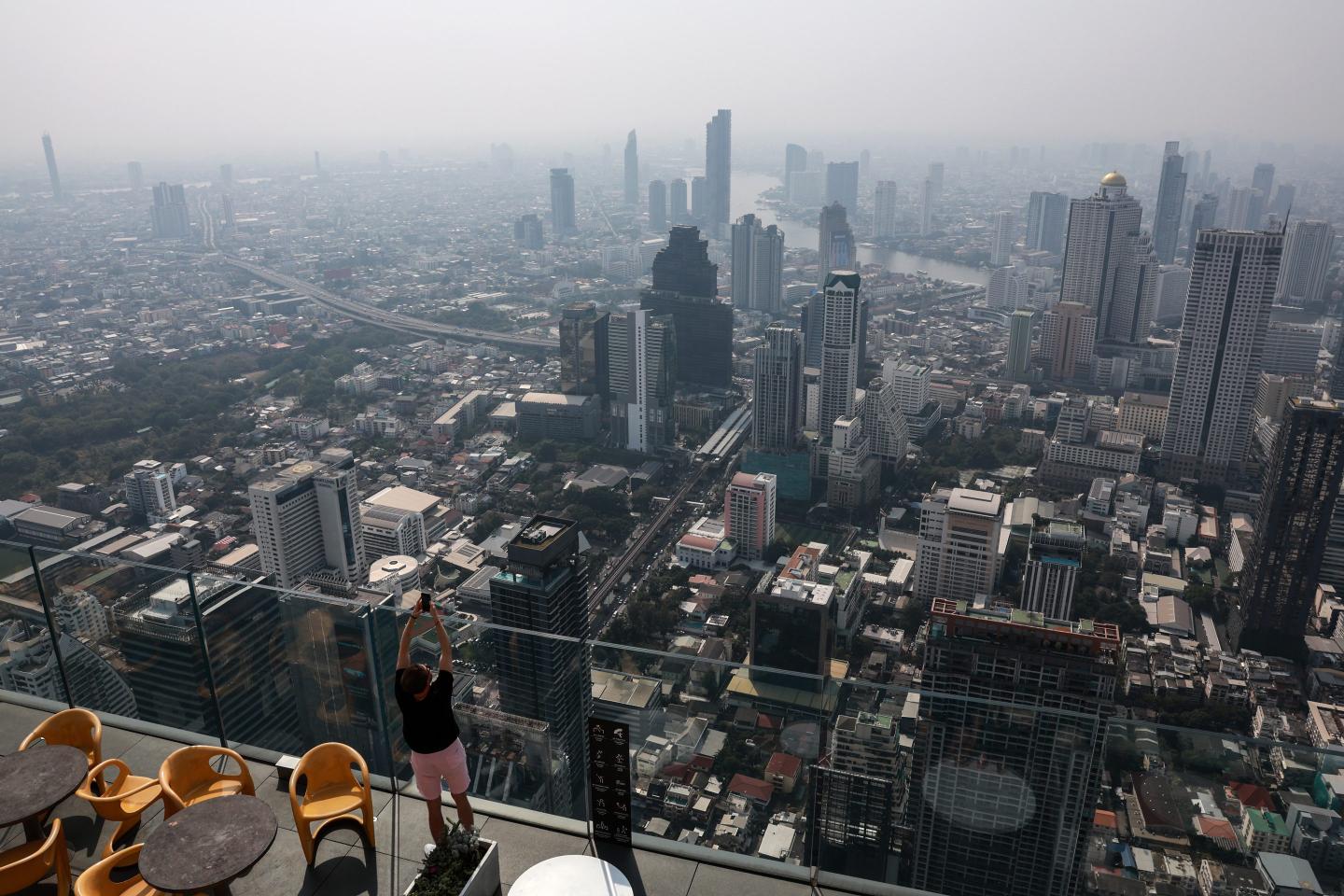
Last month, Thailand’s cabinet approved the collection of a carbon tax, the second in Southeast Asia.
Last month, Thailand’s cabinet approved the collection of a carbon tax, the second in Southeast Asia.Valeria Mongelli—Bloomberg via Getty Images

Last month, Thailand’s cabinet approved the collection of a carbon tax, the second in Southeast Asia after Singapore imposed its own carbon duty in 2019. Bangkok took this bold step right as the World Meteorological Organization confirmed that 2024 was the hottest year on record, with average temperatures at 1.55 degrees above pre-industrial levels.

Multilateral efforts to fight climate change are fracturing. According to a Carbon Brief analysis, just 13 of the 195 signatories to the Paris Agreement met the UN’s Feb. 10 deadline to make new pledges to cut emissions by 2035. Countries that skipped the assignment account for around 80% of both world economic activity and carbon emissions. And the U.S., the world’s second largest emitter of greenhouse gases, is exiting the Paris Agreement altogether.

A carbon tax is one of the most effective ways to encourage decarbonization and fund ways to mitigate the harms of climate change. Europe, which has the world’s oldest cap-and-trade system, is implementing a carbon tax with global implications.

But now Asia, accounting for some 60% of world carbon emissions, looks set to lead the next wave of progress on carbon pricing. And that means businesses in the region will need to prepare for a world where they pay for their emissions—and adjust their strategy accordingly.

Why Asia is embracing carbon taxes

The Asian Development Bank estimates that developing countries in Asia Pacific need to invest $1.7 trillion a year in infrastructure to maintain growth, tackle poverty and respond to climate change, and that the cost of mitigating climate change is $200 billion annually.

Carbon tax revenue can help meet those financing needs, which is why governments around Asia are now embracing ways to price carbon.

Japan introduced Asia’s first carbon tax in 2012 and is now upgrading its carbon pricing framework. China, Japan and Korea have also put a price on carbon through mandatory emissions trading systems for companies in certain sectors, or with emissions above a certain threshold.

By design, carbon taxes should automatically increase to achieve their goal of encouraging emissions reductions. Governments often shy away from hiking taxes, but Asian governments are likely to make that tough decision for three reasons.

First, Asia is particularly exposed to climate risk. According to the UN, the region is home to 70% of the global population at risk from rising sea levels. And one third of its total employment is in sectors hurt by climate change, like farming and fishing.

Second, carbon taxes will help Asian governments fund their climate policies, such as mitigation, R&D, and support for businesses. While Asia still relies on fossil fuels for 85% of its energy, it’s shifting faster towards renewables compared to other regions. Carbon pricing provides a direct incentive to steer energy developers away from fossil fuels and towards cleaner alternatives, like solar and low-carbon hydrogen. These options may even end up being cheaper, after the initial investment.

Third, Asia must respond to other regions using carbon pricing. Exporters to the European Union face a carbon tax in the form of the EU’s Carbon Border Adjustment Mechanism (CBAM), which is being phased in and will be fully implemented in 2026.

Europe’s CBAM requires importers of carbon-intensive products like steel from countries outside the EU and European Free Trade Association (EFTA) to pay the difference between the carbon price in the country of origin and a carbon price linked to the EU Emissions Trading System.

This means Asian exporters would effectively be paying a new EU tax, since their buyers would almost certainly pass the cost to them. Asian policymakers will need to address this potential tax leakage.

Malaysia’s pledge to tax its iron and steel sectors starting in 2026 is one pointer to how Asia’s governments will respond to these three pressures. These regulations will encourage industries to adopt low-carbon technologies, while also ensuring that any tax revenue is kept at home, rather than paid to foreign governments.

Asia has long been an engine of global economic growth thanks to its companies’ capacity for innovation and rapid adaptation. It now stands to gain greater clout to shape evolving carbon market rules and to harness the power of carbon pricing to support economic transformation.

No time like the present

With higher prices for carbon emissions a certainty, companies will need to reduce their carbon intensity today. That could mean investing in energy-efficient processes, or in new carbon capture and storage facilities.

Asian companies can look for financing from banks, asset managers and specialist or concessional capital providers. Institutions like the Monetary Authority of Singapore are starting to standardize transition finance, through frameworks like the Singapore-Asia Taxonomy for Sustainable Finance (SAT), the world’s first such taxonomy, to define the green and transition economy and provide clarity via a common language for market participants. 

The International Platform on Sustainable Finance in November announced a multi-jurisdictional Common Ground Taxonomy that incorporates the SAT, building on earlier work to harmonise standards between the EU and China.

As more governments introduce disclosure regimes based on the guidance laid down by international sustainability standards bodies, we may see greater harmonisation across jurisdictions leading to more robust non-financial disclosure requirements for companies that operate globally.

As the U.S. changes direction on climate, at least at the federal level, and Europe increasingly focuses on security, Asian policymakers are picking up the baton on carbon pricing—and for good reason. Smart companies will need to be one step ahead.

The opinions expressed in Fortune.com commentary pieces are solely the views of their authors and do not necessarily reflect the opinions and beliefs of Fortune.

About the Author
By Patrick Winter
See full bioRight Arrow Button Icon

Latest in Commentary

Finance
Lorem ipsum dolor sit amet, consectetur adipiscing elit, sed do eiusmod tempor incididunt ut labore et dolore magna aliqua. Ut enim ad minim veniam
By Fortune Editors
October 20, 2025
Finance
Lorem ipsum dolor sit amet, consectetur adipiscing elit, sed do eiusmod tempor incididunt ut labore et dolore magna aliqua. Ut enim ad minim veniam
By Fortune Editors
October 20, 2025
Finance
Lorem ipsum dolor sit amet, consectetur adipiscing elit, sed do eiusmod tempor incididunt ut labore et dolore magna aliqua. Ut enim ad minim veniam
By Fortune Editors
October 20, 2025
Finance
Lorem ipsum dolor sit amet, consectetur adipiscing elit, sed do eiusmod tempor incididunt ut labore et dolore magna aliqua. Ut enim ad minim veniam
By Fortune Editors
October 20, 2025
Finance
Lorem ipsum dolor sit amet, consectetur adipiscing elit, sed do eiusmod tempor incididunt ut labore et dolore magna aliqua. Ut enim ad minim veniam
By Fortune Editors
October 20, 2025
Finance
Lorem ipsum dolor sit amet, consectetur adipiscing elit, sed do eiusmod tempor incididunt ut labore et dolore magna aliqua. Ut enim ad minim veniam
By Fortune Editors
October 20, 2025

Most Popular

Finance
Lorem ipsum dolor sit amet, consectetur adipiscing elit, sed do eiusmod tempor incididunt ut labore et dolore magna aliqua. Ut enim ad minim veniam
By Fortune Editors
October 20, 2025
Finance
Lorem ipsum dolor sit amet, consectetur adipiscing elit, sed do eiusmod tempor incididunt ut labore et dolore magna aliqua. Ut enim ad minim veniam
By Fortune Editors
October 20, 2025
Finance
Lorem ipsum dolor sit amet, consectetur adipiscing elit, sed do eiusmod tempor incididunt ut labore et dolore magna aliqua. Ut enim ad minim veniam
By Fortune Editors
October 20, 2025
Finance
Lorem ipsum dolor sit amet, consectetur adipiscing elit, sed do eiusmod tempor incididunt ut labore et dolore magna aliqua. Ut enim ad minim veniam
By Fortune Editors
October 20, 2025
Finance
Lorem ipsum dolor sit amet, consectetur adipiscing elit, sed do eiusmod tempor incididunt ut labore et dolore magna aliqua. Ut enim ad minim veniam
By Fortune Editors
October 20, 2025
Finance
Lorem ipsum dolor sit amet, consectetur adipiscing elit, sed do eiusmod tempor incididunt ut labore et dolore magna aliqua. Ut enim ad minim veniam
By Fortune Editors
October 20, 2025
Fortune Secondary Logo
Rankings
  • 100 Best Companies
  • Fortune 500
  • Global 500
  • Fortune 500 Europe
  • Most Powerful Women
  • World's Most Admired Companies
  • See All Rankings
  • Lists Calendar
Sections
  • Finance
  • Fortune Crypto
  • Features
  • Leadership
  • Health
  • Commentary
  • Success
  • Retail
  • Mpw
  • Tech
  • Lifestyle
  • CEO Initiative
  • Asia
  • Politics
  • Conferences
  • Europe
  • Newsletters
  • Personal Finance
  • Environment
  • Magazine
  • Education
Customer Support
  • Frequently Asked Questions
  • Customer Service Portal
  • Privacy Policy
  • Terms Of Use
  • Single Issues For Purchase
  • International Print
Commercial Services
  • Advertising
  • Fortune Brand Studio
  • Fortune Analytics
  • Fortune Conferences
  • Business Development
  • Group Subscriptions
About Us
  • About Us
  • Press Center
  • Work At Fortune
  • Terms And Conditions
  • Site Map
  • About Us
  • Press Center
  • Work At Fortune
  • Terms And Conditions
  • Site Map
  • Facebook icon
  • Twitter icon
  • LinkedIn icon
  • Instagram icon
  • Pinterest icon

Latest in Commentary

employees
CommentarySuccession
Millions of business owners are about to retire. They should sell to their employees
By Matt Helmer and Maxwell JohnsonMay 23, 2026
9 hours ago
Ashley Yetman
Commentarydisruption
Everyone is blaming AI for the death of ‘craft.’ Take a good look in the mirror
By Ashley YetmanMay 23, 2026
9 hours ago
clay
CommentaryLoneliness
I’ve spent 25 years studying loneliness. AI is about to make it much worse
By Clay RoutledgeMay 23, 2026
11 hours ago
ambrose
CommentaryRobotics
Former NASA Robotics Chief: America is building the wrong kind of robots — and China knows it
By Robert AmbroseMay 23, 2026
12 hours ago
morris
CommentaryEntrepreneurship
My startup hit $200 million ARR. But first I walked away from 2.5 million YouTube subscribers and nearly went bankrupt
By Joel MorrisMay 23, 2026
14 hours ago
brotman
CommentaryVenture Capital
I’ve spent 25 years in venture capital. Here’s how it quietly shut ordinary Americans out of the AI wealth boom—and what could fix it
By Steve BrotmanMay 22, 2026
1 day ago

Most Popular

Jeff Bezos wants the bottom half of earners to pay zero income tax—he says nurses making just $75K should save $12K a year
Success
Jeff Bezos wants the bottom half of earners to pay zero income tax—he says nurses making just $75K should save $12K a year
By Preston ForeMay 21, 2026
2 days ago
Indeed chief economist says we’re entering an era of ‘great mismatch’ thanks to a generational imbalance of workers
Success
Indeed chief economist says we’re entering an era of ‘great mismatch’ thanks to a generational imbalance of workers
By Emma BurleighMay 22, 2026
1 day ago
Microsoft reports are exposing AI's real cost problem: Using the tech is more expensive than paying human employees
AI
Microsoft reports are exposing AI's real cost problem: Using the tech is more expensive than paying human employees
By Jake AngeloMay 22, 2026
1 day ago
Apple’s Steve Wozniak says he cofounded the tech giant after 5 rejections from HP—not to ‘make money.’ For years, his paycheck was just $50
Success
Apple’s Steve Wozniak says he cofounded the tech giant after 5 rejections from HP—not to ‘make money.’ For years, his paycheck was just $50
By Preston ForeMay 22, 2026
1 day ago
Bolt CEO says he let go of his entire HR team for creating problems that didn’t exist: ‘Those problems disappeared when I let them go’ 
Workplace Culture
Bolt CEO says he let go of his entire HR team for creating problems that didn’t exist: ‘Those problems disappeared when I let them go’ 
By Preston ForeMay 19, 2026
4 days ago
Current price of oil as of May 22, 2026
Personal Finance
Current price of oil as of May 22, 2026
By Joseph HostetlerMay 22, 2026
1 day ago

© 2026 Fortune Media IP Limited. All Rights Reserved. Use of this site constitutes acceptance of our Terms of Use and Privacy Policy | CA Notice at Collection and Privacy Notice | Do Not Sell/Share My Personal Information
FORTUNE is a trademark of Fortune Media IP Limited, registered in the U.S. and other countries. FORTUNE may receive compensation for some links to products and services on this website. Offers may be subject to change without notice.