• Home
  • Latest
  • Fortune 500
  • Finance
  • Tech
  • Leadership
  • Lifestyle
  • Rankings
  • Multimedia
TechNvidia
Asia

Biden to further limit Nvidia AI chip exports in final push

By
MacKenzie Hawkins
MacKenzie Hawkins
,
Jenny Leonard
Jenny Leonard
, and
Bloomberg
Bloomberg
Down Arrow Button Icon
By
MacKenzie Hawkins
MacKenzie Hawkins
,
Jenny Leonard
Jenny Leonard
, and
Bloomberg
Bloomberg
Down Arrow Button Icon
January 9, 2025, 12:24 AM ET
The measures would build on years of curbs that already limit the ability of American chipmakers like Nvidia and AMD to sell advanced processors in China and Russia.
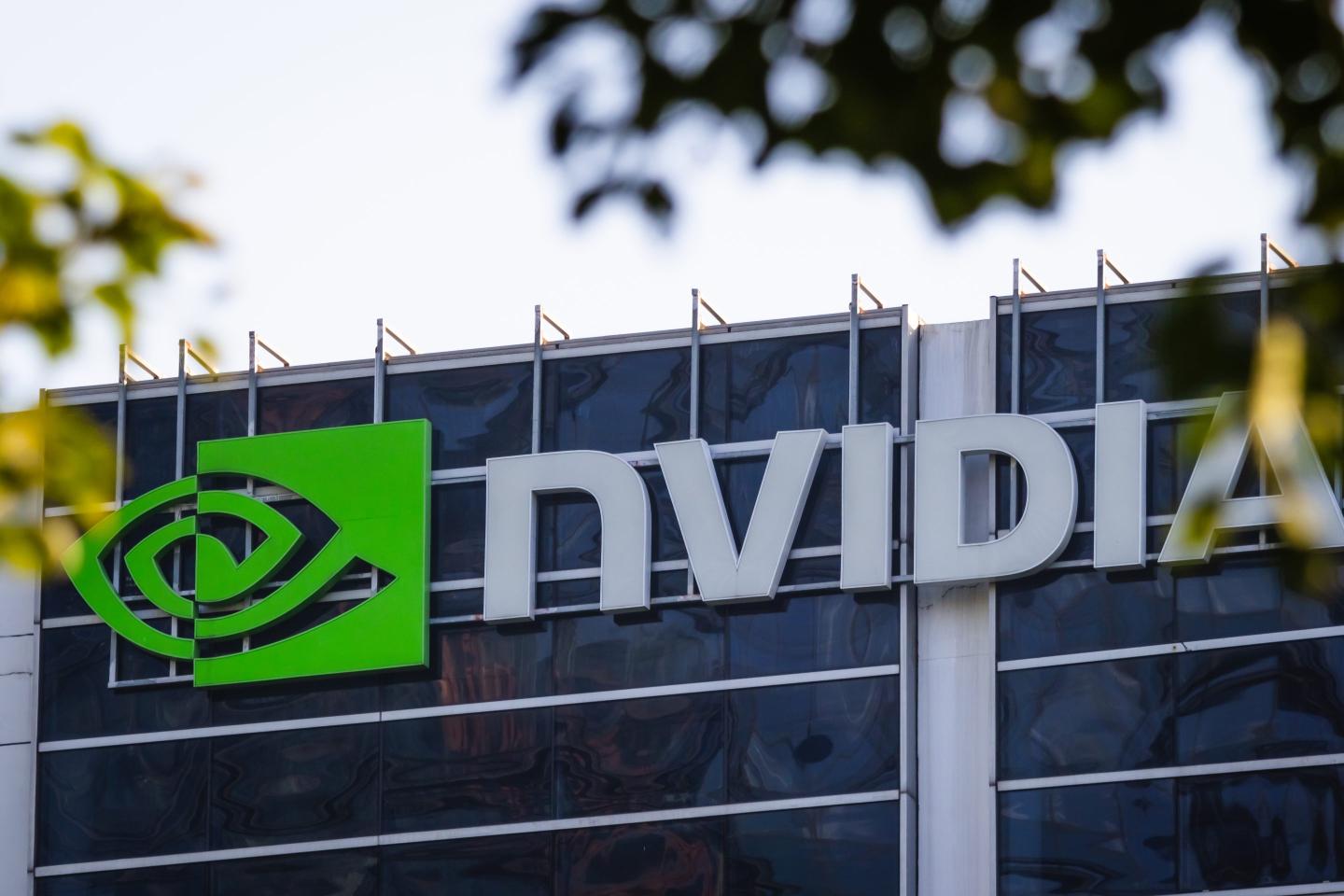
The measures would build on years of curbs that already limit the ability of American chipmakers like Nvidia and AMD to sell advanced processors in China and Russia.Cheng Xin—Getty Images

President Joe Biden’s administration plans one additional round of restrictions on the export of artificial intelligence chips from the likes of Nvidia Corp. just days before leaving office, a final push in his effort to keep advanced technologies out of the hands of China and Russia.

Recommended Video

The U.S. wants to curb the sale of AI chips used in data centers on both a country and company basis, with the goal of concentrating AI development in friendly nations and getting businesses around the world to align with American standards, according to people familiar with the matter.

The result would be an expansion of semiconductor trade restrictions to most of the world—an attempt to control the spread of AI technology at a time of soaring demand. The regulations, which could be issued as soon as Friday, would create three tiers of chip curbs, said the people, who asked not to be identified because the discussions are private.

At the top level, a small number of U.S. allies would maintain essentially unmitigated access to American chips. A group of adversaries, meanwhile, would be effectively blocked from importing the semiconductors. And the vast majority of the world would face limits on the total computing power that can go to one country. 

Companies headquartered in nations in that last group would be able to bypass their national limits—and get their own, significantly higher caps—by agreeing to a set of U.S. government security requirements and human rights standards, according to the people. That type of designation—called a validated end user, or VEU—aims to create a set of trusted entities that develop and deploy AI in secure environments around the world.

Shares of Nvidia, the leading maker of AI chips, dipped more than 1% in late trading after Bloomberg reported on the plan. They had been up 4.3% this year through the close, following stratospheric gains in 2023 and 2024 that turned the company into the world’s most valuable chipmaker.

Advanced Micro Devices Inc., Nvidia’s biggest challenger in AI processors, dropped less than 1% in extended trading.

Nvidia objected to the proposal in a statement. “A last-minute rule restricting exports to most of the world would be a major shift in policy that would not reduce the risk of misuse but would threaten economic growth and U.S. leadership,” Nvidia said. “The worldwide interest in accelerated computing for everyday applications is a tremendous opportunity for the U.S. to cultivate, promoting the economy and adding U.S. jobs.”

A representative of the White House’s National Security Council declined to comment. The Commerce Department’s Bureau of Industry and Security, which is in charge of chip export controls, didn’t immediately respond to a request for comment.

The measures build on years of curbs that already limit the ability of American chipmakers like Nvidia and AMD to sell advanced processors in China and Russia. The U.S. also has sought to prevent adversary nations from accessing cutting-edge technology through intermediaries in places like the Middle East and Southeast Asia. The latest draft rules are part of that global effort.

The rules follow months of debate over how quickly and broadly to deploy U.S. chips to global data centers. Because American chips far outperform Chinese ones at AI tasks, companies and entire countries have indicated that they’re willing to jump through hoops to gain access to U.S. technology. That gives the U.S. a unique role as a gatekeeper—and a potentially significant amount of leverage to shape global AI development. 

The U.S. has “a serious once-in-a-generation moment to leverage U.S. AI technology,” the top Democrat and Republican on the House China Select Committee wrote last week in a letter to Commerce Secretary Gina Raimondo. “Demand for U.S. AI technology is an opportunity to pry both companies and countries out of Beijing’s orbit.” 

The first tier established in the new rules includes the U.S. and 18 allies, such as Germany, the Netherlands, Japan, South Korea and Taiwan, according to people familiar with the matter. 

Companies can freely deploy computing power in those places, and firms headquartered there can apply for blanket U.S. government permission to ship chips to data centers in most other parts of the world. That’s provided that no more than a quarter of their total computing power is located outside of Tier 1 countries, and no more than 7% in any one Tier 2 country. Companies would also have to abide by U.S. government security requirements.

Additionally, U.S.-headquartered companies that apply for that type of permission—a so-called universal VEU designation—have to keep at least half of their total computing power on American soil, people familiar with the matter said. The broader goal of these regulations is ensuring that the U.S. and allied countries always have more computing power than the rest of the world.

Restrictive tiers

The vast majority of countries fall into the second tier of restrictions, which establishes maximum levels of computing power that can go to any one nation—equivalent to about 50,000 graphic processing units, or GPUs, from 2025 to 2027, the people said. But individual companies can access significantly higher limits—that grow over time—if they apply for VEU status in each country where they wish to build data centers. 

Getting that approval requires a demonstrated track record of meeting U.S. government security and human rights standards, or at least a credible plan for doing so. Security requirements span physical, cyber and personnel concerns. If companies obtain national VEU status, their chip imports won’t count against the maximum totals for that country—a measure to encourage firms to work with the U.S. government and adopt American AI standards.

The third, most restrictive tier affects China, Macau and all countries for which the U.S. maintains an arms embargo—about two dozen nations in total, according to the people. Shipments to data centers in those places are broadly prohibited. 

Like Nvidia, the Semiconductor Industry Association trade group opposes the move.

“A policy change of this scope and significance should not be rushed out the door during a period of presidential transition and without meaningful input from industry,” the association said in a statement. “Too much is at stake here to circumvent a deliberative process. Our country needs to get this right so we can compete and win globally.”

Model weights

In addition to the semiconductor controls, the new rules also limit the export of closed AI model weights, which are the numerical parameters that software uses to process data and make predictions or decisions. 

Companies would be prohibited from hosting powerful closed model weights in Tier 3 countries, like China and Russia, and would have to abide by security standards to host those weights in Tier 2 countries. That means the controls on model weights don’t apply to companies that obtain universal VEU status, one of the people said. 

Open weight models—which allow the public to access underlying code—aren’t affected by the rules, nor are closed models that are less powerful than an already-available open model. But if an AI company wants to fine-tune a general-purpose open weight model for a specific purpose, and that process uses a significant amount of computing power, they would need to apply for a U.S. government license to do so in a Tier 2 country.

Join us at the Fortune Workplace Innovation Summit May 19–20, 2026, in Atlanta. The next era of workplace innovation is here—and the old playbook is being rewritten. At this exclusive, high-energy event, the world’s most innovative leaders will convene to explore how AI, humanity, and strategy converge to redefine, again, the future of work. Register now.
About the Authors
By MacKenzie Hawkins
See full bioRight Arrow Button Icon
By Jenny Leonard
See full bioRight Arrow Button Icon
By Bloomberg
See full bioRight Arrow Button Icon

Latest in Tech

Finance
Lorem ipsum dolor sit amet, consectetur adipiscing elit, sed do eiusmod tempor incididunt ut labore et dolore magna aliqua. Ut enim ad minim veniam
By Fortune Editors
October 20, 2025
Finance
Lorem ipsum dolor sit amet, consectetur adipiscing elit, sed do eiusmod tempor incididunt ut labore et dolore magna aliqua. Ut enim ad minim veniam
By Fortune Editors
October 20, 2025
Finance
Lorem ipsum dolor sit amet, consectetur adipiscing elit, sed do eiusmod tempor incididunt ut labore et dolore magna aliqua. Ut enim ad minim veniam
By Fortune Editors
October 20, 2025
Finance
Lorem ipsum dolor sit amet, consectetur adipiscing elit, sed do eiusmod tempor incididunt ut labore et dolore magna aliqua. Ut enim ad minim veniam
By Fortune Editors
October 20, 2025
Finance
Lorem ipsum dolor sit amet, consectetur adipiscing elit, sed do eiusmod tempor incididunt ut labore et dolore magna aliqua. Ut enim ad minim veniam
By Fortune Editors
October 20, 2025
Finance
Lorem ipsum dolor sit amet, consectetur adipiscing elit, sed do eiusmod tempor incididunt ut labore et dolore magna aliqua. Ut enim ad minim veniam
By Fortune Editors
October 20, 2025

Most Popular

Finance
Lorem ipsum dolor sit amet, consectetur adipiscing elit, sed do eiusmod tempor incididunt ut labore et dolore magna aliqua. Ut enim ad minim veniam
By Fortune Editors
October 20, 2025
Finance
Lorem ipsum dolor sit amet, consectetur adipiscing elit, sed do eiusmod tempor incididunt ut labore et dolore magna aliqua. Ut enim ad minim veniam
By Fortune Editors
October 20, 2025
Finance
Lorem ipsum dolor sit amet, consectetur adipiscing elit, sed do eiusmod tempor incididunt ut labore et dolore magna aliqua. Ut enim ad minim veniam
By Fortune Editors
October 20, 2025
Finance
Lorem ipsum dolor sit amet, consectetur adipiscing elit, sed do eiusmod tempor incididunt ut labore et dolore magna aliqua. Ut enim ad minim veniam
By Fortune Editors
October 20, 2025
Finance
Lorem ipsum dolor sit amet, consectetur adipiscing elit, sed do eiusmod tempor incididunt ut labore et dolore magna aliqua. Ut enim ad minim veniam
By Fortune Editors
October 20, 2025
Finance
Lorem ipsum dolor sit amet, consectetur adipiscing elit, sed do eiusmod tempor incididunt ut labore et dolore magna aliqua. Ut enim ad minim veniam
By Fortune Editors
October 20, 2025
Fortune Secondary Logo
Rankings
  • 100 Best Companies
  • Fortune 500
  • Global 500
  • Fortune 500 Europe
  • Most Powerful Women
  • World's Most Admired Companies
  • See All Rankings
  • Lists Calendar
Sections
  • Finance
  • Fortune Crypto
  • Features
  • Leadership
  • Health
  • Commentary
  • Success
  • Retail
  • Mpw
  • Tech
  • Lifestyle
  • CEO Initiative
  • Asia
  • Politics
  • Conferences
  • Europe
  • Newsletters
  • Personal Finance
  • Environment
  • Magazine
  • Education
Customer Support
  • Frequently Asked Questions
  • Customer Service Portal
  • Privacy Policy
  • Terms Of Use
  • Single Issues For Purchase
  • International Print
Commercial Services
  • Advertising
  • Fortune Brand Studio
  • Fortune Analytics
  • Fortune Conferences
  • Business Development
  • Group Subscriptions
About Us
  • About Us
  • Press Center
  • Work At Fortune
  • Terms And Conditions
  • Site Map
  • About Us
  • Press Center
  • Work At Fortune
  • Terms And Conditions
  • Site Map
  • Facebook icon
  • Twitter icon
  • LinkedIn icon
  • Instagram icon
  • Pinterest icon

Latest in Tech

Tim Cook reveals the advice he gave Apple’s next CEO: The most important decision he’ll make is ‘where he spends his time’
Big TechApple
Tim Cook reveals the advice he gave Apple’s next CEO: The most important decision he’ll make is ‘where he spends his time’
By Alexei OreskovicApril 30, 2026
7 hours ago
Meta’s threat to quit New Mexico ‘is showing the world how little it cares about child safety,’ AG says
LawMeta
Meta’s threat to quit New Mexico ‘is showing the world how little it cares about child safety,’ AG says
By Catherina GioinoApril 30, 2026
9 hours ago
Meta's Hyperion data-center site in Northeastern Louisiana.
NewslettersEye on AI
Big Tech will spend nearly $700 billion on AI this year. No one knows where the buildout ends
By Sharon GoldmanApril 30, 2026
13 hours ago
Financial analyst working at a computer
Personal FinancePersonal Finance Evergreen
AI’s entry-level hiring nightmare is another gift to boomers’ retirement plans
By Catherina GioinoApril 30, 2026
14 hours ago
TOPSHOT - Alphabet Inc. and Google CEO Sundar Pichai speaks during the inauguration of a Google Artificial Intelligence (AI) hub in Paris on February 15, 2024. (Photo by ALAIN JOCARD / AFP via Getty Images)
AIGoogle
Google and Amazon’s biggest profit driver last quarter was their Anthropic stakes—which they haven’t sold
By Eva RoytburgApril 30, 2026
14 hours ago
Elon Musk arrives at the courthouse during his trial against OpenAI
CryptoElon Musk
Elon Musk likes Bitcoin—but he just told a jury most crypto coins are scams
By Jack KubinecApril 30, 2026
16 hours ago

Most Popular

Apple cofounder Ronald Wayne—whose stake would be worth up to $400 billion had he not sold it in 1976—says that at 91, he has no regrets
Success
Apple cofounder Ronald Wayne—whose stake would be worth up to $400 billion had he not sold it in 1976—says that at 91, he has no regrets
By Preston ForeApril 27, 2026
4 days ago
Google Cloud revenue is now 18% of Alphabet's business. Is this the beginning of the end of Google's search identity?
Big Tech
Google Cloud revenue is now 18% of Alphabet's business. Is this the beginning of the end of Google's search identity?
By Alexei OreskovicApril 29, 2026
1 day ago
China dominates the world's lithium supply. The U.S. just found 328 years' worth in its own backyard
North America
China dominates the world's lithium supply. The U.S. just found 328 years' worth in its own backyard
By Jake AngeloApril 30, 2026
13 hours ago
Accenture's Julie Sweet blew up 50 years of company history. She says the hardest part is still ahead
Conferences
Accenture's Julie Sweet blew up 50 years of company history. She says the hardest part is still ahead
By Nick LichtenbergApril 29, 2026
2 days ago
With no end in sight, Trump considers new options in Iran war—including the ‘Dark Eagle’ hypersonic missile
Big Tech
With no end in sight, Trump considers new options in Iran war—including the ‘Dark Eagle’ hypersonic missile
By Jim EdwardsApril 30, 2026
21 hours ago
‘The cost of compute is far beyond the costs of the employees’: Nvidia executive says right now AI is more expensive than paying human workers
AI
‘The cost of compute is far beyond the costs of the employees’: Nvidia executive says right now AI is more expensive than paying human workers
By Sasha RogelbergApril 28, 2026
3 days ago

© 2026 Fortune Media IP Limited. All Rights Reserved. Use of this site constitutes acceptance of our Terms of Use and Privacy Policy | CA Notice at Collection and Privacy Notice | Do Not Sell/Share My Personal Information
FORTUNE is a trademark of Fortune Media IP Limited, registered in the U.S. and other countries. FORTUNE may receive compensation for some links to products and services on this website. Offers may be subject to change without notice.