• Home
  • Latest
  • Fortune 500
  • Finance
  • Tech
  • Leadership
  • Lifestyle
  • Rankings
  • Multimedia

Trendingnow

1

U.S. debt is even worse than it seems, and rising Treasury yields are now an 'all-hands-on-deck situation,' top economist warns

2

China's export shock is pushing the global economy to a breaking point, and the U.S. may have to clean up the mess, former trade official says

3

Like Jamie Dimon, AT&T CEO says if you attend a meeting, you need to show up prepared—he ‘craves’ people who don’t just sit back and observe

1

U.S. debt is even worse than it seems, and rising Treasury yields are now an 'all-hands-on-deck situation,' top economist warns

2

China's export shock is pushing the global economy to a breaking point, and the U.S. may have to clean up the mess, former trade official says

3

Like Jamie Dimon, AT&T CEO says if you attend a meeting, you need to show up prepared—he ‘craves’ people who don’t just sit back and observe
TechElectric vehicles
Asia

China’s carmakers don’t see the country’s fierce price war ending anytime soon as they press suppliers for discounts

By
Lionel Lim
Lionel Lim
Asia Reporter
Down Arrow Button Icon
By
Lionel Lim
Lionel Lim
Asia Reporter
Down Arrow Button Icon
November 28, 2024, 5:46 AM ET
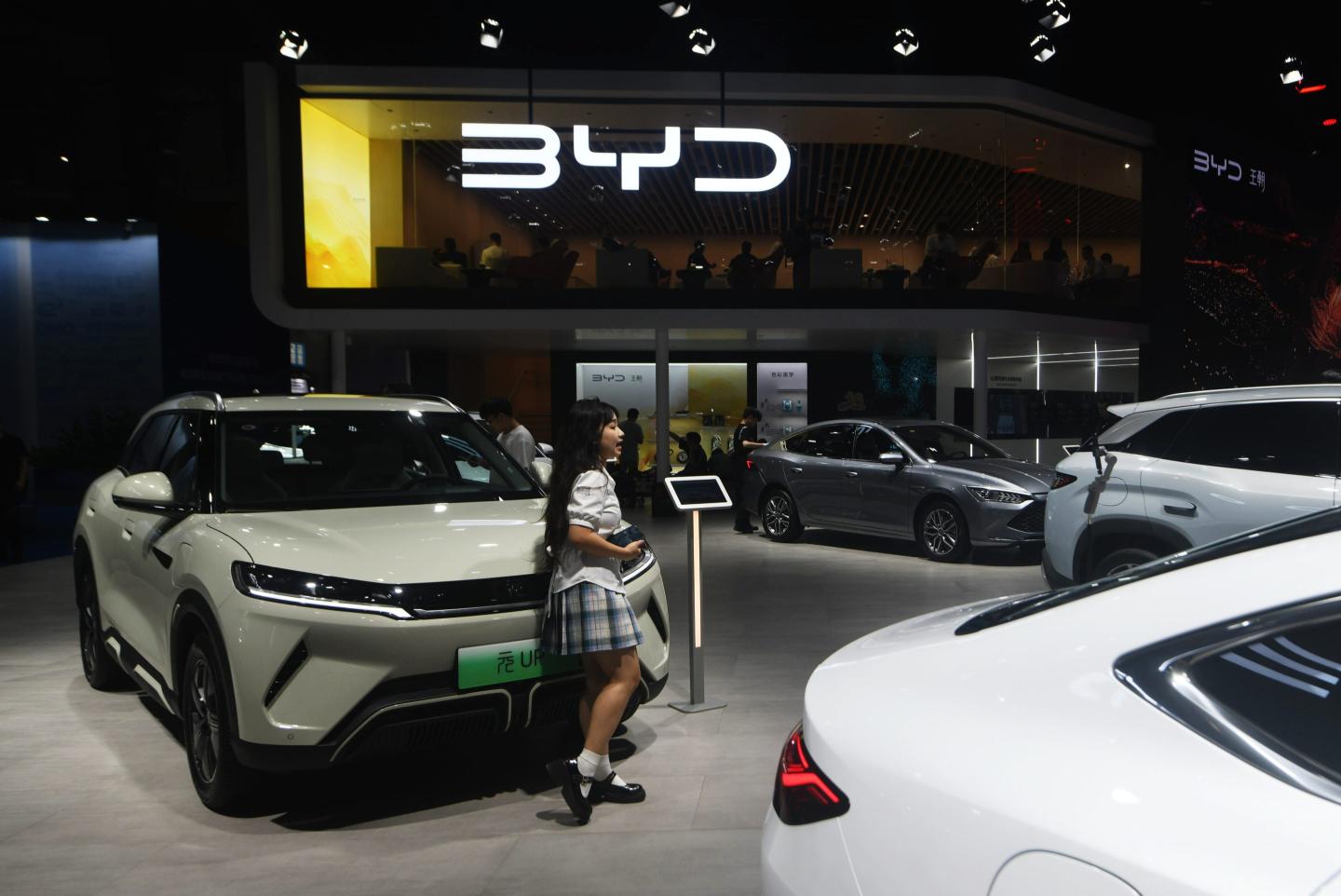
BYD’s stand at the Guangzhou auto show on Nov. 15, 2024. BYD has reportedly asked suppliers for a 10% price cut for 2025.
BYD’s stand at the Guangzhou auto show on Nov. 15, 2024. BYD has reportedly asked suppliers for a 10% price cut for 2025.Costfoto/NurPhoto/Getty Images
Google source logo
Add Fortune on Google for similar content.

Carmakers like BYD and SAIC Motor aren’t holding out hope for a ceasefire in the price war raging in China’s oversaturated EV sector. 

Recommended Video

The U.S. carmaker Tesla first initiated China’s EV price cuts in late 2022, which in turn spurred its domestic competitors like BYD to follow suit with their own discounts. There’s been sporadic truces in the fighting, but EV makers in China still turn to price cuts when they want to increase market share.

Now, EV suppliers are getting caught in the cross fire.

Maxus, owned by state-owned SAIC Motor, is asking suppliers for a 10% discount, reports the China Securities Journal citing unnamed industry sources. A letter to suppliers, sent Monday, reportedly asks for help in reducing costs as SAIC predicts EV oversupply will persist into next year.

SAIC Motor did not immediately respond to a request for comment. 

It’s the second report of a Chinese automaker asking for a discount this week. BYD—the market leader in China’s EV sector—also asked suppliers for a 10% discount, according to an email from the carmaker’s executive vice president He Zhiqi that circulated on Chinese social media and was picked up by local media outlets. The email asked for price cuts to start Jan. 1. 

Nominations are now open:
Fortune is now accepting nominations for the 2025 Southeast Asia 500—the definitive ranking of the region’s largest companies. Start your nomination here.


Fortune was unable to independently verify the accuracy of the letter, but a BYD public relations executive posted on his Weibo account claiming that annual price negotiations are common, and that discounts were not mandatory.

China has encouraged the rapid development of the EV sector since the early 2010s, leading to a large number of new EV startups, as well as several traditional automakers transitioning to electric cars. 

That’s helped create an extremely competitive market for EVs—and in turn encouraged price cuts as a way to gain market share. That’s eaten into margins, which is a problem for EV startups like Nio and XPeng that have yet to turn an annual profit. The reported pressure on suppliers to cut prices indicates that automakers don’t see the fierce competition letting up anytime soon. 

Fierce competition at home is pushing Chinese automakers to go overseas in search of new markets, but new tariffs in the U.S., Canada, and Europe could be closing doors in some of the world’s wealthiest economies. 

Instead, Chinese automakers are targeting “smaller but still meaningful” markets for growth, like Thailand, Mexico, and Brazil, which sometimes have a less fractious geopolitical relationship with Beijing.

About the Author
By Lionel LimAsia Reporter
LinkedIn icon

Lionel Lim is a Singapore-based reporter covering the Asia-Pacific region.

See full bioRight Arrow Button Icon
Google source logo
Add Fortune on Google for similar content.

Latest in Tech


Most Popular

Fortune Secondary Logo
Rankings
  • 100 Best Companies
  • Fortune 500
  • Global 500
  • Fortune 500 Europe
  • Most Powerful Women
  • World's Most Admired Companies
  • See All Rankings
  • Lists Calendar
Sections
  • Finance
  • Fortune Crypto
  • Features
  • Leadership
  • Health
  • Commentary
  • Success
  • Retail
  • Mpw
  • Tech
  • Lifestyle
  • CEO Initiative
  • Asia
  • Politics
  • Conferences
  • Europe
  • Newsletters
  • Personal Finance
  • Environment
  • Magazine
  • Education
Customer Support
  • Frequently Asked Questions
  • Customer Service Portal
  • Privacy Policy
  • Terms Of Use
  • Single Issues For Purchase
  • International Print
Commercial Services
  • Advertising
  • Fortune Brand Studio
  • Fortune Analytics
  • Fortune Conferences
  • Business Development
  • Group Subscriptions
About Us
  • About Us
  • Press Center
  • Work At Fortune
  • Terms And Conditions
  • Site Map
  • About Us
  • Press Center
  • Work At Fortune
  • Terms And Conditions
  • Site Map
  • Facebook icon
  • Twitter icon
  • LinkedIn icon
  • Instagram icon
  • TikTok icon
  • YouTube icon

    Latest in Tech


    Most Popular

    © 2026 Fortune Media IP Limited. All Rights Reserved. Use of this site constitutes acceptance of our Terms of Use and Privacy Policy | CA Notice at Collection and Privacy Notice | Do Not Sell/Share My Personal Information
    FORTUNE is a trademark of Fortune Media IP Limited, registered in the U.S. and other countries. FORTUNE may receive compensation for some links to products and services on this website. Offers may be subject to change without notice.