
• Home
  • Latest
  • Fortune 500
  • Finance
  • Tech
  • Leadership
  • Lifestyle
  • Rankings
  • Multimedia
Leadershipphilanthropy
Asia

Asia’s rich flip the script on charitable giving: Instead of mega-foundations, they’re using their family companies

Nicholas Gordon
By
Nicholas Gordon
Nicholas Gordon
Asia Editor
Down Arrow Button Icon
Nicholas Gordon
By
Nicholas Gordon
Nicholas Gordon
Asia Editor
Down Arrow Button Icon
July 28, 2024, 11:30 PM ET
Updated July 29, 2024, 4:02 PM ET
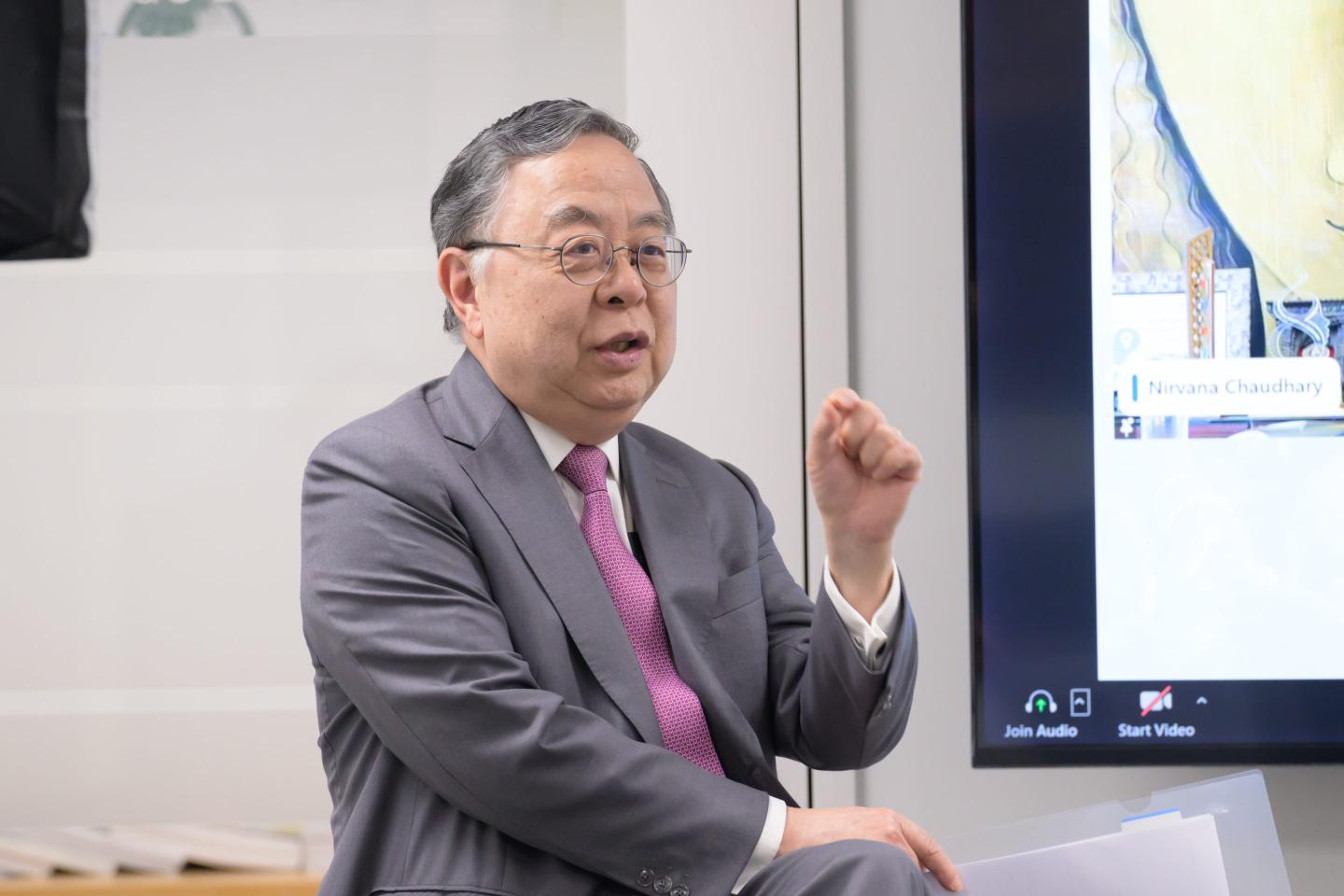
Ronnie Chan, former chairman of Hang Lung Group, shares his views on philanthropy at a CAPS event earlier this year.
Ronnie Chan, former chairman of Hang Lung Group, shares his views on philanthropy at a CAPS event earlier this year. Courtesy of the Centre for Asian Philanthropy and Society

Ronnie Chan, the former chairman of Hong Kong’s Hang Lung Group, one of the city’s largest property developers, thinks a business mindset is needed for philanthropy—and that’s just as true for future generations as his own.

Recommended Video

“I don’t prefer a family that becomes so philanthropic that they lose track of making money,” says Chan, who earlier this year handed the reins of Hang Lung over to his 41-year-old son, Adriel Chan. “I think that the two being together is a better solution.” 

In the U.S., philanthropy has long been dominated by wealthy tycoons: Andrew Carnegie and John D. Rockefeller during the Gilded Age; Mark Zuckerberg and Bill Gates in the digital age. Earlier this year, Michael Bloomberg donated $1 billion to Johns Hopkins University through his charity arm, Bloomberg Philanthropies. The gift will allow most medical students to attend the U.S. university for free.

For over a century, U.S. tycoons traditionally chose to give their money through large family foundations, like the Carnegie Corp. of New York (founded in 1911) and the Rockefeller Foundation (founded in 1913). Foundations still drive a lot of U.S. philanthropy, giving $103.5 billion in 2023, out of a total $557.2 billion, according to the Lilly Family School of Philanthropy at Indiana University. (Corporations, by comparison, gave a relatively paltry $36.6 billion.)

Asia has its fair share of high-net-worth individuals—think Indian mega-mogul Mukesh Ambani, whose family just threw a wedding that reportedly cost $600 million—yet the region’s wealthiest tend not to rely on mega-foundations for their charity work.

Instead, the company takes the lead in Asia. “There’s very little distinction between personal philanthropy and corporate philanthropy” in Asia, says Ruth Shapiro, cofounder of the Centre for Asian Philanthropy and Society (CAPS), a Hong Kong–based think tank. “There are no Ford, Gates, Rockefeller foundations here.”

Corporate giving comes with its own set of perks: on-the-ground experience, existing distribution systems, and personal connections. “Companies want to fund where they’re operating,” Shapiro explains. “Why send it through another organization,” when companies can just do it themselves.

For example, Jollibee Foods Corp., the Filipino fast giant, works directly with small farmers in the Philippines through the Jollibee Foundation. “We try to cut off the middlemen by trying to work with farmers’ groups to supply vegetables directly to our JFC brands,” CEO Ernesto Tanmantiong told Fortune in an interview earlier this year.

Tanmantiong described the relationship with farmers, as well as investing in education, as a way to make rural life more attractive to young Filipinos. “In the past, children were not willing to be farmers. They would rather go to the city to try to venture on their own,” he said. Since Jollibee started helping farmers, “some of the children started coming back to help their parents.”

Politics plays a role too, of course.

“It’s in everyone’s interest to help the government,” Shapiro says. “There are people who want to stay in business, and they continue to make money.”

In 2021, Chinese president Xi Jinping called for “common prosperity,” a drive to reduce inequality in Chinese society. Chinese companies loosened their purse strings, donating billions of dollars to poverty-alleviation campaigns. Corporate leaders may also have been trying to prove they were good corporate citizens. Alibaba, for example, promised to give $15 billion, equal to two-thirds of the company’s entire 2020 profit, just months after getting slapped with a $2 billion fine for alleged monopolistic practices.

That openness to working with the government marks another difference between Asian philanthropy and giving in, say, the U.S. In Asia, “people want to work aligned, at the minimum, with the government,” Shapiro says, “which is not a major factor in the U.S.”

Jollibee also worked with the government for its philanthropic programs, and even handed its education-assistance program over to the Filipino Department of Education, Tanmantiong told Fortune earlier this year.

Asian philanthropy still lags the U.S.; CAPS estimates that if Asians donated at the same rate as the U.S.—roughly at a level equal to 2% of GDP—an additional $702 billion of funds could be released. Unlike in the U.S., which gives generous tax incentives to family foundations and other philanthropic organizations, Asian policy can vary widely among different countries, with some coupling low limits with low tax deduction rates.

Measuring doing good

In June, CAPS released its Doing Good Index for 2024. The index surveys “social delivery organizations,” or SDOs—CAPS’s term for any organization that engages in social work, including nonprofit, for-profit, and government-linked entities. 

Broadly, CAPS found that the SDO space across Asia was largely stable, with funding levels remaining mostly unchanged. 

One particular concern among social delivery organizations—similar to their counterparts in the private business world—is talent. Almost 75% of SDOs say they struggle to recruit staff, and just under 70% say they have problems retaining them. 

The problem is even more acute in wealthier economies like Japan, Thailand, and Hong Kong, where over 90% of SDOs report troubles attracting staff. Higher cost of living and greater opportunities in the private sector mean it’s hard for nonprofits to compete.

But young people are finding other ways to do good. “We’re seeing record numbers of social enterprises,” Shapiro says. Younger people see social enterprises as a way to “make money and still do good.” Governments like them, too: Shapiro notes that a CAPS study found that governments were allotting more money to social enterprises over pure nonprofits owing to the former’s strengths in job creation. 

Of course, SDOs also bolster their manpower with volunteers, and they’re getting a helping hand from the corporate sector. Over 60% of SDOs in Asia reported having corporate volunteers, with the rate reaching 80% in mainland China, Hong Kong, and Taiwan. 

Employees increasingly report that they want purpose in their careers, and companies are using volunteering programs to give them that. “It’s a great source of satisfaction, and employees feel proud of their company for creating those opportunities,” Shapiro says. 

One of the region’s largest foundations is the Hong Kong Jockey Club’s Charities Trust, which donates approximately $640 million a year to local city issues like talent, eldercare, poverty alleviation, and other social causes. The HKJC—the only legal purveyor of gambling in the Chinese city—has donated its surplus to the trust since 1955.

Succession matters in philanthropy, too

Earlier this year, Ronnie Chan—CAPS’s chair—announced that he was giving up his role as chairman of the Hang Lung Group and handed control to his son, Adriel Chan.

Yet the former chairman is also handing over a bevy of donor relationships to organizations like CAPS, Harvard University, the U.S. think tank Asia Society, and several other charitable organizations in the U.S., Hong Kong, and elsewhere. 

Much in the same way that a business leader thinks about succession, Chan says, his family is also thinking about how to hand over these philanthropic responsibilities, too: “We increasingly engage the next generation in philanthropic decisions.”

Chan is upfront about the options his children have regarding philanthropy. “My son is privileged,” he says, noting the many relationships the family has with potential recipients. “It’s up to him to choose,” Chan says, adding that he’s been surprised at where his son decided to put his energy.

“I’m history,” he says. “He’s the future.”

Correction, July 29, 2024: A previous version of this article misstated Ronnie Chan’s title at the Centre for Asian Philanthropy and Society.

Join us at the Fortune Workplace Innovation Summit May 19–20, 2026, in Atlanta. The next era of workplace innovation is here—and the old playbook is being rewritten. At this exclusive, high-energy event, the world’s most innovative leaders will convene to explore how AI, humanity, and strategy converge to redefine, again, the future of work. Register now.
About the Author
Nicholas Gordon
By Nicholas GordonAsia Editor
LinkedIn iconTwitter icon

Nicholas Gordon is an Asia editor based in Hong Kong, where he helps to drive Fortune’s coverage of Asian business and economics news.

See full bioRight Arrow Button Icon

Latest in Leadership

Finance
Lorem ipsum dolor sit amet, consectetur adipiscing elit, sed do eiusmod tempor incididunt ut labore et dolore magna aliqua. Ut enim ad minim veniam
By Fortune Editors
October 20, 2025
Finance
Lorem ipsum dolor sit amet, consectetur adipiscing elit, sed do eiusmod tempor incididunt ut labore et dolore magna aliqua. Ut enim ad minim veniam
By Fortune Editors
October 20, 2025
Finance
Lorem ipsum dolor sit amet, consectetur adipiscing elit, sed do eiusmod tempor incididunt ut labore et dolore magna aliqua. Ut enim ad minim veniam
By Fortune Editors
October 20, 2025
Finance
Lorem ipsum dolor sit amet, consectetur adipiscing elit, sed do eiusmod tempor incididunt ut labore et dolore magna aliqua. Ut enim ad minim veniam
By Fortune Editors
October 20, 2025
Finance
Lorem ipsum dolor sit amet, consectetur adipiscing elit, sed do eiusmod tempor incididunt ut labore et dolore magna aliqua. Ut enim ad minim veniam
By Fortune Editors
October 20, 2025
Finance
Lorem ipsum dolor sit amet, consectetur adipiscing elit, sed do eiusmod tempor incididunt ut labore et dolore magna aliqua. Ut enim ad minim veniam
By Fortune Editors
October 20, 2025

Most Popular

Finance
Lorem ipsum dolor sit amet, consectetur adipiscing elit, sed do eiusmod tempor incididunt ut labore et dolore magna aliqua. Ut enim ad minim veniam
By Fortune Editors
October 20, 2025
Finance
Lorem ipsum dolor sit amet, consectetur adipiscing elit, sed do eiusmod tempor incididunt ut labore et dolore magna aliqua. Ut enim ad minim veniam
By Fortune Editors
October 20, 2025
Finance
Lorem ipsum dolor sit amet, consectetur adipiscing elit, sed do eiusmod tempor incididunt ut labore et dolore magna aliqua. Ut enim ad minim veniam
By Fortune Editors
October 20, 2025
Finance
Lorem ipsum dolor sit amet, consectetur adipiscing elit, sed do eiusmod tempor incididunt ut labore et dolore magna aliqua. Ut enim ad minim veniam
By Fortune Editors
October 20, 2025
Finance
Lorem ipsum dolor sit amet, consectetur adipiscing elit, sed do eiusmod tempor incididunt ut labore et dolore magna aliqua. Ut enim ad minim veniam
By Fortune Editors
October 20, 2025
Finance
Lorem ipsum dolor sit amet, consectetur adipiscing elit, sed do eiusmod tempor incididunt ut labore et dolore magna aliqua. Ut enim ad minim veniam
By Fortune Editors
October 20, 2025
Fortune Secondary Logo
Rankings
  • 100 Best Companies
  • Fortune 500
  • Global 500
  • Fortune 500 Europe
  • Most Powerful Women
  • World's Most Admired Companies
  • See All Rankings
  • Lists Calendar
Sections
  • Finance
  • Fortune Crypto
  • Features
  • Leadership
  • Health
  • Commentary
  • Success
  • Retail
  • Mpw
  • Tech
  • Lifestyle
  • CEO Initiative
  • Asia
  • Politics
  • Conferences
  • Europe
  • Newsletters
  • Personal Finance
  • Environment
  • Magazine
  • Education
Customer Support
  • Frequently Asked Questions
  • Customer Service Portal
  • Privacy Policy
  • Terms Of Use
  • Single Issues For Purchase
  • International Print
Commercial Services
  • Advertising
  • Fortune Brand Studio
  • Fortune Analytics
  • Fortune Conferences
  • Business Development
  • Group Subscriptions
About Us
  • About Us
  • Press Center
  • Work At Fortune
  • Terms And Conditions
  • Site Map
  • About Us
  • Press Center
  • Work At Fortune
  • Terms And Conditions
  • Site Map
  • Facebook icon
  • Twitter icon
  • LinkedIn icon
  • Instagram icon
  • Pinterest icon

Latest in Leadership

doubles
Workplace Cultureremote work
‘Did we learn nothing?’ Synchrony is hybrid, the Best Company to Work For, and puzzled by the return-to-office push
By Nick LichtenbergMay 5, 2026
20 minutes ago
A jittery CEO crowd at Milken looks abroad for growth—and answers
NewslettersCEO Daily
A jittery CEO crowd at Milken looks abroad for growth—and answers
By Diane BradyMay 5, 2026
2 hours ago
Man in a suit with glasses
Big TechTech
Supermicro’s co-founder allegedly smuggled $2.5 billion in Nvidia-chipped servers to China—now the whole company is under the microscope
By Amanda GerutMay 5, 2026
3 hours ago
alain
CommentaryIran
I watched my father run his business through the Lebanese Civil War. Here’s what it taught me about leading through disruption.
By Alain BejjaniMay 5, 2026
5 hours ago
Investors endorse Greg Abel—even as Berkshire crowd thins without Buffett as CEO. ‘This was definitely the meeting with the deepest insights’
C-SuiteWarren Buffett
Investors endorse Greg Abel—even as Berkshire crowd thins without Buffett as CEO. ‘This was definitely the meeting with the deepest insights’
By Marco Quiroz-GutierrezMay 4, 2026
16 hours ago
GameStop wants to buy eBay for $56 billion. Wall Street has one big question
C-SuiteFortune 500
GameStop wants to buy eBay for $56 billion. Wall Street has one big question
By Phil WahbaMay 4, 2026
16 hours ago

Most Popular

Diary of a CEO founder says he hired someone with 'zero' work experience because she 'thanked the security guard by name' before the interview
Success
Diary of a CEO founder says he hired someone with 'zero' work experience because she 'thanked the security guard by name' before the interview
By Emma BurleighMay 3, 2026
2 days ago
Current price of silver as of Monday, May 4, 2026
Personal Finance
Current price of silver as of Monday, May 4, 2026
By Joseph HostetlerMay 4, 2026
22 hours ago
As economic despair mounts, Russian official admits the country has had enough of Putin's war on Ukraine. 'We can’t even take one region'
Economy
As economic despair mounts, Russian official admits the country has had enough of Putin's war on Ukraine. 'We can’t even take one region'
By Jason MaMay 3, 2026
2 days ago
America got rich and got sad. A top economist says 2020 broke something that hasn't healed
Economy
America got rich and got sad. A top economist says 2020 broke something that hasn't healed
By Nick LichtenbergMay 3, 2026
2 days ago
Current price of oil as of May 4, 2026
Personal Finance
Current price of oil as of May 4, 2026
By Joseph HostetlerMay 4, 2026
23 hours ago
Scott Bessent on financial literacy: 'it drives me crazy' to see young men in blue-collar construction jobs playing the lottery
Personal Finance
Scott Bessent on financial literacy: 'it drives me crazy' to see young men in blue-collar construction jobs playing the lottery
By Fatima Hussein and The Associated PressMay 1, 2026
4 days ago

© 2026 Fortune Media IP Limited. All Rights Reserved. Use of this site constitutes acceptance of our Terms of Use and Privacy Policy | CA Notice at Collection and Privacy Notice | Do Not Sell/Share My Personal Information
FORTUNE is a trademark of Fortune Media IP Limited, registered in the U.S. and other countries. FORTUNE may receive compensation for some links to products and services on this website. Offers may be subject to change without notice.